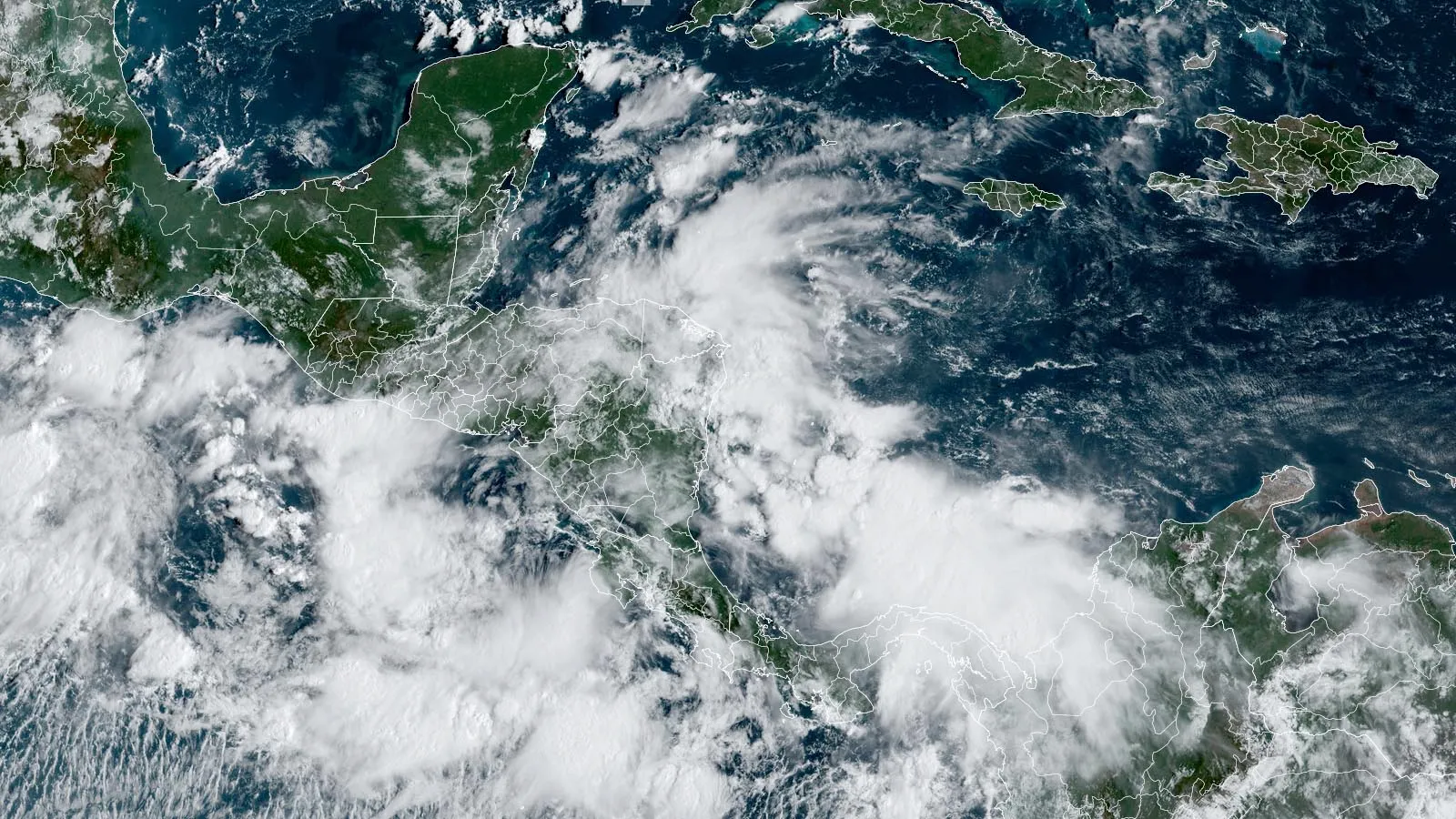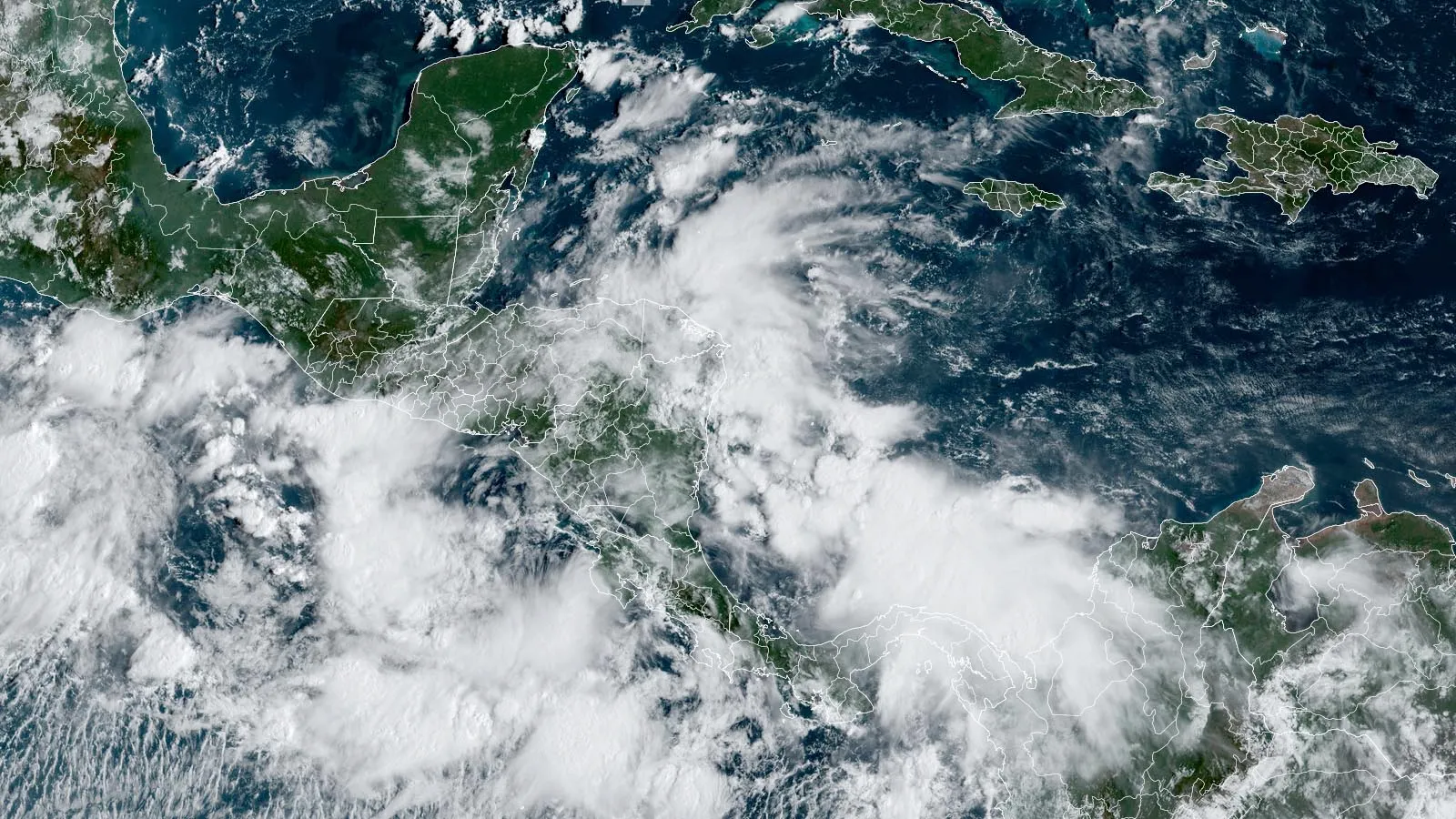
Visible satellite image of the developing Central American Gyre that spawned Hurricane Helene, at 10:20 EDT Friday, Sep. 20. (Image credit: NOAA/RAMMB/Colorado State University)
In September 2024, heavy rains in excess of eight inches (203 mm) poured down on portions of Central America and southern Mexico.
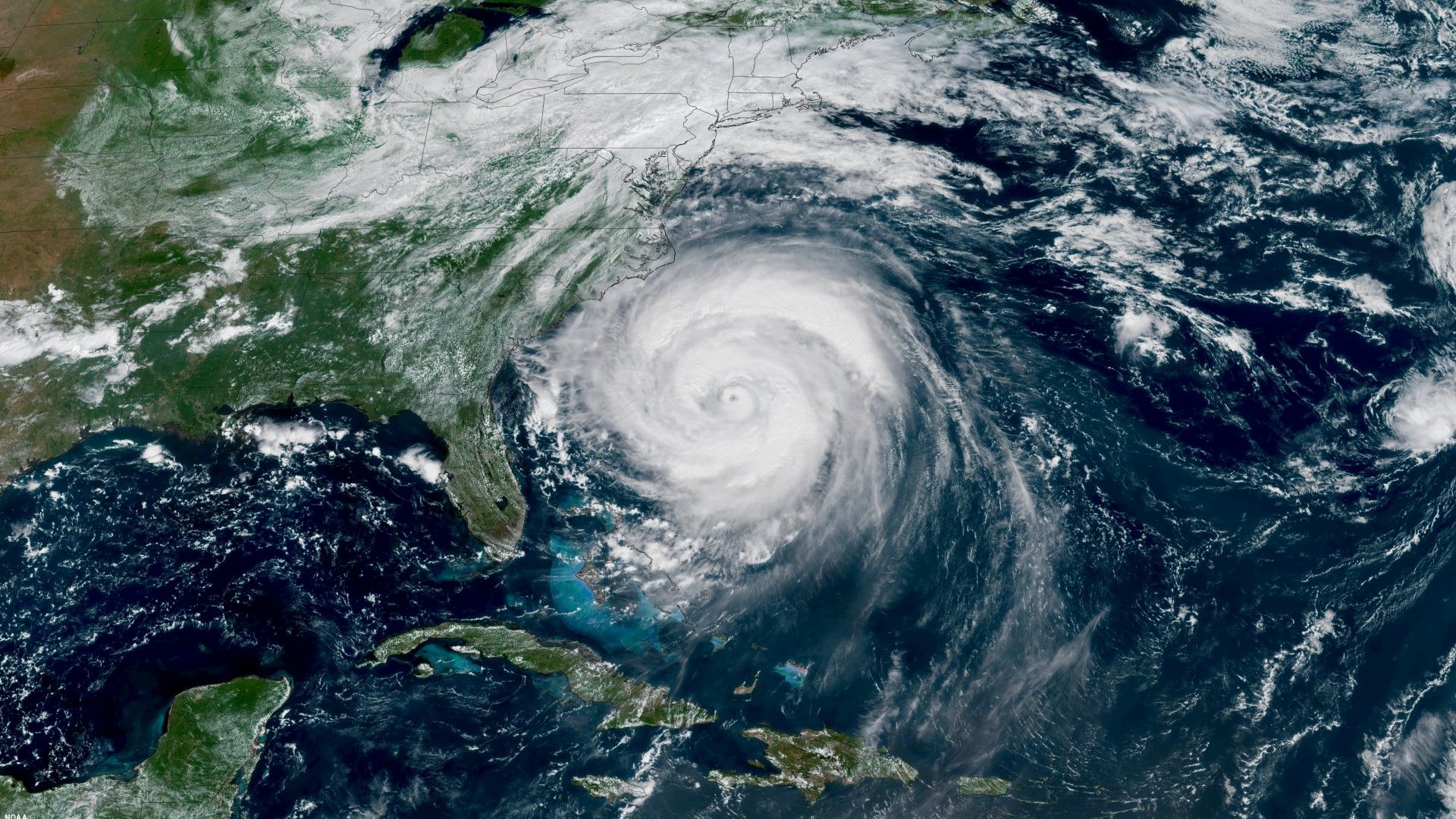
The rains, a warning sign of what was to come, resulted from a sprawling low-pressure weather system known as a Central American Gyre, which developed over Central America and the adjacent waters of the Caribbean, Gulf of Mexico, and Eastern Pacific. After festering for three days, the lobe of the Central American Gyre over the northwestern Caribbean split off from the main low and developed into Hurricane Helene, one of the most notorious Atlantic hurricanes of all time. Helene’s rampage across the western Caribbean and through the Southeast U.S. killed 217 people and caused $81 billion in damage, making it the seventh-costliest weather disaster in world history.
Figure 1. A Central American Gyre on Oct. 6, 2018, a day before it spawned the tropical depression that would go on to become Cat 5 Hurricane Michael in the Gulf of Mexico. (Image credit: NASA World View)
Helene was one of three named storms that were spawned by a Central American Gyre in 2024, along with Tropical Storm Alberto and Hurricane Rafael. A number of devastating hurricanes have been spawned by these gyres in recent years, including Cat 4 Opal of 1995, Cat 4 Michelle of 1999, Cat 5 Wilma of 2005, and Cat 5 Michael of 2018. This naturally gives rise to the question: How is climate change affecting the propensity of Central American Gyres to spawn hurricanes? The answer: As far as we can tell, the gyres and Central American Gyre-spawned hurricanes are not increasing in frequency, but it is possible that climate change could cause an increase in the future.