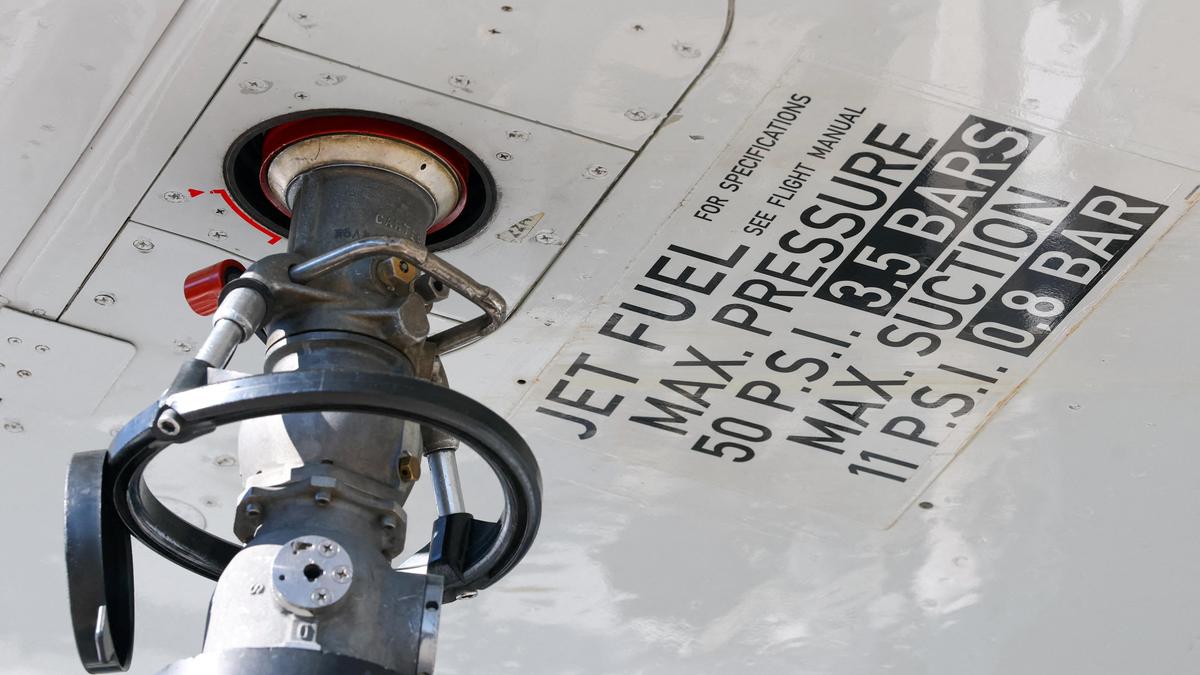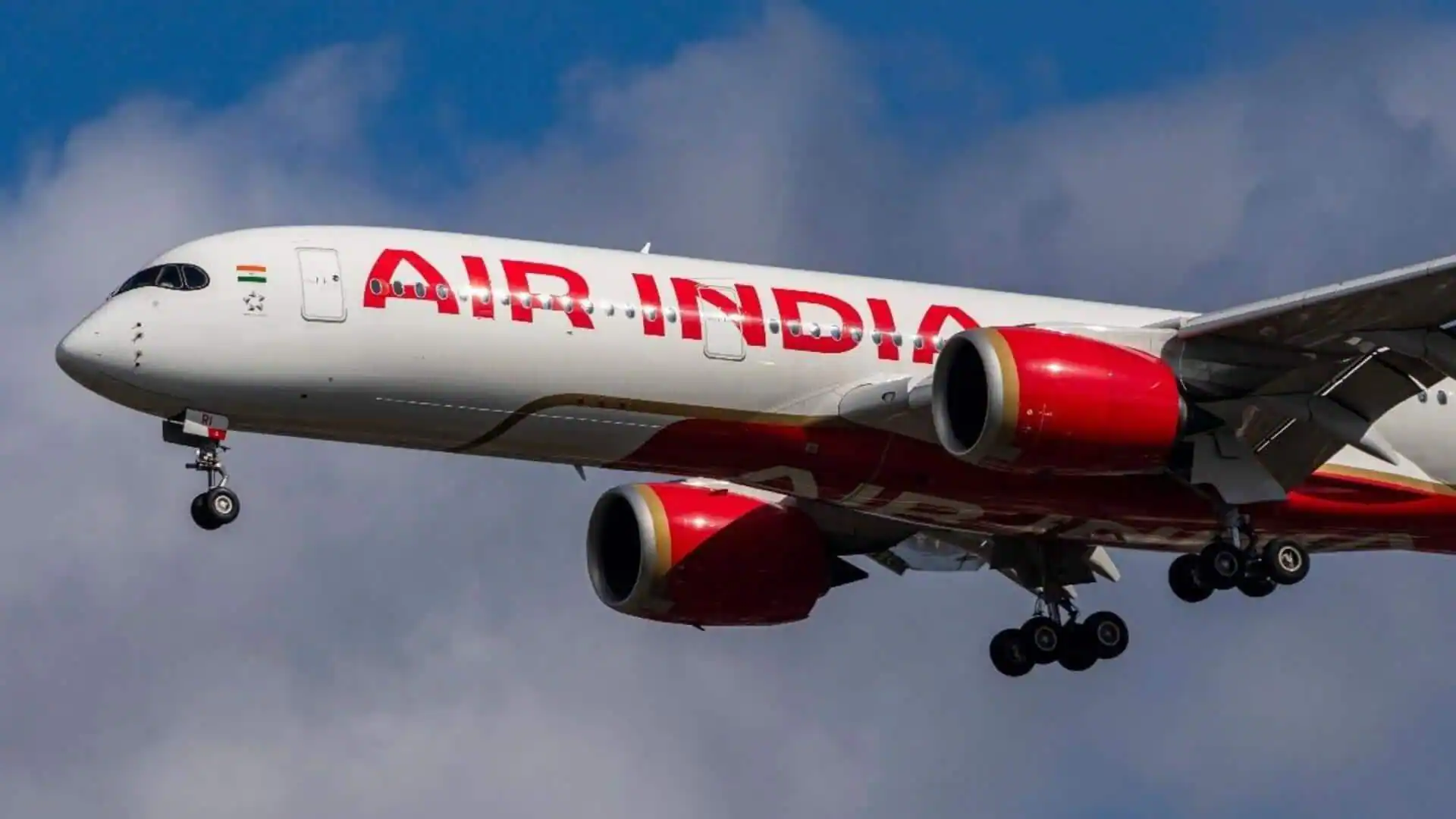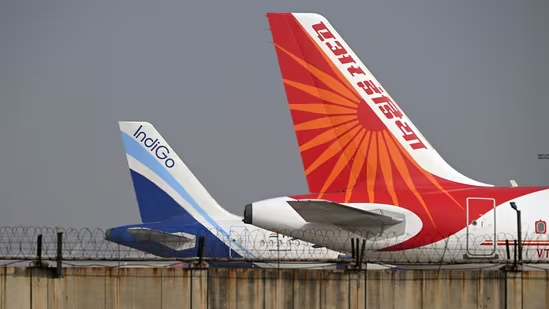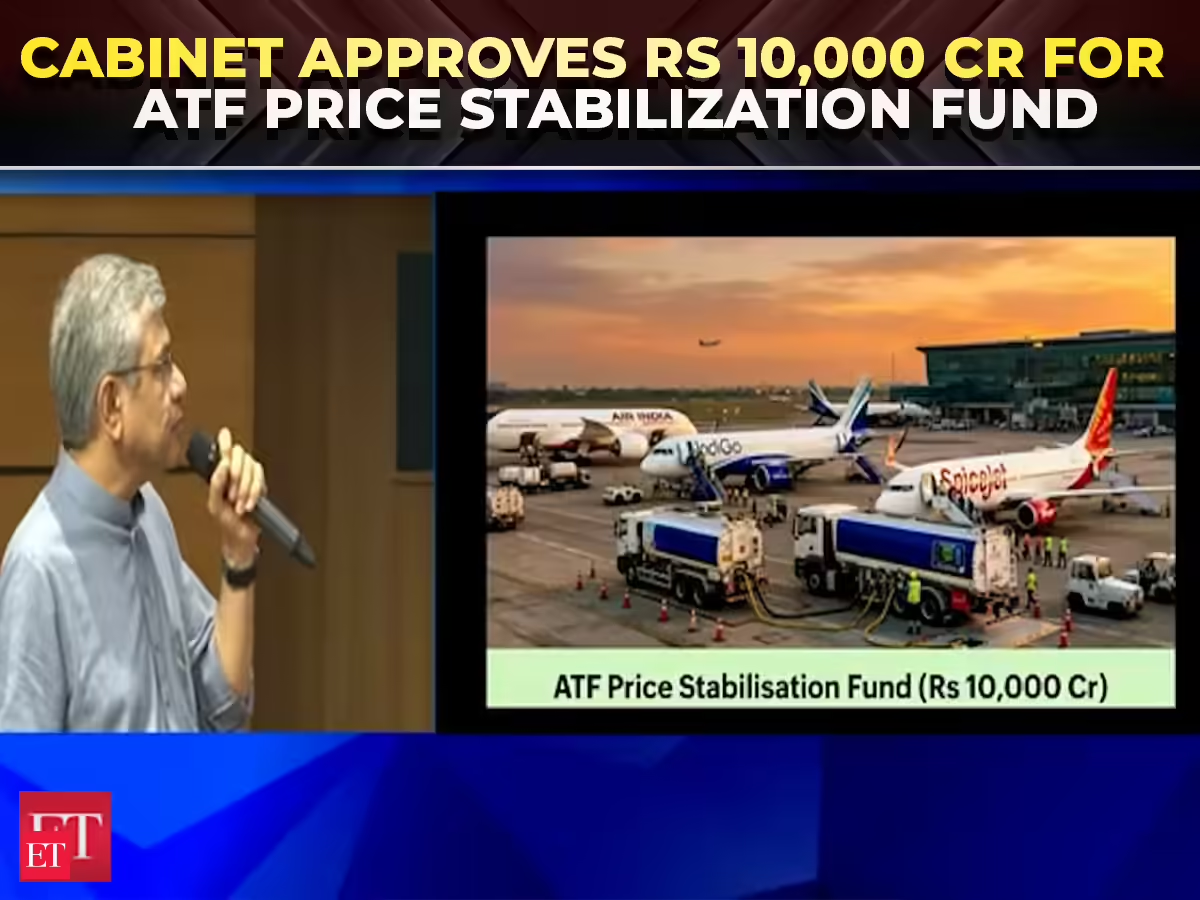
One-time stabilisation fund aims to protect airlines and passengers from fuel shocksLast updated: June 03, 2026 | 14:583 MIN READIndia is one of UAE's biggest travel source markets. ShutterstockDubai: India on Wednesday approved a one-time budgetary support package of up to Rs100 billion ($1.2 billion) to help stabilise aviation turbine fuel (ATF) prices for Indian airlines, as fuel costs continue to surge amid the ongoing conflict in West Asia.Get updated faster and for FREE: Download the Gulf News app now - simply click here.The support will be provided to oil marketing companies (OMCs) as an interest-free advance and is designed to cushion airlines from unprecedented fuel-price volatility that has significantly increased operating expenses across the aviation sector.Announcing the decision, Union Minister Ashwini Vaishnaw said international ATF prices had risen sharply from Rs 60.5 per litre in March 2026 to Rs142 per litre in May 2026, largely due to geopolitical tensions in the Middle East.Jet fuel price surge The government said the sharp increase in fuel costs has placed considerable pressure on airlines, for whom ATF typically accounts for around 40 per cent of operating expenses and can rise to as much as 60 per cent during periods of extreme volatility.The increase has also affected OMCs, which continue to supply fuel amid elevated international prices. While domestic ATF prices have been capped, airlines operating international routes remain exposed to higher import-parity pricing.How support worksUnder the approved framework, the government will extend interest-free advances to OMCs through the Ministry of Petroleum and Natural Gas.The corpus will compensate OMCs whenever international ATF prices exceed a benchmark price determined under the government's approved mechanism. In turn, airlines will gain access to a fixed-price fuel procurement arrangement that offers greater cost predictability.When global fuel prices moderate, the differential amount will be recovered from OMCs and returned to the Consolidated Fund of India, making the arrangement self-correcting over time.All routes to benefitThe scheme will be available to all willing scheduled Indian airlines for both domestic and international operations.Participating carriers will be required to procure ATF exclusively from OMCs for up to three years. The programme will remain in force for 36 months, subject to annual review or until the entire advance amount is recovered, whichever occurs earlier.A monitoring committee comprising representatives from the ministries of civil aviation, petroleum and natural gas, and the Department of Expenditure will oversee implementation, claims verification and audits.Curbing fare spikesThe Centre said the fund is intended to prevent disruptions to airline operations and protect passengers from higher ticket prices resulting from soaring fuel costs."The fund will help stabilise ATF prices for scheduled Indian carriers and will prevent disruption of airline operations. It will also shield air passengers from fare spikes driven by the global price surge," Vaishnaw said.The government also highlighted the importance of maintaining international connectivity at a time when the closure of Pakistani airspace has forced Indian carriers to take longer flight routes to destinations in Europe, North America and Central Asia, increasing fuel consumption and operating costs.Investors cheerAccording to the government, the stabilisation package will help protect approximately 7.7 million jobs linked to India's aviation ecosystem and safeguard investments made in airport infrastructure.Officials also said the measure would support continued connectivity to Tier-II and Tier-III cities, including routes operated under the government's UDAN regional connectivity scheme.The announcement was welcomed by investors, with shares of InterGlobe Aviation, the parent company of IndiGo, rising as much as 1.62 per cent following the Cabinet's decision.The government said the support mechanism would continue until the entire amount is recovered and settled, while providing airlines and fuel suppliers with temporary relief from one of the sharpest fuel-price increases seen in recent years.Justin is a personal finance author and seasoned business journalist with over a decade of experience. He makes it his mission to break down complex financial topics and make them clear, relatable, and relevant—helping everyday readers navigate today’s economy with confidence.
Indian carriers get Rs100 billion support to stabilise amid jet fuel price spikes
India approves Rs100 billion support to stabilise jet fuel prices, easing cost pressures on airlines and protecting passengers from sharp fare hikes.
692 words~3 min read