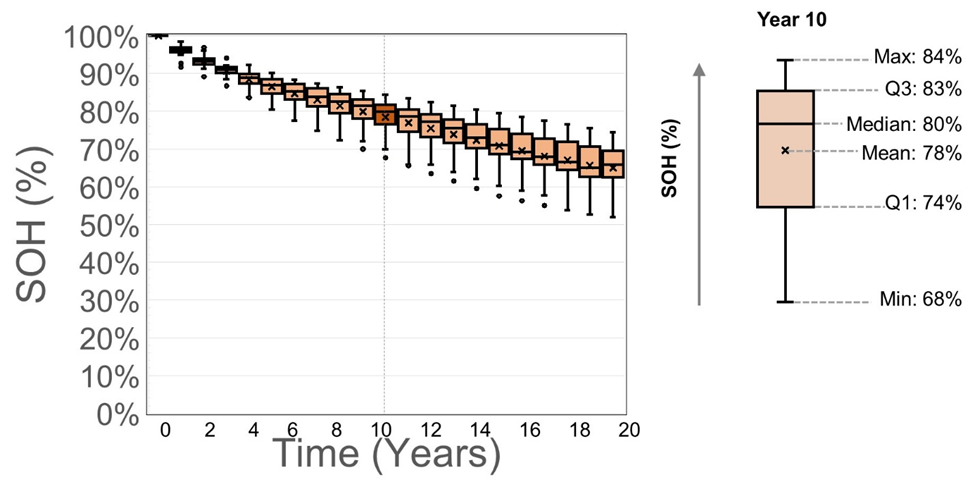
Yet the project’s actual cycling pattern placed different demands on the cells than a generic throughput model assumed. The guarantee covered the total energy. It did not cover the operational stresses that real-world cycling behaviour and system conditions impose over time.
The guarantee was real. The gap between what it covered and what the project actually needed turned out to be real too.
The estimation problem: why degradation only tells part of the story
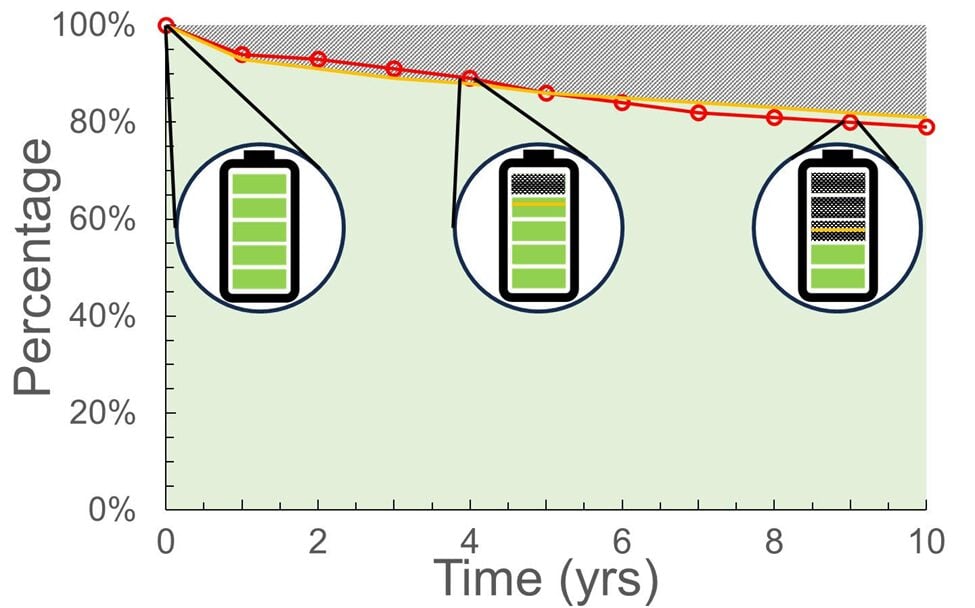
Suppliers typically build degradation models using accelerated laboratory testing: exposing cells to elevated temperatures and extreme conditions to simulate years of field wear within a much shorter timeframe. Temperature and charge/discharge rate, known as C-rate, govern this degradation process — and they reinforce each other.
Higher C-rates generate more heat; heat accelerates cell ageing. Suppliers incorporate conservative margins into their projections to protect against liquidated damage exposure.