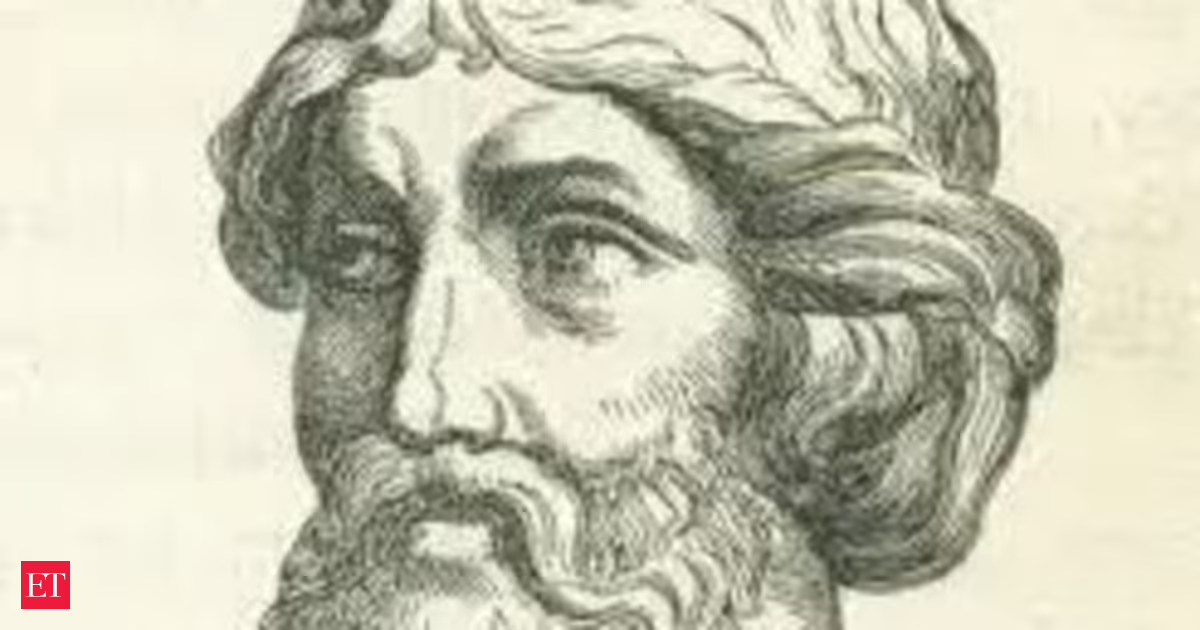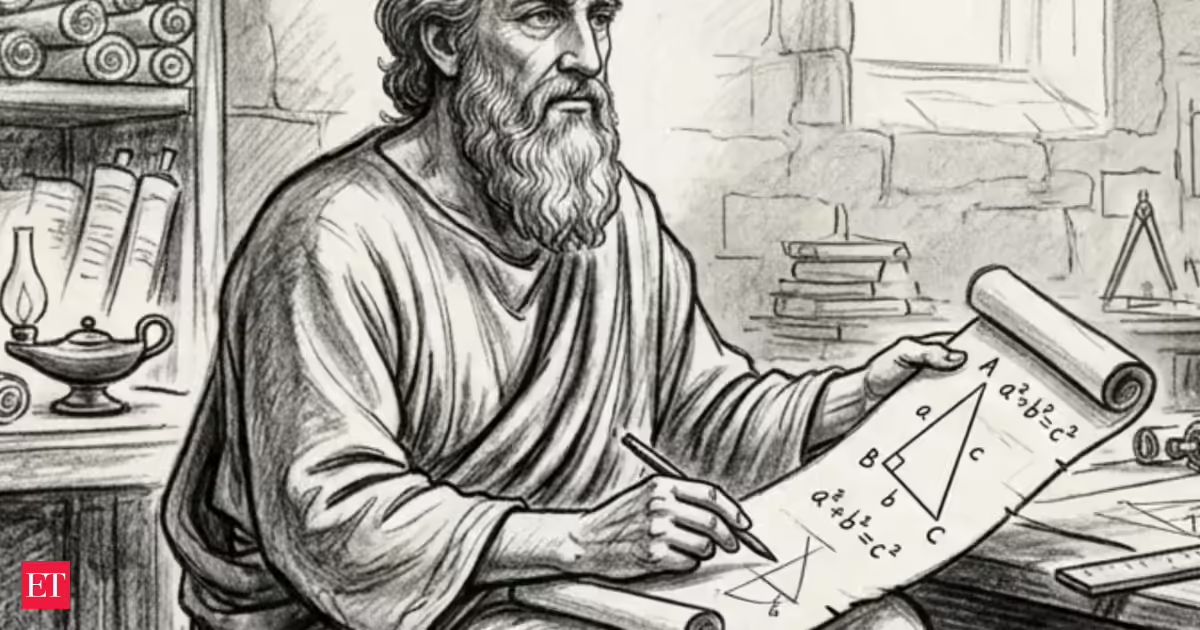
Human history is filled with remarkable advances in science, philosophy, and civilization. Yet despite centuries of progress, conflict, cruelty, and violence continue to shape societies across the world. More than 2,500 years ago, one philosopher offered a powerful observation about the connection between how humans treat animals and how they treat one another.His words remain strikingly relevant today, touching on ethics, compassion, peace, and the consequences of our actions. The quote serves as both a moral challenge and a reflection on the nature of humanity itself.Quote of the day by Pythagoras: “As long as Man continues to be the ruthless destroyer of lower living beings, he will never know health or peace. For as long as men massacre animals, they will kill each other. Indeed, he who sows the seed of murder and pain cannot reap joy and love.”Who was Pythagoras?Pythagoras (c. 570-495 BCE) is best known as the Greek mathematician behind the famous Pythagorean Theorem, a foundational principle in geometry. However, reducing him to mathematics alone would overlook the extraordinary breadth of his influence.Born on the Greek island of Samos, Pythagoras was a philosopher, mystic, teacher, and founder of a religious-philosophical movement known as Pythagoreanism. His followers viewed mathematics not merely as a practical tool but as a pathway to understanding the universe itself.Pythagoras believed that numbers governed the natural order of existence. He taught that harmony, balance, and proportion were fundamental principles underlying reality. His ideas influenced later philosophers, including Plato and Aristotle, helping shape the foundations of Western philosophy.Beyond mathematics and philosophy, Pythagoras advocated a lifestyle rooted in self-discipline, moderation, spiritual growth, and respect for all living beings. Historical accounts suggest that he encouraged vegetarianism and promoted the belief that animals deserved moral consideration.For Pythagoras, compassion was not simply a virtue, it was an essential ingredient for creating a harmonious society.Meaning behind Pythagoras’ quoteAt first glance, Pythagoras' statement appears to be a commentary on the treatment of animals. However, its deeper meaning extends far beyond dietary choices or animal welfare. It is ultimately a reflection on the relationship between violence, compassion, and the human spirit.Pythagoras believed that cruelty is not an isolated act. Every act of unnecessary harm shapes the character of the person committing it. When individuals become comfortable with suffering, whether directed at animals or humans, they risk dulling their capacity for empathy. In this sense, violence becomes a habit of mind rather than a single action.The quote suggests that peace is not merely the absence of war. True peace begins with how people treat the vulnerable and powerless. A society that normalizes cruelty in one area may find it difficult to cultivate kindness, justice, and respect in others.The phrase, “he who sows the seed of murder and pain cannot reap joy and love,” draws upon the timeless principle of cause and effect. Just as a farmer cannot plant thorns and expect roses, individuals and societies cannot continuously nurture violence and expect harmony as the result.Why this quote still matters todayIn an age marked by armed conflicts, environmental challenges, and debates about humanity's relationship with nature, Pythagoras' words remain surprisingly relevant.The quote encourages people to think about:The ethical consequences of their actions.The connection between compassion and social harmony.The importance of respecting all forms of life.The role of empathy in building peaceful communities.The long-term effects of cruelty, whether individual or collective.Regardless of one's views on animal rights or vegetarianism, the broader message remains powerful: societies flourish when compassion outweighs violence.
Quote of the day by Pythagoras: ‘As long as Man continues to be the ruthless destroyer of lower living beings, he will…’ – Greek philosopher on compassion, peace, and humanity
Over 2,500 years ago, philosopher Pythagoras observed a profound link between how humans treat animals and their own capacity for peace and compassion. His words highlight that cruelty towards any living being cultivates a mindset that inevitably leads to violence and suffering among humans, emphasizing the interconnectedness of all life.
574 words~3 min read