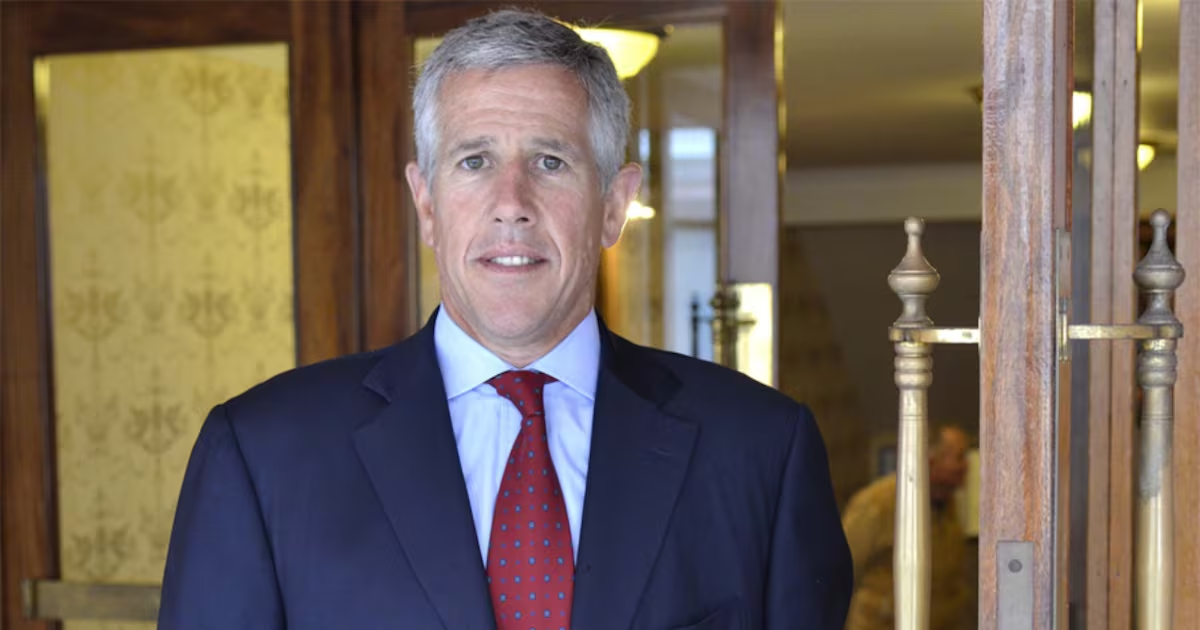
Ninety One grew assets under management (AUM) by almost a third in the 2026 financial year, boosted by the inclusion of £18.3bn of AUM under the Sanlam transaction.The group said on Wednesday that AUM rose 31% to £171.8bn in the year to end-March.The increase was due to net inflows of £2.8bn and the Sanlam take-on of £18.3bn from the transfers to Ninety One of the Sanlam Investments UK active asset management business and Sanlam Investment Management’s active asset management business in South Africa. In addition, there was a positive market and foreign exchange impact of £19.9bn. The transaction with Sanlam, originally announced in November 2024, was completed during the year with the greenlight from South African competition authorities. This followed the approval by the UK authorities in June last year.The South African transaction involved, among other things, the acquisition by Ninety One Limited of all shares in Sanlam Investment Management and the creation of the initial 15-year strategic relationship between Ninety One and the Sanlam Group. Adjusted operating profit was 12% higher at £211.3bn and HEPS amounted to 17.5 pence from 17.2p before. Adjusted EPS was up 12% to 17.4p. Ninety One said this measure is calculated on the after-tax adjusted operating profit divided by the number of shares in issue at the end of the year, as management believes this is a reliable measure of operating performance.“Due to the significant number of shares issued in relation to the Sanlam transaction, adjusted EPS for the current year has been amended by weighting the shares issued to Sanlam. This should be a one-off calculation adjustment for the Sanlam transaction,” it said.A final dividend of 7.4p per share was declared, taking the total dividend for the year to 13.4p, up 10% from the previous year.“Ninety One is a resilient and robust business with positive momentum,” said CEO Hendrik du Toit.“The demand recovery for emerging markets is visible and our offering competitive. We are in a stronger position than a year ago.”“Over the past year we pursued and established several significant partnerships. We are committed to cost and operating discipline, and our focus remains on investment performance and client service,” he said.Ninety One said equities were the main driver of net inflows, particularly into global strategies in the first half and natural resources in the second half. This was followed by fixed income net inflows, driven primarily by blended strategies throughout the year, though somewhat offset by net outflows from emerging market corporate strategies. “There were outflows from some South African multi-asset strategies across the year. Alternatives generated net inflows, particularly in developed market credit strategies. The South African fund platform saw net inflows during the year,” the group said.Asia Pacific was the largest contributor to net inflows, mainly from global equities in the first half and gold, natural resources and local currency fixed-income strategies in the second half. Europe’s net inflows were driven by natural resources and emerging market equities and hard currency and blended fixed-income strategies, the group said. The Americas’ net inflows were driven by global and Asian equities and natural resources“In spite of strong net inflows into the fund platform and fixed income, South African multi-asset and equities strategies drove net outflows in Africa. The UK outflows reflected some large new client wins during the year being outweighed by clients rebalancing their portfolios, with almost all still remaining clients in the UK,” it added.With Kabelo Kumalo
Ninety One’s AUM jump by almost a third
Sanlam deal, net inflows and positive market and forex impact boosts Ninety One's AUM
TL;DRAI
Ninety One boosted AUM to £171.8bn (+31%) via Sanlam deal (£18.3bn) and net inflows (£2.8bn). Wealth management consolidation signals accelerating M&A and rising compliance complexity; IT leaders should monitor integration playbooks for data governance and regulatory platforms.
567 words~3 min read