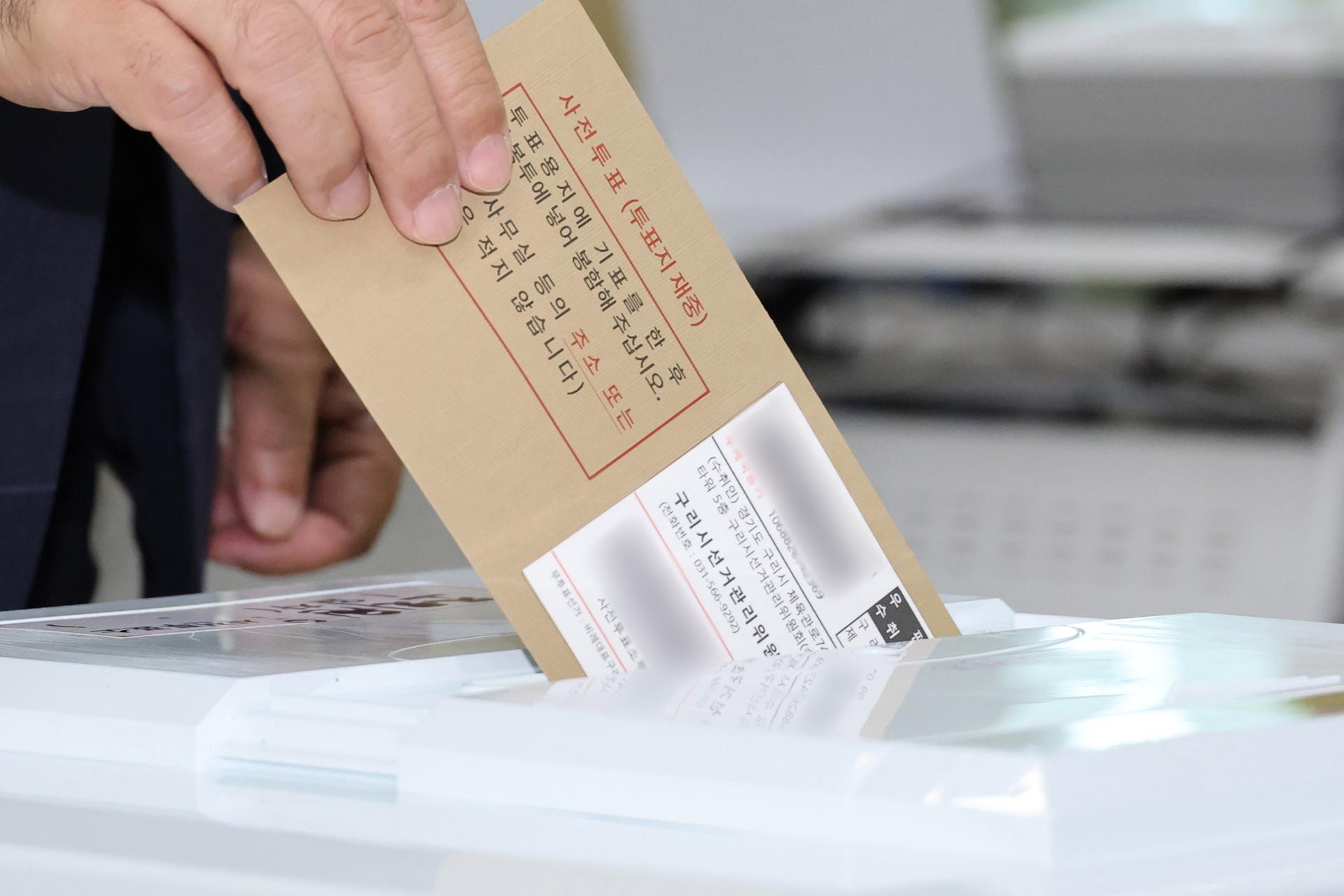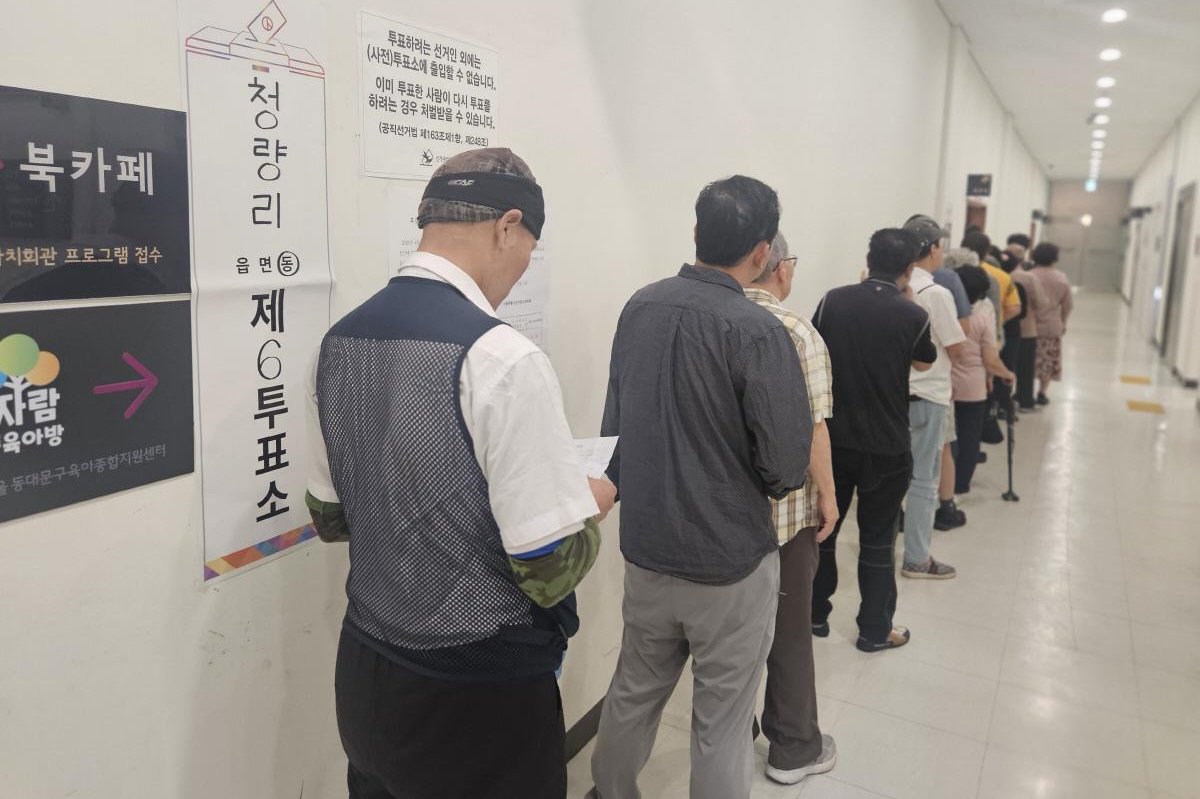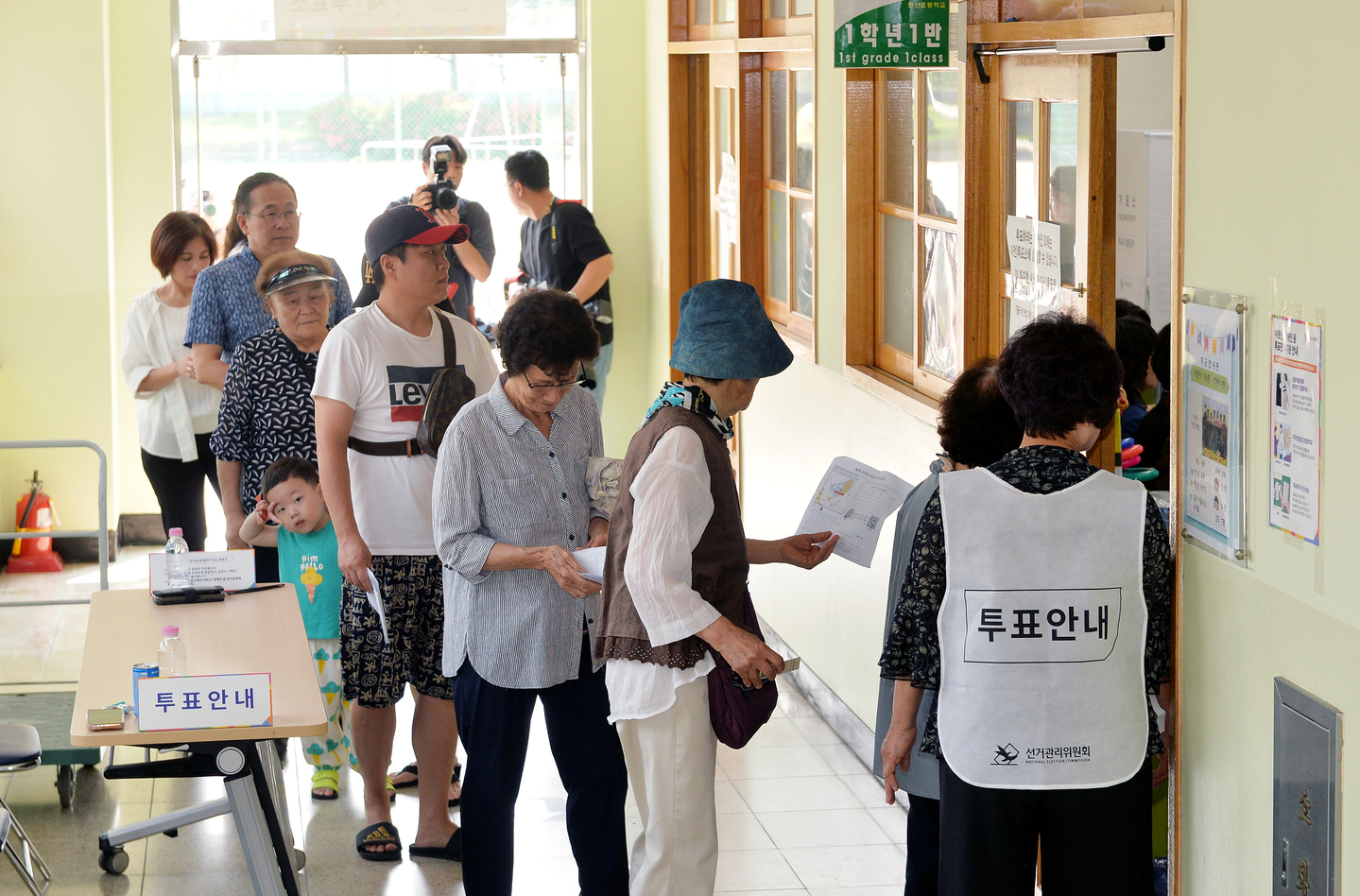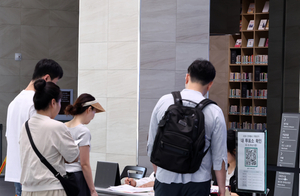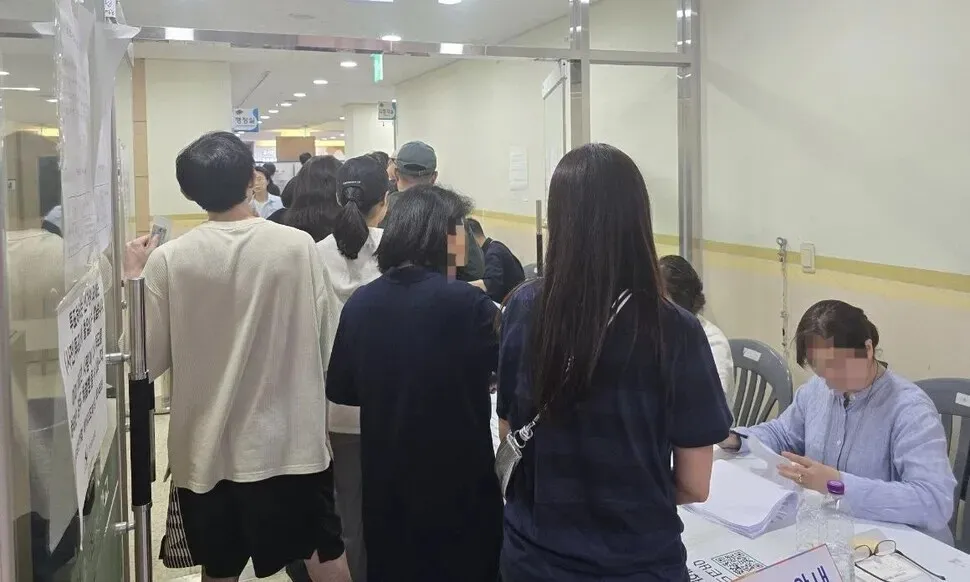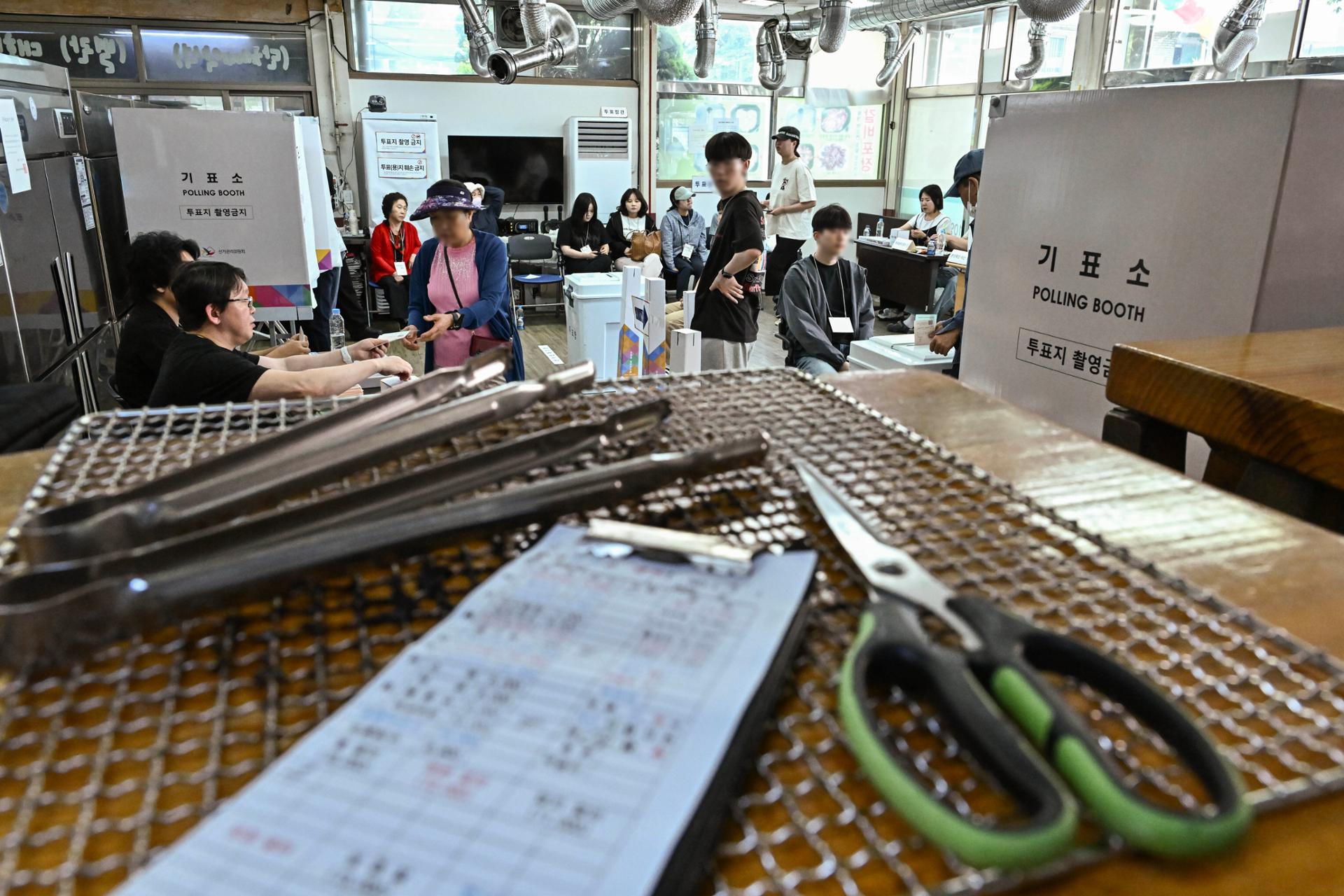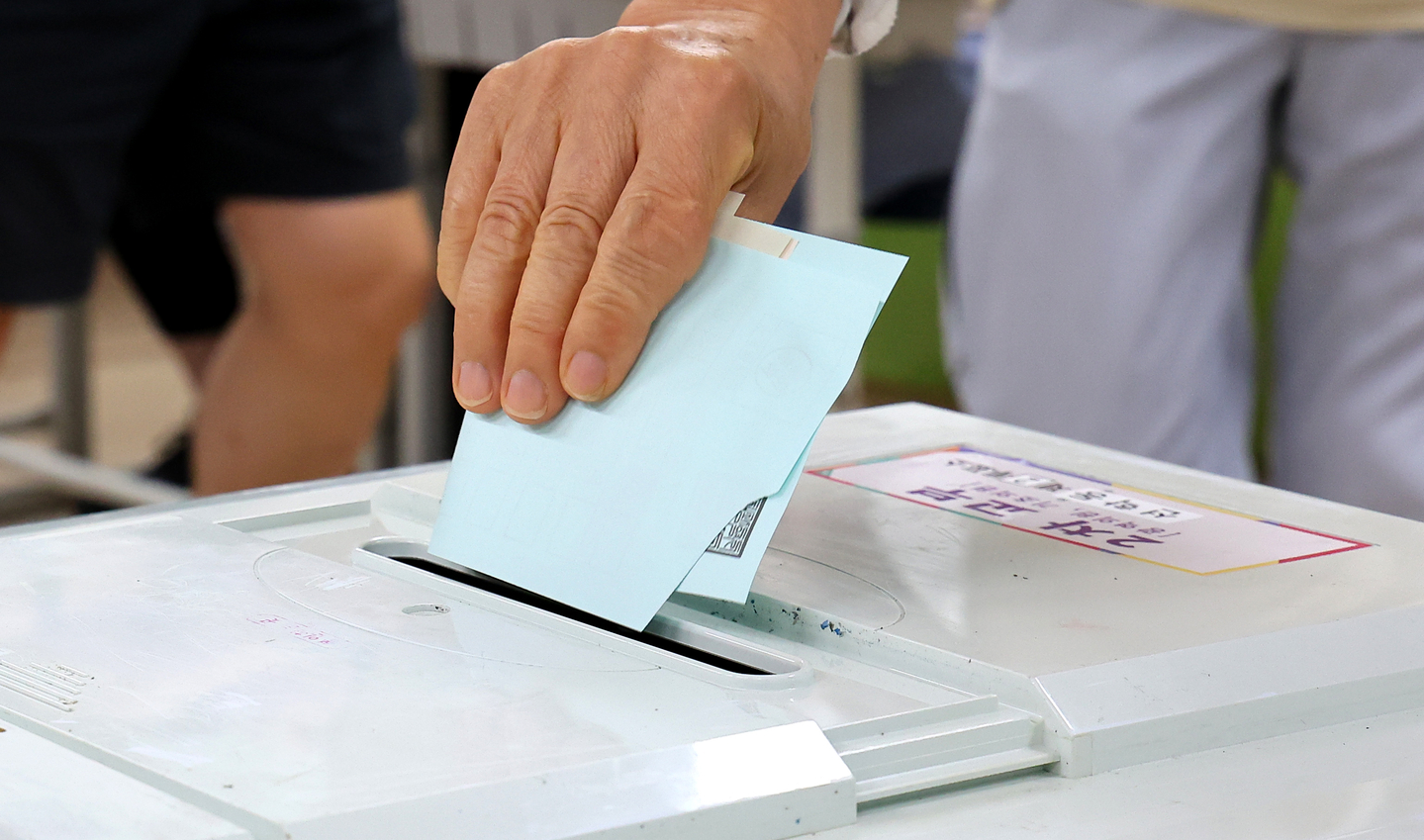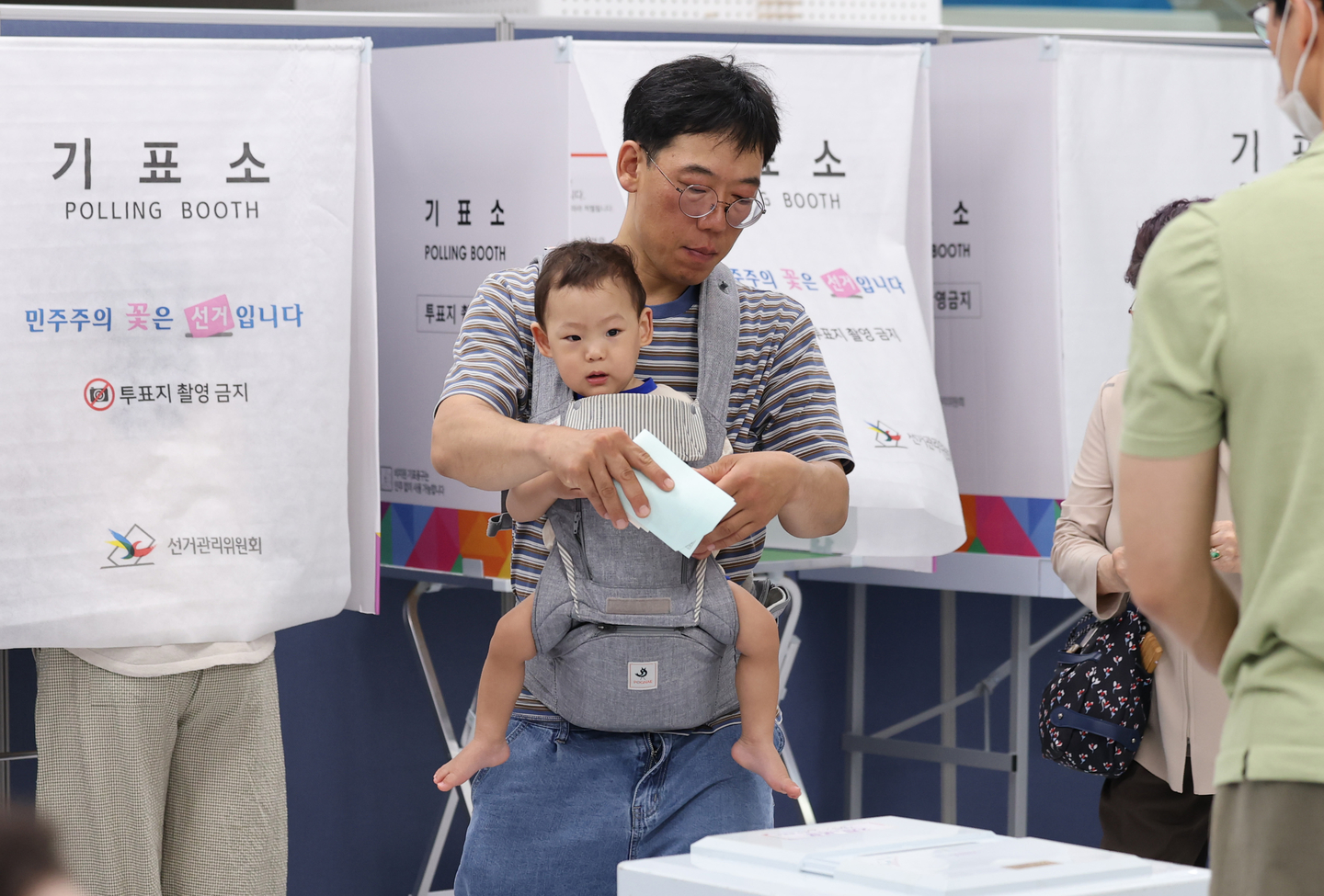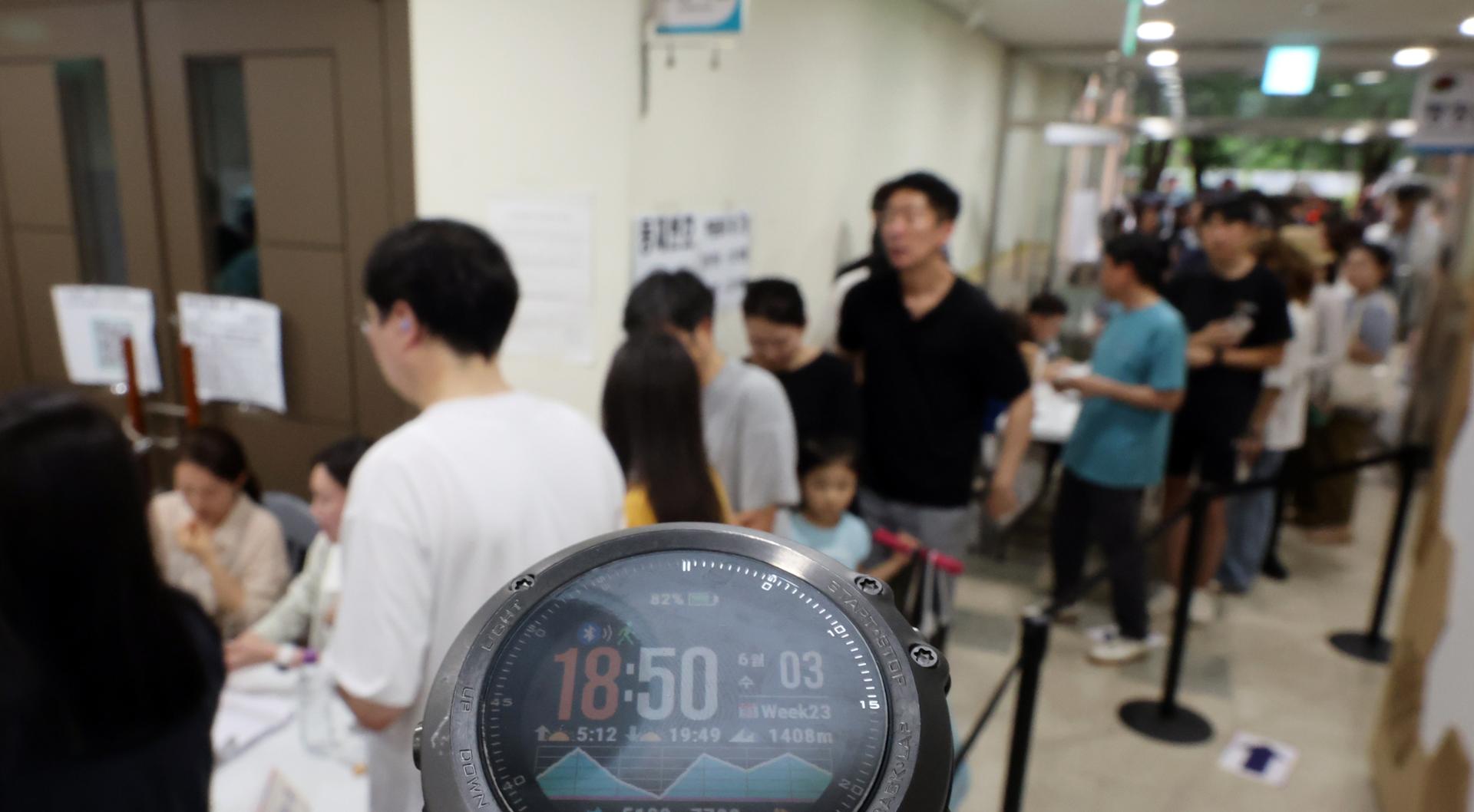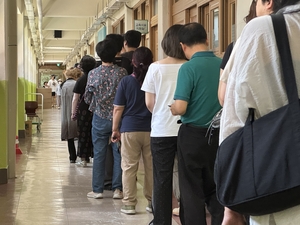
Martial law, party rivalry and frustration with national politics influence choices in races meant to decide local leadership Voters wait in line at a passage inside Seongsan Elementary School in Mapo-gu, western Seoul on Wednesday to cast their votes. (Cha Min-jung/The Korea Herald) Before the early summer heat had fully set in, residents in light clothing began lining up inside an elementary school in Seocho, southern Seoul, early Wednesday morning. Some arrived holding their family members’ hands, while others waited quietly with their arms folded.It marked the start of a long Election Day, with South Koreans casting up to seven ballots to fill local posts ranging from mayors and governors to education superintendents and local council members. Final results were expected to become clear around midnight.About 23.5 percent of eligible voters had already cast their ballots during early voting on Friday and Saturday, the highest turnout since early voting was introduced in 2014. Still, many voters turned up at polling stations on Election Day.Although the election was meant to decide local leadership, many voters cited party affiliation and national politics as key factors in their choices.Their responses reflected criticism that the election had become dominated by partisan confrontation, with local policy debates often taking a back seat. Residents of the Banpo Xi apartment complex in Seocho-gu, southern Seoul, wait to cast their votes at a polling station inside the complex on Wednesday. (Hwang Sun-jun/The Korea Herald) Kwon Ye-ji, a woman in her early 20s at a polling station in Wonchon Middle School in Seocho, said she considered national issues such as real estate and taxes, "which I believe will shape Korea’s future.”Similar views were heard from voters with different political leanings, with many placing national issues above assessments of incumbent local administrations or specific local projects.“After the martial law, the country was in chaos, but it has recently begun to settle back into place,” said Lee Dong-hee, a 55-year-old resident of Noryangjin, Dongjak-gu, central Seoul. “I voted to help ensure a firmer process.”Yoon’s failed attempt at martial law, which triggered mass protests and eventually led to his impeachment, has been widely cited as a factor that drew previously disengaged citizens into politics. It continues to shape public sentiment under President Lee Jae Myung's administration.“I used to not care about politics, thinking it didn’t matter either way,” said Jang So-ra, a 43-year-old Noryangjin resident who visited the polling station with her husband and daughter. “But after the martial law situation, I started thinking more seriously about what a better choice would be and reading policies more closely.”As in previous presidential and parliamentary elections, some voters appeared to signal their political leanings through their clothing.Blue, associated with the Democratic Party of Korea, was worn by supporters of the ruling bloc, while red, associated with the People Power Party, was sported by voters critical of the administration. A woman takes a photo of election stamps on her hand in Mapo-gu, western Seoul, on Wednesday, a popular way of showing that they have voted in South Korea. (Cha Min-jung/The Korea Herald) Even as national politics loomed large, some voters said local issues and administrative performance still mattered.“In the case of the Seoul mayoral race, I especially cared about newly built apartments and the renovation of old apartments,” a woman in her 50s surnamed Park said at a polling station in Seocho, where redevelopment has been a major issue.Park also recalled the records of previous district mayors, saying their work affected her decision. “I saw how they made life easier overall,” she said.Foreign national voters were also seen at polling stations.In Korea, foreign nationals are eligible to vote in local elections if they have held permanent residency status for more than three years. However, many still face barriers in accessing information about candidates and policies, while few campaign pledges directly target foreign residents.“It feels strange. In local elections, I don’t know much,” said Peter Davies, 51, from the United Kingdom, who said he even cast a blank ballot in the vote for superintendent of education. “I’m not complaining, but I don’t feel connected to this community. No one wants to talk to me.”“It’s hard to understand the policies,” he added. “You need to be fluent in Korean to engage properly. I wasn’t informed enough.”The number of eligible foreign national voters reached a record 151,532 for this year’s local elections, but turnout among foreign voters has remained low. In the 2022 local elections, their turnout stood at around 13 percent, less than a quarter of the turnout among Korean voters.
At local polls, national politics weighs heavily on voters
Before the early summer heat had fully set in, residents in light clothing began lining up inside an elementary school in Seocho, southern Seoul, early Wednesda
757 words~3 min read