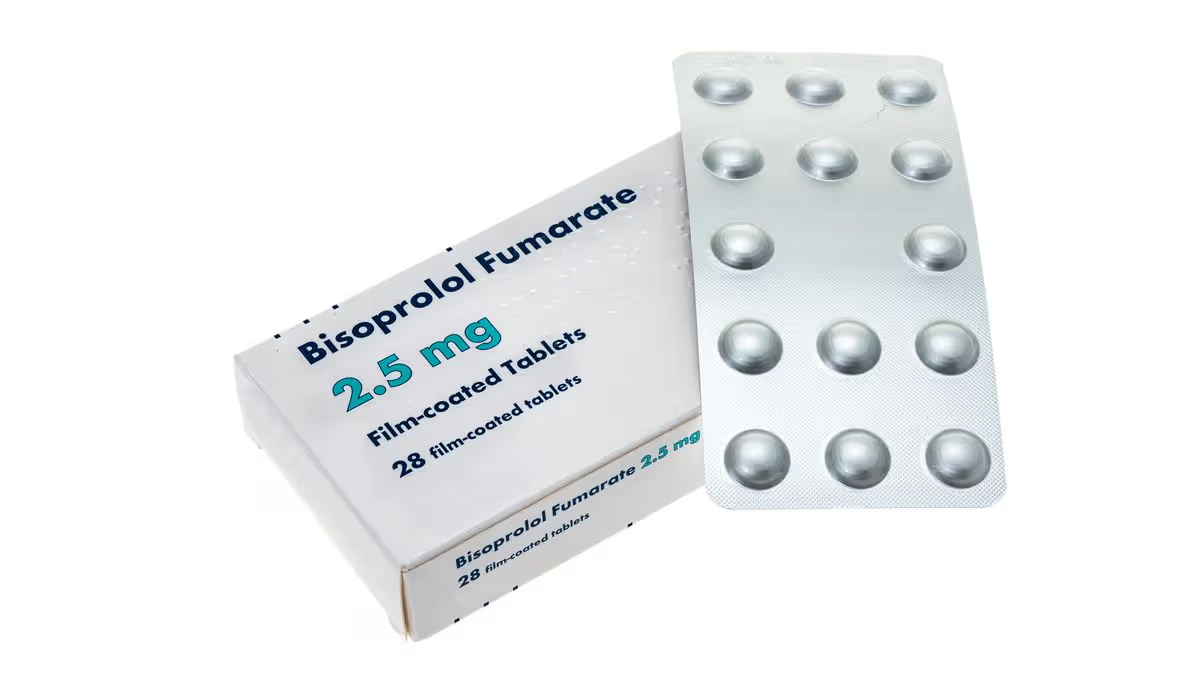
NewsHealthNHSNHS has shared significant side effects that people taking the beta-blocker Bisoprolol should watch for07:21, 03 Jun 2026The NHS has warned those taking a widely-used medication prescribed for heart and circulation conditions of some serious side-effects. Millions of people throughout the UK rely on beta-blockers to treat heart and circulatory diseases.More than 50 million prescriptions for the drug are issued every year, supporting patients with everything from blood pressure and heart rate issues to conditions affecting the brain and nervous system. The beta-blocker most commonly chosen by doctors is Bisoprolol which, according to NHS England, ranks as the seventh most prescribed medication in the country.Figures for 2024-25 reveal it was prescribed 32 million times throughout the year in England alone. The NHS states: "If you have high blood pressure, taking bisoprolol helps prevent future heart disease, heart attacks and strokes."Bisoprolol is also used to prevent chest pain caused by angina. It's also used to treat atrial fibrillation and other conditions that cause an irregular heartbeat. It works by slowing down your heart rate and making it easier for your heart to pump blood around your body."However, as with many medicines, there are important things that anyone taking the drug needs to be aware of. Those starting the medication for the first time are advised to take it at bedtime, as the initial dose can cause dizziness.There are other common side effects which affect more than one in 100 people who take the medication. The NHS advises these are "usually mild and do not last for long". They include:feeling dizzy or sickheadachescold hands or feetconstipationdiarrhoeaHowever there are some side effects it is vital to be aware of as they could mean a trip to the doctor or even dialling 999. The NHS advises: "It happens rarely, but some people have serious side effects when taking bisoprolol. Call a doctor or call 111 now if:you have shortness of breath with a cough that gets worse when you exercise (like walking up stairs), swollen ankles or legs, or an irregular heartbeat – these are signs of heart problemsthe whites of your eyes turn yellow, or your skin turns yellow although this may be less obvious on brown or black skin – these can be signs of liver problemsIt continued: "Call 999 now if:you have chest pain – this can be a sign of heart problemsyou have shortness of breath, wheezing and tightening of the chest – these can be signs of lung problems"You should also dial 999 if you have a serious allergic reaction to the medication - also known as anaphylaxis. It says you should "call 999 now" if:your lips, mouth, throat or tongue suddenly become swollenyou're breathing very fast or struggling to breathe (you may become very wheezy or feel like you're choking or gasping for air)your throat feels tight or you're struggling to swallowyour skin, tongue or lips turn blue, grey or pale (if you have black or brown skin, this may be easier to see on the palms of your hands or soles of your feet)you suddenly become very confused, drowsy or dizzysomeone faints and cannot be woken upa child is limp, floppy or not responding like they normally do (their head may fall to the side, backwards or forwards, or they may find it difficult to lift their head or focus on your face)Article continues belowIt says: "You or the person who's unwell may also have a rash that's swollen, raised, itchy, blistered or peeling. These can be signs of a serious allergic reaction and may need immediate treatment in hospital."It adds: "Do not drive yourself to A&E. The person you speak to at 999 will give you advice about what to do."Choose Daily Mirror as a 'Preferred Source' on Google News for quick access to the news you value.NHSHeart attackHeart diseaseBlood pressureFitness And HealthMen's HealthGood HealthHealthy LifestyleHealthy eatingCardiac HealthHealthy LifeHealthHealthy Living
Bisoprolol side effects every user must know and when to dial 999
NHS has shared significant side effects that people taking the beta-blocker Bisoprolol should watch for
644 words~3 min read