In briefThe potential for new tariffs follows an investigation by the office of the US trade representative.Continued unpredictability is an issue for economies including Australia, an expert says.Australia is among 60 countries potentially facing new American tariffs after the Trump administration accused them of failing to block goods made with "forced labour" — opening another front in the United States' ongoing global trade war.The US trade representative (USTR), Jamieson Greer, announced on Wednesday that his office had completed investigations into 60 economies and found their failure to act was "unreasonable" and harmful to American commerce."The failure of our most important trading partners to address the importation of goods made with forced labour is unacceptable," Greer said in a statement. "This creates a dynamic where American workers are forced to compete globally on an unlevel playing field."Proposed tariffs of up to 12.5 per cent on imports from the named countries, including Australia, will now go to a public comment period before any final decision is made.News that makes senseYour trusted source for staying up-to-date with the world around you. Get free daily news updates and analysis, straight to your inbox.What has happened?The USTR has used a legal mechanism called Section 301 of the Trade Act of 1974 to investigate whether dozens of countries were doing enough to stop goods made with forced labour from entering their markets. On Wednesday, it concluded that none of the 60 investigated countries passed the test.That finding is important because it effectively gives the US a legal basis to impose new tariffs.The proposed rates — 10 per cent for some countries at 12.5 per cent for others — will be subject to public submissions until 6 July, with a hearing scheduled for 7 July.Source: SBS NewsThe announcement comes as the Trump administration scrambles to rebuild its tariff agenda after the US Supreme Court struck down Trump's tariffs in February.Following that decision, the Trump administration imposed a global 10 per cent temporary tariff that is due to expire on 24 July.Why is Australia named?Australia falls into the larger group of 54 countries the USTR says have no forced labour import ban whatsoever.That puts it alongside China, Vietnam, Japan, the United Kingdom and New Zealand.The findings document accuses Australia of having "failed to impose and effectively enforce a forced labour import prohibition", adding the acts, policies and practices of Australia are "unreasonable and burden or restrict US commerce".That language is used almost identically across every other country on the list.A spokesperson for Australia's Trade Minister Don Farrell pushed back on the characterisation. "Australia has robust, comprehensive and world-leading legislation addressing forced labour and modern slavery," they said."We continue to use every opportunity to advocate that US tariffs imposed on Australia are unwarranted."A separate group of six economies — Canada, Ecuador, the European Union, Indonesia, Mexico and Pakistan — received a slightly different finding. They were alleged to have forced labour import laws in place, but the US said they were not enforcing them effectively enough.They face the lower proposed tariff rate of 10 per cent. Australia would sit in the 12.5 per cent category.Could it affect Australian prices or trade?Experts say the practical impact on Australia is likely to be limited.Hayley Channer, director of economic security at the University of Sydney's United States Studies Centre, said the new tariff would have a "minimal impact" on Australia. "Many businesses — including beef, energy, and critical mineral exporters — are exempt," Channer told SBS News. "The US only accounts for a small percentage of Australia’s goods exports, with around 5 to 6 per cent of our exports going to the US."While any tariff increase is damaging, many Australian businesses already face a 10 per cent or higher tariff and could learn to live with the extra 2.5 per cent."The proposed tariffs come with a range of exemptions, including beef, coffee, certain fruits and vegetables, pharmaceuticals, rare earths and aircraft parts.Channer said the longer-term concern was less about this specific tariff and more about unpredictability. "The bigger problem is the instability of US tariff rates, which makes it difficult for Australian businesses to plan long-term," she said."Regardless of whether you have a Trump presidency or another US leader, tariffs are likely to be an ongoing feature of future US administrations."The best Australia could hope for would be a more stable US tariff rate and a stronger US economic strategy that cooperates with, rather than counteracts, US allies."— With reporting by Reuters and Agence France-Presse news agencies.For the latest from SBS News, download our app and subscribe to our newsletter.
'Australia has failed': US opens door to new tariffs in trade crackdown
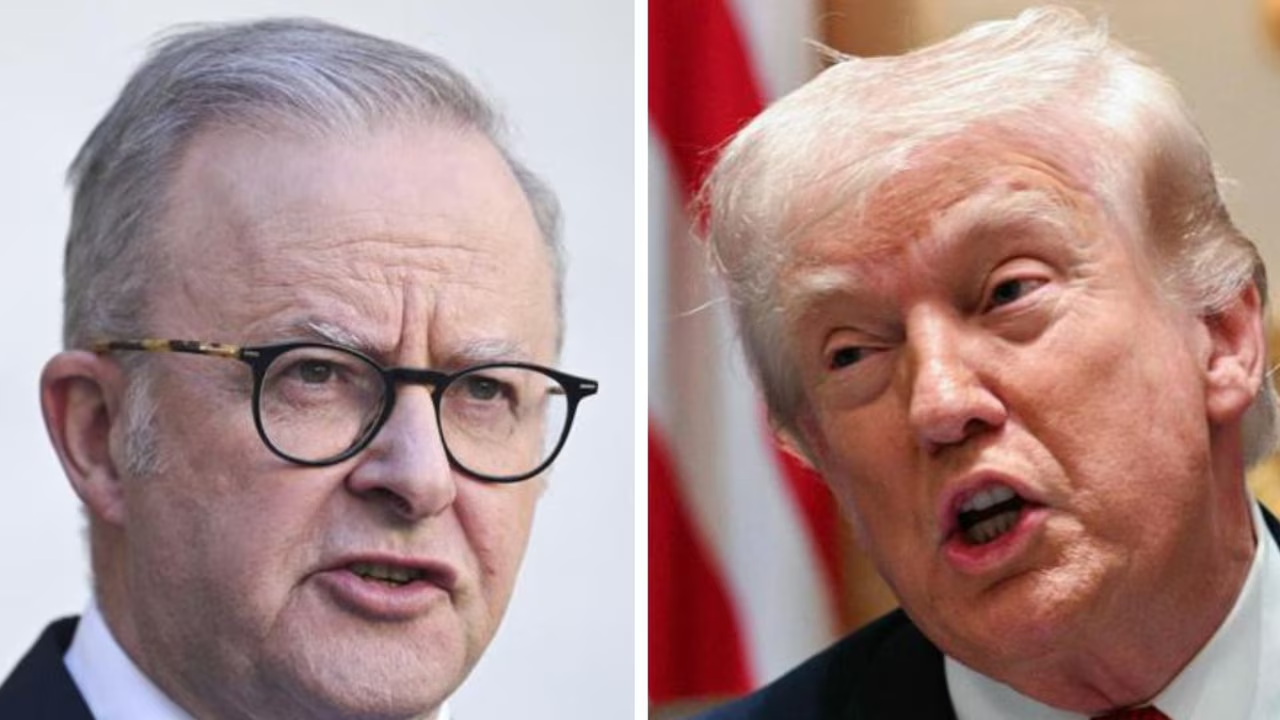
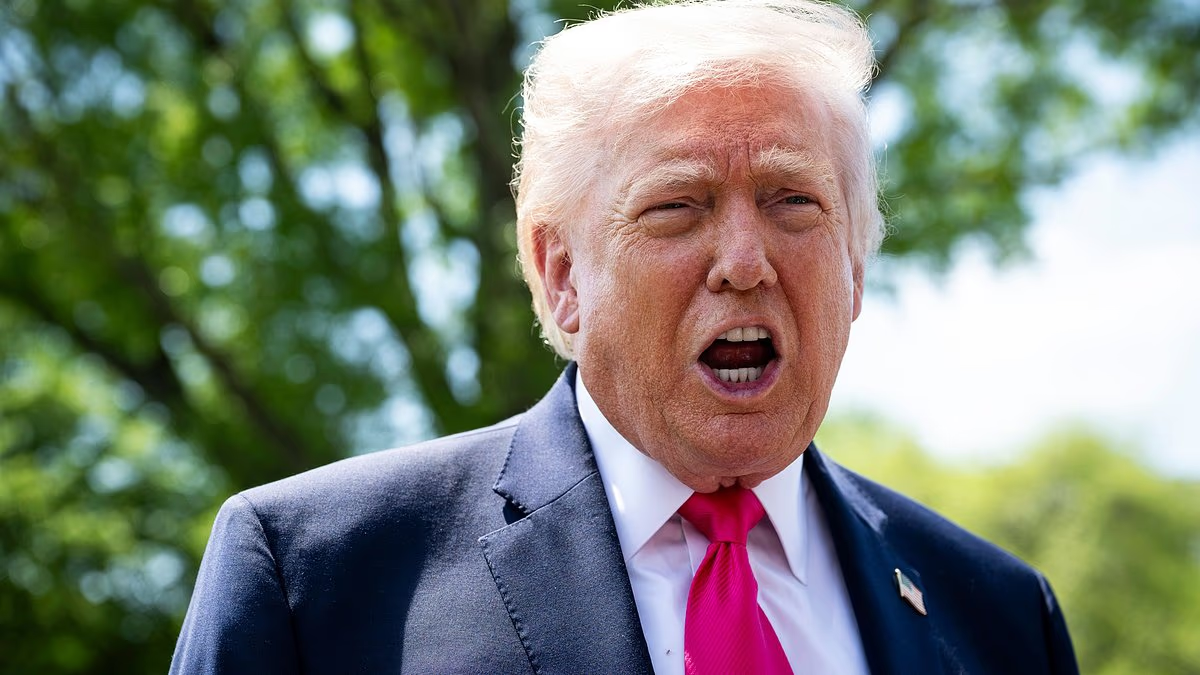
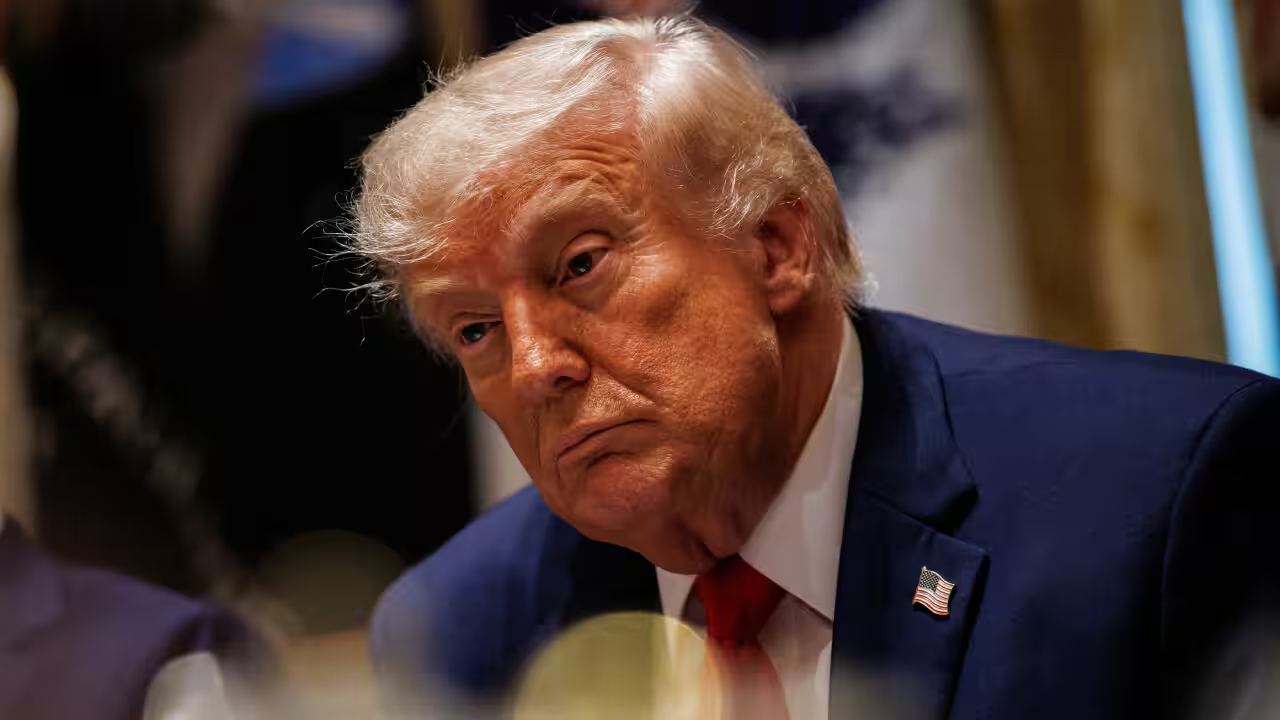
Donald Trump's administration has been scrambling to rebuild it's tariff agenda after a supreme court decision.
758 words~3 min read