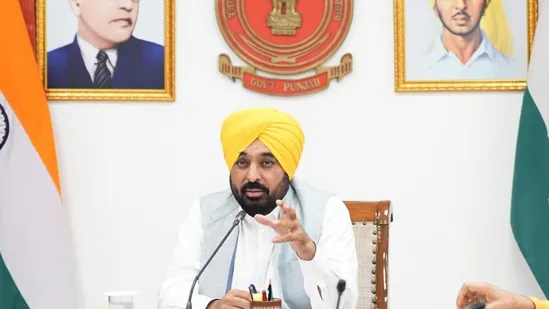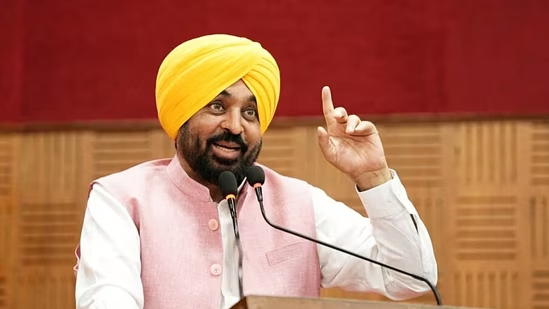
Punjab has witnessed a steady increase in bone, joint and trauma-related health conditions, with orthopaedic care emerging as one of the major components of public healthcare services under the Mukh Mantri Sehat Yojana, according to data released by the State Health Agency (SHA).Punjab Chief Minister Bhagwant Mann in Chandigarh on Tuesday. (@BhagwantMann)Official figures show that more than ₹84 crore has been spent on orthopaedic treatments under the scheme so far. The expenditure covers a range of procedures related to bone, joint and trauma care and reflects both growing demand for surgical interventions and wider access to specialised orthopaedic services in government hospitals.Knee replacements account for highest number of proceduresAccording to the data, knee replacement surgeries account for the largest share of orthopaedic procedures conducted under the scheme. Hip surgeries and fracture fixation procedures involving plates, nails and other implants have also been carried out in large numbers.These interventions are being provided as part of the scheme’s cashless treatment coverage across district hospitals and larger tertiary-care government institutions.The scheme has recorded more than 45 lakh registrations across Punjab. Ludhiana leads in beneficiary registrations with over 4.8 lakh enrolments, while Patiala has recorded around 4.1 lakh beneficiaries.Rise linked to ageing population and mobility issuesHealth officials said the increase in orthopaedic cases reflects broader public health trends, particularly among the ageing population. Government hospitals are reporting a growing number of patients with degenerative knee and hip conditions, chronic joint pain, mobility limitations and other musculoskeletal disorders.Orthopaedic treatments often require costly implants, surgery, prolonged medical care and rehabilitation, resulting in significant financial burdens for patients and their families.Beneficiary recounts treatment experienceOne of the beneficiaries of the scheme, Gulshan Taneja, 43, a resident of Khera Gajju near Rajpura, underwent treatment after sustaining injuries in a workplace accident.According to the release, Taneja began experiencing persistent knee pain, swelling, stiffness and difficulty walking after the accident. He was admitted to Rajindra Hospital in Patiala on May 6 and underwent treatment for a ligament tear the following day. Doctors recorded severe joint pain, instability, swelling and difficulty bearing weight.The treatment, valued at ₹86,750, was provided entirely cashlessly under the Mukh Mantri Sehat Yojana. He was discharged on May 12.Taneja said, “I am recovering now and it’s thanks to the Sehat card that I did not have to pay any money for my treatment. The Mukh Mantri Sehat Yojana is helping us reduce out-of-pocket expenditure by making such treatments accessible.”Minister cites growing orthopaedic burdenPunjab Health Minister Dr Balbir Singh said, “The burden of orthopaedic disorders has been on an exponential rise, and thus, has brought to light the indispensable need to buttress accessible and affordable operative care across the state of Punjab.”He added that the government is providing cashless knee, hip and trauma treatments to thousands of patients under the scheme, helping reduce financial hardship while improving mobility, recovery and overall quality of life.“The expenditure of over ₹84 crore in around 4 months under the scheme represents not only increased healthcare utilisation but also a broader shift towards restoring mobility, reducing disability and improving quality of life for patients across Punjab,” he said.
Orthopaedic treatments under Punjab’s Mukh Mantri Sehat Yojana cross ₹84 crore as demand for bone and joint care rises
Punjab has spent over ₹84 crore on orthopaedic, bone, joint and trauma-related treatments under the Mukh Mantri Sehat Yojana, as per State Health Agency data.
TL;DRAI
Punjab's health scheme spent ₹84 crore on orthopaedic treatments, with knee replacements leading as demand surges among an ageing population. Cashless healthcare deployment at scale demonstrates the IT infrastructure investments required to sustain public health systems' digital transformation—a growing market for healthcare technology providers.
514 words~2 min read