The new study, published in the British Journal of Sports Medicine, included 147,374 peopleNeil Shaw Assistant Editor (Money and Lifestyle)06:40, 03 Jun 2026Doing 90 minutes to two hours of weight training per week can slash the risk of an early death, experts say. People who undertake resistance training regularly and keep it up for the long term lower the chance of early death from any cause by 13% – and by 19% when it comes to conditions such as heart disease and stroke, according to a study.Those who lift weights or use things like resistance bands or bodyweight exercises also have a 27% lower risk of dying from neurological disease, even when other activity such as aerobic exercise is taken into account. Researchers said their findings support the need for people to do both aerobic exercise such as cycling, jogging and swimming, and weight-based training.However, they said that doing more than two hours of strength training per week will not lead to extra benefits. Overall, the study found the lowest risks of dying early were seen when people did a decent amount of aerobic exercise and strength training, or when aerobic activity was very high.Current NHS guidelines say adults should aim to do strength activities that work all the major muscle groups (legs, hips, back, abdomen, chest, shoulders and arms) on at least two days per week. They should also do at least 150 minutes of moderate intensity activity a week or 75 minutes of vigorous intensity activity a week.Examples of moderate activity include very brisk walking (4mph or faster), cycling at 10mph-12mph, or badminton. Vigorous activity includes hiking, jogging at 6mph or faster, fast cycling, basketball or tennis.The new study, published in the British Journal of Sports Medicine, included 147,374 people (31,540 men and 115,834 women) followed for up to 30 years. People were quizzed every two years on the amount of time they spent on strength training and aerobic exercise.Aerobic exercise in the study included brisk walking, running, jogging, swimming, cycling, tennis and squash, while strength training included exercises using weights or body weight, such as dumbbell work, squats and lunges. The lowest risks were observed among those people with both high aerobic activity and strength training levels, with risks dropping by up to 58% among the most active.Article continues belowTom Burton, strategic lead for health and wellbeing policy at Sport England, said: “Strength-based physical activity is a powerful tool, particularly in support of healthy ageing – helping prevent or delay poor health, keeping us mobile and independent and easing pressures on overstretched health and care services.“Sport England research has found that active lifestyles prevent 3.3 million cases of chronic illness a year, as well as saving £8 billion a year for healthcare services. Our mission is to make physical activity accessible to all – it’s the key to healthier, wealthier and happier communities.”
90-minutes of one exercise cuts early death risk by 13 per cent
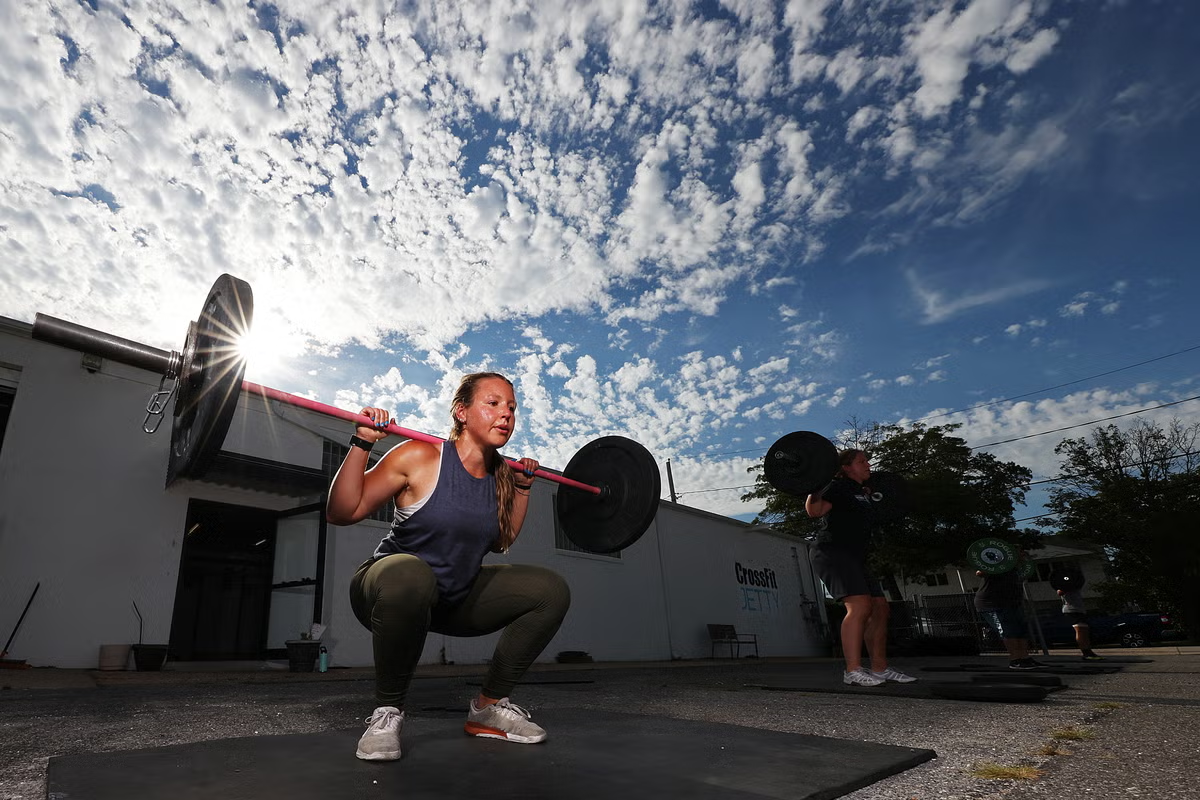
The new study, published in the British Journal of Sports Medicine, included 147,374 people
TL;DRAI
90 minutes weekly strength training reduces early death 13%, cardiovascular death 19%, neurological disease death 27% across 147,374 people over 30 years, plateauing at two hours. Signals growing business case for enterprise fitness programs as markers of executive health and sustained cognitive performance in knowledge work.
476 words~2 min read