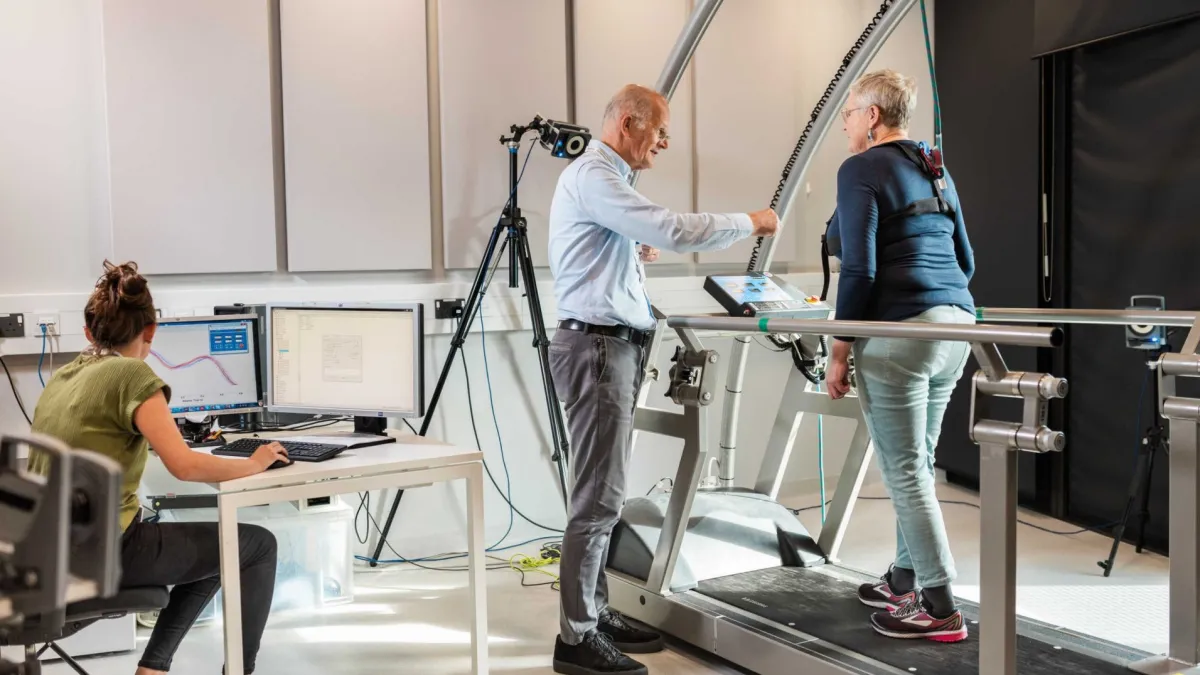
I’m standing in a white, entirely windowless room. I’m surrounded by cameras, and on the large screen in front of me an animated image of my skeleton appears. I follow instructions to flex each finger, wiggle my hips, and perform some other embarrassing moves, only for my animated skeleton counterpart to match my movements perfectly in real time.
It feels like I’ve entered The Truman Show, but I’m with a group of Imperial College scientists to have my walking speed and style analysed. The team are leading research showing that how you walk can reveal vital information about your future health – and even your biological age.
Our walking styles are as different and specific to us as our fingerprints, explains research engineer Dr Matthew Banger. “You walk the way you do for lots of different reasons, and people will recognise you because of how you walk,” he says. “Some people are heavier-footed. Some people have a springy gait. You could probably look at a silhouette of someone moving and recognise them without their other features.”
Shorts
Often, he says, in conditions such as dementia or Parkinson’s, “one of the first things that people report is walking or balance changes. A partner, or someone who knows you well, might notice you’re walking differently up to two years before other symptoms appear.”