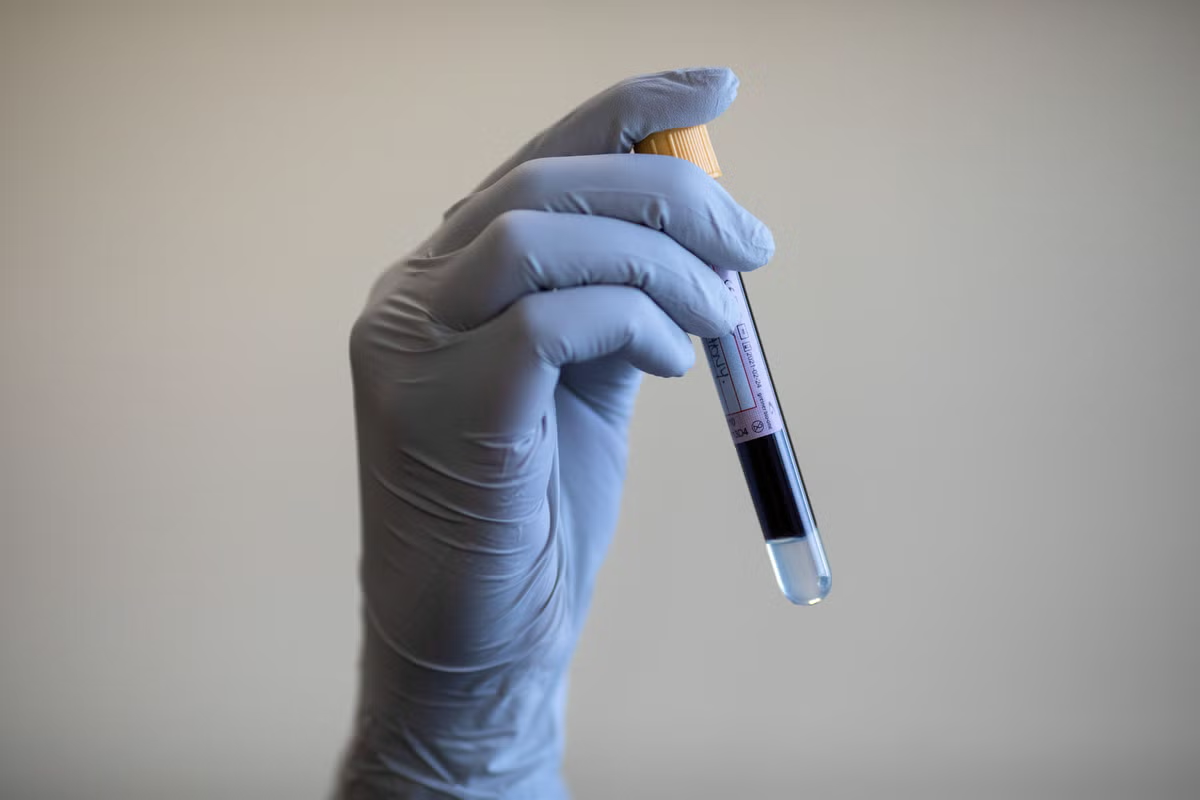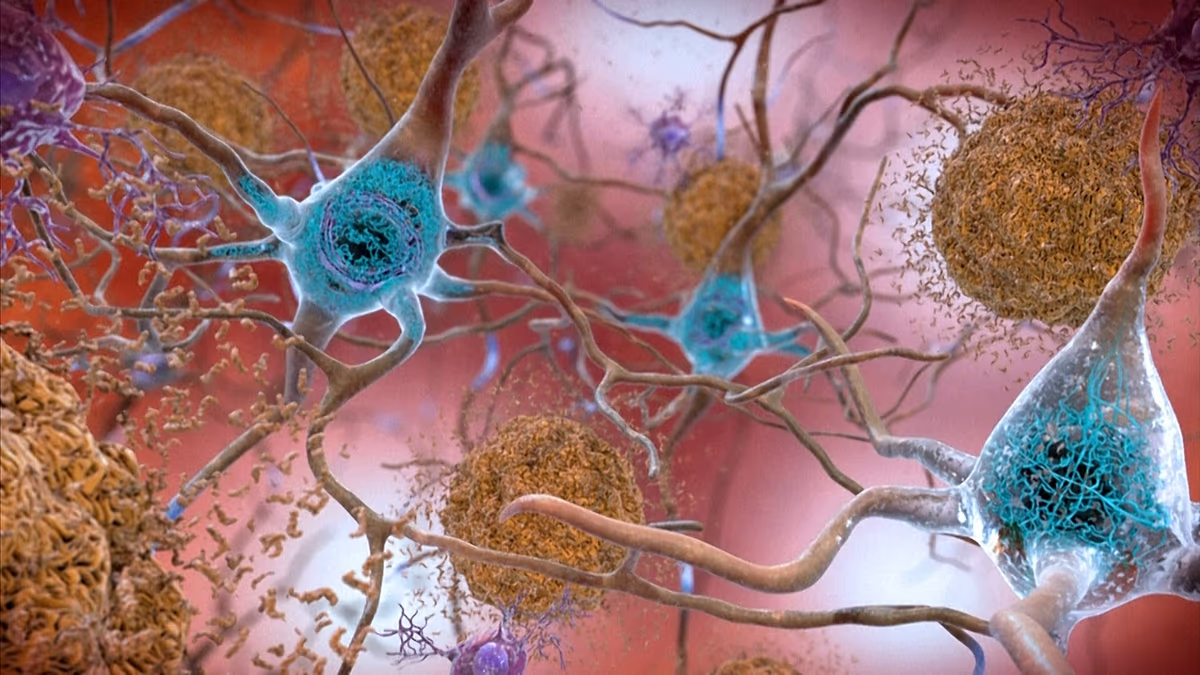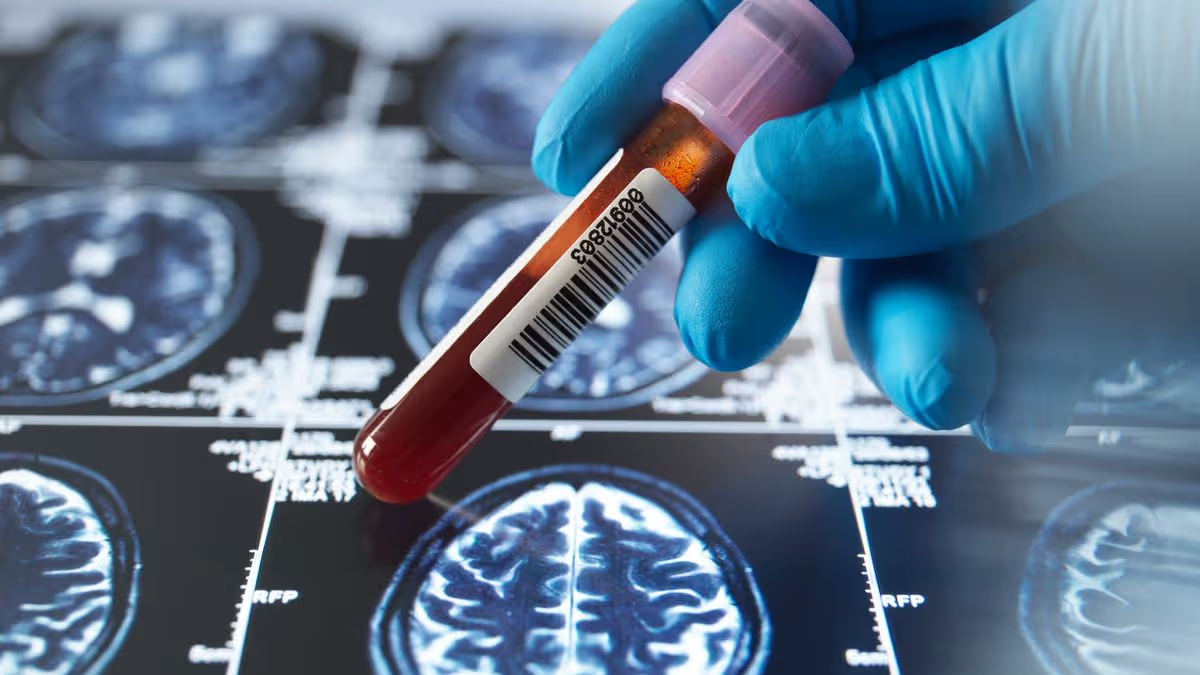
This sensor could also predict the likelihood of developing Parkinson's disease08:19, 31 May 2026An experimental blood test could detect a devastating disease almost two decades before a typical diagnosis. A new report has found that this test could predict Alzheimer’s disease 17 years earlier than usual.The findings, published in the Journal of Physical Chemistry B, also suggest that this test could detect Parkinson’s disease early. As reported by Study Finds, this report focused on the use of a new sensor called the immuno-infrared sensor (iRS).This sensor can detect abnormal protein changes in blood linked to Alzheimer’s and Parkinson’s disease, potentially years before symptoms appear. Based on a large population study, it predicted Alzheimer’s disease risk up to 17 years before clinical diagnosis.It works by detecting how brain-linked proteins change shape in blood samples, catching a warning sign that current blood tests miss. However, it is important to note that this test has not been approved for mass use yet and requires further testing.How the sensor worksAlzheimer’s and Parkinson’s disease have both been linked to an abnormal build-up of proteins in the brain. In Alzheimer’s, it is caused by the progressive build-up of two proteins known as amyloid (forming plaques around cells) and tau (forming tangles inside cells).And in Parkinson’s, the affected brain cells often accumulate abnormal protein deposits called Lewy bodies, which contain a protein called alpha-synuclein. Instead of measuring whether a protein was present or absent, the sensor detected whether it had started to change shape, which is a much earlier warning sign.After a blood sample is taken, an infrared light is then shone on proteins captured from the sample. The sensor then determines how far along the misfolding process has gone.The research drew upon an existing population-based study using blood samples from a subset of 10,000 participants, finding that the sensor predicted Alzheimer's disease risk up to 17 years before any symptoms emerged, with accuracy reaching as high as 0.82 out of a possible 1.0.Within a smaller group who had already reported subtle memory concerns, the test predicted progression to full clinical Alzheimer's disease six years in advance, with an accuracy score of 0.94. For Parkinson's disease, the sensor was tested on spinal fluid samples in a discovery and independent validation study, achieving 94 per cent sensitivity and 97 per cent specificity.Blood-based Parkinson's findings were also recorded, with an accuracy score of 0.94, 87 per cent sensitivity, and 97 per cent specificity, although that particular study was a preprint at the time and had yet to complete peer review.Study limitationsHowever, there are limitations to the study. The report reviewed and synthesised existing research rather than presenting brand new clinical trial data.And some of the performance figures quoted, including the predictive accuracy statistics for Alzheimer's and Parkinson's disease, are drawn from previously published studies referenced within the paper, rather than from fresh experimental data. The Parkinson's blood-based results cited were, at the time of publication, only available as a preprint study and had yet to undergo peer review.Article continues belowThe ALS-related findings are described as a feasibility study, suggesting they represent very early-stage evidence. For widespread population screening, the test still requires regulatory certification in Europe and FDA approval in the United States, and throughput would need to be considerably increased.Further to this, one disclosed competing interest is that the corresponding author, Klaus Gerwert, is the founder and CEO of betaSENSE GmbH, which is connected to the commercialisation of this technology.
Blood test could detect Alzheimer's disease '17 years early'
This sensor could also predict the likelihood of developing Parkinson's disease
572 words~3 min read