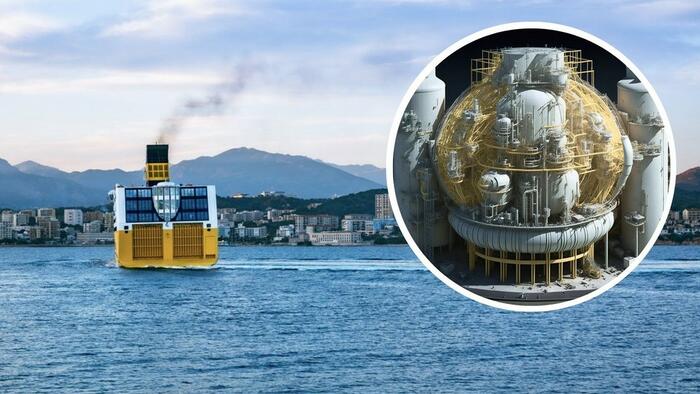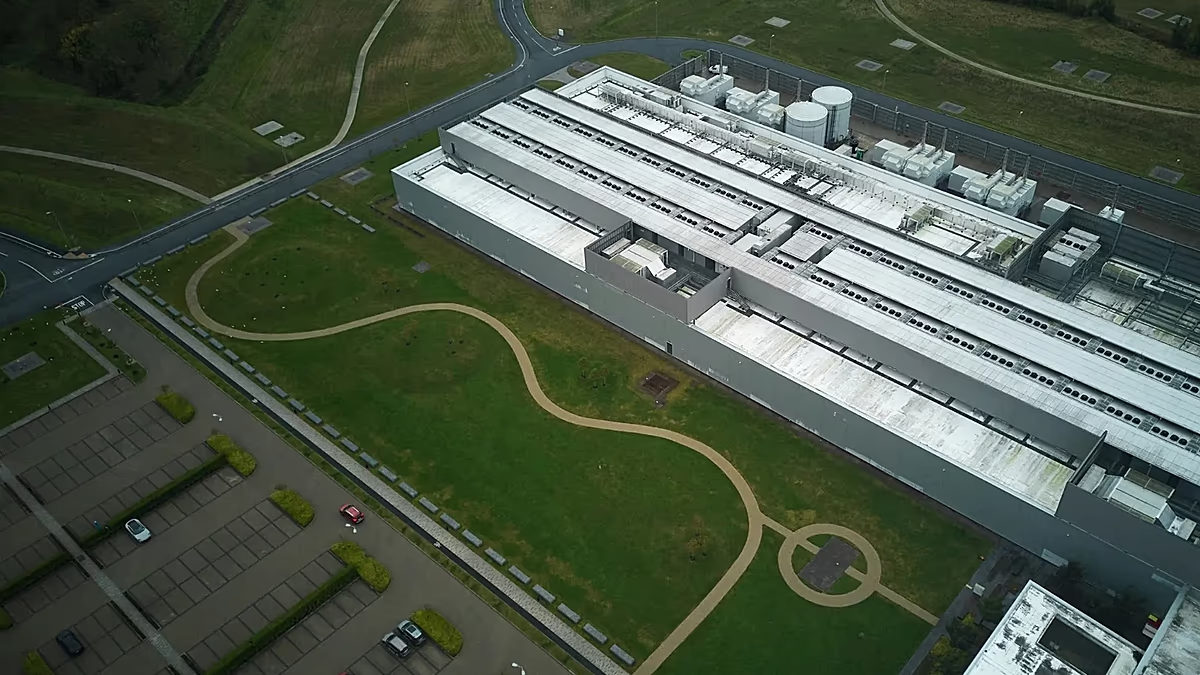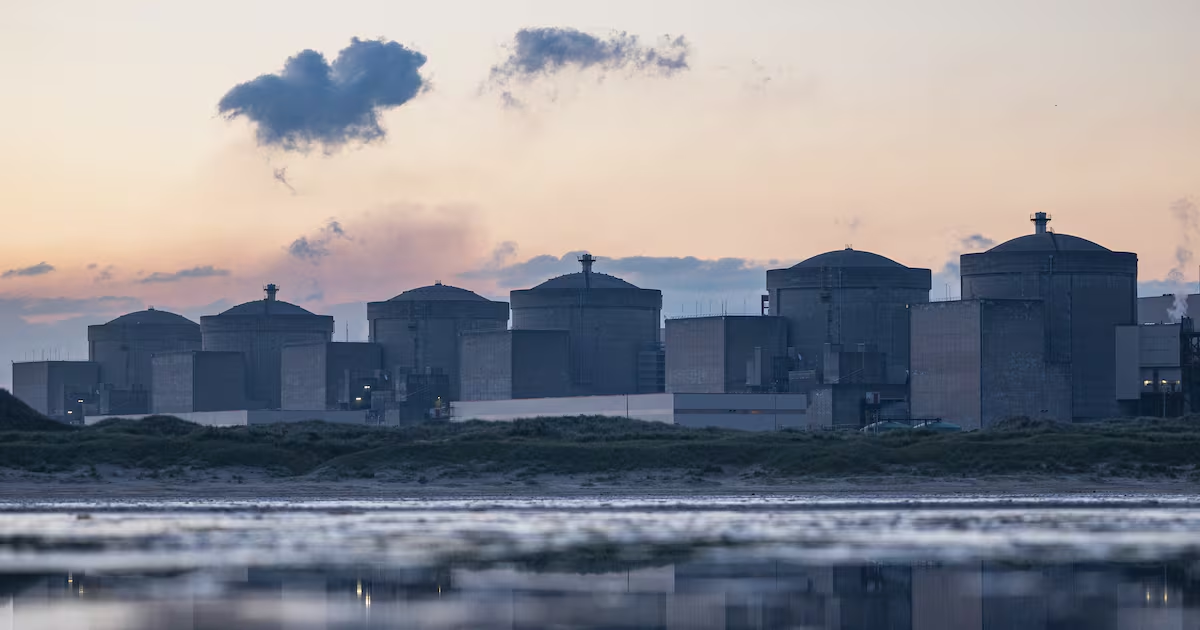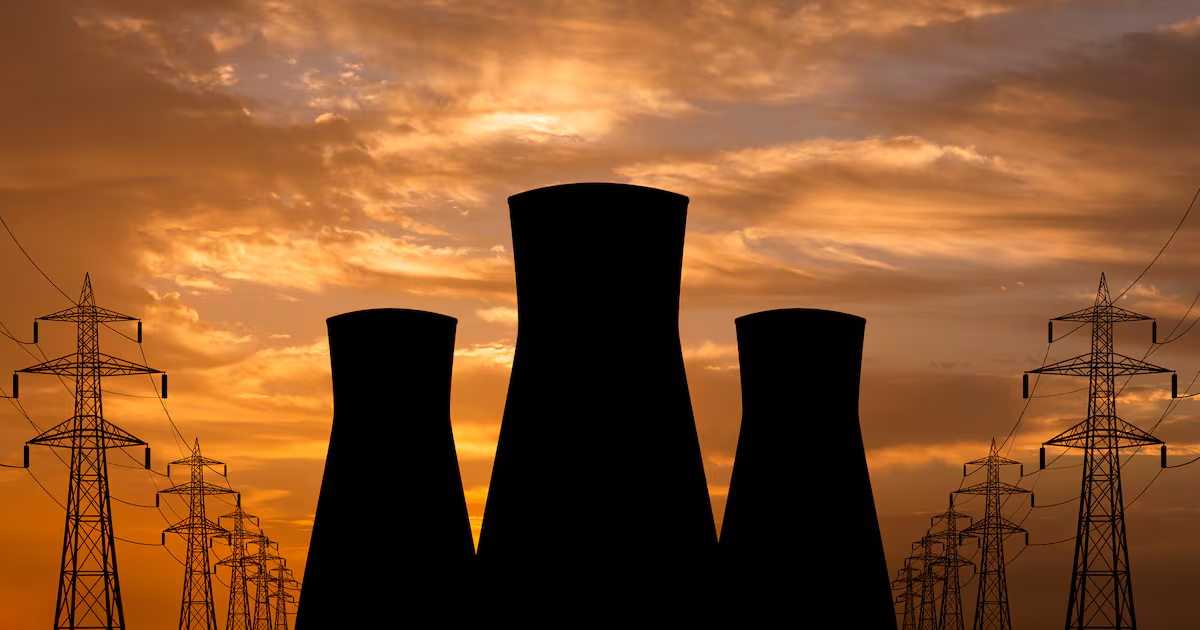
In an ever-changing world, old assumptions and conventions surrounding Ireland’s energy needs are being challenged.A string of senior Government figures have recently suggested that, in light of the instability seen in the Gulf and rising oil prices, Ireland should consider abandoning its opposition to nuclear power.Fianna Fáil’s parliamentary party has backed a Bill that would remove the statutory ban on nuclear energy in Ireland – something that has been in place since 1999. Minister for Transport Darragh O’Brien reportedly backed sending James O’Connor’s Bill to the Dáil at a meeting last week, though he told TDs and Senators that the Government’s priority was the delivery of renewable energy.O’Connor says any potential use of nuclear reactors would be designed to “complement” renewables. Taoiseach Micheál Martin has said he is open to the idea, but cost and the time it would take to deliver such a policy would need to be taken into consideration.New, smaller nuclear reactors have been touted as a possible solution to the energy squeeze facing the country and would bear no resemblance to the gargantuan nuclear power stations of old. Small modular reactors (SMRs) are fission reactors a fraction of the size of older light-water reactors and could potentially be assembled and deployed at individual factories. Companies such as Google, Meta and Amazon are exploring their use as a means of powering their massive data centres. Advocates of nuclear energy say they are worried about Ireland’s ability to balance the need to decarbonise its economy with the growing demands for power from these tech companies.[ A chill wind: Why are wind farms drawing so many objections in a time of climate crisis?Opens in new window ]At the forefront of the argument has been the think-tank Progress Ireland. Its executive director Seán Keyes told an Oireachtas committee in April that SMR technology should be considered like it has been in Denmark.“SMR is a new and fast-changing technology that has the potential to deliver exactly what Ireland requires,” he says.While acknowledging the technology is “immature”, Keyes argues that it could deliver “abundant, cheap and clean power – the Holy Trinity”.“To pre-empt ruling them out makes no sense to me. By focusing purely on the status quo, our default option on how to get affordable, reliable and clean energy is not without risk. Looking at both sides of the ledger, it seems prudent to me not to tie one hand behind our back.“Let’s watch how SMR matures and how wind energy matures, and see how the chips fall.”The argument that we should consider nuclear power has obvious public relation problems to contend with. For decades, it has been paired in the public mind with ecological disasters such as those in Chernobyl and Fukushima, and the issue of nuclear waste associated for so many years with the Sellafield plant on the Cumbrian coast. Even if the new technology was deemed feasible and safe, finding communities in which to locate these new reactors would be highly problematic.Paul Deane of University College Cork says we need a 'mature, upfront conversation' Paul Deane, a senior lecturer in the school of engineering and architecture in University College Cork, says, sweltering in “30-degree heat in Tralee” earlier this week, he is keenly aware of the challenges posed by climate change but a “mature, upfront conversation” was needed.“The Academy of Engineers has done work on this and they reckon you would need about 18 of these reactors,” he says. “You wouldn’t be able to concentrate it, you’d have to spread it around the grid and put some in Dublin, Limerick, Cork and Galway.“It is not always easy to get social support. We are finding it difficult to build power lines and wind farms at the minute – imagine how difficult it will be with nuclear power.“You have to take these conversations from 30,000 feet down to ground level.”Deane argues the technology is at least 15 years away and there are only a tiny number of serviceable reactors actually in existence in China and Russia. Instead, he argues, Ireland needs to watch what Canada is doing.In Darlington, Ontario, work has begun on the first SMRs to be constructed in a G7 country. The Darlington New Nuclear Project envisages four of the reactors eventually coming online, with claims they could power 1.2 million homes. “The sensible thing for Ireland is to watch and see how that project gets on and then talk more seriously about nuclear energy,” says Deane.The conversation about nuclear power has moved on in many ways already, say those engaged in the discussion.Oisín Coghlan, a policy adviser to The Environmental Pillar, which represents environmental non-governmental organisations, says the focus is more around costs and feasibility these days than it is about the sort of arguments made against nuclear power “30 or 40 years ago”.“Even if you are not concerned about any of those arguments, it just makes no sense from an energy or cost perspective,” he says.I worry that the main purpose is that it serves as a distraction— Oisin CoghlanCoghlan suggests the recent political support for the option is a form of “vice signalling” to big US technology companies and the current White House administration. “I actually think this is Fianna Fáil signalling to the data centre companies and Donald Trump that we are open for business at any cost – it is the opposite of virtue signalling, saying to Big Tech that we will even do things we don’t like.”Coghlan doubts the political seriousness behind nuclear energy and claims that it serves to confuse debate about the energy quandary in which Ireland finds itself.“I worry that the main purpose is that it serves as a distraction,” he says. “The Government clearly at the moment has a real challenge providing all the electricity that is needed, when we are ramping up data centres like nowhere else in the world and struggling to decarbonise.“Rather than focusing on things they could be doing right now, they are saying let’s talk about this big thing in the future, let’s have a row about that instead.” What it should be doing right now, says Coghlan, is looking to build out more wind and solar energy. He says recent global statistics have shown a great leap forward in the ability of solar to provide cheap power.“We now have the solutions – the availability of cheap solar is revolutionary,” he says. “The stats around solar are just stunning, new solar is the cheapest way to make electricity.” [ Solar energy surges as grid taps into Ireland’s of sunny spellOpens in new window ]Deane shares some of the suspicions expressed by Coghlan when it comes to the current to-and-fro in the public domain.“We need to manage our expectations,” he says. “It is nonsense to suggest we could do this in four or five years, it is going to take much longer. We shouldn’t ignore the commercially available technology. “It is very easy to talk about things that are probably not going to happen.”Keyes says arguments that renewable energy will be able to close the gap still shouldn’t preclude the addition of a nuclear element to the energy mix.“With nuclear energy it is probably 15 years before it is mature,” he says. “But if 15 years ago we had made a long-sighted investment which resulted in us having abundant, clean energy right now we would be happy that we did it.”
In a time of sky-high oil prices, should Ireland go nuclear?
Advocates say new, smaller reactors could deliver ‘abundant, cheap and clean power – the Holy Trinity’
1,227 words~6 min read