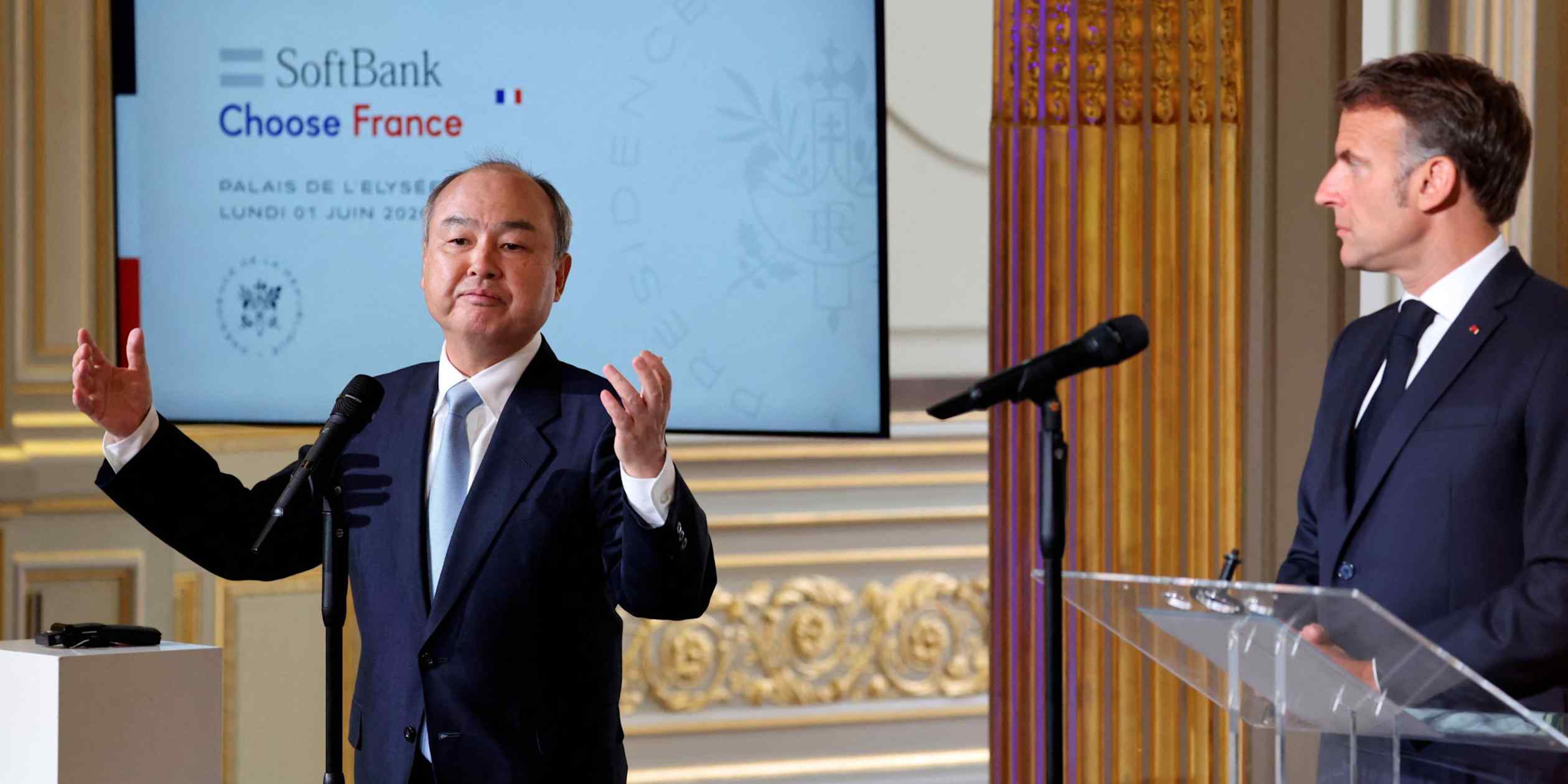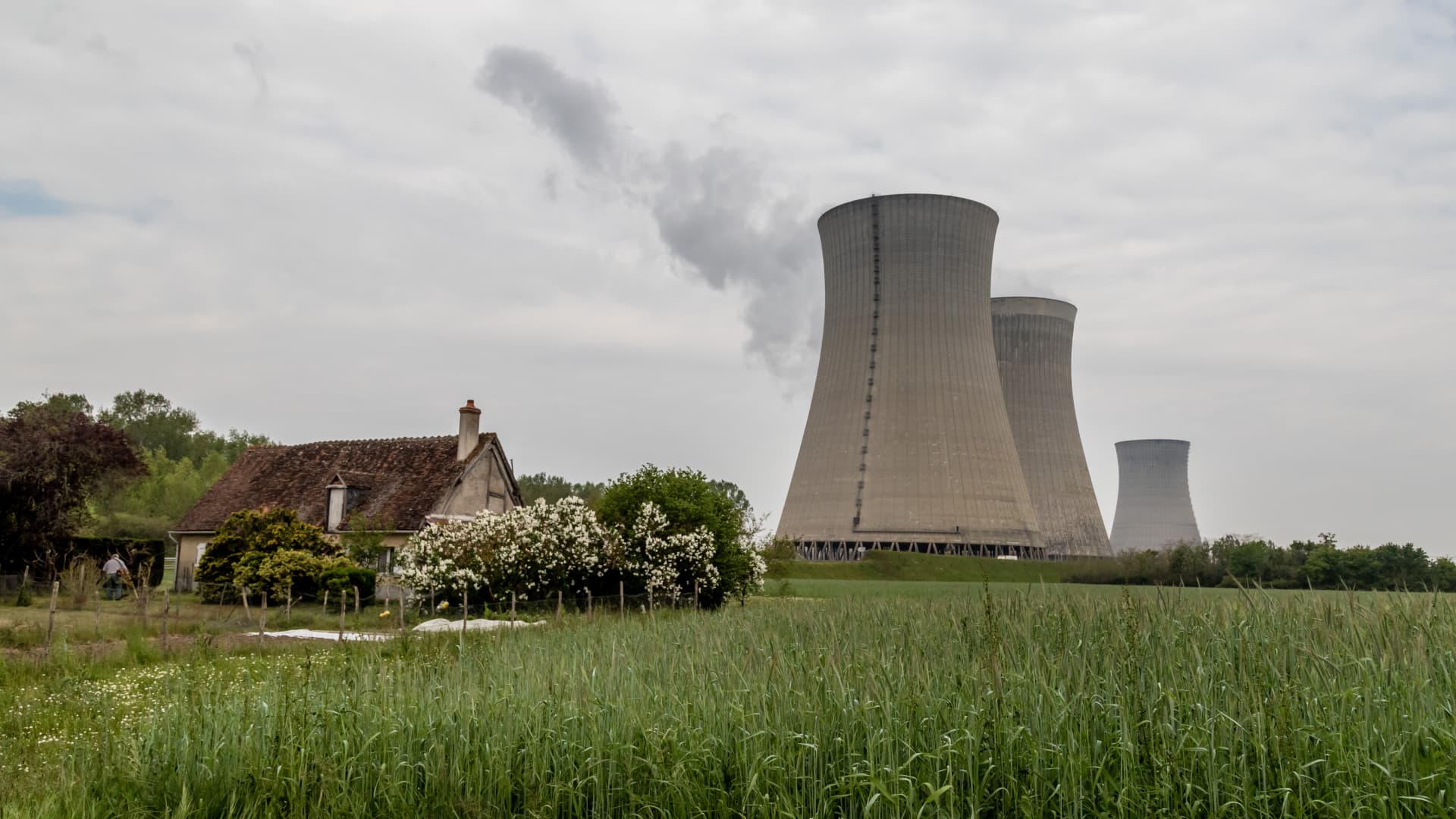
Cooling towers at the Dampierre-en-Burly nuclear power plant, operated by Electricite de France SA (EDF), in Dampierre-en-Burly, France, on Tuesday, May 3, 2022. EDF's falling nuclear production, combined with Russia's invasion of Ukraine, is exacerbating Europe's energy crisis as France is traditionally a net exporter of electricity.Bloomberg | Bloomberg | Getty ImagesSoftBank's plan to invest 75 billion euros in building AI infrastructure in France underscored the nation's status as a leading hub, but Big Tech's lofty energy demands will put the wider continent's grid to the test, analysts say.Japan's SoftBank on Saturday announced plans to build 3.1 GW of AI data centers in the northern Hauts-de-France region, including new sites in Dunkirk, Bosquel and Bouchain, by 2031.With over 60% of its power needs met by nuclear power, France is particularly well-placed to manage such an energy-intensive project at a time when Europe is grappling with some of the highest industrial electricity prices among major economies.This is a key advantage as power-hungry data centers make investments particularly sensitive to energy costs, pushing companies toward parts of Europe with lower power costs, experts previously told CNBC.watch nowPrices for energy-intensive industries in Europe last year were on average roughly double those in the U.S. and 50% higher than in China and India, according to the International Energy Agency.Analysts told CNBC in May that they see a strong argument for increasing the prominence of nuclear power as a key component of European nations' energy strategy to help manage the demands of data centers.As of 2025, nuclear comprised just 11.8% of Europe's total energy mix, while oil and gas still accounted for over a third, according to Eurostat data.Data center operators look to the next decade of power Small modular reactors, or SMRs, have caught the eye of Big Tech firms in the United States. In 2024, Amazon announced an agreement with Dominion Energy, Virginia's utility company, to explore SMR development. In 2025, Google followed suit, entering into an agreement with Kairos Power and the TVA for a new nuclear plant.These factory-built nuclear power plants are much smaller than traditional reactors, typically capable of 300 megawatts or less. SMRs are usually designed to be mass-produced and shipped to sites for faster and cheaper installation than traditional reactors, which often take over a decade to come online. They do not require grid connection to work, either, which offers another key benefit to data center providers.Rolling SMRs out en masse, however, will be a challenge, according to the energy team at law firm Baker McKenzie.Read more data center newsWhy AI demand is pushing data centers to the edge of EuropeDenmark faces data center reckoning as power grid overwhelmed by surging demandMajor data center company pauses investment decisions in Middle East amid Iran war, CEO tells CNBCAnthropic looks to hire six-figure role for negotiating data center deals to fuel Europe AI expansionAI data center boom ‘stress tests’ insurers as private capital floods inData center expansion reaches an ‘inflection point’How the AI debt binge shattered hyperscalers’ ‘unspoken contract’ with investorsPowering AI: Europe switches on its first microgrid-connected data centerHow the red-hot AI data center boom is igniting demand for a new, lucrative career path: Trade workersDust to data centers: The year AI tech giants, and billions in debt, began remaking the American landscapeQuantum’s big leap puts data centers in the spotlightData center deals hit record $61 billion in 2025 amid construction frenzyData center operators are looking at their power requirements over the next 10 years because "ultimately that is the driving force behind whether they can operate or not," Tania Arora, partner at Baker McKenzie's energy group, told CNBC in an interview."Many of them are looking at nuclear SMRs, but it is a challenge. No data center operator, in my view, will take first-of-a-kind risk on SMRs, and there are none currently operational at the moment outside China and Russia." Energy availability isn't the only driver behind Big Tech's investment in Europe. London's talent pool is another.Several U.S. AI companies that have recently announced big growth plans for London footprints. This includes Nvidia-backed Runway, which told CNBC on Monday that it plans to make London its new European headquarters.Anthropic, OpenAI and Google have also announced plans to open new office spaces in London.
Big Tech's AI ambitions pose a major power test for Europe
Japan's SoftBank on Saturday announced plans to build 3.1 GW of AI data centers in the northern Hauts-de-France region by 2031.
704 words~3 min read