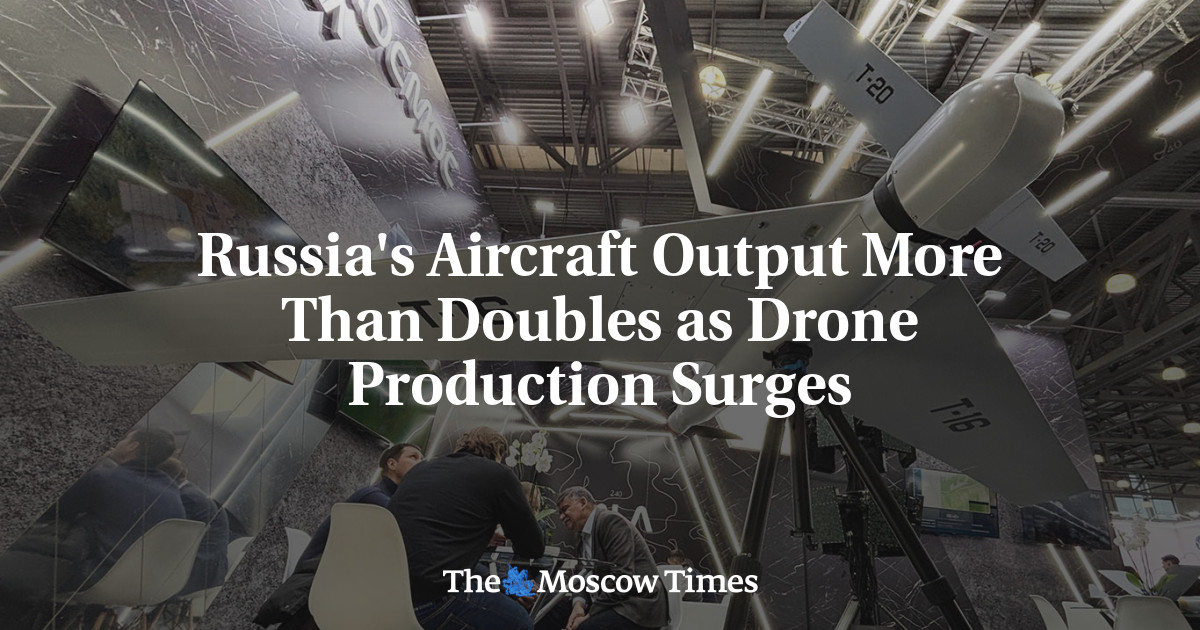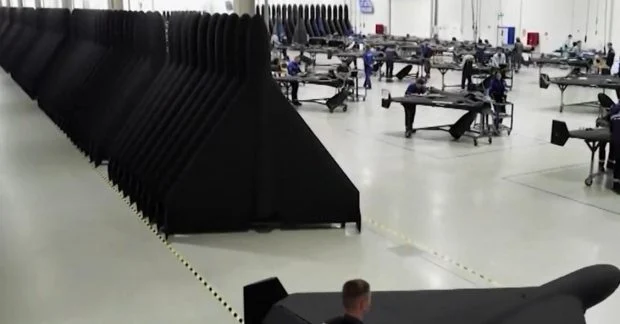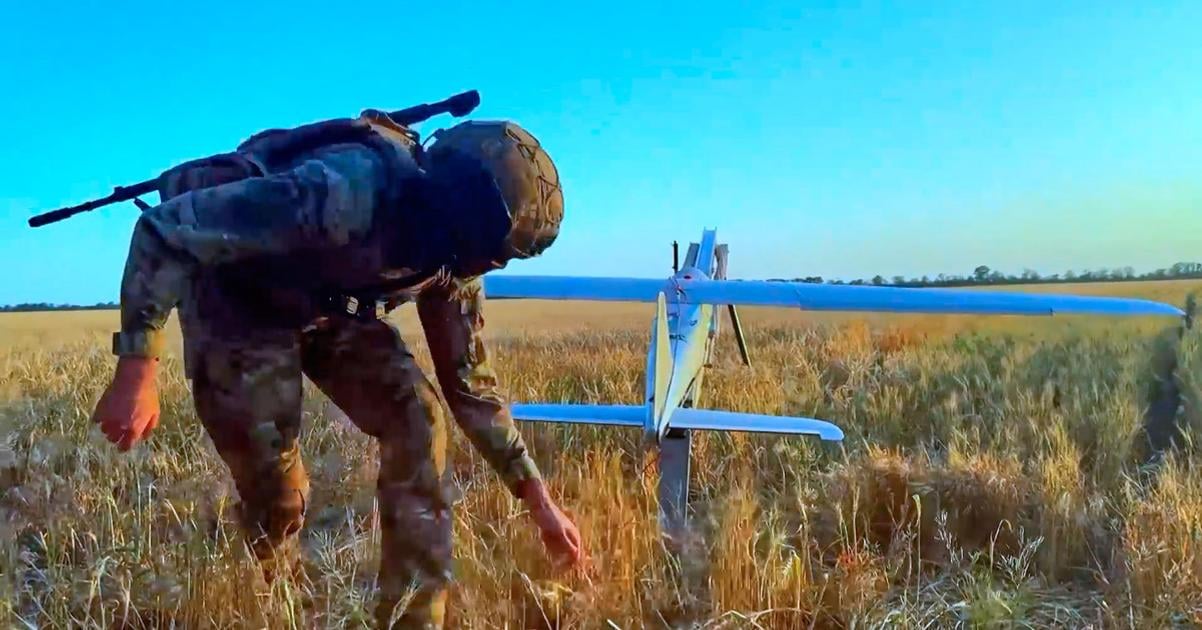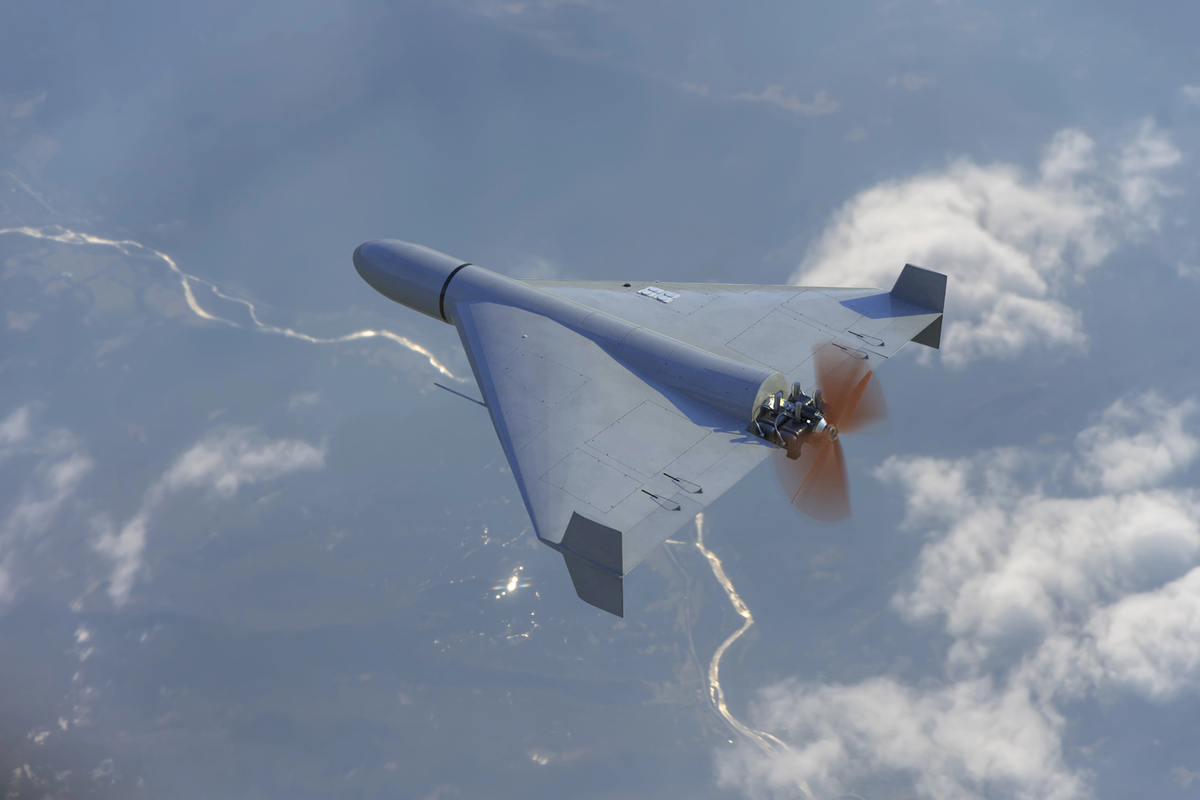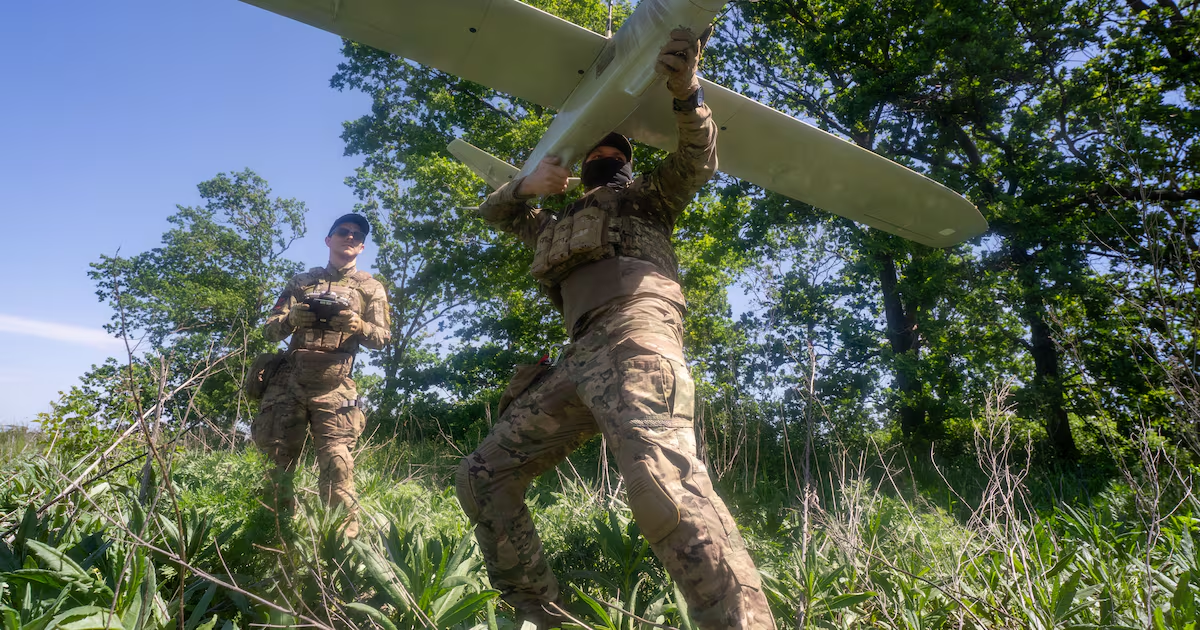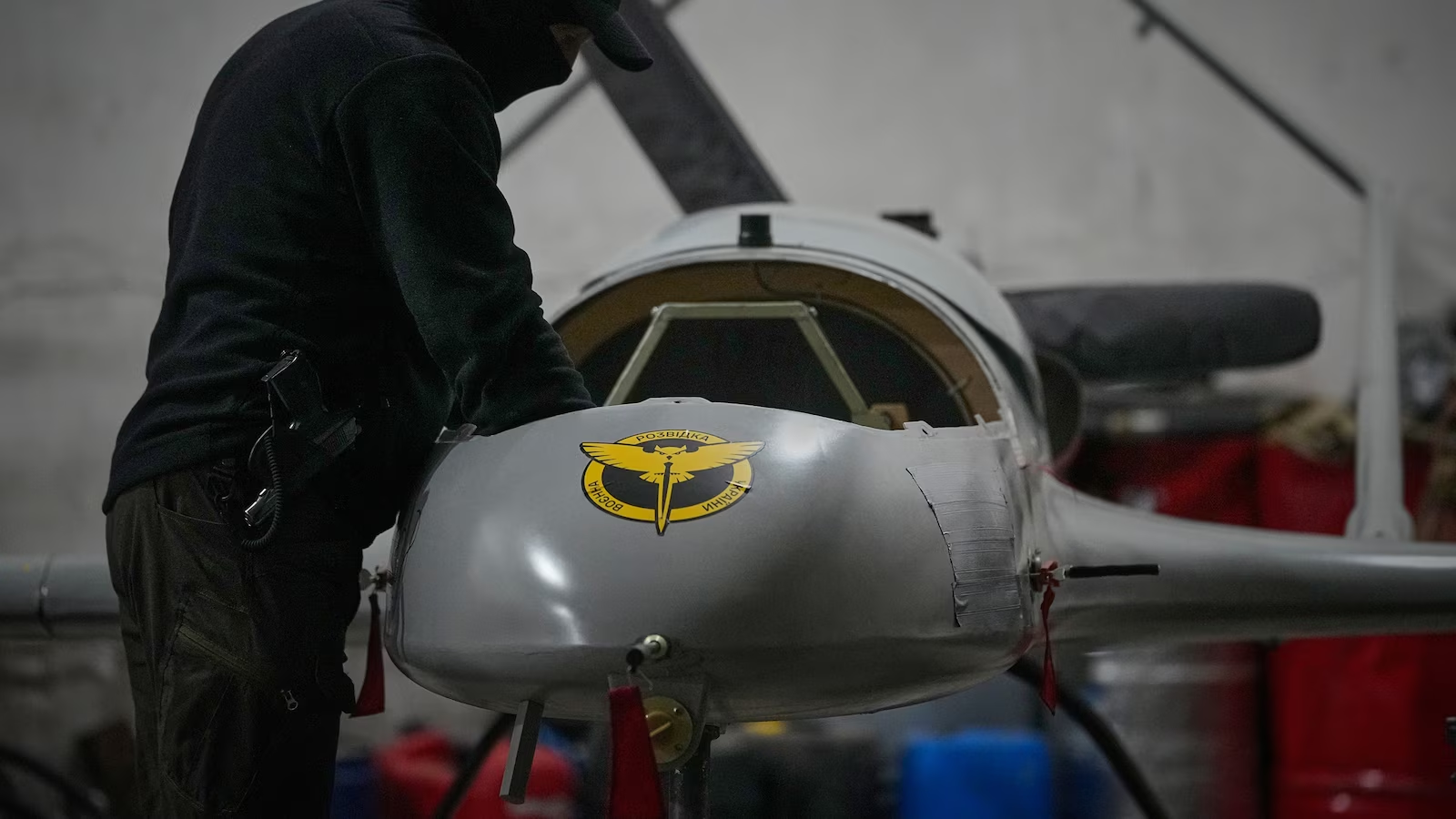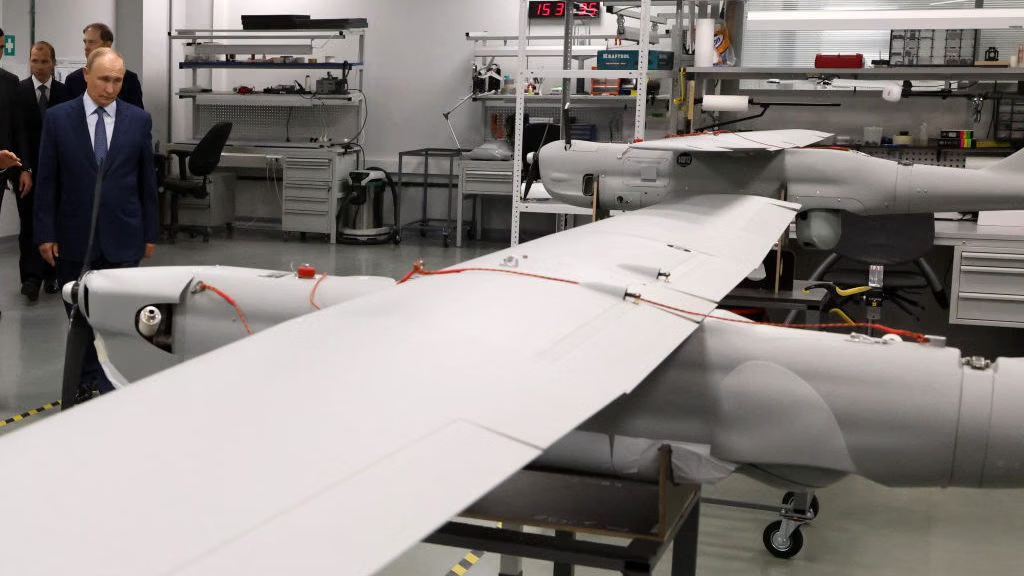
Even as the Kremlin’s war machine starts to lose steam after years of relentless expansion, Russia’s aircraft sector is on a tear, fueled by insatiable demand for thousands of drones.
Output in the industry, which includes both manned military aircraft and unmanned aerial vehicles, increased 117% in April from a year earlier, Federal Statistics Service data show. That compares with an average 68% growth year-on-year in 2025, according to Bloomberg calculations.The surge underscores how Moscow is pivoting to a new economic and military reality in President Vladimir Putin’s war with Ukraine that’s now in its fifth year. With the production and effectiveness of tanks and other conventional armor hitting limits, cheap and scalable unmanned systems including first-person view drones have become one of the few areas of Russian industry still capable of rapid expansion.
“First-person view UAVs are now a dominant feature of fighting on the ground, making any kind of force build up hazardous for kilometers either side of the line of contact,” said Douglas Barrie, a senior fellow for military aerospace at the International Institute for Strategic Studies. “Longer-range UAVs have provided Moscow with the capacity to supplement its far smaller inventory of land-attack cruise missiles and to sustain a campaign against Ukrainian critical national infrastructure.”Moscow is scaling up drone output alongside the creation of new dedicated unmanned systems troops, a move ordered by Putin in mid-2025. Summing up last year’s results, Defense Minister Andrey Belousov acknowledged that Ukrainian forces previously held an advantage in the combat use of drones, but claimed Russia has since turned the tide.Detailed data on military production volumes are not disclosed. Putin previously cited a figure of 1.4 million drones produced in 2024. In 2026, Russia plans to manufacture 7.3 million first-person view drones and 7.8 million warheads for unmanned aerial vehicles of various types, according to Ukrainian military intelligence figures cited in May by Commander-in-Chief Oleksandr Syrskyi.By comparison, since the start of the war, Russian forces have received 64 Su-34 and Su-35 tactical fixed-wing aircraft and 12 Su-27 warplanes, according to Sam Cranny-Evans, a military analyst at the Royal United Services Institute.The broader defense sector is losing momentum, constrained by acute labor shortages, widening economic strains and tighter state financing. While this year marks the first time the Kremlin opted to cut military spending since the invasion began, official forecasts show growth across industries producing heavy equipment, ammunition and missile components sharply slowing to just 4% to 5% from roughly 30% in recent years.Drones now play a central role in Russia’s military operations, Barrie said, including by helping ensure that more expensive cruise and ballistic missiles reach their targets. Keeping up the current pace of cruise and ballistic missile launches over time “may well be beyond current Russian production capacity,” he said.Read More: Putin Steps Up Kyiv Missile Strikes Seeking Momentum in War With the battlefield largely at a stalemate despite Russia’s advantage in manpower and conventional weapons, Moscow has intensified ballistic missile and drone attacks on Ukraine in an effort to regain the strategic initiative. In May, Ukraine faced one of the largest Russian barrages of the war, which involved some 600 drones and 90 missiles, including a hypersonic Oreshnik missile used for the first time since January.