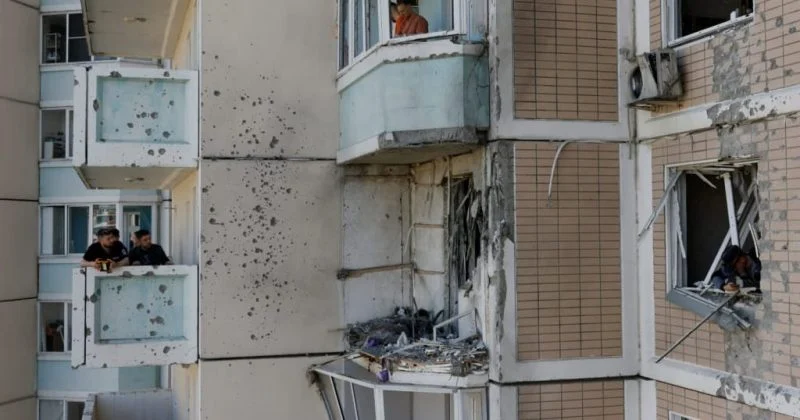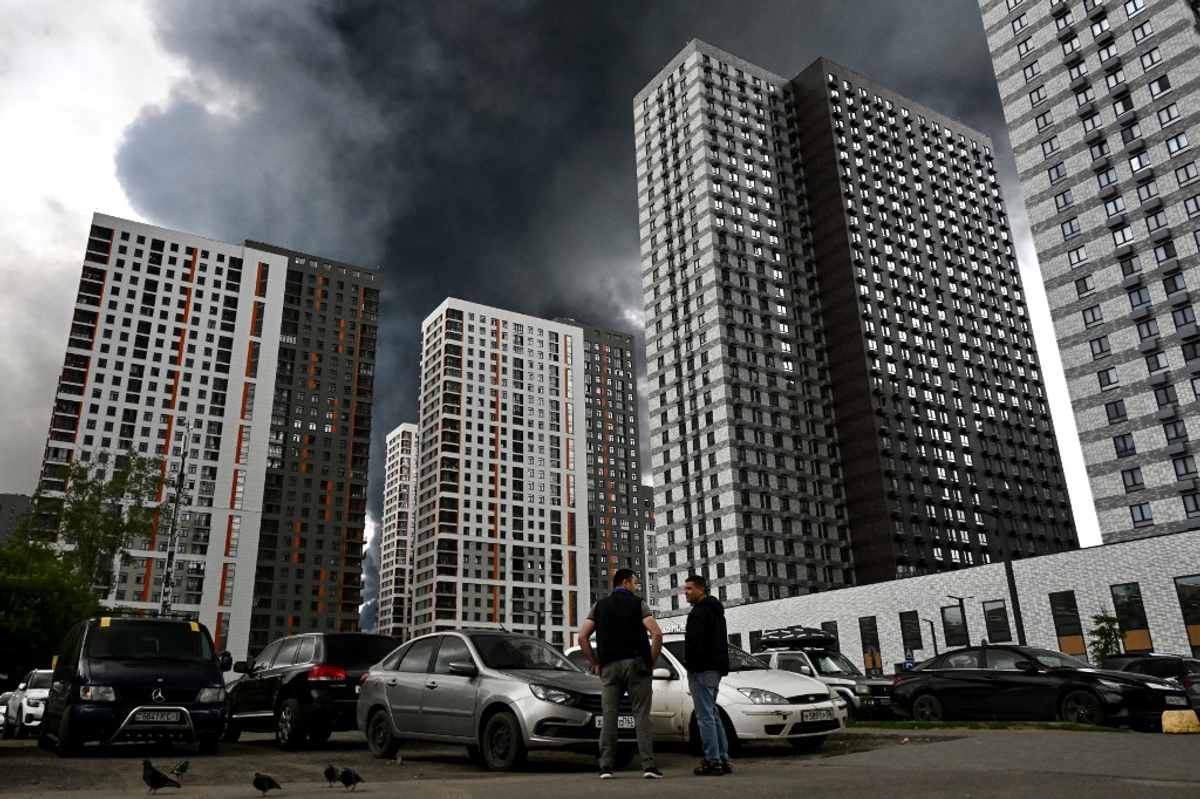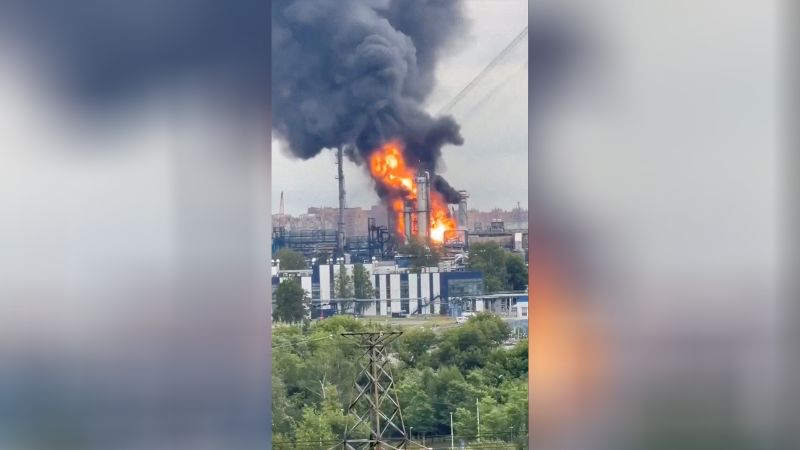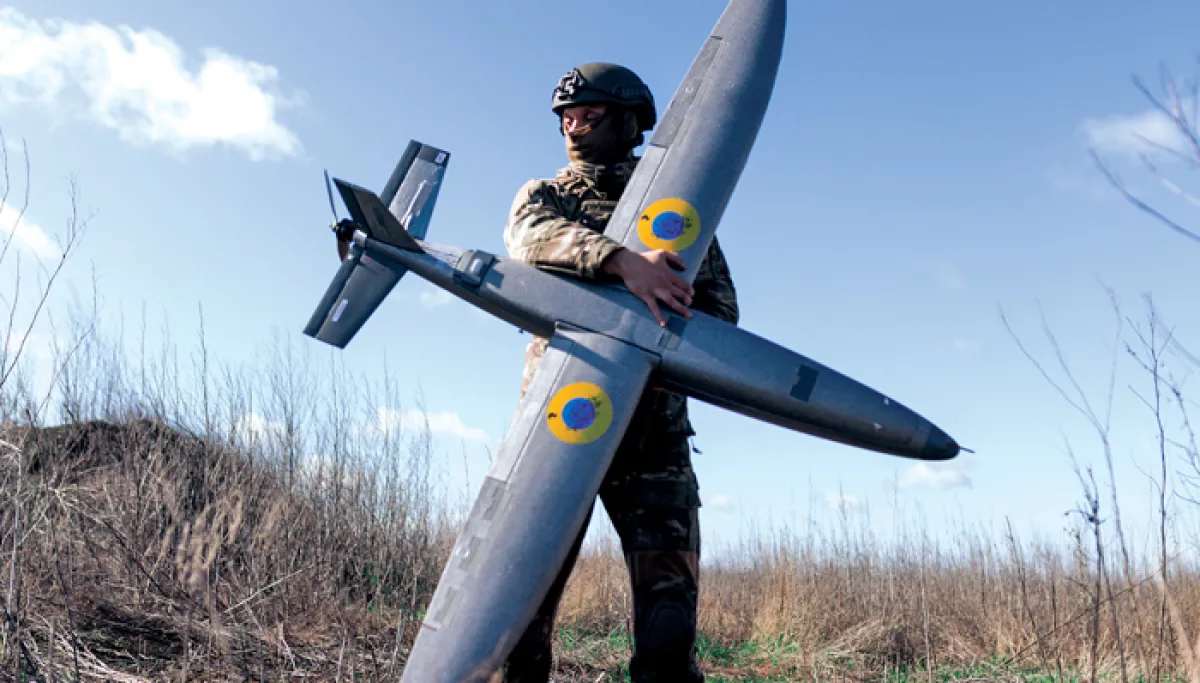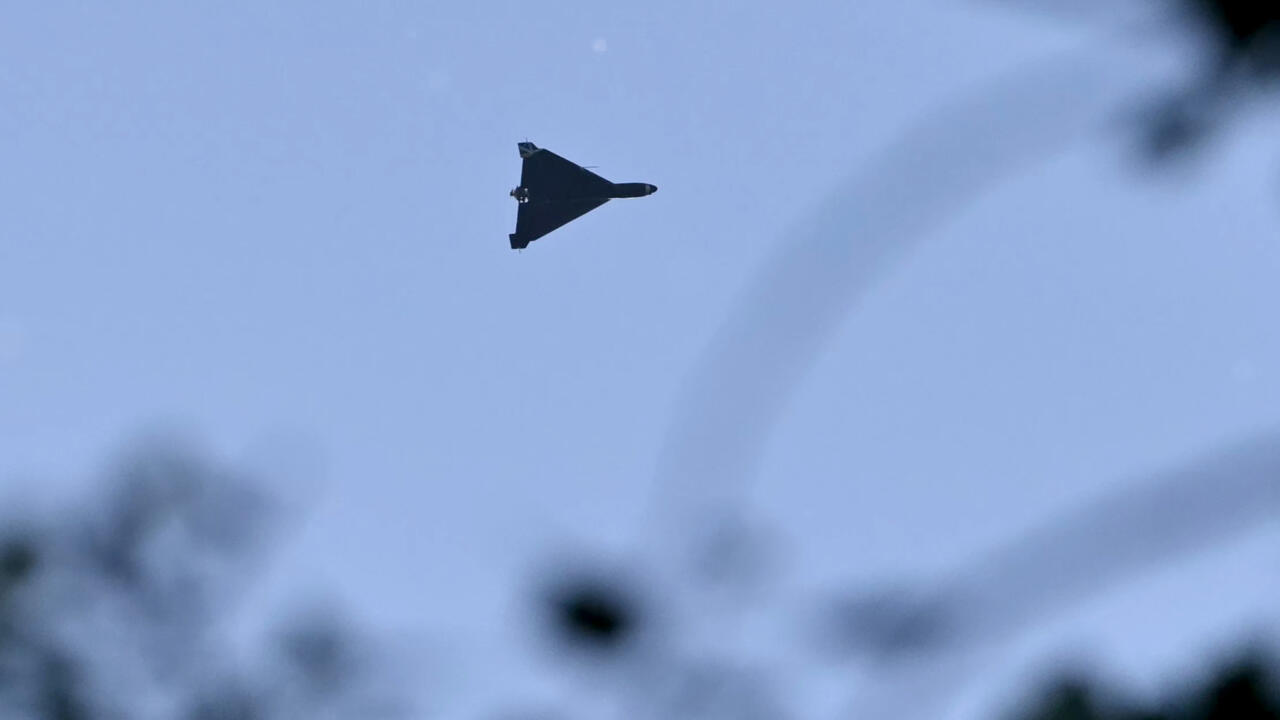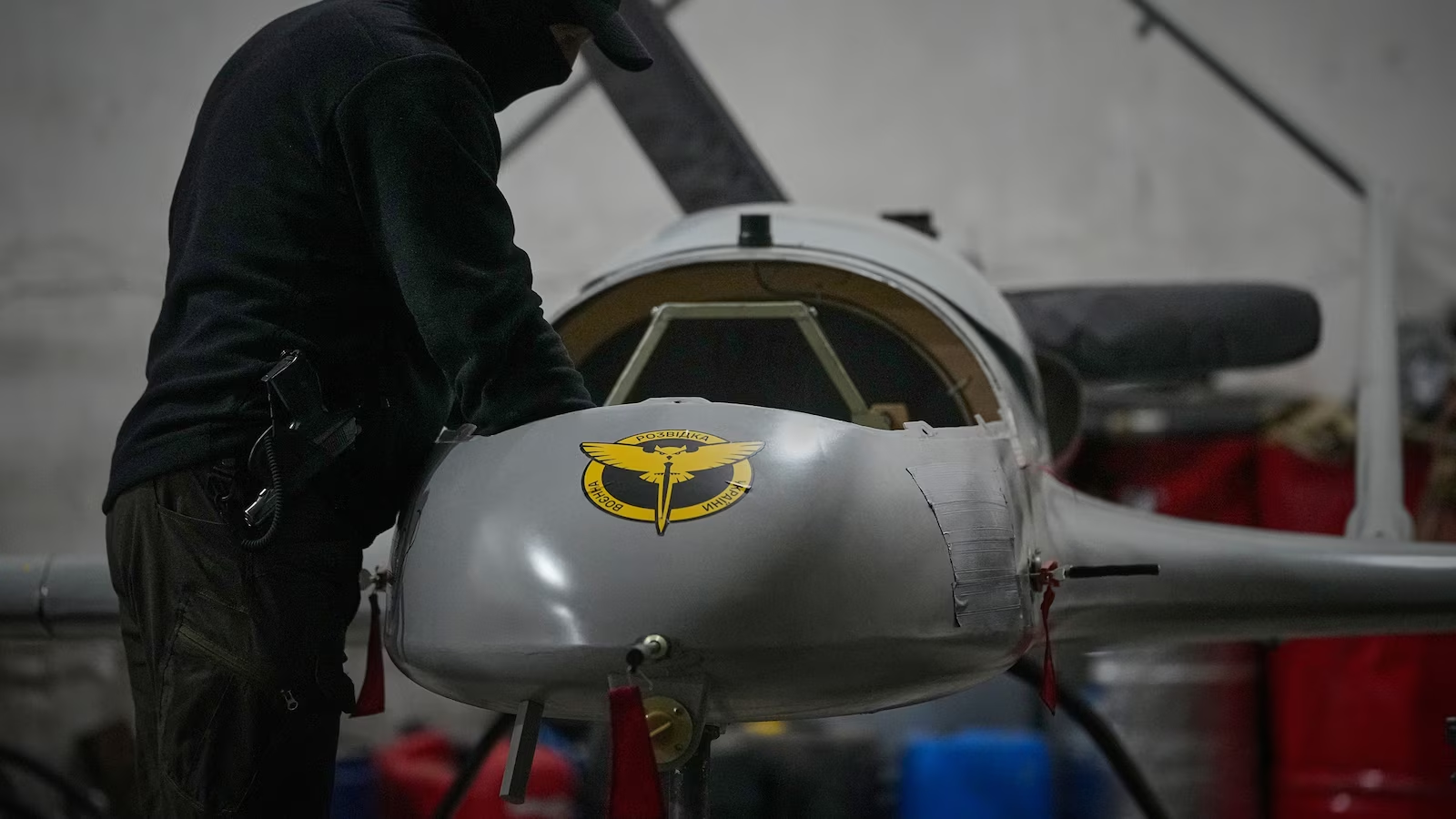
LONDON -- Ukraine is significantly expanding its long-range drone attacks on targets across Russia -- including the capital Moscow -- according to data published by the Russian Defense Ministry, as the Kremlin's four-year-old full-scale invasion of its neighbor grinds on with little apparent hope for a peace deal or for the Russian victory that President Vladimir Putin has framed as inevitable.May saw the Russian Defense Ministry claim the shooting down of 9,418 Ukrainian drones -- the highest monthly total ever reported by the ministry -- according to public statements analyzed by ABC News.And even in Moscow, which open-source intelligence analysts say has been ringed by more than 100 air defense systems amid Ukraine's expanding strike campaign, the threat from Kyiv appears to be more present than ever before.In regular posts to Telegram, Moscow Mayor Sergei Sobyanin reported the shooting down of at least 329 Ukrainian drones heading toward the Russian capital in May -- the second highest monthly total of the war at an average rate of more than 12 drones per day, according to an ABC News analysis of Sobyanin's statements.Ukrainian long-range drones reported shot down while heading toward MoscowMoscow Mayor Sergey Sobyanin on TelegramUkrainian long-range drones reported shot down in all areasRussian Defense Ministry on TelegramThis year has seen a significant uptick in the rate of Ukrainian drone attacks toward Moscow, according to Sobyanin's statements, with the mayor reporting a record monthly high of 398 drone interceptions in March.The expanding strikes on the Russian capital have met with some celebration in Ukraine. DJ Smash's 2008 electronic anthem, "Moscow Never Sleeps," enjoyed a brief resurgence among Ukrainian social media users in May as Kyiv's long-range drones again targeted Russia's heavily defended capital city.On May 17, a unit belonging to Ukraine's Unmanned Systems Forces unit -- which is commanded by Robert "Magyar" Brovdi -- posted a photo of a drone marked with writing, declaring, "Moscow Never Sleeps." The photo prompted Ukrainian internet users to create and share videos of drone impacts in Moscow set to a soundtrack of the mid-noughties hit.The sardonic trend spoke to what Ukrainian and Russian military analysts say could be a deeper shift in the course of the war, which began in 2022 when Russian forces launched their full-scale invasion of Ukraine. The "special military operation," as the Kremlin termed the invasion, marks only the latest chapter in Moscow's decades-long effort to re-establish control over Ukraine following the collapse and fracturing of the Soviet Union.The costs of that effort are increasingly being felt deep inside Russia as Ukraine systematically targets the country's key oil and gas facilities in a bid to choke off the energy revenues the Kremlin is using to fund its war.Ukrainian President Volodymyr Zelenskyy has made clear Kyiv's intentions to take the fight back to Russia, even if the vast majority of the ground combat has so far been fought on Ukrainian soil. This photograph shows a Ukrainian long-range drone launched by servicemen of the 9th Kairos Battalion of the "Madyar's Birds" from an undisclosed location in Ukraine, on May 16, 2026.Genya Savilov/AFP via Getty ImagesRussia's own long-range strikes against Ukraine also continue. Ukraine's air force said it faced a record-breaking 8,361 Russian munitions -- 8,150 drones and 211 missiles -- in May, of which 55% of missiles and 90% of drones were intercepted or otherwise failed to reach their targets.ABC News cannot independently verify the data released by either Russia or Ukraine. It is possible that both sides may seek to exaggerate the effectiveness of their air defenses, or to amplify the attacks against them as proof that their enemies are not interested in pursuing a peace deal, experts have suggested.Moscow publishes only the number of Ukrainian drones and other projectiles it claims to have intercepted. Moscow Mayor Sobyanin releases realtime statements when Ukrainian drones are reported shot down while heading toward the capital. Russian officials rarely acknowledge successful Ukrainian drone strikes, more often claiming that any casualties and damage are caused by falling debris following successful interceptions. Russian leaders routinely frame the strikes as "terrorism."Though the true figures of attacks and successful strikes remain shrouded by the fog of war, the increasing numbers of Ukrainian drones claimed intercepted could be seen as indicative of Ukraine's growing ability and willingness to target key political, military and economic sites within Russia.This photo shows the damaged facade of a high-rise building following a drone attack, in Moscow, Russia, on May 4, 2026.Stringer/ReutersKyiv has been clear in its goal to bring the war back into Russia. "Our responses to Russia's prolonging of the war and strikes on our cities and communities are completely fair," Zelenskyy wrote on Telegram in May.Popular Reads"The Moscow region has Russia's densest concentration of air defenses. But we are getting through," Zelenskyy added.Ukrainian commanders have also been open about their systematic effort to erode Russian air defenses.The Unmanned Systems Forces' "killboard," which the unit says tracks the results of its drone attacks, claimed the destruction of at least 23 Russian air defense systems and the damaging of 109 others from the start of 2026 up to the end of May.In April, Ihor Fedirko -- the CEO of the Ukrainian Council of Defence Industry -- said that Ukrainian forces had destroyed 48% of all Russian Pantsir medium-range surface-to-air missile systems and around 25% of its long-range S-300 and S-400 systems.This handout photograph posted on the official Telegram channel of Moscow Region Governor Andrey Vorobyov on May 17, 2026, shows a burning building following an air attack at an undisclosed location in the Moscow region.Handout/TELEGRAM / @vorobiev_live/AFP viThe erosion of Russia's air defense umbrella, and subsequently the increasing rate of successful Ukrainian drone strikes, will not have an immediate tactical battlefield impact, Ivan Stupak -- a former officer in the Security Service of Ukraine -- told ABC News."It's more about establishing stronger political positions" and undermining Moscow's much-needed energy export profits, said Stupak, who earlier in the war advised Ukrainian parliamentarians on security matters.Zelenskyy said this week that Ukrainian strikes have hit at least 15 Russian oil refineries since January. "As of May, nearly 40% of Russia's primary oil refining capacity is offline," the Ukrainian president said.Russian President Vladimir Putin sought a temporary ceasefire in May to coincide with the planned Victory Day celebrations in Moscow's Red Square, while additional Russian air defense teams were deployed all around the capital.In the days before, Zelenskyy said Ukraine's eventual decision to honor the truce was a measure intended to advance peace talks. But the Ukrainian president sought to take charge of the debate.A serviceman of the Defence Intelligence of Ukraine prepares an An-196 Liutyi one-way deep strike drone in an undisclosed location in Ukraine on May 28, 2026.Efrem Lukatsky/AP Photo/Efrem Lukatsky"I hereby decree: to permit the holding of a parade in the city of Moscow (Russian Federation) on May 9, 2026," Zelenskyy said in a tongue-in-cheek statement. "The territorial sector of Red Square shall be excluded from the operational use plan of Ukrainian weaponry," Zelenskyy's decree said.Ukraine's expanding reach within Russia thus plays into what appears to be a broader shift in the wartime narrative in Kyiv's favor.Moscow has long sought to depict its victory as an inevitability, demanding enormous Ukrainian concessions in exchange for any halt to the invasion -- and since January 2025 often with the explicit or implicit backing of the White House.But Russian battlefield progress has slowed to a crawl while Russian casualties are reportedly mounting at an exponential rate, analysts say. In some places, Ukraine has even been able to regain lost territory, increasingly -- according to its commanders -- with the help of new robotic and autonomous systems.Russian bombardments failed to freeze Ukraine into submission last winter, and now Ukrainian drone attacks -- referred to in Kyiv as "long-range sanctions" -- regularly grab headlines, producing apocalyptic images of burning oil refineries and huge plumes of toxic smoke rising above Russian ports and cities.On Wednesday, for example, Ukrainian drones attacked St. Petersburg as the landmark St. Petersburg International Economic Forum was due to open, sending plumes of black smoke towering over Russia's "second capital" -- as the city is nicknamed -- as the country's political and economic elite gathered there.A Panstir S-1 air defense missile system is pictured atop the Russian Defence Ministry headquarters in Moscow on May 5, 2026.Alexander Nemenov/AFP via Getty ImagesRussian officials have dismissed concerns, even as the list of major oil refineries and pipelines hit by Ukrainian drones grows longer. "No, the Kremlin does not see such risks," Kremlin spokesperson Dmitry Peskov said of fears of domestic fuel shortages.The Victory Day truce, persistent Ukrainian drone attacks on the capital and on oil facilities around the country, and apparent stagnation at the front have prompted some Russian analysts and bloggers to suggest that Putin is losing control of the situation."Putin is losing his magic," Alexander Baunov, a prominent political thinker, wrote in a recent essay for the Carnegie Endowment for International Peace. "'Victors are not judged,' the Soviet dictator Joseph Stalin liked to say. But non-victors can be -- and people are beginning to judge Putin."ABC News' Patrick Reevell contributed to this report.
Ukraine scales up drone attacks in Moscow, across Russia to record highs, data shows
May saw the Russian Defense Ministry claim the shooting down of 9,418 Ukrainian drones -- the highest monthly total ever reported by the ministry.
1,516 words~7 min read