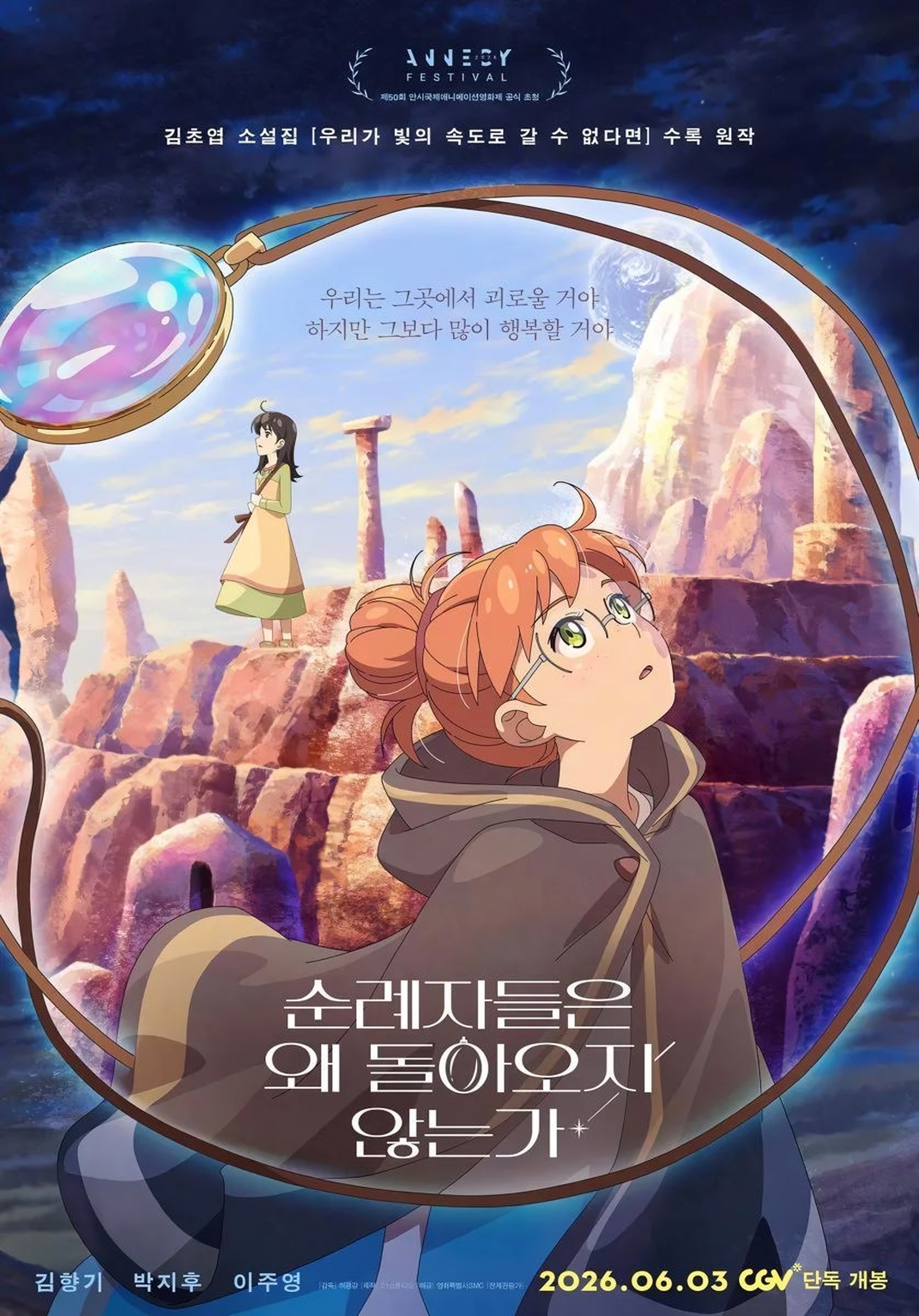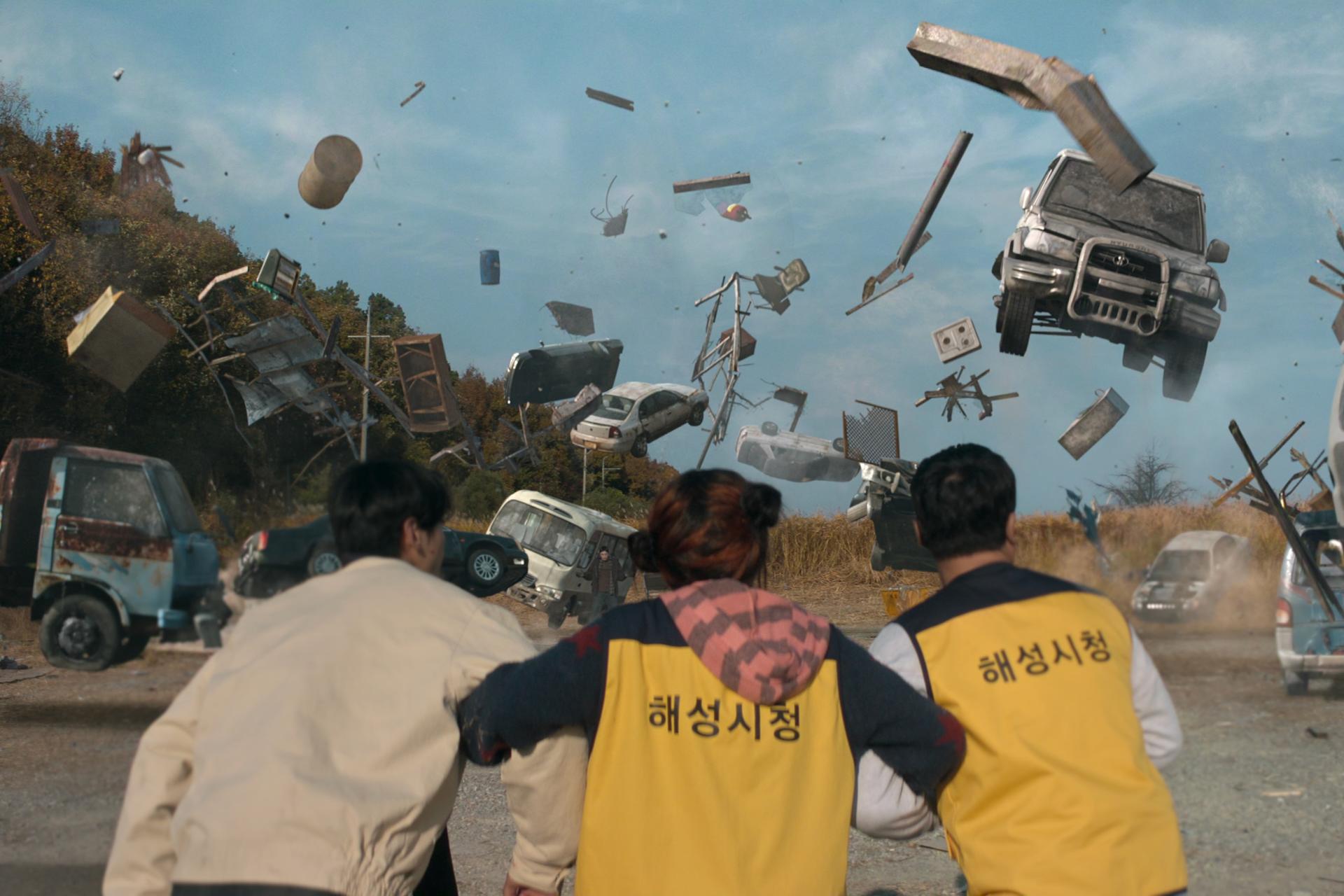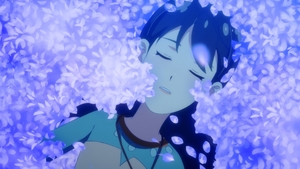
Kim Cho-yeop's beloved sci-fi short reaches the big screen, with the right instincts and visuals that can't keep up "Pilgrims" (21Studios) "Pilgrims" is built on the two things Korean cinema just can't seem to pull off. On paper, that's a recipe for disaster; on screen, it gets about halfway to proving otherwise.Start with the sci-fi problem. Koreans have proven time and again they can do period epics, gangster pictures, zombie thrillers — you name it — but science and speculative fiction remains the white whale. Homegrown titles of the past few years, from the lavishly mounted "Space Sweepers" to the 28-billion-won belly-flop "The Moon" and the head-scratching "The Great Flood," have been largely savaged and picked apart, undone by uninspired scripts that came off as Hollywood replicas with the same-old melodrama galore.This time, the source material gives you plenty to root for. Kim Cho-yeop, among the brightest of a new generation of Korean science fiction writers, gets her first screen adaptation with "Pilgrims," based on the short story "Why the Pilgrims Don't Return" from her bestselling collection "If We Cannot Go at the Speed of Light."The premise is part off-world mystery, part coming-of-age fable: In a sealed outer-space utopia free of pain and sorrow, eighteen-year-olds are required to make a yearlong pilgrimage to Earth as a rite of passage, and some never come back. Why they don't is the question that pulls the whole thing forward, with characters chasing a secret that reaches all the way to the world beyond.Then there's the animation, where things have been just as bleak. Korea's animated features often struggle to find an audience at all, even as Japanese anime steamrolls through local theaters. The case for this one rests largely on director Heo Pyeong-gang, who comes with some real credentials: She cut her teeth inside the Japanese anime industry for over a decade, working as an animator on numerous projects, including "Detective Conan" and "Haikyu!!"You might walk in thinking this one could break the streak, and Heo, for one, came to it on instinct."I have to draw more than ten thousand frames over three or four years, so I needed something that really moved me," she said at Monday's press conference at CGV Yongsan in Seoul. "There's a line in the book — 'We'll suffer there, but we'll be happier than that' — and it just shook me. I made the whole film with that sentence in mind." From left: From left, actors Park Ji-hu, Kim Hyang-gi and Lee Joo-young pose at a press screening for "Pilgrims" at CGV Yongsan iPark Mall in Seoul, Tuesday. (21Studios) The voice cast leans on actors rather than dedicated voice talent, a choice sure to rattle the animation fans here who'll tell you screen actors just aren't up for the job. Kim Hyang-gi ("The Closet," "Along With the Gods") voices Sophie, the story's central figure; Park Ji-hu, who broke out in the indie gem "House of Hummingbird," plays Daisy, who lights out for Earth chasing the pilgrims' secret; Lee Joo-young takes Olive, the one who left and never returned.All three said they came to it as fans of the book. "Just having Kim Cho-yeop's writing turned into something you can watch felt meaningful," Kim said.Park found the booth a fresh challenge — "Acting somewhere other than in front of a camera was new, so I tried as many interpretations as I could," she said — and Lee was in the same boat: "I'd never worked in a booth, so it was tough, but you could feel how much thought the director had put in, and I followed her lead."Beneath the sci-fi veneer, "Pilgrims" is essentially a philosophical meditation on what makes a life worth living, and it deserves credit for keeping faith with the source text throughout its scant 60-minute runtime. The genetically engineered universe split between the flawless and the flawed is less fantasy than allegory, serving as the backdrop for a genuine argument about agency and choice; even the resolution, all-too-tidy as it may be, feels like an earnest stab at an answer.It's a worthwhile lesson, and an unusually thoughtful one to find targeted at younger viewers. More unusual still is the thread of queer love running through the story — handled without fuss, which also counts for something. "Pilgrims" (21Studios) The trouble starts right away when the concept runs into the limitations of the art.The world of "Pilgrims" isn't the sleek, antiseptic futurism of a "Gattaca" or "The Island." Even through the rough execution, you can catch glimpses of something stranger and more layered: the off-world utopia where the story begins seems to be reaching for a Dune-adjacent primal landscape of cliffs and quarries, threaded with ornate, medieval-leaning architecture — pantheons, athenaeums, temples — while the site of pilgrimage is presented as an Alphaville-style urban dystopia. It's the kind of sweeping setup that demands scale and texture in every frame; it is also exactly what the film's rather flat contours and shallow palette are least equipped to deliver. "Pilgrims" (21Studios) The tonal mismatch only widens from there. At times reminiscent of early-aughts Saturday-morning cartoons, the bland character design and clunky motions are not exactly the ideal vehicles for the bigger questions at the story's heart. There's only so much gravitas a story can muster when it looks this sloppy.Granted, those rough edges may very well be telltale signs of a thin budget or a tight schedule — chronic affliction of an industry struggling to find its footing, so on that score, you can cut it some slack. If there's a silver lining, it's that the country's sci-fi writers are finally getting noticed. Here's hoping more of it makes the leap."Why the Pilgrims Don't Return" opens Wednesday, exclusively at CGV locations nationwide.
Korea's beloved sci-fi story is hitting the screen. Is the animation up to it?
"Pilgrims" is built on the two things Korean cinema just can't seem to pull off. On paper, that's a recipe for disaster; on screen, it gets about halfway to pro
TL;DRAI
Kim Cho-yeop's sci-fi story adapted into a 60-minute animated film; Korea's genre execution problems resurface. Weak animation undermines the narrative, exemplifying Korea's sci-fi industry gaps versus Japanese anime's market dominance.
957 words~4 min read