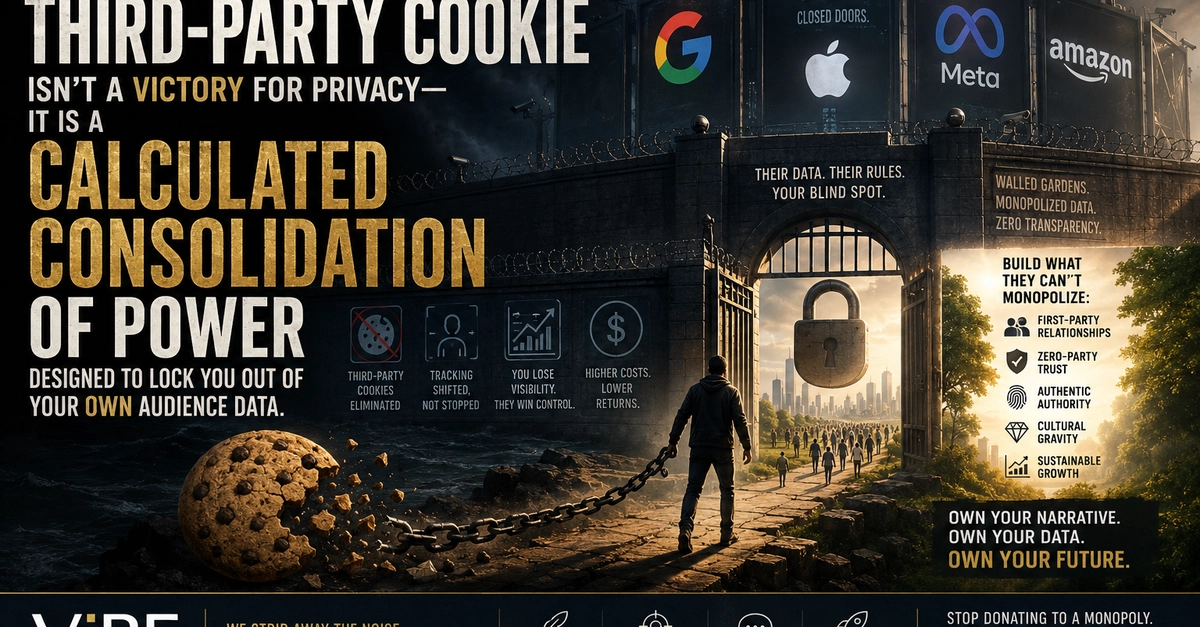
Let’s touch an absolute raw nerve across corporate marketing, data engineering, and tech compliance: The imminent death of the third-party cookie isn't a victory for consumer privacy—it is a calculated consolidation of power designed to lock you out of your own audience data.
For the past few years, the tech industry has been patting itself on the back. Under the noble banner of "protecting user privacy," major browser ecosystems and operating systems have systematically dismantled the third-party cookie. The public narrative is pristine: consumers are finally reclaiming their digital footprints from predatory tracking pixels.
But if you look at the digital landscape unvarnished, a far more cynical corporate strategy emerges.
The elimination of the cookie doesn't stop data tracking; it simply shifts the monopoly. By killing off third-party tracking, the trillion-dollar gatekeepers of the internet are destroying the open web's ability to measure independent ad performance. Meanwhile, their own closed-loop, algorithmic ad networks are completely unaffected. They aren't protecting consumer data—they are building an digital wall around it, forcing you to pay a premium to access the audiences they’ve monopolized.