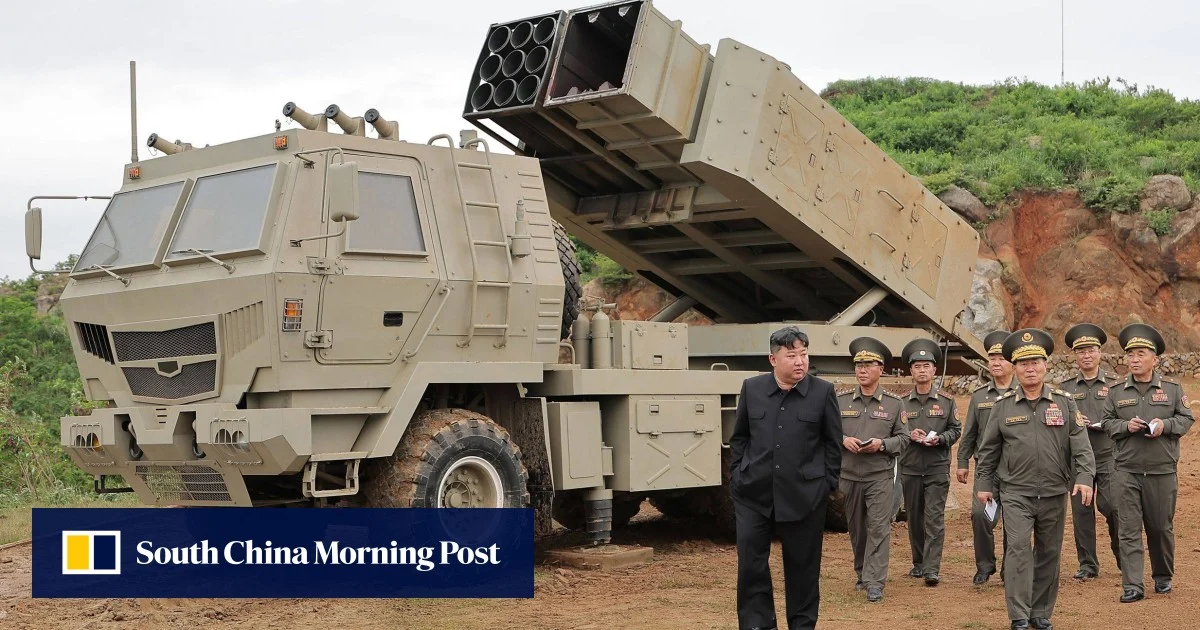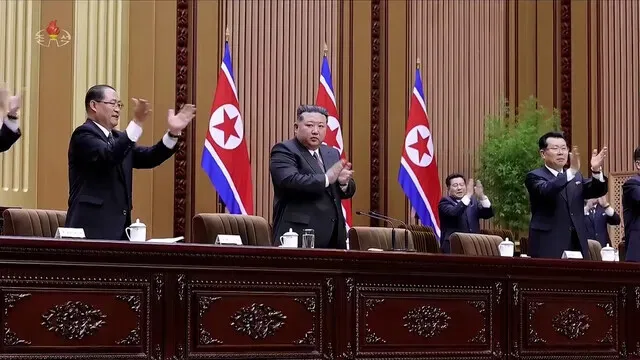
North Korean leader Kim Jong-un attending the first session of the 15th Supreme People's Assembly in Pyongyang on March 22, 2026. (still from KCTV)
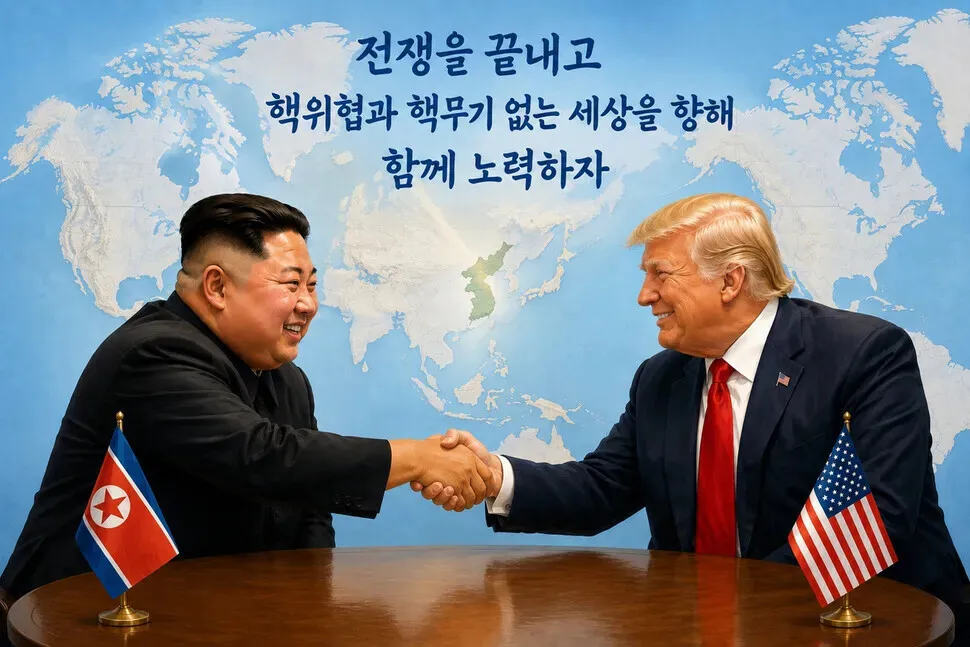
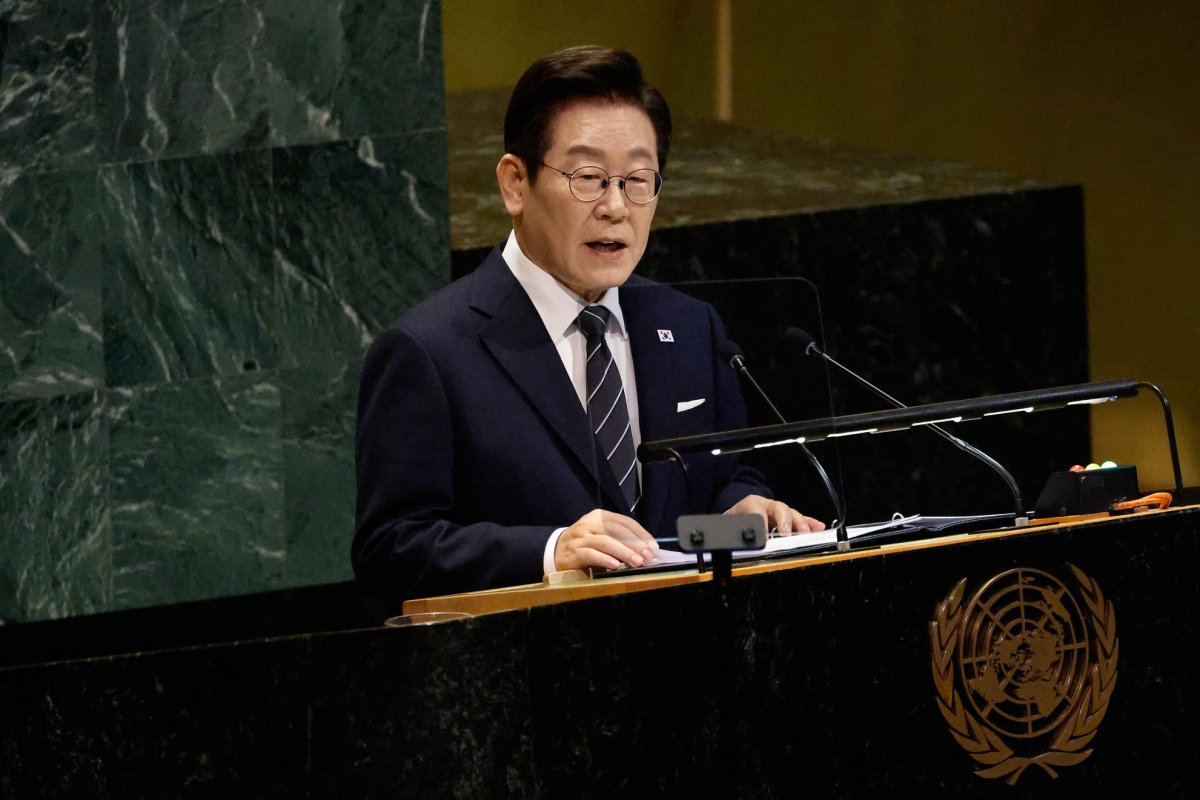
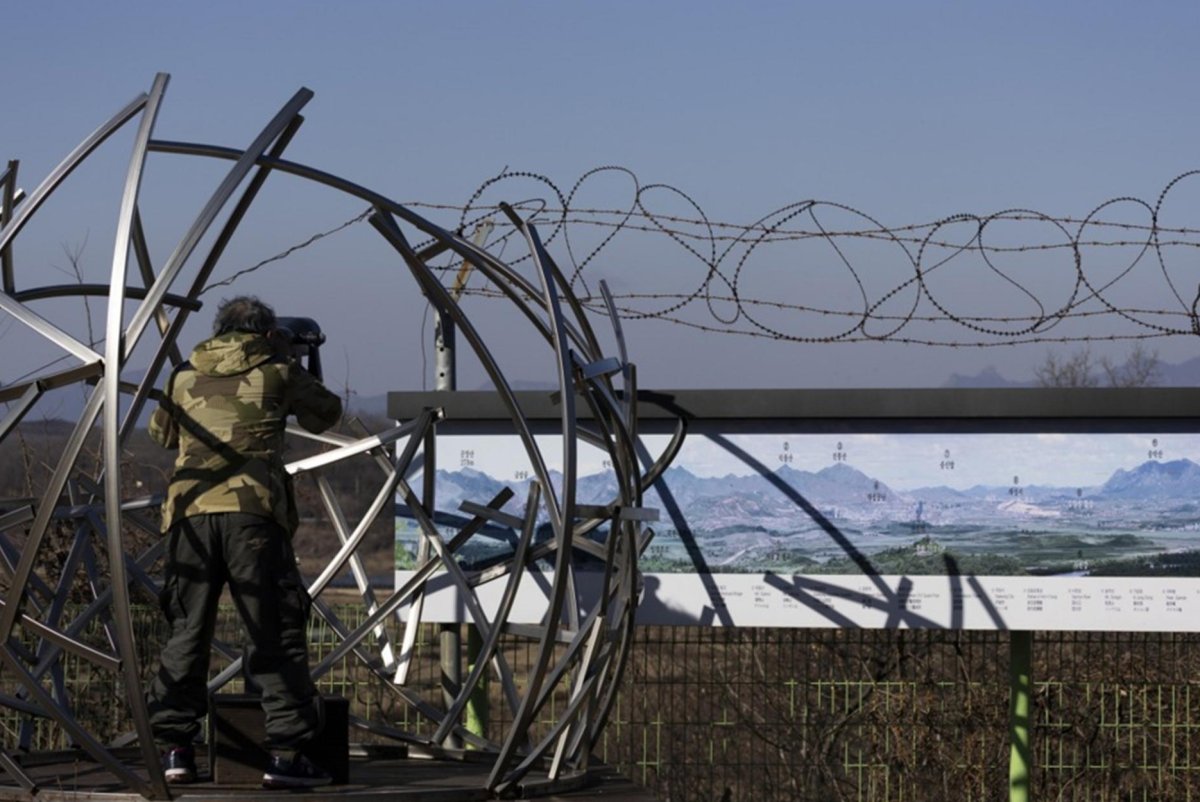
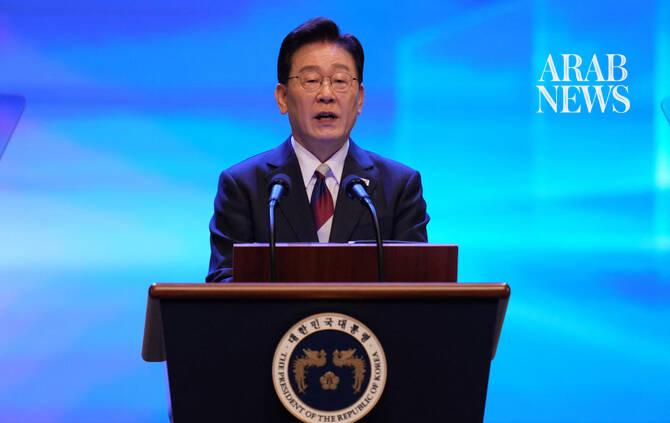
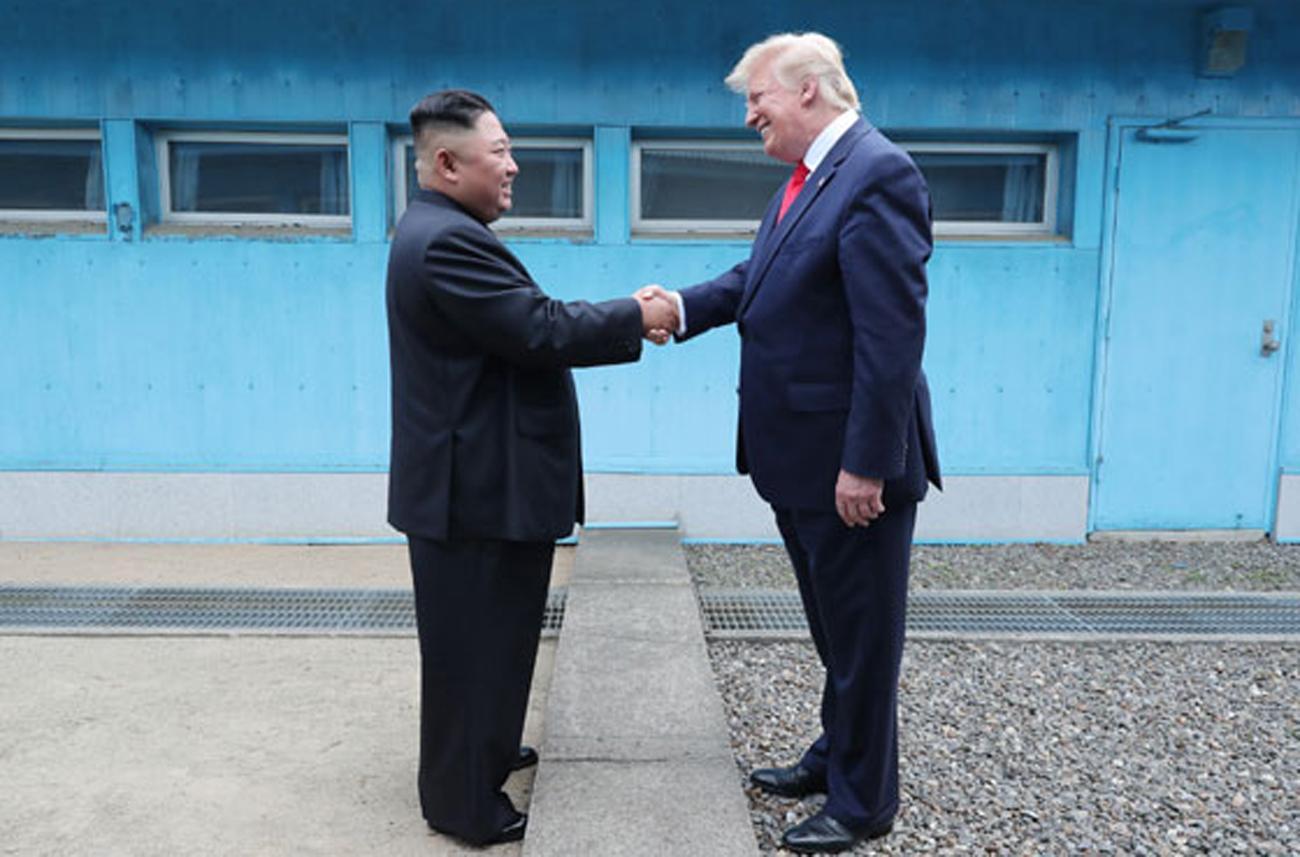
The global conflicts that have arisen in recent years show that it’s much harder to end a war than to begin one. The war that began with Russia’s illegal invasion of Ukraine in February 2022 still shows no signs of ending.Before his reelection, US President Donald Trump boasted that he would end the war in Ukraine in “24 hours.” But instead, and with a little help from Israel, he launched his own war against Iran. And the barbaric behavior committed in Israel’s wars against Palestine and Lebanon makes a mockery of the occasional ceasefires.What about the Korean Peninsula?The armistice signed on July 27, 1953, was supposed to be temporary, as reflected in language about “a political conference of a higher level” being held “within three months.”But over the past 73 years, the armistice has ossified into a semipermanent arrangement — neither war nor peace — without genuine peace talks ever being held.Is an official end of the Korean War even possible?For one thing, the leaders of South Korea and the US have voiced their commitment to ending the war and achieving peace.“I know you are officially at war, but we will see what we can do to get that all straightened out,” Trump said during his summit with President Lee Jae Myung of Korea on Oct. 29, 2025.The US president also pledged to “work very hard with Kim Jong-un and with everybody on getting things straightened out.”Lee said during a message celebrating the March First Movement Day on March 1, 2026, that “we will make every effort to convert the armistice system to a peace regime.” That was the first time he’d addressed the topic in a public setting since his inauguration in June 2025.What about the DPRK’s* position?The DPRK — as North Korea refers to itself — had long sought a peace treaty that would end the war and prevent a future conflict, as well as a peace regime established through the implementation of such a treaty. But since 2019, all language about a peace treaty or peace regime has disappeared from its rhetoric.Pyongyang declined to mention peace on the 70th anniversary of the outbreak of the Korean War in 2020 and on the 70th anniversary of the armistice being signed in 2023. That wasn’t altered by Lee and Trump’s declarations of interest in ending the war and establishing a peace regime. Pyongyang’s silence on the question could be interpreted as increasing apathy about a peace treaty.There has also been a noticeable change in China and Russia’s position.China, which is supposed to be one of the parties in Korean War peace talks (along with the two Koreas and the US), has advocated a dual-track approach to denuclearization and a peace regime as the solution to the Korean Peninsula question.But after China’s State Council mentioned the “simultaneous pursuit of the denuclearization process and the construction of a peace regime on the Korean Peninsula” in May 2025, language about denuclearization or the dual-track approach has disappeared from Chinese government communications and Chinese officials’ comments.In the past, Russia had followed China’s lead on these questions. But since Russia held a summit with the DPRK and renewed their alliance in June 2024, it has recognized the DPRK as a de facto nuclear weapons state.Attention should also be paid to the impact of the US and Israel’s war against Iran. After witnessing the US and Israel’s illegal invasion of Iran, the DPRK has been redoubling efforts to bolster its nuclear deterrent while reiterating its refusal to give up its nuclear arsenal.Recalling that Iran has been attacked twice in the middle of negotiations, Pyongyang likely thinks that staying clear of the US is its wisest course of action until such a time as the US definitively abandons its demand for the DPRK’s denuclearization.But ironically, it’s becoming even more difficult for the US to drop that demand. Since the Trump administration maintains that the chief objective of its war against Iran is keeping the mullahs from getting the bomb, any behavior suggesting a tolerance for the DPRK’s nuclear arsenal could face political backlash.Unless these two positions can be reconciled, Trump’s desire to meet with Kim Jong-un and discuss an end to the war is unlikely to be realized.As all this indicates, a peace treaty on the Korean Peninsula, and denuclearization in connection to such a treaty, have been cast into doubt. In the meantime, “peaceful coexistence” has emerged as a new concept.The Lee administration in South Korea has described peaceful coexistence as a central goal for its inter-Korean policy, and the DPRK has recently mentioned peaceful coexistence as well.Kim Jong-un spoke of the possibility of peaceful coexistence with the US after Trump returned to the White House. Then during his policy speech before the Supreme People’s Assembly in late March 2026, Kim said, “Whether our enemies choose confrontation or peaceful co-existence, it is their option, and we are ready to respond to any of their options.”Kim’s use of the plural word “enemies” is noteworthy since it appears to refer not only to the US but also to South Korea and Japan.But while the two Koreas may both be speaking about peaceful coexistence, what they mean by the term appears to be very different.For the Lee administration, peaceful coexistence is grounded in building a powerful autonomous defense on the one hand and moving forward with a peace regime and the denuclearization process on the other.But for the DPRK, peaceful coexistence is predicated on its status as a nuclear weapons state. That’s why Pyongyang says a chief condition for peaceful coexistence with its “enemies” is that they give up their demands for its denuclearization.This fundamental disconnect raises the question of how peaceful coexistence could be realized. The most desirable method would be concluding a peace treaty to replace the armistice agreement.But the DPRK is uninterested in a peace treaty tied to denuclearization, and neither China nor Russia is talking about the “dual-track approach” any longer. What that signifies is that as long as South Korea and the US insist on linking the peace treaty with denuclearization, it will be increasingly difficult to even initiate negotiations toward a peace treaty.One conceivable option is negotiating a peace treaty in which the ROK-US alliance and the DPRK tacitly accept each other’s military deterrent. That would mean combining “peace through strength” (in the form of Korea’s independent defensive capabilities and the US’ extended deterrence balanced against North Korea’s nuclear deterrent on the other) with “peace through institutions” (in the form of a peace treaty).Under this approach, the frailty of the peace treaty could be compensated with military strength, and the risks of the arms buildup and security dilemma resulting from deterrence could be managed and mitigated through political and military confidence-building.Of course, South Korea and the US are unlikely to give the DPRK’s nuclear arsenal tacit recognition. But if they keep insisting on denuclearization, the prospects for denuclearization and a peace regime will only grow more remote.A solution to this dilemma could come through creative ambiguity. The peace treaty could include language about working together for a world without nuclear war and nuclear weapons.By Cheong Wook-sik, director of the Hankyoreh Peace Institute and director of the Peace NetworkEditor’s note: The official English name of North Korea is the Democratic People’s Republic of Korea, or DPRK for short. But in Korean, the country refers to itself as “Choson” rather than using “Hanguk” like South Korea. In the original Korean piece, the author uses the term “Choson” in an attempt to do away with the baggage of using the term “North Korea,” which can imply that it is an extension of South Korea. In translation, we render this as “DPRK” for the sake of intelligibility to readers while maintaining the spirit of referring to the country by the name it uses for itself. South Korea is retained. For more on why the author uses “Choson,” read his column here: [Column] ‘Choson’: Is it time we start referring to N. Korea in its own terms?Please direct questions or comments to [english@hani.co.kr]