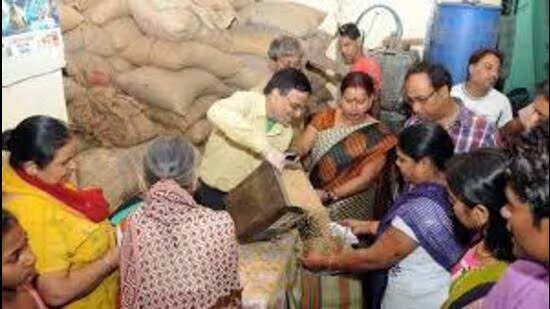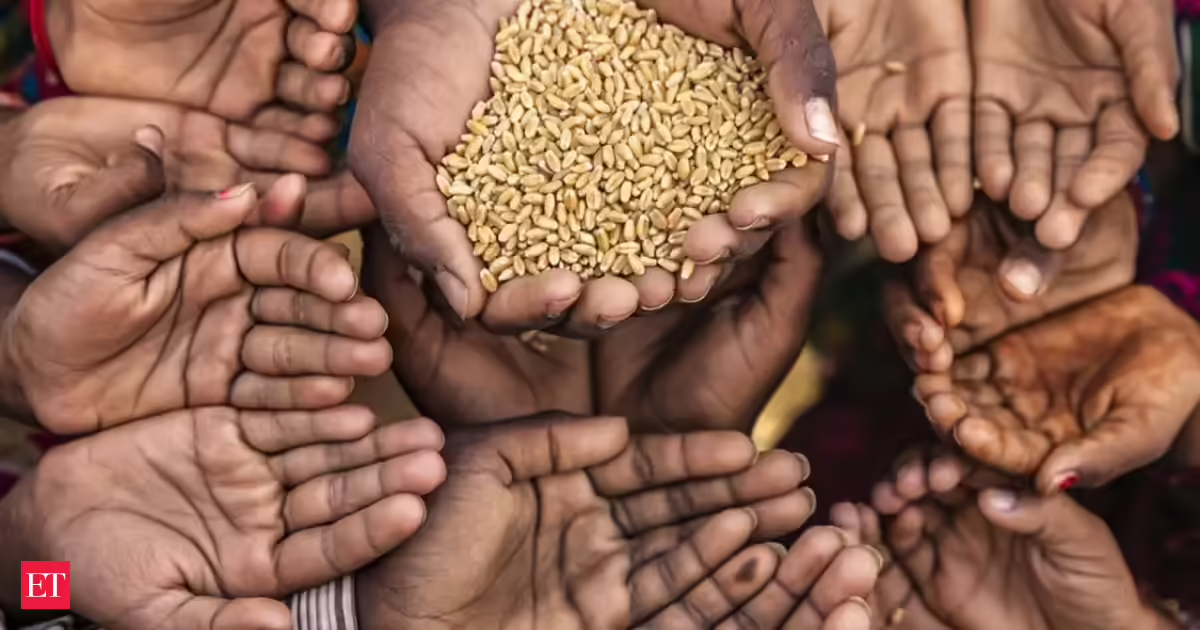
The SARTHAK scheme hopes to create a unified national PDS database to improve beneficiary verification, eliminate duplicate records
| Photo Credit:
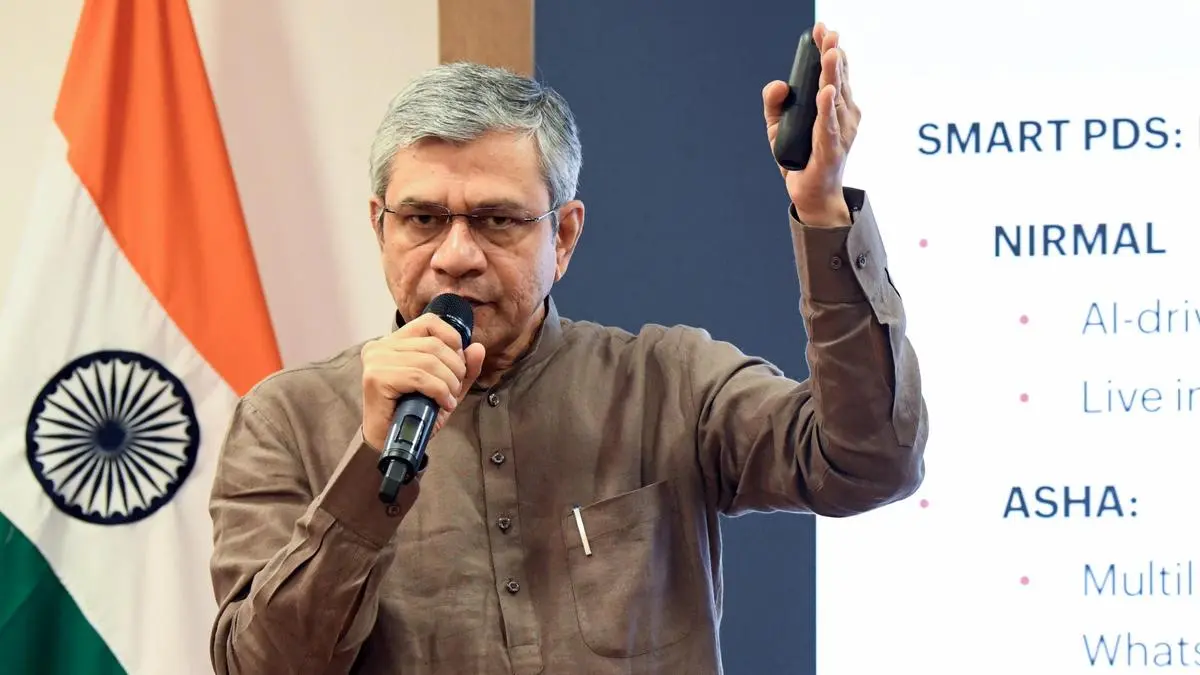
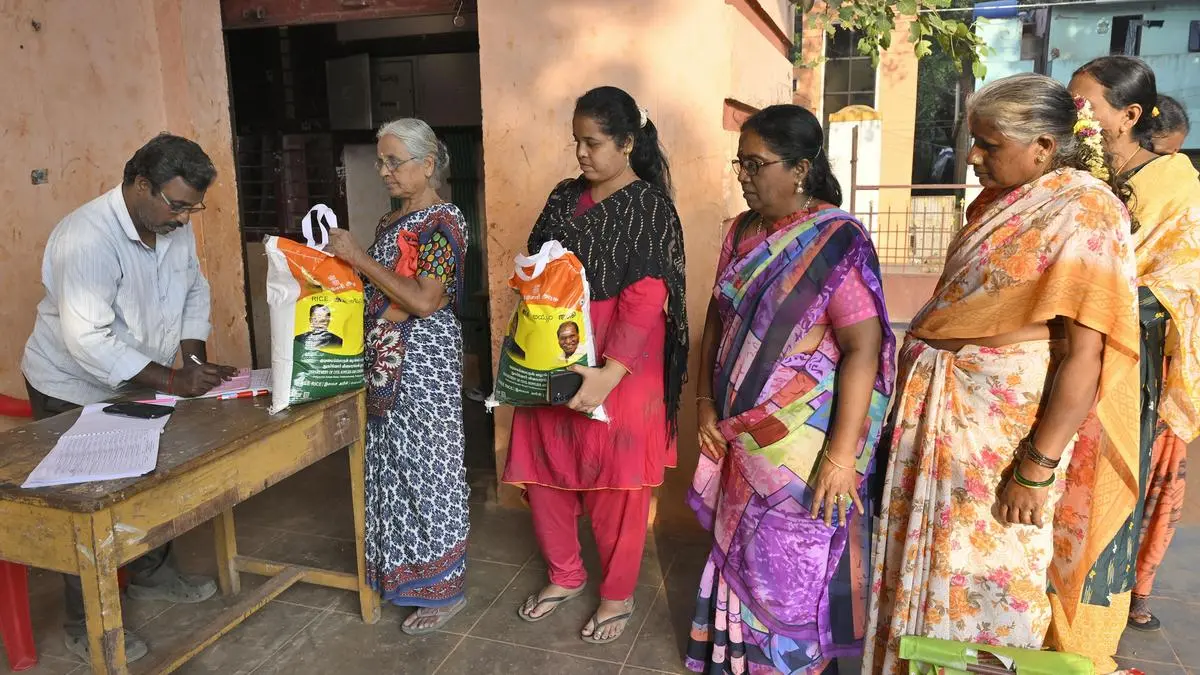
Union Minister Ashwini Vaishnav recently announced the Scheme for Assistance in Ration Transport and Handling-Income with Automation in the Public Distribution System (SARTHAK), with a central package of ₹25,530 crore for five years, to modernise and strengthen the PDS, a pillar of food security for 81.35 crore people of India.The purpose of SARTHAK is as follows: First, facilitate inter-State movement of foodgrains, along with technology-driven reforms, to create a secure and responsive distribution system. Second, enhance Fair Price Shop (FPS) dealer margins under the National Food Security Act, 2013, streamline ration distribution and improve service delivery to beneficiaries by employing an AI-based monitoring system.Third, set up State command and control centres to monitor PDS operations; supervise foodgrain transportation from State/Central warehouses to FPS dealer points; monitor FPS operations; manage stocks; and resolve beneficiary complaints.Fourth, create a unified national PDS database to improve beneficiary verification, eliminate duplicate records, strengthen coordination between States, and enhance beneficiary portability.Concerns, suggestionsWhile the scheme’s purposes are novel, a few issues need to be addressed: (i) How will the scheme be rolled out in States with decentralised/centralised procurement cum distribution models? (ii) What will be the revised FPS dealer margins for general and special States, and how will the margin fixation be rationalised? (iii) How will the scheme ensure ease of access, improve agency and sustainability of the PDS?First, the government fixed the base dealer’s margin, which varies between general (₹90 per quintal) and special States (₹180 per quintal). The concurrent evaluation of the NFSA implementation highlighted that, in general States, the base dealer’s margin should be ₹140 per quintal or higher to make the FPS operation economically viable and incentivise their agency to strengthen the PDS.Also, ration distribution to beneficiaries requires biometric authentication via Aadhaar seeding at the dealer’s managed ePoS — the maintenance charges for ePoS range from ₹21 to ₹26 per quintal.Second, costs for intra-State movement and handling charges are shared between the Central and State governments where centralised procurement takes place. Under the decentralised procurement model, the States concerned manage distribution through State agencies and pay a predetermined handling charge — example, ₹40-50 per quintal. Central assistance for the base transportation and handling is set at ₹105 per quintal for general States and ₹143 per quintal for special States.Given the State-wide distribution network, procurement operations, and operational FPS dealers, the Centre must rationalise the fund allocation. Third, ease of access is an important dimension. This depends on the approach and physical accessibility of the FPS dealer’s outlet, ease of lifting the ration, awareness, and ease of application processes among the entitled beneficiaries. So, the scheme must create an enabling environment for beneficiaries’ access to the ration quota, as 28 per cent of grains supplied through the PDS do not reach the intended beneficiaries.Fourth, national-level offtake is 93-98 per cent of the total allocation, and it can be improved through real-time monitoring of stock, allocation and offtake at the national level, and through State command-and-control centres.Fifth, to make the PDS secure, the scheme must achieve 100 per cent ONORC portability by addressing biometric failures, stock allocation lags, interoperability problems, and exclusion risks. Blockchain-IoT and AI can fix these issues.As the scheme will add to the Central government’s fiscal strain, its execution must align with its objectives: the agency and transparency of the PDS.The writer is Associate Professor, IIM Lucknow. Views are personalPublished on June 3, 2026