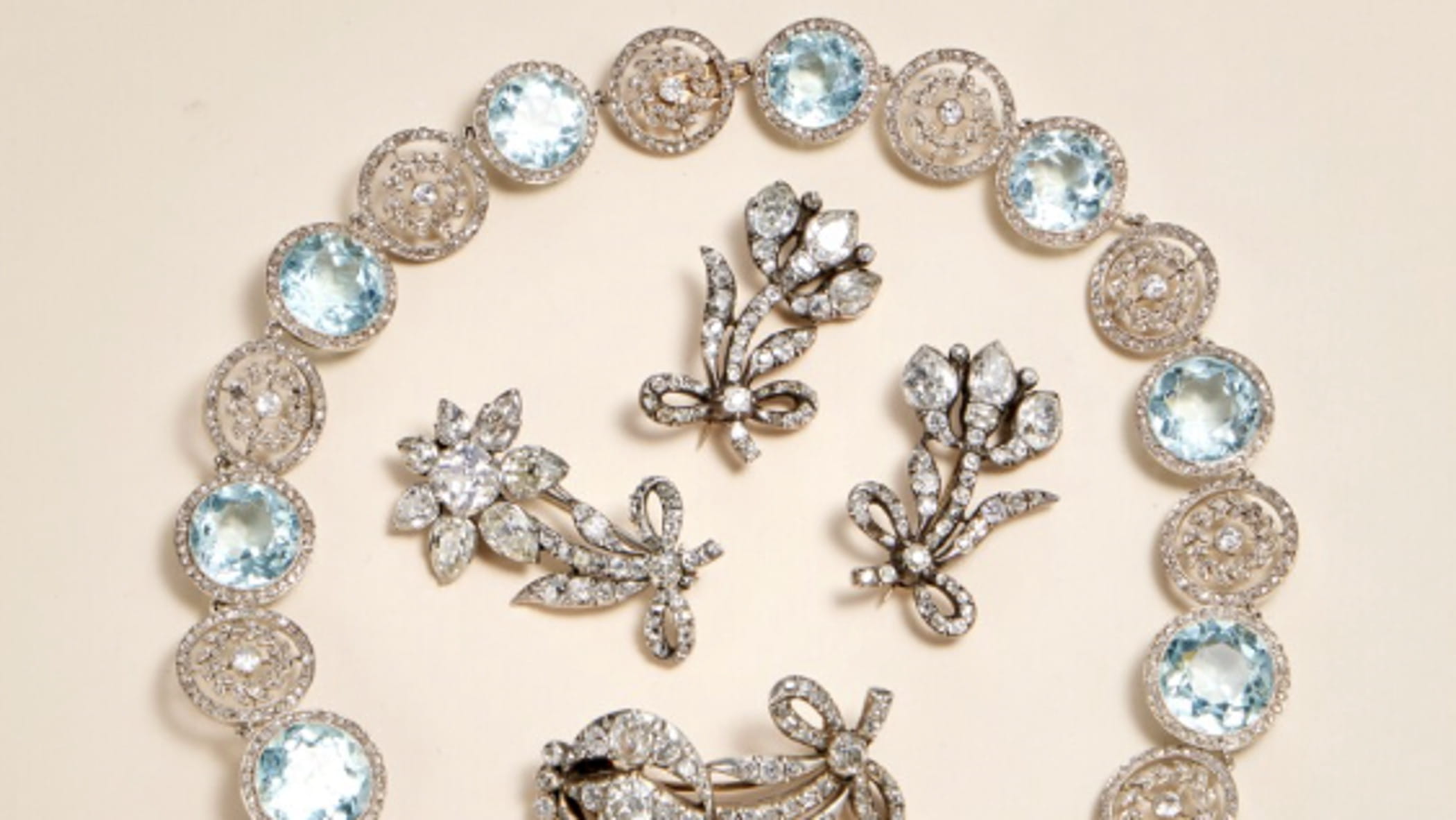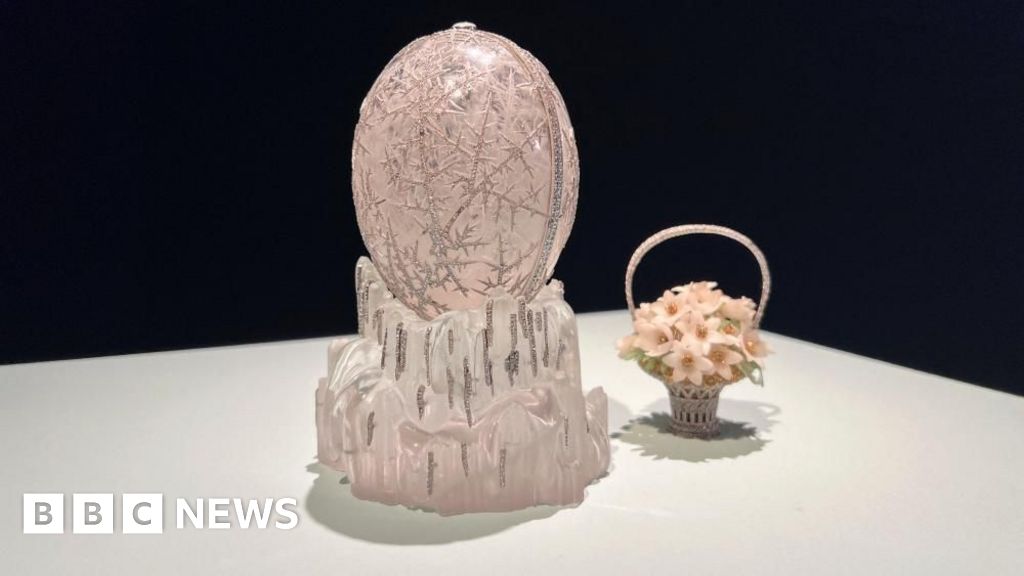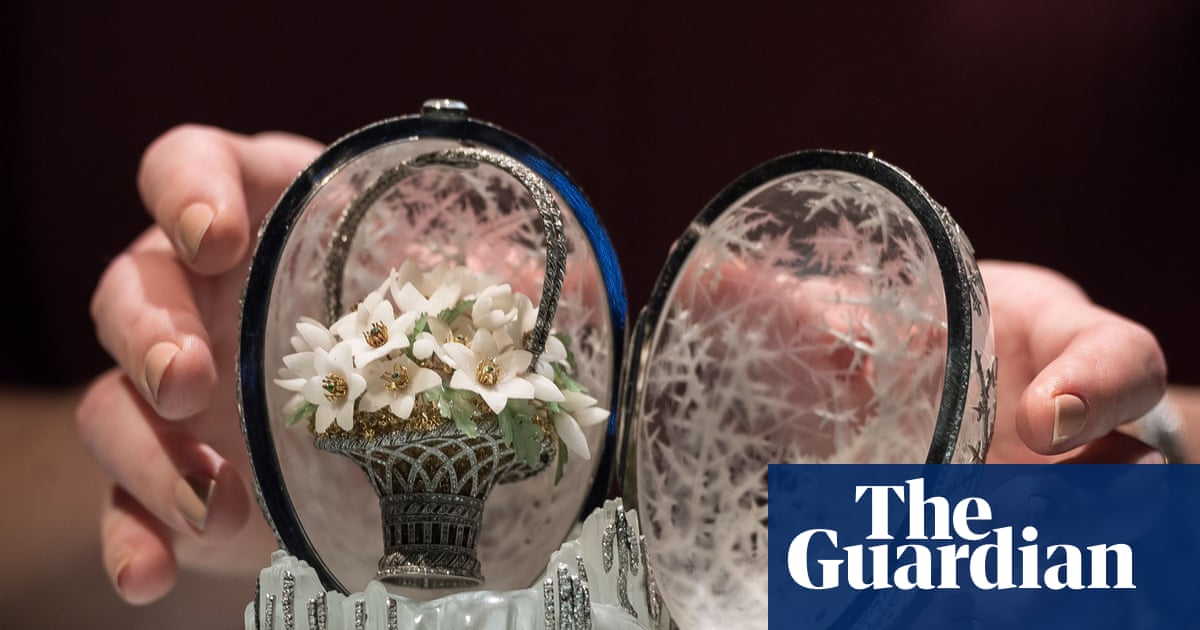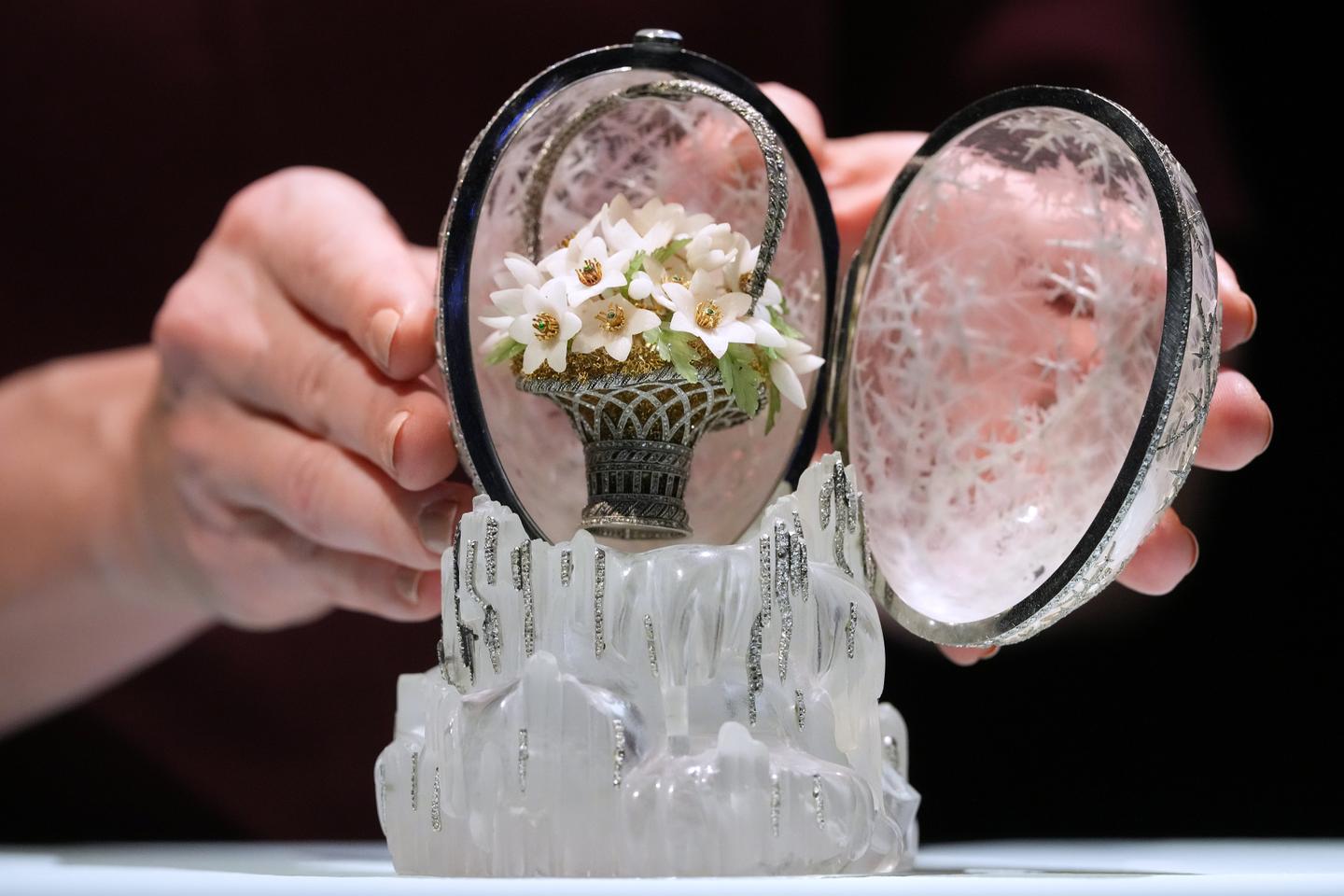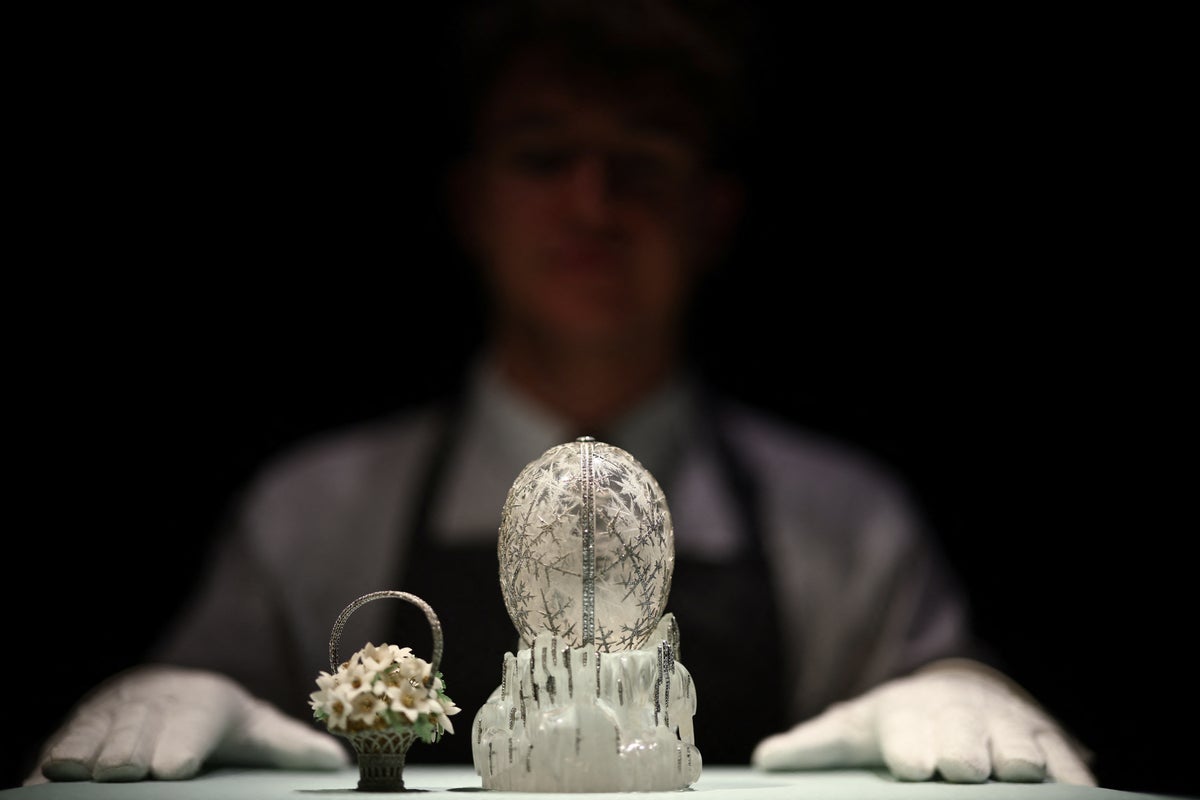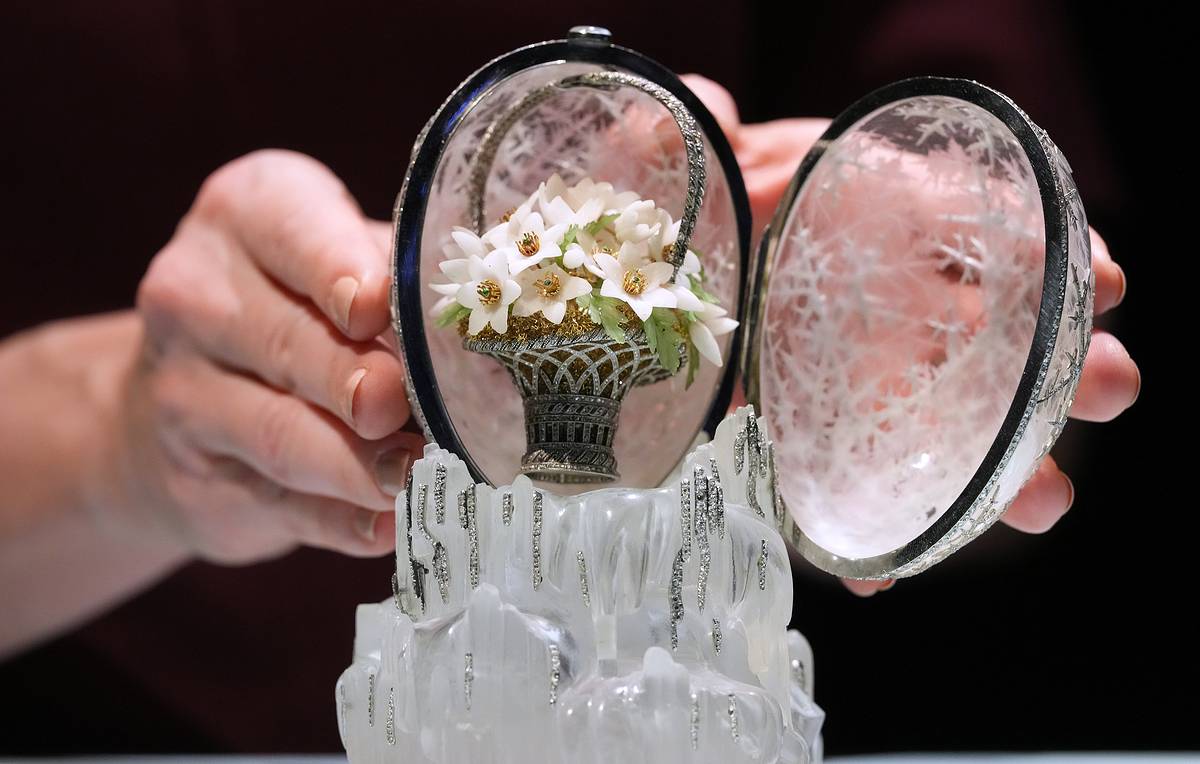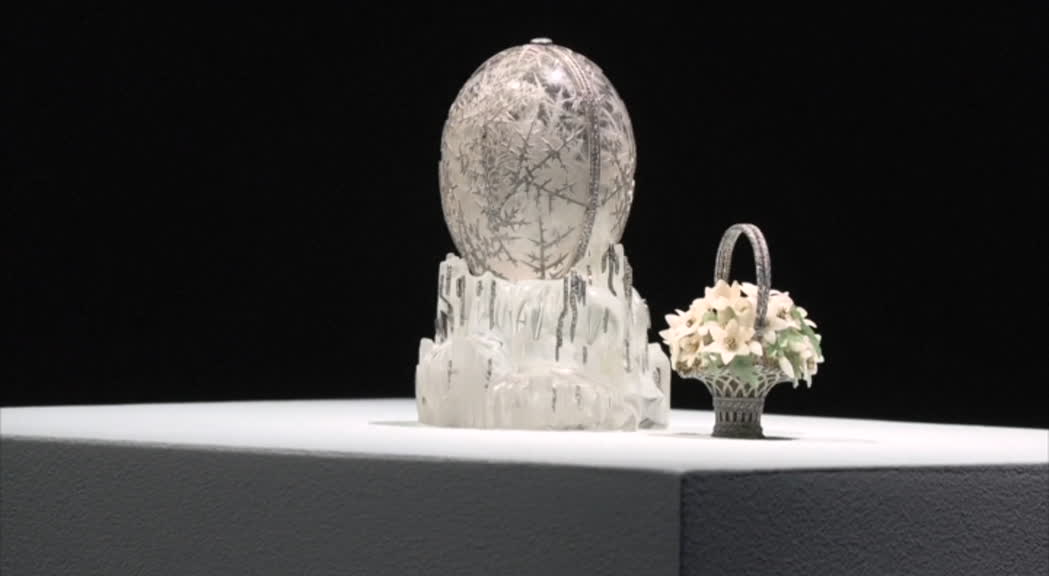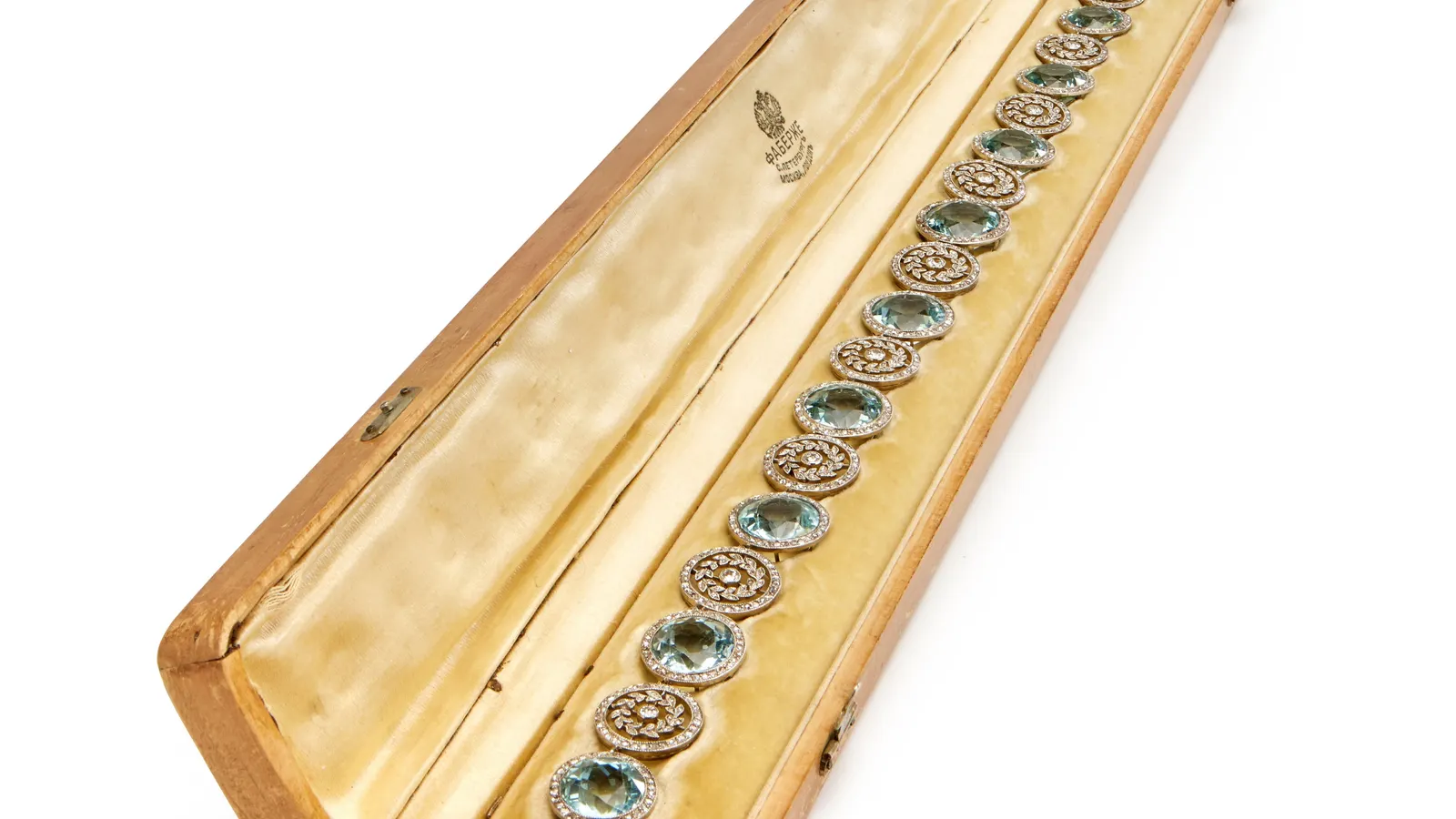
A rare Imperial Fabergé diamond and aquamarine necklace, circa 1911 with original box. Estimate: $400,000-$600,000Sotheby'sA rare Imperial Fabergé diamond and aquamarine necklace is expected to lead Sotheby’s inaugural Artistic Luxury: Fabergé, Gold Boxes, Silver & Ceramics auction on June 17. It has an estimate of $400,000 to $600,000.The necklace is set with 11 graduated round-cut Siberian aquamarines framed by rose-cut diamonds. The stones alternate with graduated openwork laurel motifs centered by 11 old-cut diamond brilliants mounted in platinized settings. Measuring more than 16 inches in length, Sotheby’s said it is among the largest known necklaces created by Fabergé.The necklace was produced under the direction of Albert Holmström, the distinguished Finnish master jeweler and Fabergé workmaster and designed by his niece and apprentice, Alma Pihl. Holmström is best known for executing the iconic 1913 Winter Egg. A closer look of the Imperial Fabergé diamond and aquamarine necklaceSotheby'sAccording to Sotheby’s, the piece boasts Russian royal provenance dating to the reign of Emperor Nicholas II.The Imperial Cabinet purchased the necklace in May 1911 for 2,650 rubles and considered it as a gift for the visit of German Crown Prince Wilhelm and Crown Princess Cecilie to St. Petersburg. Ultimately, it was not selected and was returned to the Imperial Cabinet.MORE FOR YOUFabergé necklaces of this caliber are exceedingly rare. Sotheby’s noted that many of the firm’s jeweled creations were confiscated and dismantled following the Bolshevik Revolution. Remarkably, both the necklace and its original fitted case survived.The necklace will headline the 161-lot sale, the first of its kind from Sotheby’s. The auction is led by Helen Culver Smith, Sotheby’s global head of Fabergé and Russian works of art.Bejeweled Flower Trimmings from the Russian Crown JewelsWhile the Fabergé necklace is the auction’s top lot, three diamond flower dress trimmings from the Russian Crown Jewels may be among its most historically significant offerings.During her reign from 1762 to 1796, Catherine the Great sought to establish a court rivaling Versailles and expanded the Imperial jewelry collection by approximately 40%, according to Sotheby’s. Among the most personal expressions of that ambition were small, diamond-set floral ornaments worn directly on imperial gowns. Three examples in the sale are attributed to Louis David Duval of Geneva, one of Catherine’s principal jewelry suppliers. Fashioned as ribbon-tied flowers set with old-cut diamonds mounted in silver, they exemplify late 18th-century court jewelry design.The pieces include:Two silver and diamond-set flower dress trimmings from the Russian Imperial Jewels, attributed to Duval, circa 1780Sotheby's• Two silver and diamond-set flower dress trimmings from the Russian Crown Jewels, attributed to Duval, circa 1780; estimate $60,000–$80,000.A silver and diamond-set six-petal flower dress trimming from the Russian Imperial Jewels, attributed to Duval, circa 1780Sotheby's• A silver and diamond-set flower dress trimming from the Russian Crown Jewels, attributed to Duval, circa 1780; estimate $30,000–$50,000.A silver and diamond-set flower dress trimming from the Russian Imperial Jewels, attributed to Duval, circa 1780Sotheby's• A silver and diamond-set flower dress trimming from the Russian Crown Jewels, attributed to Duval, circa 1780; estimate $40,000–$60,000.Sotheby’s noted that later generations of Romanov empresses repurposed and reimagined the trimmings. Both Empress Maria Feodorovna and Empress Alexandra Feodorovna were photographed wearing examples of the jewels.A silver, sapphire and diamond-set flower dress trimming from the Russian Imperial Jewels, circa 1750Sotheby'sAn earlier and larger example of the style, worn by Empress Elizabeth Petrovna (reigned 1741–1762), is also included in the sale. Composed of diamonds and Ceylon sapphires mounted in gold foil and depicting sprays of wheat and cornflowers, it carries an estimate of $40,000 to $60,000.“These jewels carry with them a fascinating window into the luxury and opulence of the Russian Imperial court. It is difficult to overstate their rarity and historical importance, and I am truly thrilled to be presenting them side by side for the first time,” Smith said in a statement. “Our hope with the inaugural Artistic Luxury sale is to showcase the beautiful marriage between luxury and artistry—whether in gold, silver or ceramic.”Following the Bolshevik Revolution in 1917, the Russian Crown Jewels were seized and transferred to Moscow’s Armoury Hall, where they were stored in nine large boxes, Sotheby’s said. In 1922, a team led by mineralogist and Soviet Academy of Sciences member A.E. Fersman cataloged and photographed the collection, resulting in the landmark publication Russia's Treasure of Diamonds and Precious Stones (1925–26), considered the definitive illustrated inventory of the Imperial Jewels.All four flower trimmings offered in the sale are documented in that publication.As the Soviet government sought funds to rebuild the national economy, portions of the collection were sold. In 1927, a selection was offered through Christie’s London, including these jewels. They later surfaced at London dealer S.J. Phillips, where they were acquired by the family of the present owner. Sotheby’s said the pieces have remained in private hands and largely unseen for nearly a century.Another highlight of the sale is a gold, silver-gilt and guilloché enamel Fabergé desk clock, circa 1898, that belonged to Empress Marie Feodorovna (1847–1928), mother of Emperor Nicholas II. It is estimated at $70,000 to $90,000.
A Rare Imperial Fabergé Necklace Could Fetch $600,000 At Sotheby’s
In addition to the Fabergé necklace, the June 17 auction includes three diamond-set floral ornaments worn on imperial gowns, acquired by Catherine the Great
833 words~4 min read