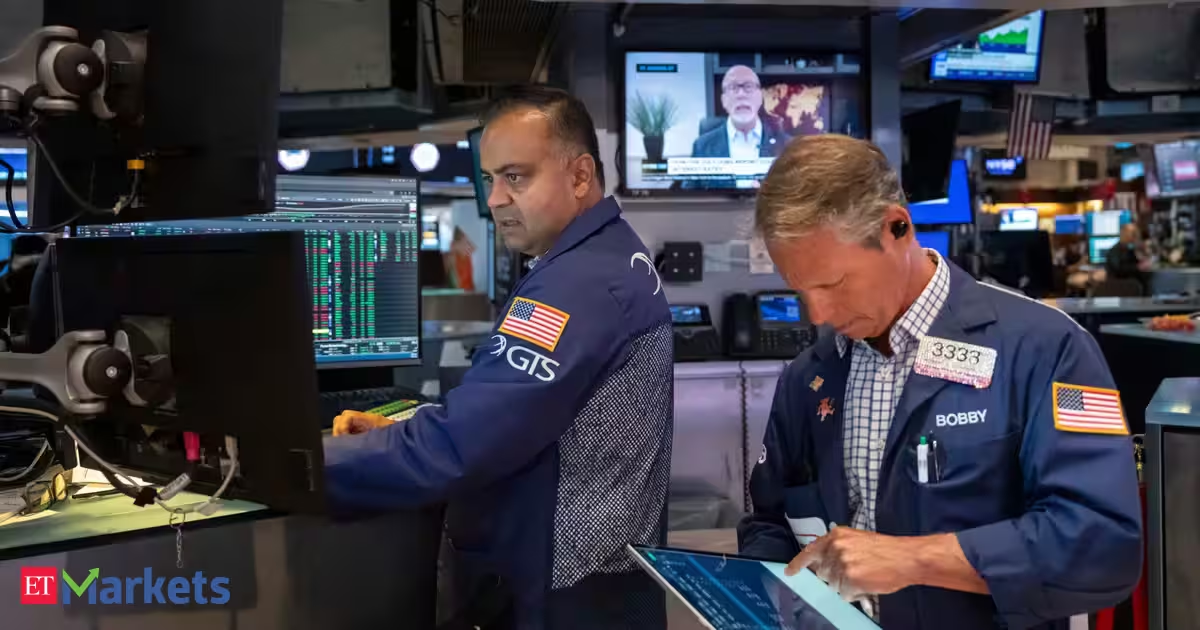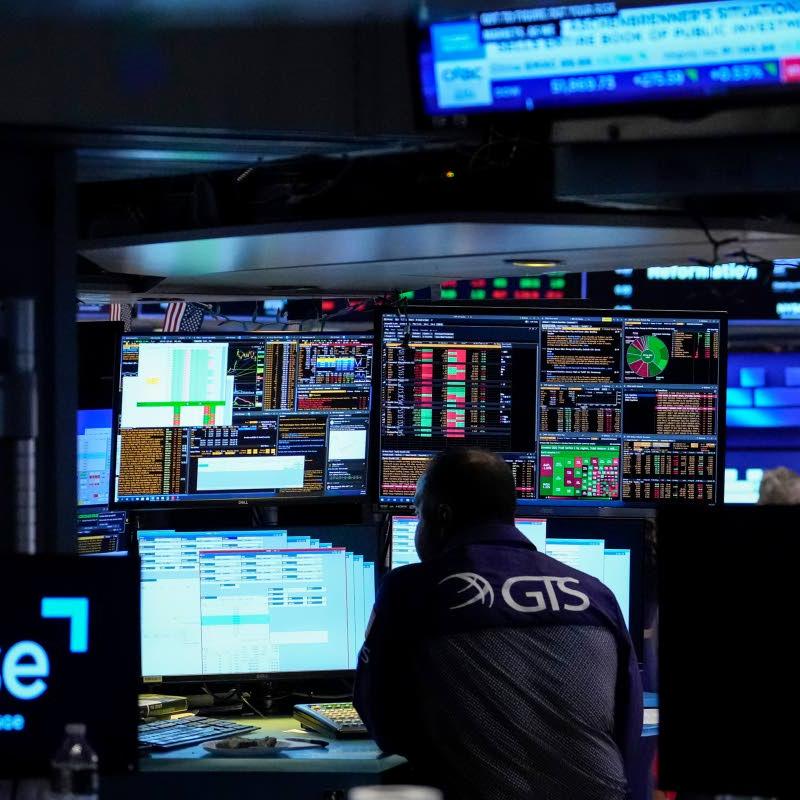
US stocks closed higher on Tuesday, with the Russell 2000 outperforming as it rebounded from Monday's losses, while the S&P 500 and Nasdaq also posted modest gains. Sector performance was broadly positive, with Utilities and Energy leading the advance. Communication Services was the clear laggard, weighed down by Alphabet (GOOGL, -4%) after it announced plans to raise USD 80bln for AI infrastructure. Elsewhere, Marvell (MRVL) surged after Nvidia's CEO suggested it could become the next trillion-dollar company, while Hewlett Packard Enterprise (HPE) rallied following a strong earnings report.USD saw a mixed performance vs. G10 peers and traded within a pretty narrow range as ING writes that the 99.00-99.50 range remains the ‘comfort zone’ for now, which embeds lower oil prices but also reflects the broadly stronger macro backing for the dollar. In ING's view, the latter factor could be reinforced by this week’s US data calendar. In terms of broader moves, geopolitics remains front and centre for now, with the main US data event on Friday: US NFP. On the labour market, JOLTs Job Openings for April surged to 7.618mln, against the expected 6.82mln, and prior 6.866mln.Looking ahead, highlights include New Zealand Terms of Trade, Australian AIG Manufacturing & Construction Indexes, Final Services & Composite PMIs, GDP, Chinese RatingDog Services & Composite PMIs, Supply from Australia.More Newsquawk in 2 steps:1. Subscribe to the free premarket movers reports2. Trial Newsquawk’s premium real-time audio news squawk box for 7 daysLOOKING AHEADHighlights include New Zealand Terms of Trade, Australian AIG Manufacturing & Construction Indexes, Final Services & Composite PMIs, GDP, Chinese RatingDog Services & Composite PMIs, Supply from Australia.Click for the Newsquawk Week Ahead.IRAN CONFLICTUS President Trump said reports that Iran and the US stopped speaking a few days ago were false, and conversations had been ongoing continuously. Trump added “Where they lead, one never knows, but as I told Iran, ‘It’s time, one way or another, for you to make a Deal.’”US Secretary of State Rubio said they are in talks with Iran, and there were prospects that Iran had agreed to negotiate aspects of its nuclear program that it had previously refused to discuss. Rubio also said that nuclear negotiations with Iran were highly complicated and technical and would therefore take time, while he added that the war with Iran had made interactions with Tehran more complicated, but also commented that the "war in Iran is over". Furthermore, Rubio said that Iran’s Supreme Leader “is increasingly engaging at some level, although all of his communications have been in writing and through intermediaries.”US military planners across several continents were on heightened alert for the potential expansion of US-Iran hostilities, according to Washington Post sources, although sources added that preparations alone did not indicate strikes were imminent.An informed source said the exchange of messages between Iran and the US aimed at achieving what had been described as an initial MoU between Tehran and Washington had been halted for at least several days, according to Fars. The source added that while Trump claimed talks with Iran were proceeding rapidly, Iran’s latest message to Washington was a clear message regarding Lebanon that had received widespread international repercussions.American sources told Al Hadath that there was a proposal for a 60-day plan under which Israel would gradually withdraw from southern Lebanon. Negotiations reportedly proposed the deployment of the Lebanese army and UNIFIL in southern Lebanon following Israel’s withdrawal, while Lebanon sought to resolve Hezbollah’s weapons issue politically after a full Israeli withdrawal.Senior Iranian official said renewed war with the US was “inevitable”, according to Arab News citing Iranian state TV.Senior Iranian political source told Amwaj Media there had not been any halt in communication with the US via intermediaries. The source added that Qatar and other regional intermediaries had been working intensively behind the scenes to contain a potential re-escalation of war over Lebanon, while movement on multiple parallel yet interconnected tracks suggested there could be significant developments approaching.Iran Deputy Foreign Minister Gharibabadi told Tehran Times that Iran will take "proportionate" measures if Israel continues strikes in Lebanon.Iranian cleric said “if negotiations can meet principles, values, and national interests, then it will be a desirable matter; otherwise, decisions must be made about other paths,” according to Mehr News.Iran said repairs to damaged energy facilities were progressing faster than expected, according to Iran’s oil ministry.Israeli Defence Minister said Israel would not accept the bombing of northern Israel without a strong response in Beirut’s southern suburbs, according to Al Hadath. The minister added that military activity inside Lebanon would continue in all cases and that the army would destroy all border villages used by Hezbollah in attacks.Israeli Broadcasting Authority, citing an Israeli official, said there was American approval for the Israeli army to remain inside the security zone in southern Lebanon. The report added that there were not necessarily restrictions on Israeli military operations in southern Lebanon and reiterated US approval for a continued Israeli presence there.Israeli Broadcasting Authority, citing sources, said negotiations between Israel and Lebanon were progressing well, while US forces would train and equip the Lebanese army.Israel and Lebanon’s delegations have not yet been able to reach decisive points regarding the ceasefire issue, according to Sky News Arabia citing a Lebanese source.Source familiar with the details told i24NEWS that during the talks between Israel and Lebanon, senior officials in the Israeli delegation said Hezbollah did not stop the fighting even after promising President Trump to do so.Hezbollah leader Mahmoud Qamati told Al-Araby TV that Hezbollah had agreed to a genuine and comprehensive ceasefire, according to Al Araby. Qamati added that Hezbollah would respond to any bombing of Beirut’s southern suburbs by targeting sites deeper inside northern Israeli settlements and said Hezbollah did not recognise the “yellow line” and that Lebanese land must be liberated.Israeli airstrikes targeted sites in southern Lebanon, according to Sky News Arabia.MTV Lebanon reported that the chances of a ceasefire were high and that communication with Hezbollah and Nabih Berri was direct.Contrary to the leak, US President Trump did not say anything personal to Israeli Prime Minister Netanyahu, according to N12’s Segal, while the pair reportedly agreed that Israel would refrain from attacking Beirut provided it was not attacked within its own borders. The report added that Trump said it was becoming difficult to present Israel’s position to the world and that this would lead to hatred toward Israel.US TRADEUS stocks closed higher on Tuesday, with the Russell 2000 outperforming as it rebounded from Monday's losses, while the S&P 500 and Nasdaq also posted modest gains. Sector performance was broadly positive, with Utilities and Energy leading the advance. Communication Services was the clear laggard, weighed down by Alphabet (GOOGL, -4%) after it announced plans to raise USD 80bln for AI infrastructure. Elsewhere, Marvell (MRVL) surged after Nvidia's CEO suggested it could become the next trillion-dollar company, while Hewlett Packard Enterprise (HPE) rallied following a strong earnings report.SPX +0.13% at 7,610, NDX +0.48% at 30,661, DJI +0.45% at 51,313, RUT +0.90% at 2,932.Click here for a detailed summary.TARIFFS/TRADEUSTR Greer said tariffs had produced very good export results and had led to “green shoots” in US manufacturing, while he added that reports on other Section 301 investigations would be released over the coming weeks. Furthermore, Greer said the US had a giant trade deficit and required substantial tariffs to correct it, while he also argued that tariffs had not caused inflation.European Parliament’s Trade Committee voted in favour of legislation to remove EU duties on several US goods imports.Canadian PM Carney said progress was being made with the US on trade-related issues. It was also reported that Canada had sent a formal letter to Mexico and the US regarding the start of the USMCA review and stated that discussions with the US on sectoral tariffs would be essential.Brazilian Senator Flavio Bolsonaro urged US President Trump not to impose tariffs on Brazilian firms, while adding that tariffs were not the solution.Chinese Foreign Minister Wang Yi said China hoped for a positive atmosphere to strengthen China-UK ties and deepen cooperation, according to Xinhua.NOTABLE HEADLINESFed Chair Warsh taps two outside associates to advise him while he settles into the job, according to WSJ citing sources.Fed’s Hammack (2026 voter, hawk) said it was reasonable to keep rates steady for now, given the uncertainty, although the Fed may need to act “soon” if inflation trends failed to cool. Hammack said there were risks in waiting for signs that high inflation was becoming embedded in the economy and added that her main concern was the growing risk of persistent inflation pressures. Hammack also said she was worried monetary policy might not be tight enough to lower inflation and reiterated her commitment to returning inflation to 2%.Fed’s Hammack (2026 voter) said there were not yet signs that inflation expectations were rising, while adding that firms had remained resilient amid significant change. Hammack said the labour market remained stable despite weak job creation and noted that Warsh was approaching his new role with an open mind and asking many questions. Hammack said she looked at a broad range of inflation indicators and warned that economic uncertainty remained very high, making the policy outlook uncertain. She added that the next FOMC meeting would likely feature robust debate, while reiterating that inflation remained too high and continued to rise and may require policy support to return to 2%.US Senate GOP leaders indicated to Republicans at lunch that they’re trying to fast-track the reconciliation bill, according to Punchbowl citing sources.DATA RECAPUS JOLTs Job Openings (Apr) 7.618M vs. Exp. 6.82M (Prev. 6.866M; Low 6.79M, High 7.05M)FXUSD saw a mixed performance vs. G10 peers and traded within a pretty narrow range as ING writes that the 99.0-99.50 range remains the ‘comfort zone’ for now, which embeds lower oil prices but also reflects the broadly stronger macro backing for the dollar. In ING's view, the latter factor could be reinforced by this week’s US data calendar. In terms of broader moves, geopolitics remains front and centre for now, with the main US data event on Friday: US NFP. On the labour market, JOLTs Job Openings for April surged to 7.618mln, against the expected 6.82mln, and prior 6.866mln.EUR was flat and saw limited reaction to the as-expected EZ CPI, whereby core Y/Y topped expectations alongside a jump in the Services figure. The euro was little moved by the report, given that it plays in favour of a hike in June, which was already near enough fully priced in pre-release.GBP marginally strengthened in choppy trade, while there were comments from BoE Governor Bailey that policymakers were facing a trade-off between growth and inflation and that the Middle East conflict entirely explained the inflation overshoot, as well as noted that the outlook was for slower growth rather than a recession.JPY weakened with USD/JPY rising to within a whisker of the psychological 160.00 level.SNB Chairman said the real overvaluation of the Swiss franc was clearly lower than the nominal overvaluation, while adding that the SNB had increased its readiness to intervene against overvaluation pressures stemming from the Middle East escalation.Polish Interest Rate Decision (Jun) 3.75% vs. Exp. 3.75% (Prev. 3.75%)FIXED INCOMET-notes settled marginally higher and the curve flattened as rising oil prices drove Treasury trade, while above-expected JOLTS data only briefly spurred yields.COMMODITIESOil prices edged higher throughout the duration of the US session despite conflicting geopolitical headlines, with initial upside spurred by a report that informed sources said that the exchange of messages between Iran and the US, aimed at achieving an initial MoU between US and Iran, has been halted for at least several days, although this was later refuted by US President Trump who said conversations had been ongoing continuously.IEA oil division chief Basoni said oil supplies from the US, Brazil, Argentina and Venezuela had exceeded expectations, although output from the Americas could only marginally offset supplies lost east of Suez. Basoni said roughly half of a planned 400mln barrel release had already entered the market, with the remainder to be released later, while adding that a further coordinated emergency oil stock release remained possible but had not been discussed. Basoni also warned that the Strait of Hormuz could take six to eight months to reopen at best from today.Iraq planned to increase crude oil exports via pipelines from 220k BPD to 770k BPD in two phases over two and a half months, while it plans to raise crude exports by truck to neighbouring countries to 420k BPD in three phases.ADNOC intends to construct a refined oil products pipeline bypassing the Strait of Hormuz, according to FT citing ADNOC’s Khoury, while sources added the pipeline was next on the agenda. ADNOC was also considering a new west-east pipeline.Russia’s oil exports from western ports rose 15% M/M in May after drone attacks disrupted refining, according to sources.GEOPOLITICALRUSSIA-UKRAINERussia’s Kremlin said systematic strikes against Ukrainian military infrastructure were continuing and reiterated that Moscow remained ready to achieve its aims in Ukraine through diplomacy. Kremlin said the peace process was on hold, although contacts between Russia and the US regarding Ukraine were continuing, while it reiterated that the war could end immediately if Ukrainian forces withdrew from regions Russia considered its own.ASIA-PACNOTABLE HEADLINESBoJ summary of its meeting with investors showed one participant said the need for further tapering of bond purchases was not high and that there was no need for additional reductions in bond buying. A participant said it was appropriate for the BoJ to maintain the current pace of bond purchases at JPY 2.1tln per month, while another noted that operating costs remained under pressure from wage inflation driven by regulatory cost increases. Furthermore, one participant said the BoJ should continue buying JGBs at a certain scale to supply liquidity in line with economic expansion, while another said the BoJ should act nimbly, including through emergency bond-buying operations if markets are destabilised.BoJ continued to call for a June rate hike, although the government was taking a wait-and-see approach given risks tied to inflation and a weaker JPY, according to Nikkei.Japanese PM Takaichi was reportedly set to decide by the end of June on plans to lower the consumption tax on food products, according to Nikkei.EU/UKNOTABLE HEADLINESBoE Governor Bailey said policymakers were facing a trade-off between growth and inflation and that the Middle East conflict entirely explained the inflation overshoot. Bailey said the outlook was for slower growth rather than recession, while highlighting forecasting uncertainty and concerns over growth drivers. He added policymakers could not wait for hard evidence on second-round inflation effects and said that tighter financial conditions gave the BoE room to wait. Bailey also said the BoE was moving along a preset path toward an equilibrium level of reserves, which could be achieved within one to two years.BoE’s Greene said UK households and businesses were arguably more sensitive to rising inflation than in the past. Greene said that in a scenario where energy prices resembled the Bank of England’s Scenario B but with greater second-round effects, interest rates would need to rise. Greene added there was a benefit in acting sooner on rates and that the speed of the response could be as important as its size, while warning that the case for rate hikes would grow if the conflict continued, potentially requiring tighter monetary policy in the coming weeks or months.ECB President Lagarde urged Europe to unify capital and banking markets to strengthen the EUR’s international role, while she warned that payment systems were fragmenting amid geopolitical tensions and stablecoin innovation.ECB’s Cipollone said a stronger international role for the EUR would not happen automatically and that Europe needed to act deliberately to strengthen its currency.ECB’s Rehn said a June rate move would be an insurance hike and added that inflation expectations remained anchored.ECB’s Simkus said short-term consumer inflation expectations were similar to 2022 levels and stressed the importance of reacting to inflation in a timely manner.DATA RECAPEU Inflation Rate YY Flash (May) 3.2% vs. Exp. 3.2% (Prev. 3.0%); Services 3.5% (Prev. 3.0%)EU Core Inflation Rate YY Flash (May) 2.5% vs. Exp. 2.3% (Prev. 2.2%)Loading...
US stocks extended on record levels but with upside capped as oil prices rose amid mixed geopolitical headlines - Newsquawk Daily Asia-Pac Market Open
S&P 500, Dow and Nasdaq 100 all printed fresh intraday record highs.
TL;DRAI
Alphabet annuncia USD 80 miliardi per AI infrastructure; titolo -4% per preoccupazioni capex massiccio in foundation models. Implicazione: consolidamento AI via mega-capex crea barrier to entry e accelera dipendenza da mega-player per accesso foundation models.
2,663 words~12 min read