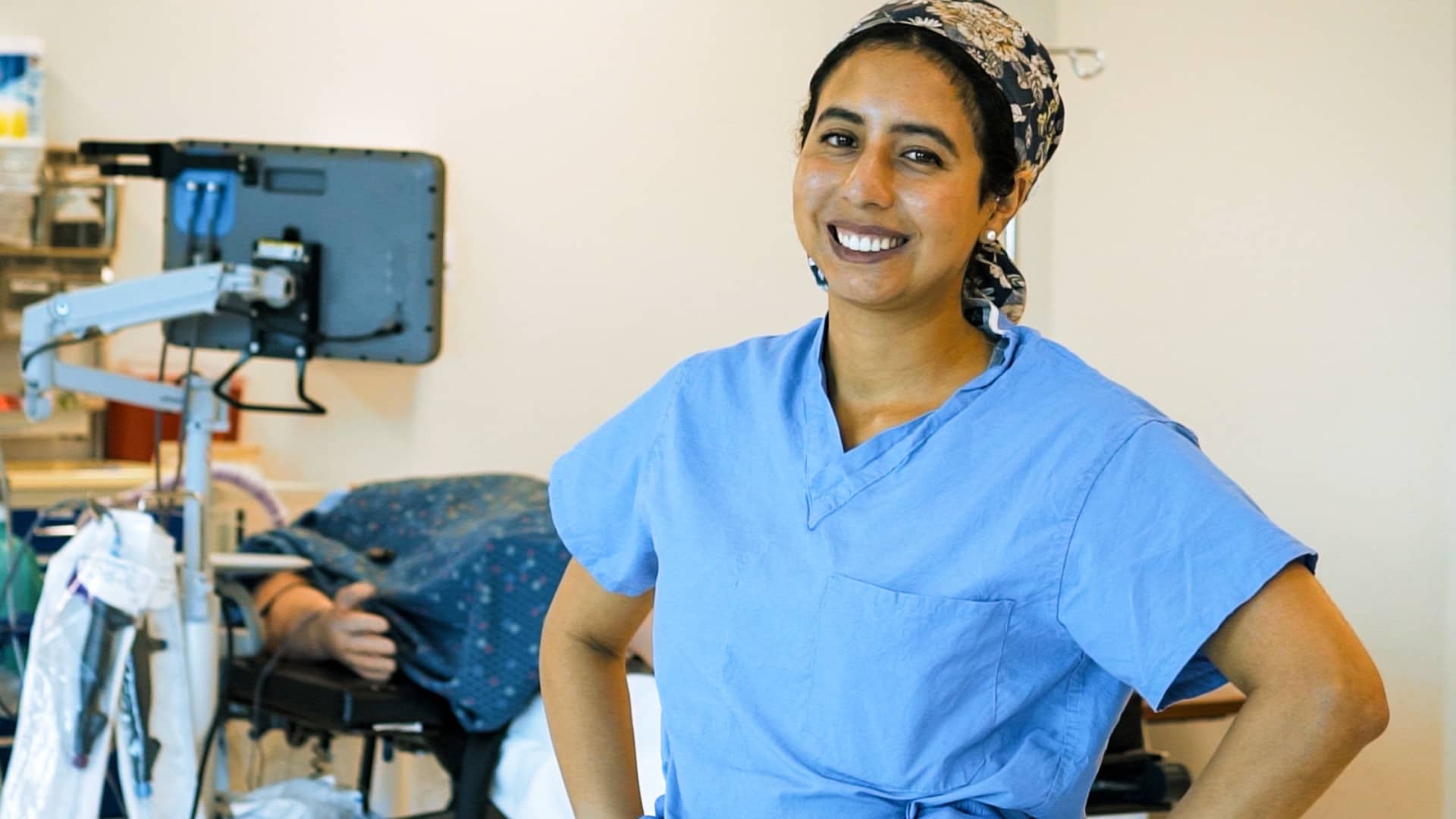
Molokaʻi native Misty Kahale completed her first year of medical school at the University of Nevada, Las Vegas on Friday. By the time she graduates, she expects to have $300,000 in student debt.With final exams behind her and a mountain of tuition bills ahead, she plans to apply for a breakthrough new Hawaiʻi grant program that would cover the rest of her medical school expenses — a prospect that she said would instantly diffuse her financial stress. There’s a catch: Grant awardees must pledge to work full time in rural Hawaiʻi for five years after graduation, a bid to entice healthcare workers to root themselves in areas where physicians, nurses and other professionals are in short supply. Encouraging doctors to take up practice in remote areas is challenging. But state leaders are pushing the effort forward, setting aside $28 million in federal funds for an ambitious medical school tuition payment program.
Attending medical school will be free starting in September for awardees of the Hawaiʻi Outreach for Medical Education in Rural Under-resourced Neighborhoods (HOME RUN) workforce pipeline program.
13 MIN READ
2 MIN READ
3 MIN READ