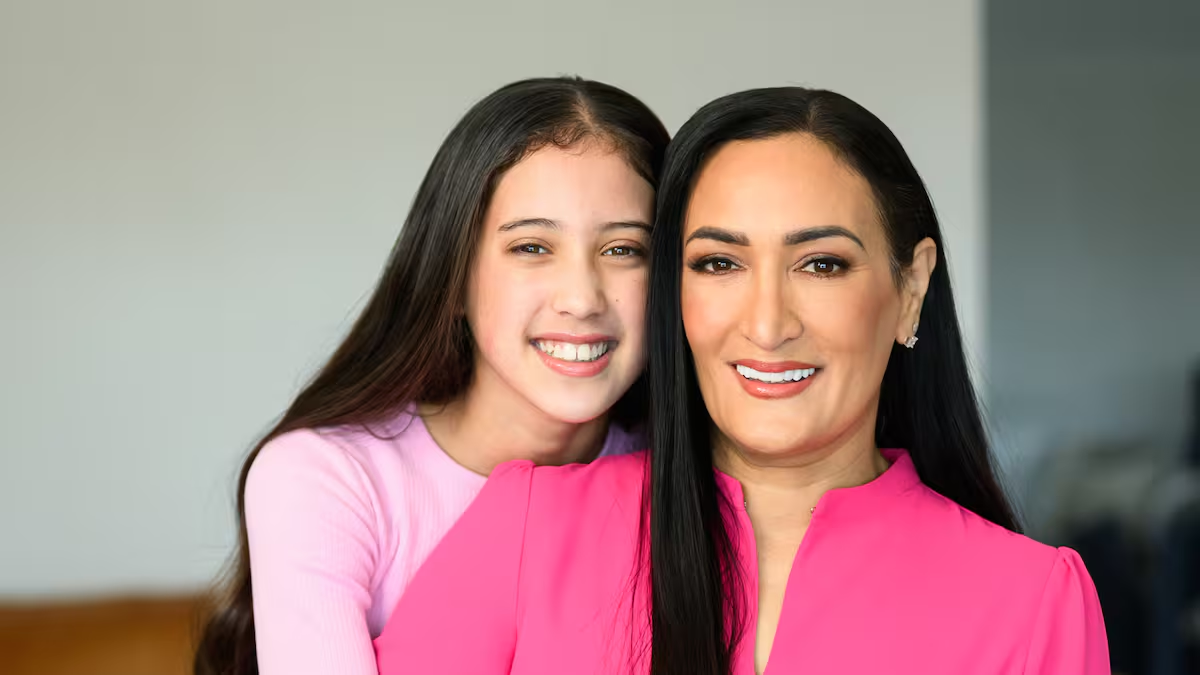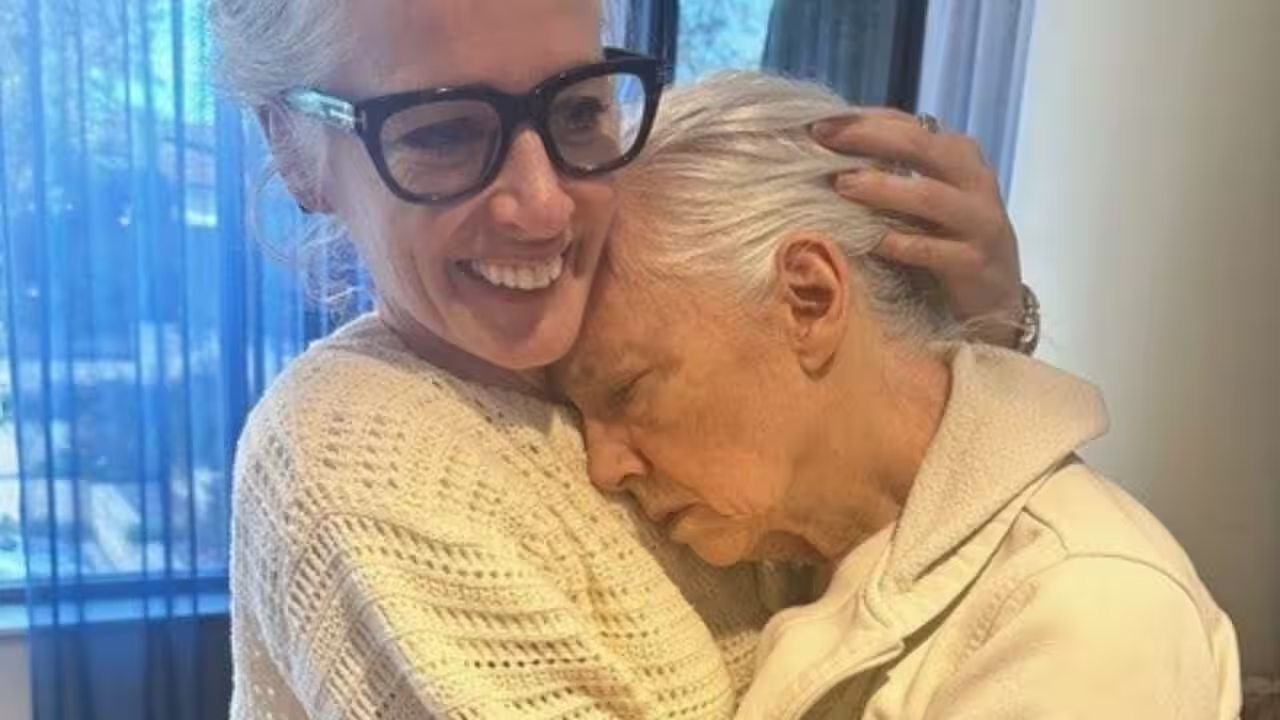
Dementia is now Australia's biggest killer. Insight examines how patients, carers and the government's support systems are equipping themselves to manage this public health crisis. Watch Insight episode Dealing With Dementia on SBS On Demand.Content warning: This article contains references to suicide.With two generations of women in my family touched by dementia, the question I ask myself is: will I be next?I recently did some DNA testing for my overall health and ticked a box to say I didn't want to know about the genes for Alzheimer's.Unfortunately, the company accidentally sent me the results.News that makes senseYour trusted source for staying up-to-date with the world around you. Get free daily news updates and analysis, straight to your inbox.And though there was a part of me that 'knew' what was coming, I was still shocked.Everyone has two apolipoprotein E (ApoE) genes, which are a type of gene linked to a predisposition to Alzheimer's.While I found out I have an ApoE2, which carries a decreased risk of developing the disease, I also found out I have an ApoE4 gene. This latter gene increases my risk of developing the disease, but it does not make it certain.But to me, it feels like a loaded gun, and I don't know if or when it will go off.We'd do anything to end her lifeWhen my mother Moira, 76, was first diagnosed with Alzheimer's, we did everything to preserve her life.Sixteen years later, we'd do anything to end it.With a front-row seat to her own mother's suffering with the disease until age 102, Mum was petrified of developing it also.Her fears became reality, and she now has advanced Alzheimer's.Nia kissing Moira on the cheek on a visit. She says her mother craves cuddles, listens to music and has a good appetite Source: SuppliedMum became acutely anxious when she received the diagnosis and made it very clear she wanted to end her life before she couldn't recognise her family.She knew there was nothing on offer in Australia for those with dementia to access Voluntary Assisted Dying (VAD), and that she would need to do it herself.We've had conversations over the years about how she'd prefer to end her life — some of which I filmed for a documentary.It felt like it was all in jest until one time she tried to end her life.Thankfully, Dad caught her.He cared for her at home for 10 years before she had to enter a locked memory support unit in residential aged care during COVID, where she still lives today.'Autonomy and life sucked away'I feel so sad when I visit Mum. These wards are full of devastatingly sad, confused and desperate faces staring back at you.It's a kind of parallel hellhole universe, which is of course no reflection on the people and organisations behind these facilities who are doing an amazing service.Mum is now nonverbal, so it is difficult to know if she's in pain or has any joy.She was a very lovable, selfless powerhouse of a mum. To see her autonomy and life sucked away — her curiosity; capacity to communicate; empathy; cheekiness; love of reading, travel and art — feels barbaric.What remains is a sentient soul who craves cuddles, listens to music, has a good appetite and is able-bodied.But based on her explicit wishes, which we documented on paper and in video during her early diagnosis days, we know she doesn't want to be here.These wishes are null and void under Australia's VAD laws when it comes to dementia.Feeling guilty and powerlessMum's end-of-life wish was to be surrounded by family, with the lights going out peacefully.I also feel guilty that I promised our family would honour this, but we can't, and we feel powerless.The most we can do is say no to a COVID vaccine and hope she dies of COVID.It just feels so wrong how helpless my and some other families in similar situations are.Changing lifestylesFor many years, I have been very scared of getting the disease and given I can't unknow this information, I've chosen to stay mentally positive.Finding out about my DNA has been a kick in the butt to research this space intensely and change my lifestyle.I'm motivated to do as much as I can — without losing the joy in life — to keep a healthy brain and help those around me.Looking to the future, given Grandma lived to 102, Mum could also live for another 20 years.Knowing that there is no medication to improve her situation, I would give up 20 years of cuddles if I could so that she could die now and have her end-of-life wish honoured.Readers seeking confidential information and support on dementia can contact the National Dementia Helpline on 1800 100 500. The Australian Centre for Grief and Bereavement can be contacted on 1800 642 066. Readers seeking support and information about suicide can contact Lifeline 24 hours a day online and on 13 11 14. Other services include the Suicide Call Back Service on 1300 659 467, Beyond Blue and Kids Helpline (for people aged five to 25) on 1800 55 1800.Watch your favourite Insight episodes around the clock on SBS On Demand's dedicated Insight channel. For the latest from SBS News, download our app and subscribe to our newsletter.
My mum’s worst fear was living with Alzheimer’s. I feel guilty I can’t help her die
Nia Pericles has watched her mum live with dementia for 16 years. There is one end-of-life wish her family can't help her fulfil.
872 words~4 min read