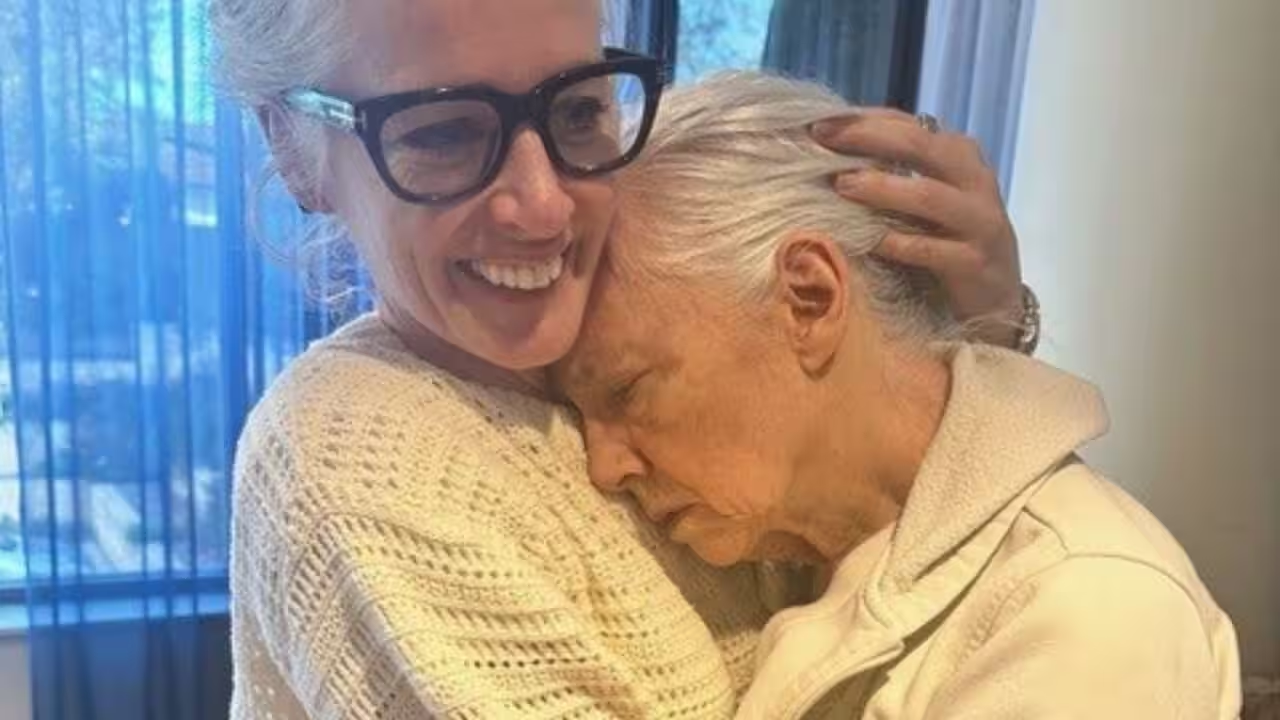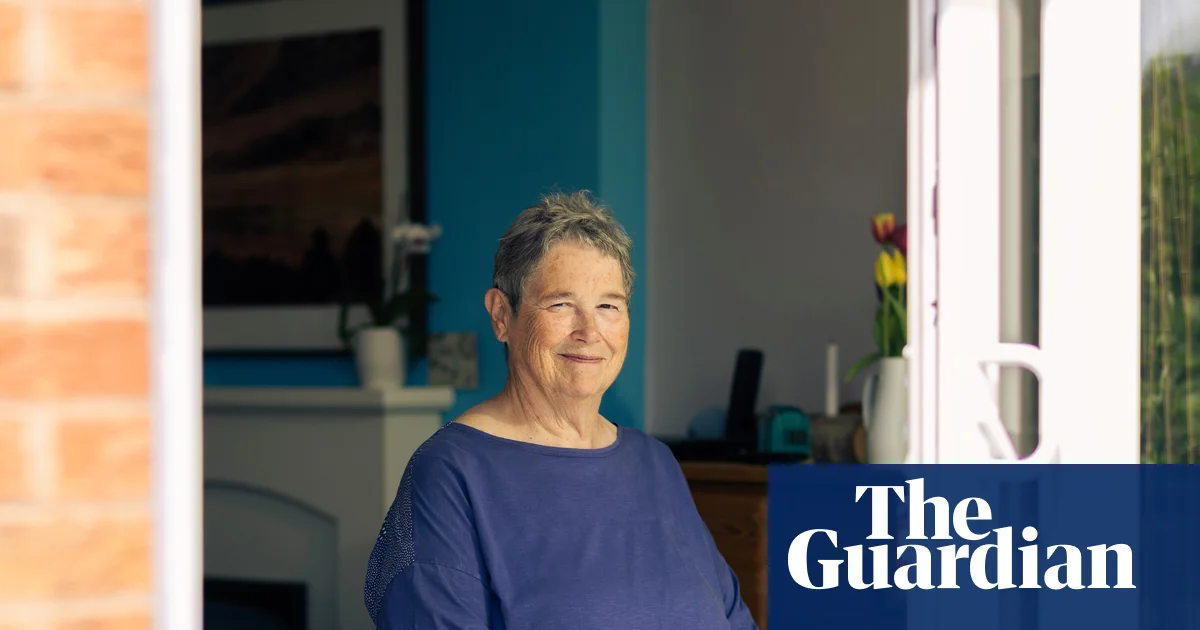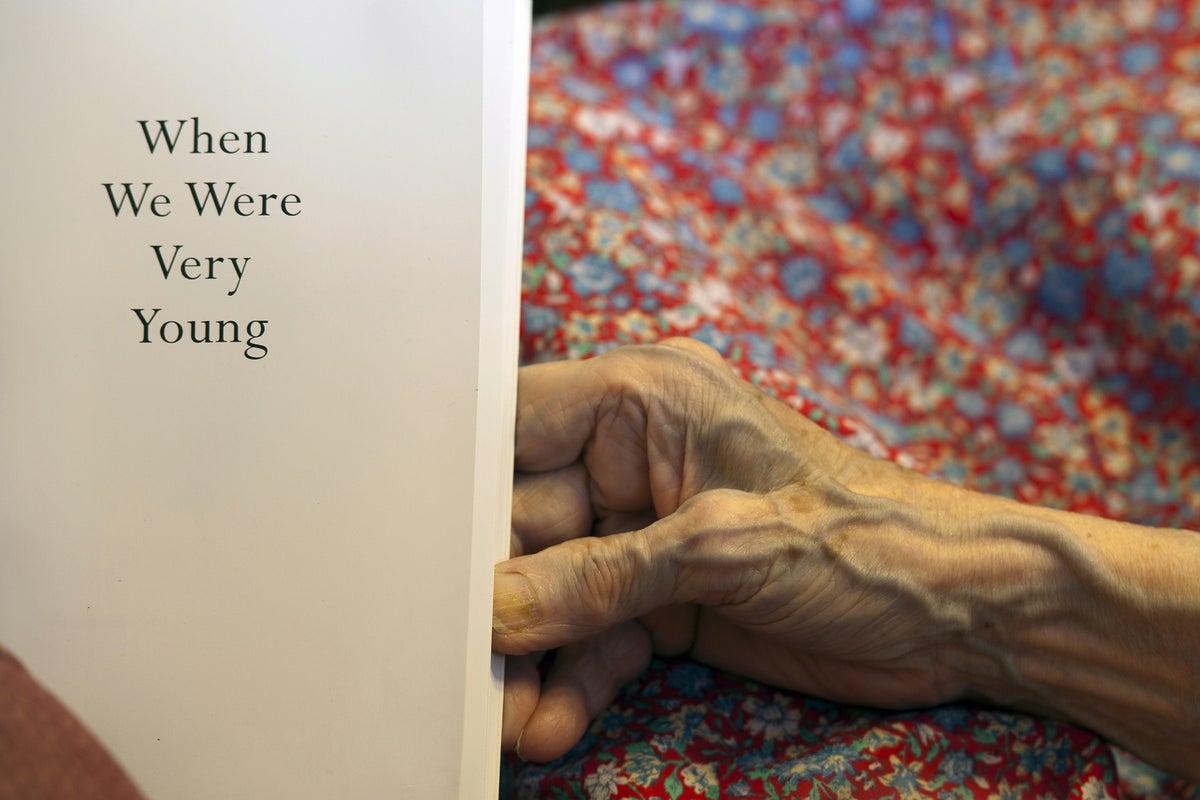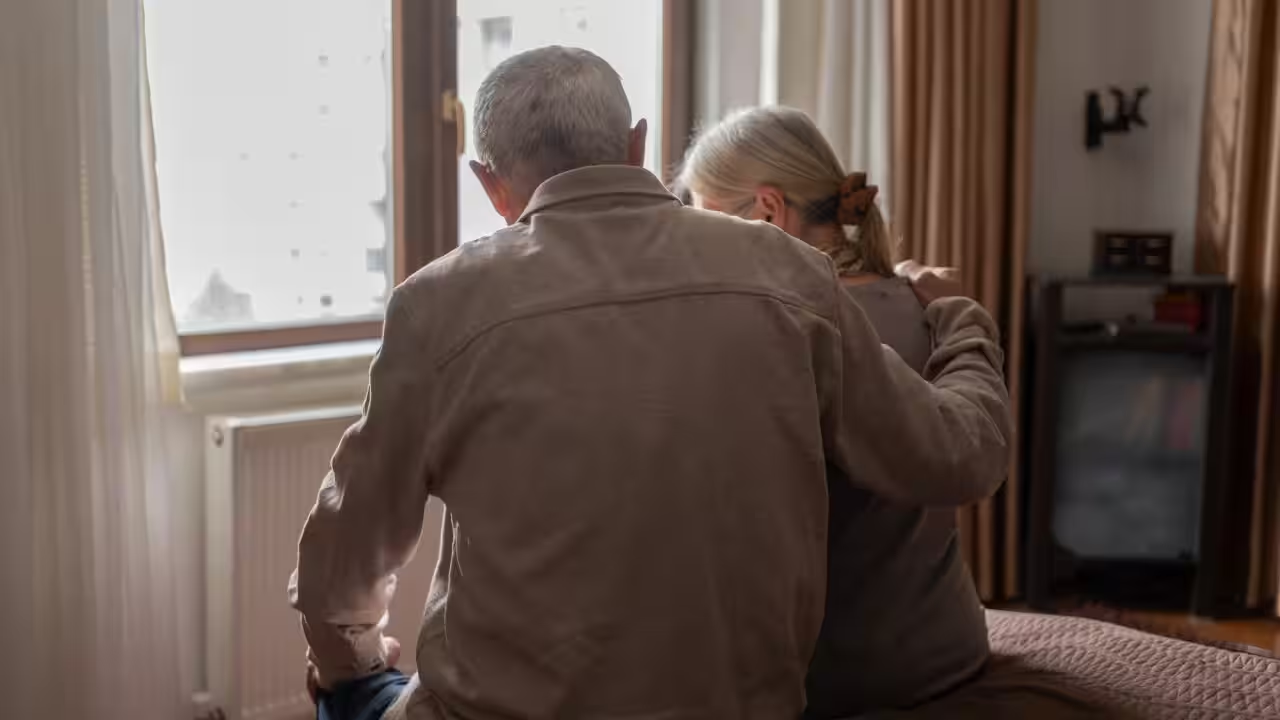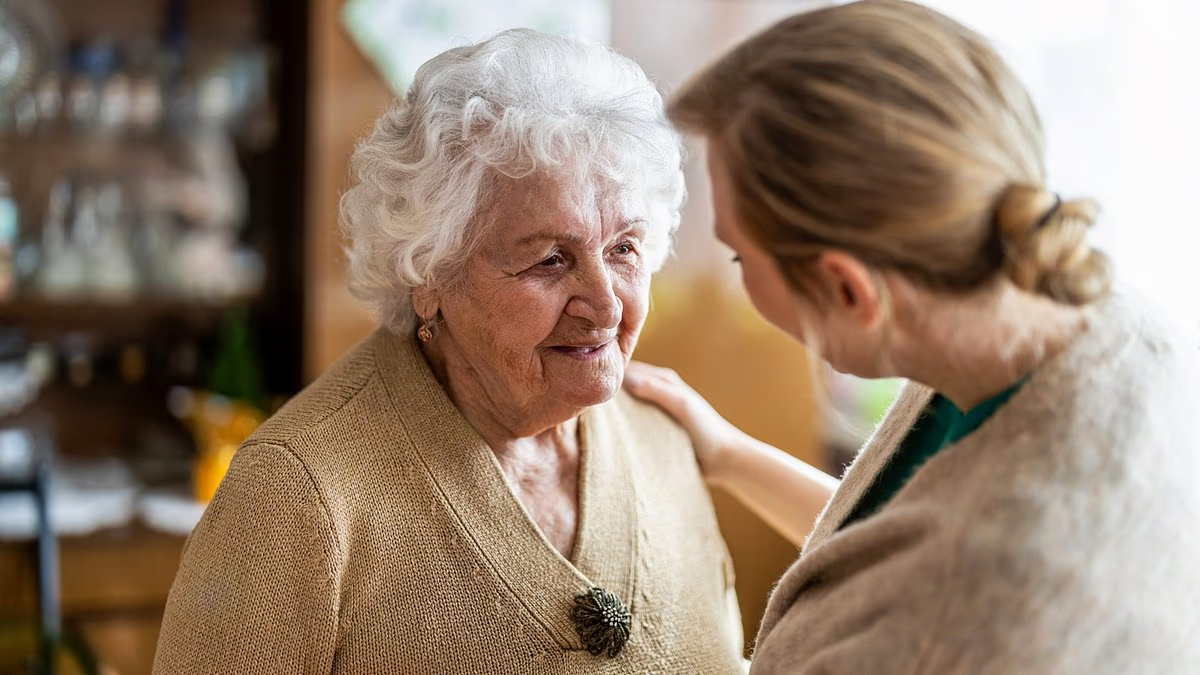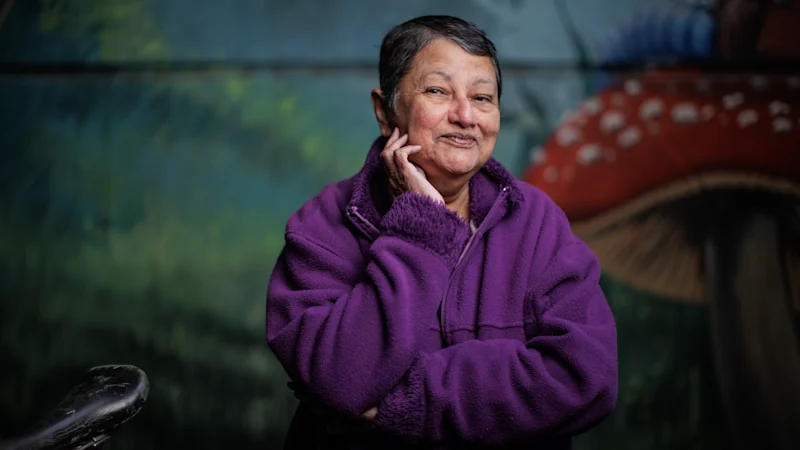
When Mithrani/Mithra De Abrew Mahadeva was a teenager growing up in Colombo, Sri Lanka, they had a crush.“It all started with a school concert. She was attracted to me, and I was attracted to her,” they say.But the excitement of a date to the movies was dashed by a visit from the girl’s family.“One day, her mother and sister turned up and demanded my personal correspondence [with their daughter]. There was a big commotion in my family home and my foster father came out,” they say. “I really expected him to tell those people, ‘please leave’. But he was angry with me.”For Mahadeva, who is non-binary and uses she/they pronouns as well as dual first names, they’ve known about their gender and sexual identity from a young age. But the pain of this encounter had a lasting effect.They never spoke to this friend again (Mahadeva later learnt she was forced to marry), and has never had a relationship with a woman since.Now in their 70s, Mahadeva lives with mixed dementia – Lewy body disease and Alzheimer’s. They also have PTSD, having grown up in an abusive household and a victim of domestic violence with their first husband, and are an ovarian cancer survivor.As their dementia progresses, Mahadeva says recollections of traumatic incidences from childhood have become more common. Their short-term memory is also declining.Being part of the Victorian Pride Centre in Melbourne and working as an advocate for the rights of LGBTQ+ people with dementia have been deeply healing experiences.They cite their friendship with dementia advocate Anne Tudor as another source of great joy in life, and the opportunity to work with young people.“There’s more strength because of the support the younger generations are giving,” Mahadeva says.Today, Mahadeva is cared for by their youngest daughter at home, where they hope to age and eventually die. But they are concerned about whether carers, who already provide Mahadeva some support at home, will be tolerant of their identity.“It’s very scary for me,” Mahadeva says, recalling one particularly upsetting experience in which a carer, after spotting a pride flag on a desk, became aggressive.“She was angry, and I told her, ‘leave right now’. I was by myself. If I was not aware or able to speak up for myself, I don’t know what she could have done to me.”A new model of careAround 11 per cent of the Australian population identify as lesbian, gay, bisexual, transgender or intersex.But it’s not known how many of the estimated 446,500 Australians living with dementia in 2026 are LGBTQ+. This is due to a paucity of data, as well as individuals’ reluctance to disclose their sexual or gender identity.Louisa Smith, an associate professor at Deakin University, has been researching the experiences of LGBTQ+ people with dementia for almost a decade.Smith has just completed the first stage of SAGE Dem (minority Sexuality And Gender Experiences Dementia), a four-year project to develop a new model of care for LGBTQ+ people living with dementia. She will present these findings at the International Dementia Conference in Sydney this week.This initial stage, focused on engaging directly with LGBTQ+ people living with dementia and their care partners around Australia, has revealed “LGBTQ+ people living with dementia want things that most people living with dementia would benefit from, like housing where they feel safe and free, supportive relationships and community connections”, says Smith.“But lifetimes of discrimination, where they have been criminalised and pathologised, means that those things are even more imperative for LGBTQ+ people living with dementia, and when they don’t get them, which is unfortunately quite common, changed and responsive behaviours can increase.”Many LGBTQ+ people can be reluctant to enter aged care or receive in-home help due to a lifetime of discrimination.iStockIndeed, research from Australia and the US suggests older lesbian, gay and bisexual people are more likely to experience social isolation than the rest of the population. A small but growing body of research suggests similar findings for older transgender people.LGBTQ+ people are also at increased risk of developing dementia, in part because they are more likely to be diagnosed with heart disease, depression, stroke and substance use disorder – all of which are risk factors for the disease.While Smith emphasises the experiences and attitudes of those from the community are diverse, a common thread is a reluctance to enter aged care or receive in-home help, again due to lived experience of discrimination, particularly from the medical system.Smith and her team are working with Dementia Training Australia, and aim to turn these findings into a toolkit for the new model of care, supported by LGBTIQ+ Health Australia, Dementia Support Australia and HammondCare, that will help aged care providers better support LGBTQ+ individuals.Kedy Kristal is chief executive of GRAI, a Perth-based organisation dedicated to the rights and wellbeing of older LGBTQ+ people.LGBTQ+ training is not compulsory for aged care providers, and Kristal says many lack understanding of the needs of residents or knowledge that LGBTQ+ residents exist at all.High staff turnover and shortages are other challenges.She has worked on cases in which transgender individuals have been treated by aged care staff according to their pre-transition gender identity, or where someone who was closeted their whole life came out after entering aged care, only to have their sexuality dismissed by family.“The reduction in social inhibitors that dementia sometimes precipitates can work both ways. It can disclose things that a person may have kept hidden all their life around their sexuality, or it may invalidate someone’s gender identity or sexuality if that suits the family to use the dementia as a way of doing it,” says Kristal.Given dementia is a terminal condition (it is now the leading cause of death for Australians), Kristal says palliative care is another target area for improving care.Carers need care, tooIn the corner of the bedroom in Peter Ryder’s inner west home in Sydney is a chair. Over the course of Ryder’s 26-year relationship, his husband, Jeff, has carefully reupholstered this chair time and time again – one act among many that represents their quiet, unwavering kind of love.This chair remains today, even as Jeff’s memory is fading.Peter Ryder (left) is the full-time carer for his husband, Jeff, who has Alzheimer’s.Peter RaeJeff, 76, was diagnosed with Alzheimer’s around three years ago, but had been experiencing cognitive decline for years before the diagnosis.In a practical sense, this slow decline has given them time to prepare – remodelling their home to allow Jeff to age in place and drawing up an advanced care directive and power of attorney.Ryder also took an online course at the University of Tasmania’s Wicking Dementia Centre designed for carers and aged care and community workers.But it’s also meant Ryder has weathered the anticipatory grief of watching the person he loves fade before his eyes.“It’s a journey, so you can never really get comfortable. There’s always a new normal around the corner,” he says.“He took a lot of care of me during the 20-year lead-up to his getting Alzheimer’s. So I kind of feel like I’m paying him back for taking such good care of me.”Ryder, 61, is a full-time carer for Jeff, whose condition has advanced to the point where he can say only a few words. While talking over video from his home office, he keeps an eye on Jeff through an Alexa device in their living room, where he is napping.“I’m in a very difficult place now – one of the things he [Jeff] said was he didn’t want to be in a situation where he had to be fed by other people, and we’re just about there now.”In December, Ryder had arranged for Jeff to move into a residential aged care home, but as the date approached, he says he began to feel “physically ill” at the prospect of being apart. He took it as a sign to pull out when the aged care home delayed Jeff’s intake.In the little spare time he has, Ryder finds reprieve through a support group for LGBTQ+ carers, friends and going to hydrotherapy.Carers are often forgotten in conversations about illness, and Kristal says LGBTQ+ carers can be denied the same privileges as non-LGBTQ+ by the aged care and medical system, and as such can face higher levels of stress and isolation.One US study from 2023, for example, found LGBTQ+ caregivers experienced higher levels of stress than their non-LGBTQ+ counterparts because they were less likely to seek support.For Ryder, it’s the small moments of togetherness that keep him going.“This is something I learned from Minnie, my friend whose partner died of MS: if Jeff has a nap in the afternoon, I nap with him because sometimes at night, I don’t get a lot of sleep,” he says.Lifeline 13 11 14; National Sexual Assault, Domestic Family Violence Counselling Service 1800RESPECT Make the most of your health, relationships, fitness and nutrition with our Live Well newsletter. Get it in your inbox every Monday.
Dementia is Australia’s leading cause of death. It’s even harder for people like Mithrani
LGBTQ+ people with dementia and their carers can face unique challenges.
1,482 words~7 min read