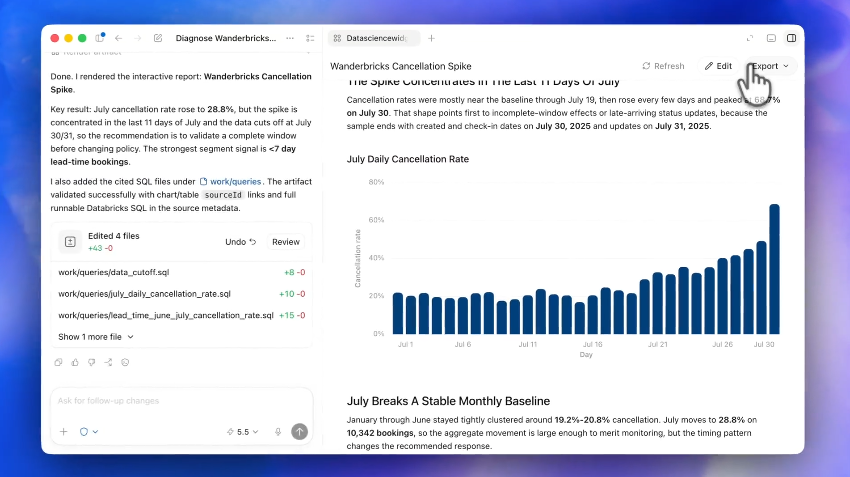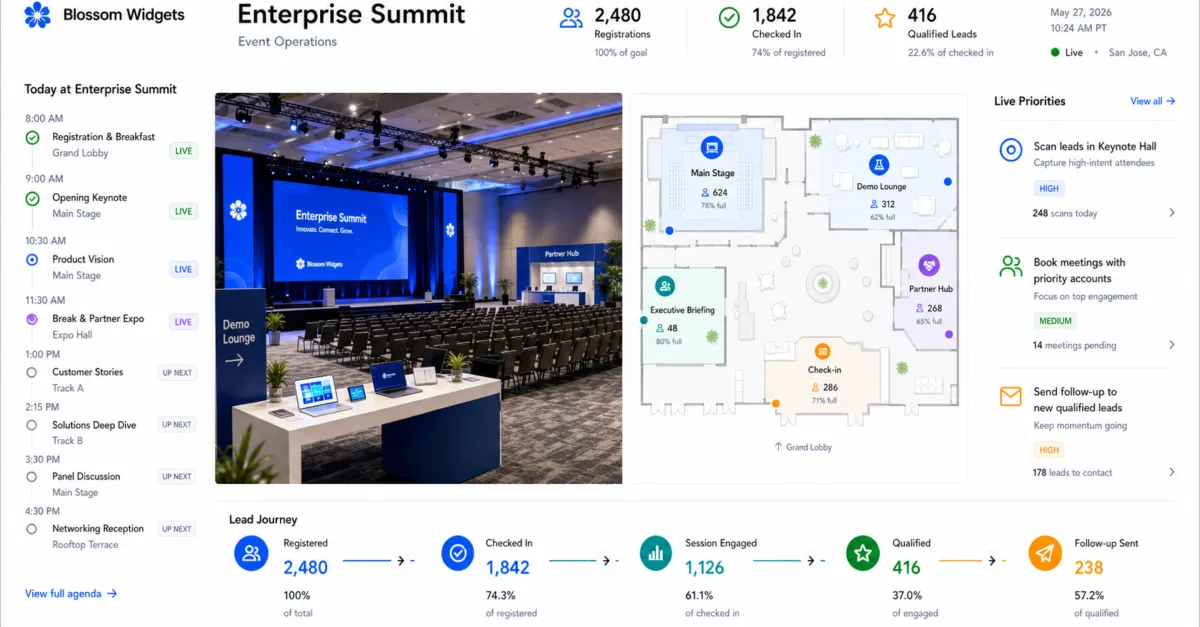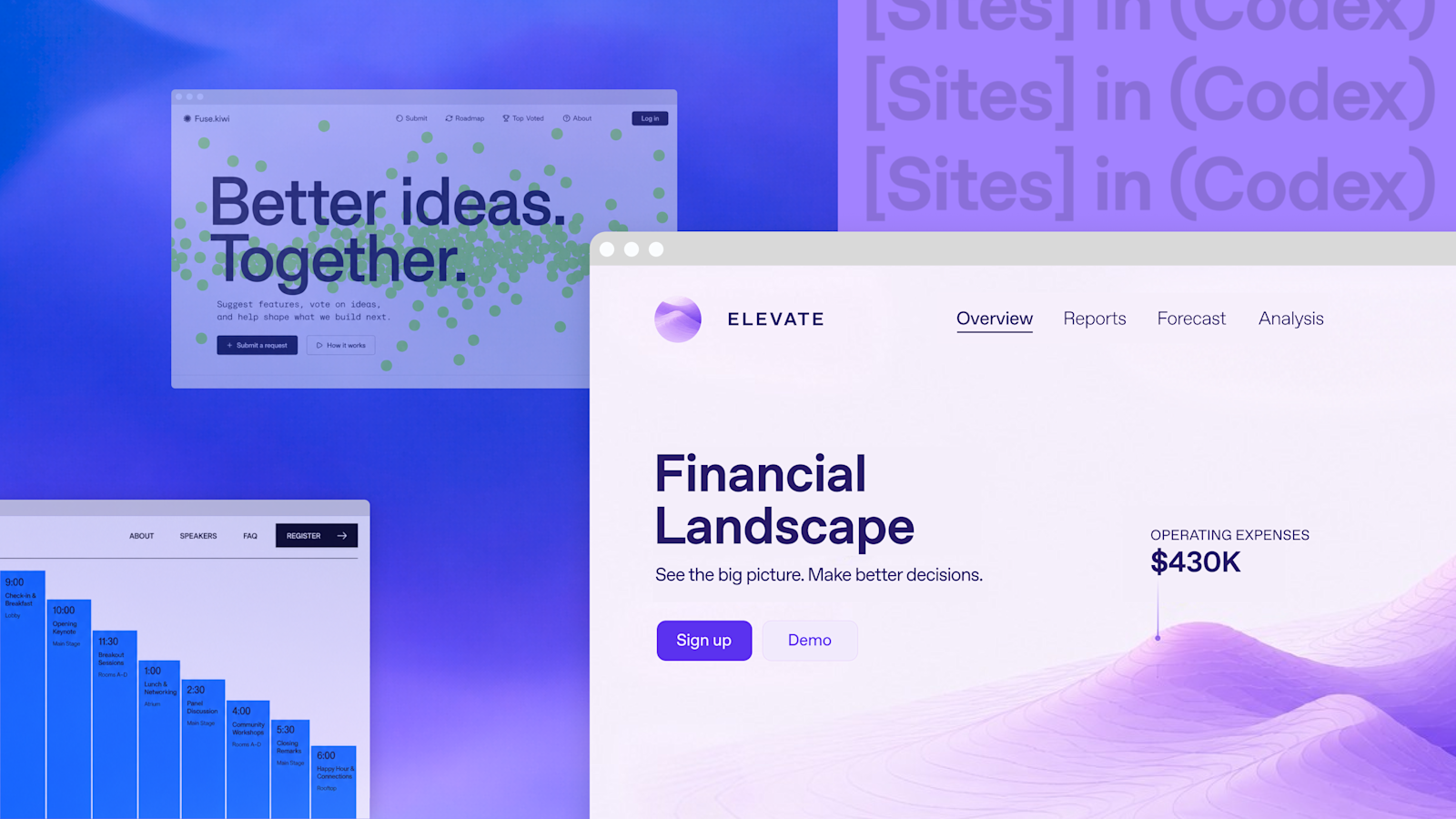
More than 5 million people now use Codex every week. Codex started as a tool for software development, but it's increasingly useful for more kinds of work. Non-developers—including analysts, marketers, operators, designers, researchers, investors, and bankers—make up about 20% of overall Codex users and are growing more than 3x as fast as developers.Today, we’re introducing new ways to do more of your work with Codex: plugins that adapt Codex to your role and tools, annotations that help you refine the result in place, and a preview of the ability to create interactive websites and apps you can share with your workspace using a URL.Inside OpenAI, non-technical teams use Codex to build internal apps, prepare executive materials, create dashboards, and turn creative briefs into work that reflects brand and design constraints. At Zapier, teams use Codex to pull knowledge from tools like Slack, Google Docs, and Coda, then turn that context into postmortems, incident response plans, and feature tickets. At NVIDIA, researchers are using Codex to speed up experiment workflows, from finding research ideas to writing scripts for machine learning infrastructure.Make Codex work the way your team doesCodex is most useful when it works the way your team does: connected to the tools you use and ready to create the materials you need.Plugins help Codex work with the tools, context, and workflows your team already uses. Today, we’re launching six new role-specific plugins that make Codex useful for more kinds of knowledge work, no coding required:Each plugin bundles the relevant apps, skills, instructions, and workflows. Together, they include 62 popular apps and 110 skills.The data analytics plugin helps analysts and business teams answer questions with data. They can explore product and business data, explain why key metrics changed, and create reports and dashboards using tools like Snowflake, Databricks Genie, Hex, and Tableau, with more coming soon.The creative production plugin helps marketing and creative teams turn a brief into assets they can review. Teams can create campaign boards, make and refine display ad variations, and produce product lifestyle shots or ecommerce-ready image sets with tools like Figma, Canva, Shutterstock, Picsart, and Fal.The sales plugin helps sales teams bring customer context into the work that moves deals forward. Sales teams can find high-priority accounts and signals, prepare for customer meetings, complete follow-ups, update customer records, build close plans, and review deals at risk using tools like Salesforce, HubSpot, Slack, Outreach, Clay, Rox, and Actively.The product design plugin is built for turning early ideas into prototypes teams can review. Teams can explore product directions, audit user flows, prototype from a live URL, and make static screenshots interactive, with work that can be carried forward in tools like Figma and Canva.The public equity investing plugin helps investors make sense of market and company information. They can review earnings, compare companies, track signals, and assess whether an investment thesis is strengthening or weakening using information from Moody’s, Daloopa, Datasite, FactSet, LSEG, S&P, PitchBook, and Hebbia.The investment banking plugin helps bankers turn research and diligence into client-ready materials. They can prepare pitch materials, analyze comparable companies and transactions, and turn diligence into recommendations using trusted data.Business performance analysis with the data analytics pluginPlugins work out of the box. Teams can also adapt them to their workflows or build and share custom plugins for their own systems and processes.More role-specific plugins are coming soon, including Corporate Finance, Private Equity Investing, Marketing Strategy, Strategy Consulting, and Legal. And this is just the start: we’re building toward an open ecosystem where partners can create and deploy their own plugins directly in Codex and ChatGPT.Starting in preview for business and enterprise customers, Codex can now create and share interactive, hosted websites and apps.Sites are a new kind of canvas for your ideas. Codex can take your ideas, analysis, and plans and turn them into dashboards, planners, review workspaces, project boards, galleries, and lightweight tools. Today, sites can be shared with anyone in your workspace via URL, giving teams a shared place to explore work, contribute input, track progress, and make decisions together.Ask Codex to create a site for an upcoming customer review, and it’ll generate an interactive webpage with the relevant product updates, open questions, usage trends, and next steps for that account. Ask it to build a scenario planner from a financial model, so leaders can compare assumptions instead of reading through tabs in a doc. Ask it to turn launch materials into a living hub where teams can find the latest messaging, milestones, owners, and decisions. Then ask Codex to keep the site up to date as details change.Instead of adapting work to the limits of a single tool or file, teams can create sites that fit the work. And sites aren’t static. They can also help track progress for a major project, help guide customer service reps, or act as a repository for your team’s creative briefs.We’re also working with early partners including Wix, Base44, Replit, Lovable, Figma, Webflow, and Emergent as we build towards a sites partner ecosystem.Refine your work with annotationsDevelopers already use annotations in Codex to refine code, Markdown files, and websites Codex creates. With annotations, you point to the exact part you want to refine and tell Codex what needs to change. That way of working now extends to content you create, like documents, spreadsheets, and slides.Select the navigation bar in a site and ask Codex to update the font. Highlight a claim in an investment thesis and ask Codex where it came from. Mark a chart on a slide and ask for a clearer label. Codex focuses the update on the part you selected, so you can refine your work without starting over or reworking the parts you already like. Annotations make Codex more useful after the first draft, when the work needs judgment, feedback, and iteration.Availability and getting startedRole-specific plugins are rolling out in Codex in supported regions. You can install them from the Codex plugin directory and Codex will help get you set up. Codex can also help you customize a plugin. For Business and Enterprise workspaces, admins can control(opens in a new window) underlying app permissions in workspace settings.Sites are rolling out in preview for Business and Enterprise teams through the Codex app. Enterprise admins can enable sites in admin settings.Explore more stories about how teams use Codex, or get in touch with our team to get started.
Codex for every role, tool, and workflow
Discover new Codex plugins, sites, and annotations that help analysts, marketers, designers, investors, and other teams get more done with AI.
1,058 words~5 min read