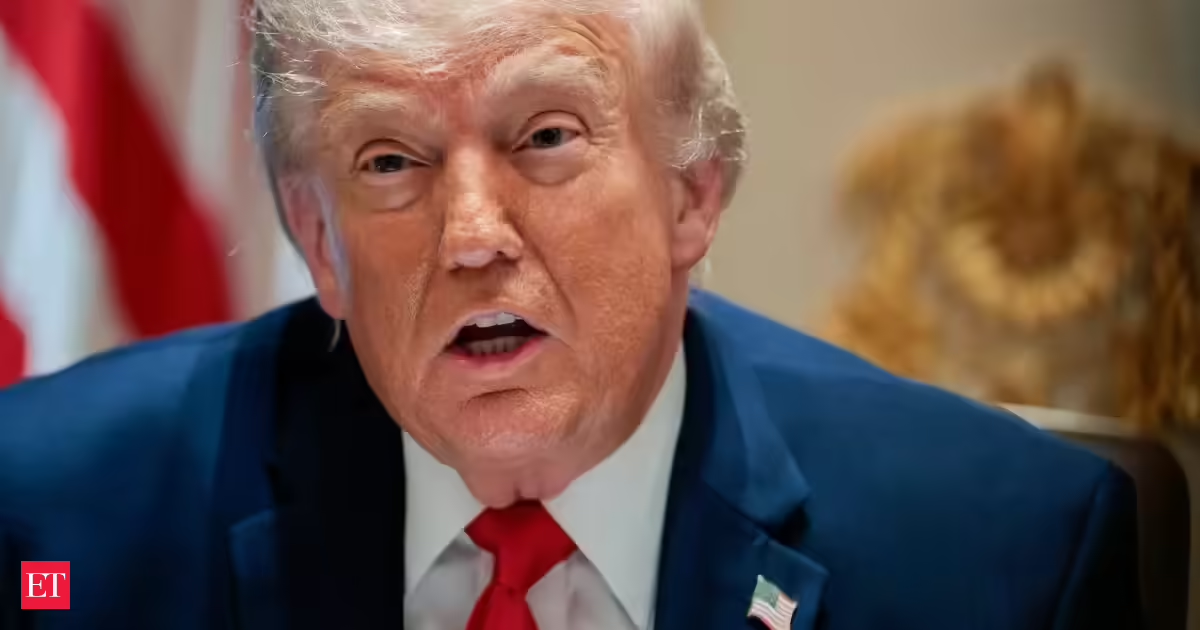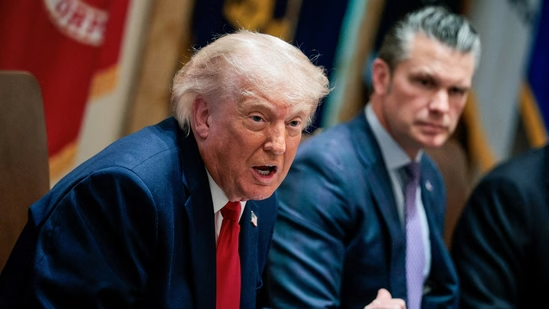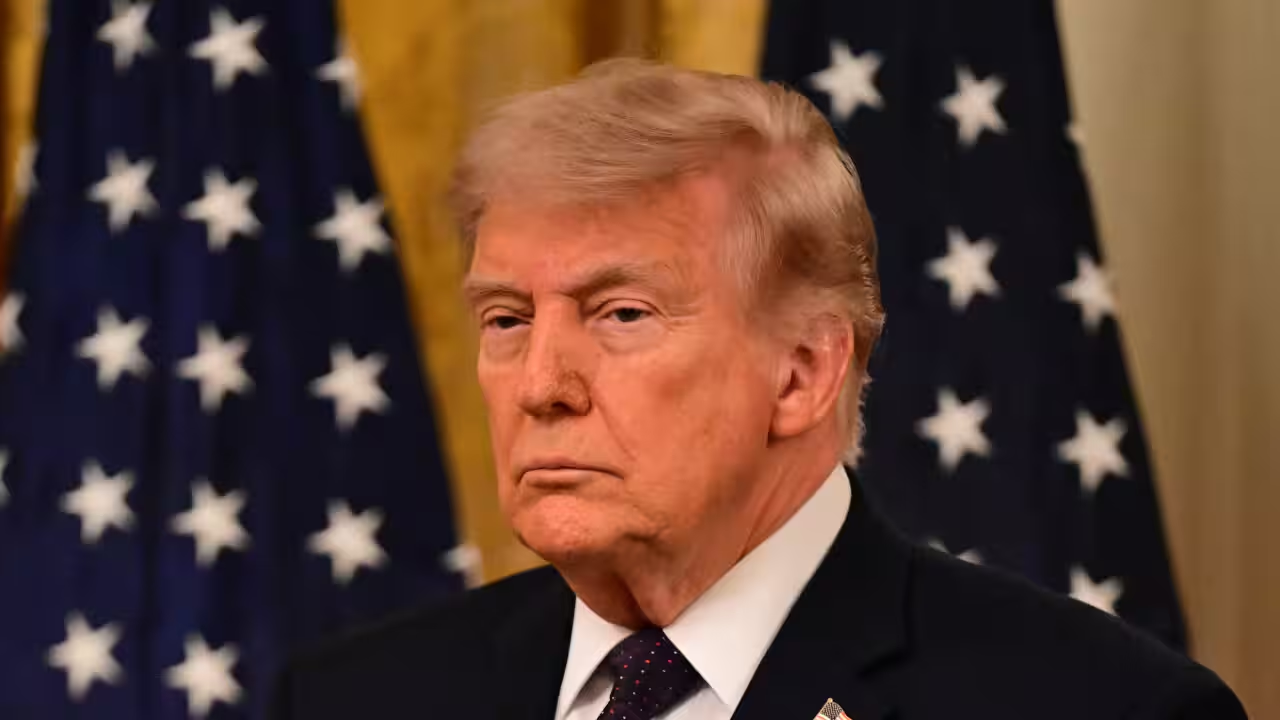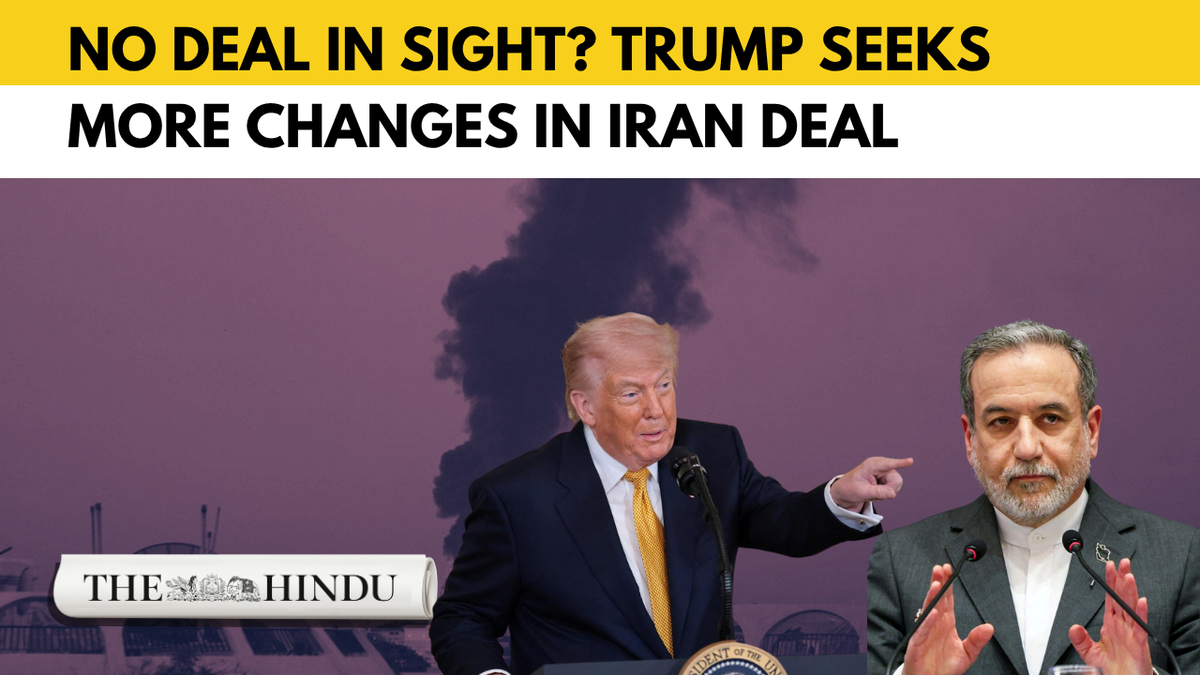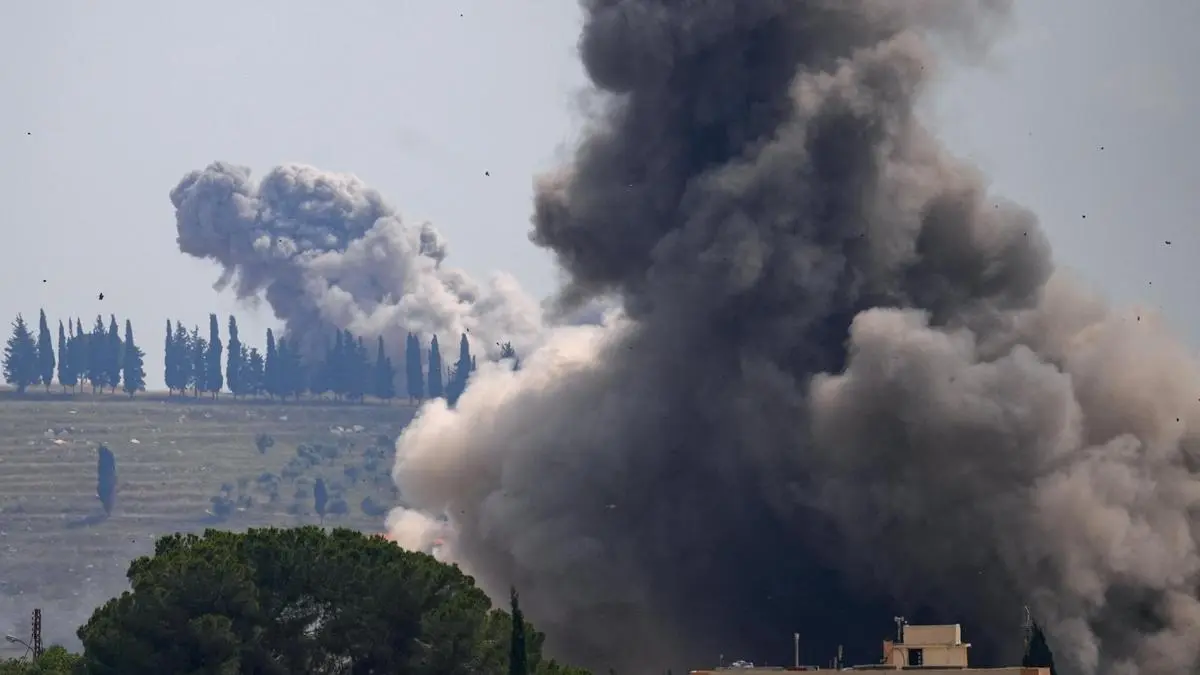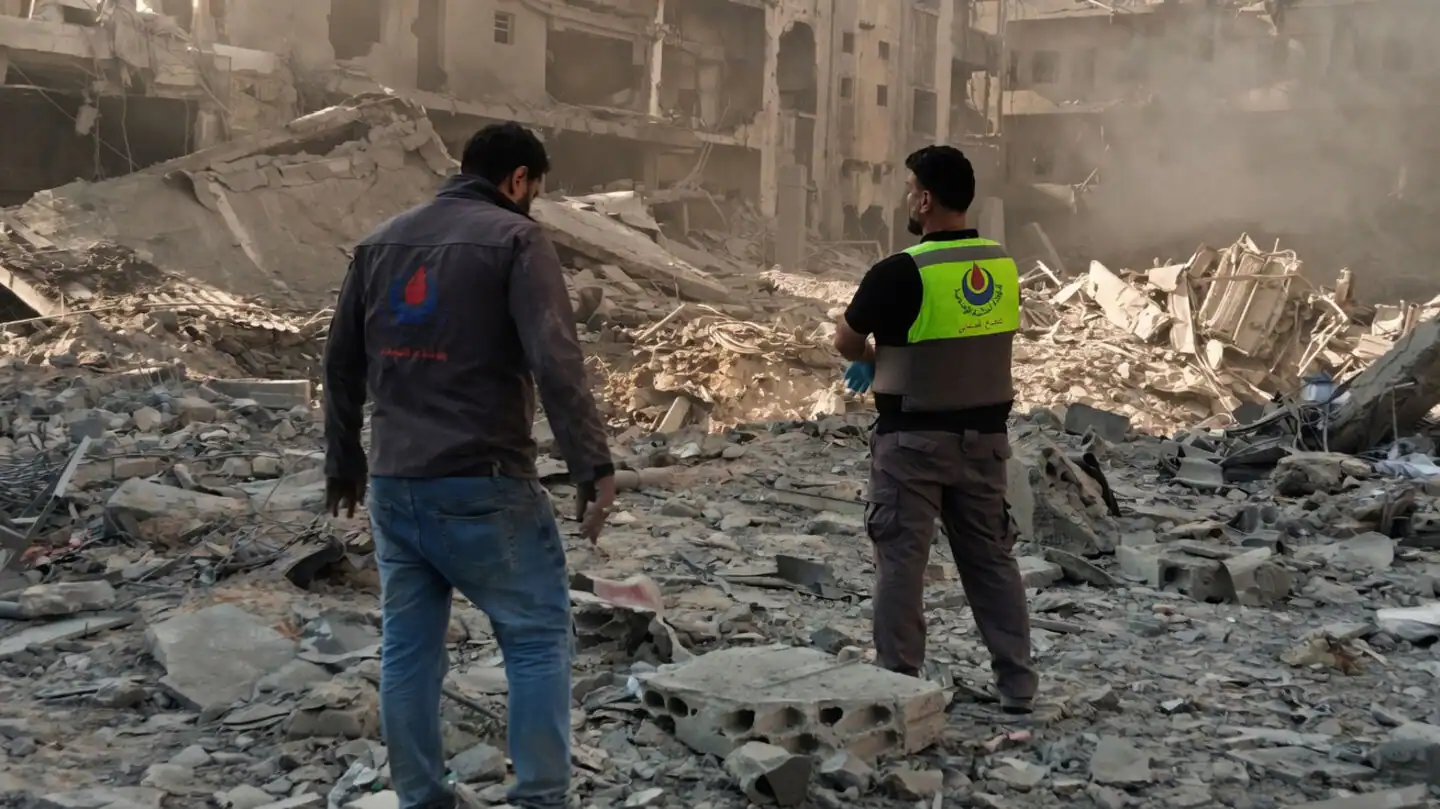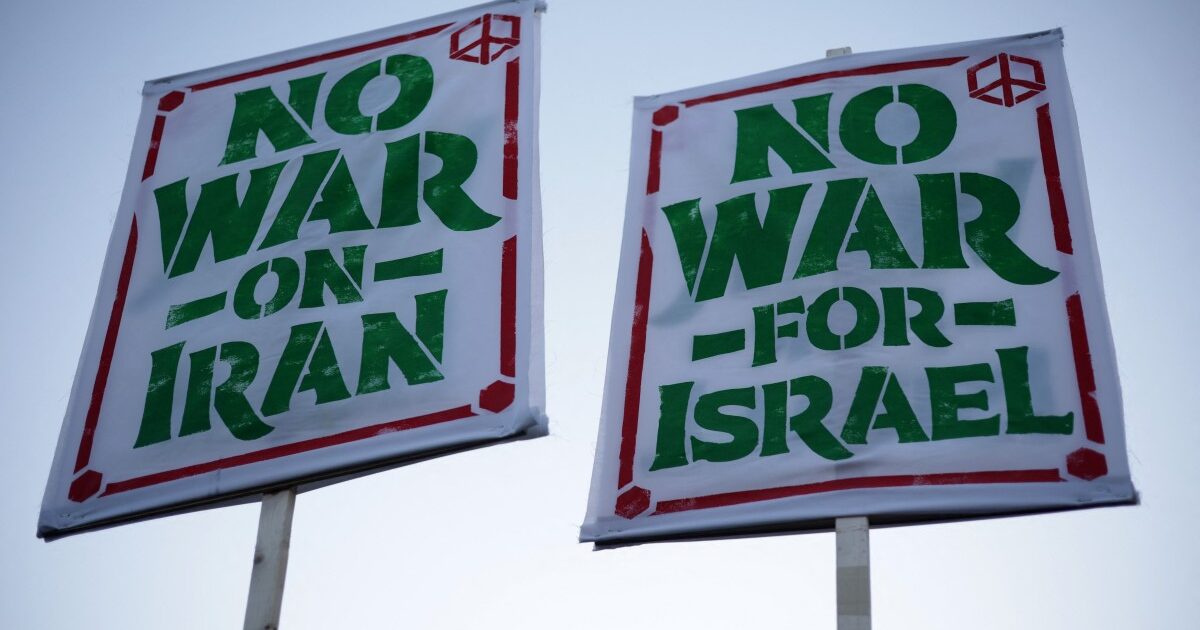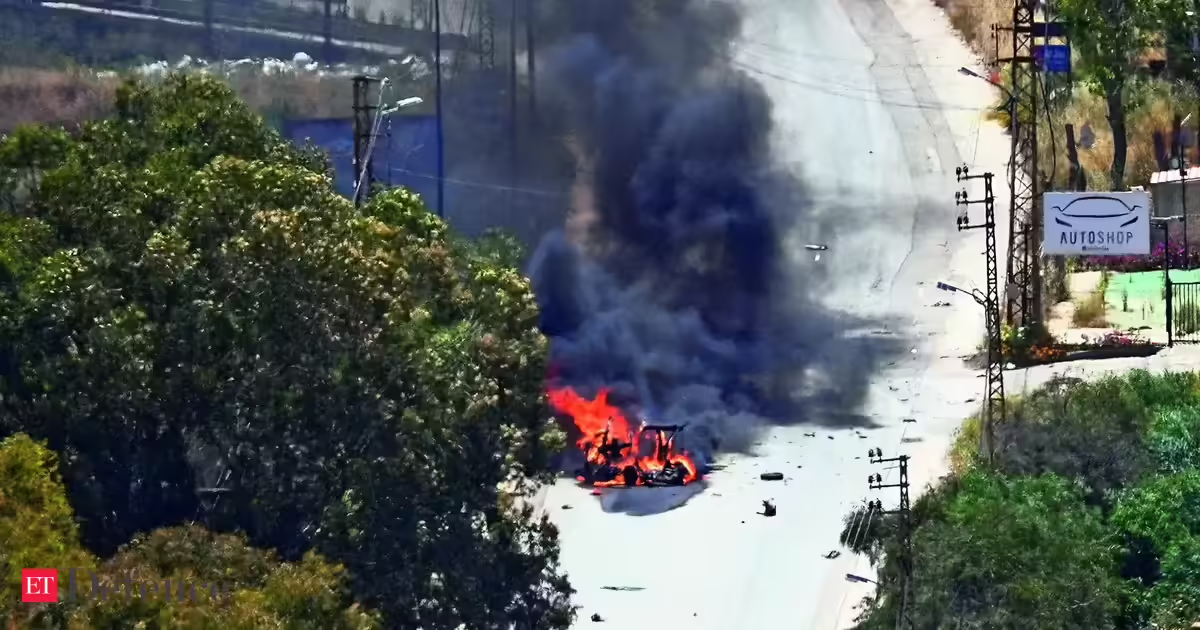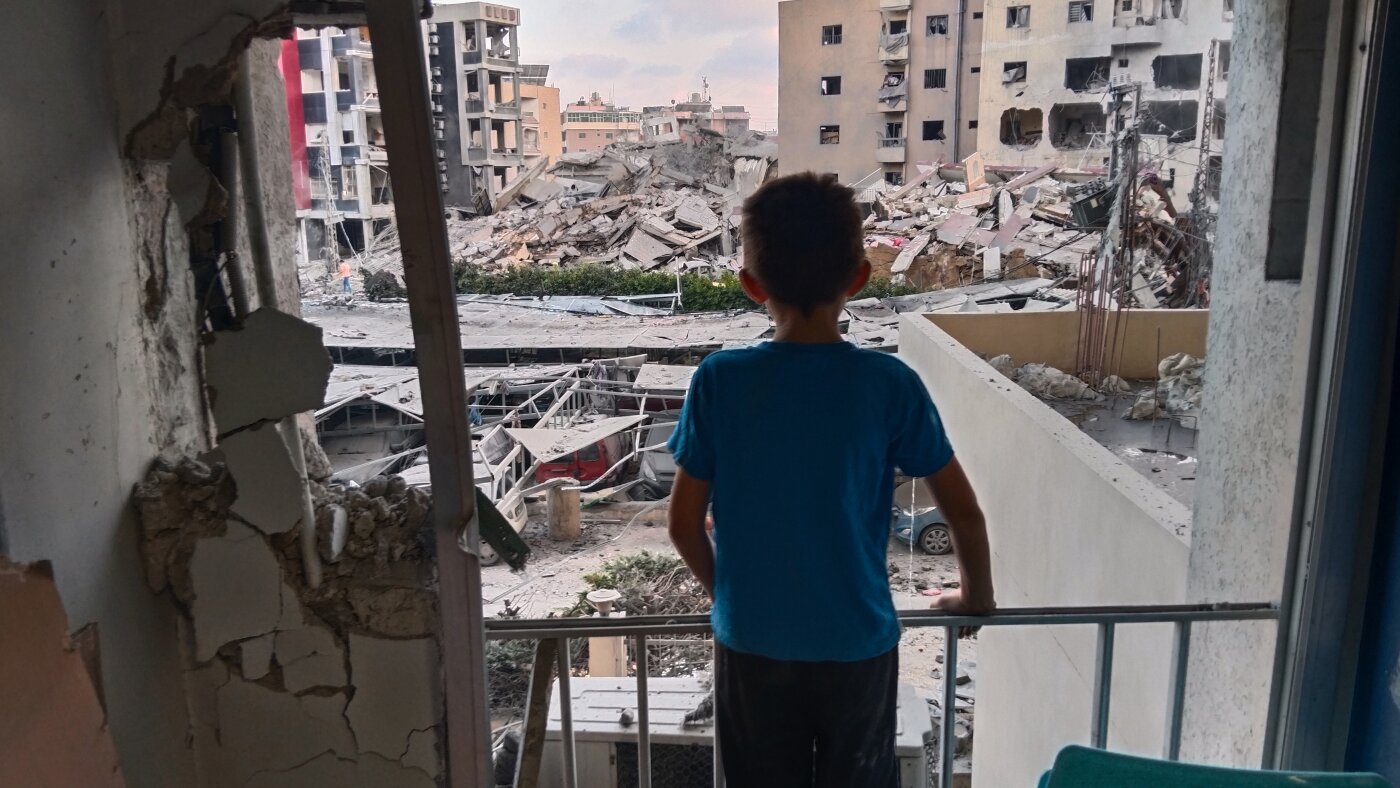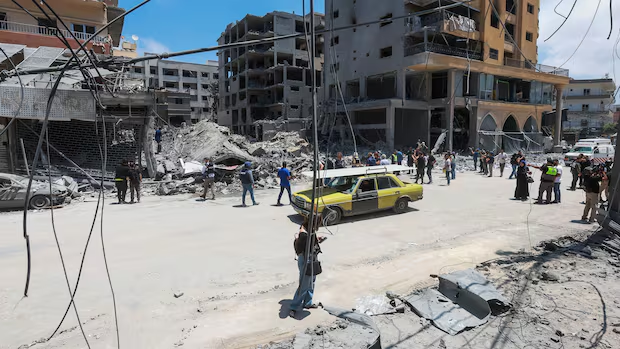
Iran is reviewing a proposed agreement with the United States to halt the war, Iran's Mehr news reported Tuesday after U.S. President Donald Trump said talks to reach a deal are continuing.More than three months after the U.S. and Israel launched strikes against Iran, the conflict has hardened into a stalemate while largely indirect talks to negotiate an interim deal have proved inconclusive, leaving the Strait of Hormuz largely shut.Iran has not yet responded to a proposed final text of the temporary deal, and was taking a "stern" approach given what it sees as a history of U.S. non-compliance and longstanding mistrust, Mehr cited a source as saying.The semi-official Fars agency, also citing a source, added that messages on the possible deal, or memorandum of understanding, had stopped a few days ago, with the last one being Tehran's "clear message" over Lebanon, where Iran is seeking a stop to Israel's incursion against its ally Hezbollah. Trump said Monday that negotiations with Iran are continuing, and there would be a deal to extend the ceasefire and reopen the Strait of Hormuz over the next week.WATCH | Lebanon attacks disrupts U.S. peace talks with Iran:Fighting in Lebanon latest irritant in U.S.-Iran talksJune 1|Duration 2:06U.S. President Donald Trump claimed Israel and Hezbollah agreed to stop shooting at each other after the conflict became another irritant in peace talks with Iran. But neither Israel or Hezbollah said they’d put down their weapons for long.Since mid-March, Trump has repeatedly said he is close to signing a peace agreement. A ceasefire has largely held since early April, though Iran and the U.S. have exchanged strikes several times over the past week.U.S. Secretary of State Marco Rubio told lawmakers on Tuesday that Iran had agreed to negotiate aspects of its nuclear program that it previously refused to discuss, but added there was no guarantee they would lead to a deal.Rubio, who also serves as Trump's national security adviser, said the first condition in the talks was that Iran opened the Strait of Hormuz, and it also had to commit to negotiations on its stock of highly enriched uranium.Trump has said stopping Iran acquiring nuclear weapons was his top priority. Iran has always denied wanting to build a nuclear bomb, saying its atomic program is for peaceful purposes only. Trump says talks with Iran continuing at 'rapid pace' after reports Tehran had stopped indirect negotiationsThe war, which began Feb. 28, has left thousands of people dead, mainly in Iran and Lebanon. It has caused global economic pain by pushing up energy prices since Iran effectively closed the Strait of Hormuz, which previously carried about a fifth of global supplies of oil and liquefied natural gas.It also triggered the latest round of conflict between Israel and Lebanese militant group Hezbollah, with Israel pursuing its deepest incursion into Lebanon in 25 years.Israel keeps up strikes in LebanonIsraeli drone strikes on southern Lebanon on Tuesday killed eight people, including two children and their father, a day after Trump said Israel Hezbollah agreed to dial back fighting. Hezbollah, which is backed by Iran, continued launching dozens of projectiles and drones at Israeli soldiers in southern Lebanon and civilians in Israel.An Israeli drone strike hit a car on the road linking the southern town of Marjayoun with the city of Nabatiyeh, killing James Karam, a dentist from the nearby Christian town of Qlayaa, along with his daughter and son, Lebanon's state-run National News Agency reported Tuesday.Drone strikes killed two Syrians working at a plant nursery in the village of Jibchit and two people in the nearby village of Toul, the news agency reported. A third strike hit a car near the village of Harouf, killing one person. The Israeli military said it wasn't aware of any strikes in that area.Men stand inside the Jabal Amel Hospital in Tyre on Tuesday. It was damaged in an Israeli strike a day earlier. (Aziz Taher/Reuters)A partial ceasefire announced by Lebanon on Monday would entail Israel refraining from strikes on Beirut and Hezbollah-controlled southern suburbs of the Lebanese capital, while the Iran-aligned group would halt its attacks on Israel.But the announcement failed to reassure many people in Lebanon. About 1.2 million people there have been displaced. The din of an Israeli drone over Beirut kept residents on edge on Tuesday."Every time we return to our homes, there is a warning for us to be displaced again," said Faten Al Chehime, who fled to a displacement camp from her home in Beirut's southern suburbs on Monday, only two weeks after returning there.Lebanon said it would seek to expand the ceasefire in talks with Israel in Washington on Tuesday. Hezbollah said Tuesday its fighters fired anti-tank missiles on Israeli troops who were pushing into the southern village of Hadatha, about seven kilometres from the Israeli border. Meanwhile, Israeli Prime Minister Benjamin Netanyahu faces criticism domestically over any agreement to hold back from further attacks on Beirut ahead of an election later this year that he is projected to lose.Iran pushes for limited dealIn the wider war, Iran is pushing for a limited interim agreement as it tries to ease mounting economic pressure while avoiding major concessions on its nuclear program, according to Iranian sources.As part of any deal, Tehran is seeking an end to hostilities across all fronts, including Lebanon, access to billions of dollars in oil revenues, waivers on crude exports, a lifting of a U.S. blockade on its ports and continued leverage over the Strait of Hormuz.Trump is under pressure to reopen the strait and curb U.S. fuel prices while not making concessions to Iran.WATCH | What we know about the latest proposed framework:Iran holding more cards than Trump expected in stalled talks: former defence officialMay 31|Duration 8:37CBC's David Common, sitting in for chief political correspondent Rosemary Barton, speaks with retired vice-admiral Mark Norman about the proposed framework for a deal to end hostilities between the U.S. and Iran.John Bolton, who served as Trump’s national security adviser in his first term and has since become a critic, said the president faced few good options."I think he wants to have a deal that opens the Strait of Hormuz, and he can declare victory and get the price of gasoline down," Bolton told Reuters. "But he knows if he makes a bad deal, he'll be justifiably criticized for it, so he's between a rock and a hard place, and he doesn't know what to do."Iran's Revolutionary Guards said Tuesday that 24 vessels had transited the strait in the past 24 hours after obtaining permission from the Guards' navy.AnalysisWhy the seizing of Lebanon's Beaufort Castle handed Iran leverage in peace talksIran threatened Monday to expand its blockade to the Bab El Mandeb Strait, another chokepoint at the mouth of the Red Sea, if Israel resumed strikes on Beirut. Highlighting the risk at sea, the world's largest shipping group, MSC, said Tuesday that one of its vessels was struck by two projectiles while in Iraq's Umm Qasr port the previous day.Iran's Revolutionary Guards claimed responsibility for the attack, saying it was carried out in retaliation for a U.S. attack on an Iranian vessel in the Gulf of Oman. The wide-reaching impact of the crisis was laid bare by the United Nations children's agency UNICEF, which said surging transport costs and supply chain disruptions were hindering life-saving aid for Gaza, Lebanon, the Democratic Republic of Congo, Mali, Somalia, South Sudan, Nigeria and elsewhere.
Iran reviewing proposed Trump deal to halt war as Lebanon attacks continue | CBC News
Iran is reviewing a proposed agreement with the United States to halt the war between the two countries, Iran's Mehr news reported Tuesday after U.S. President Donald Trump said talks to reach a deal are continuing.
1,231 words~6 min read