Early data suggest KLN-1010, now acquired by Eli Lilly, could be more tolerable but less efficacious that AstraZeneca’s ESOT-01.
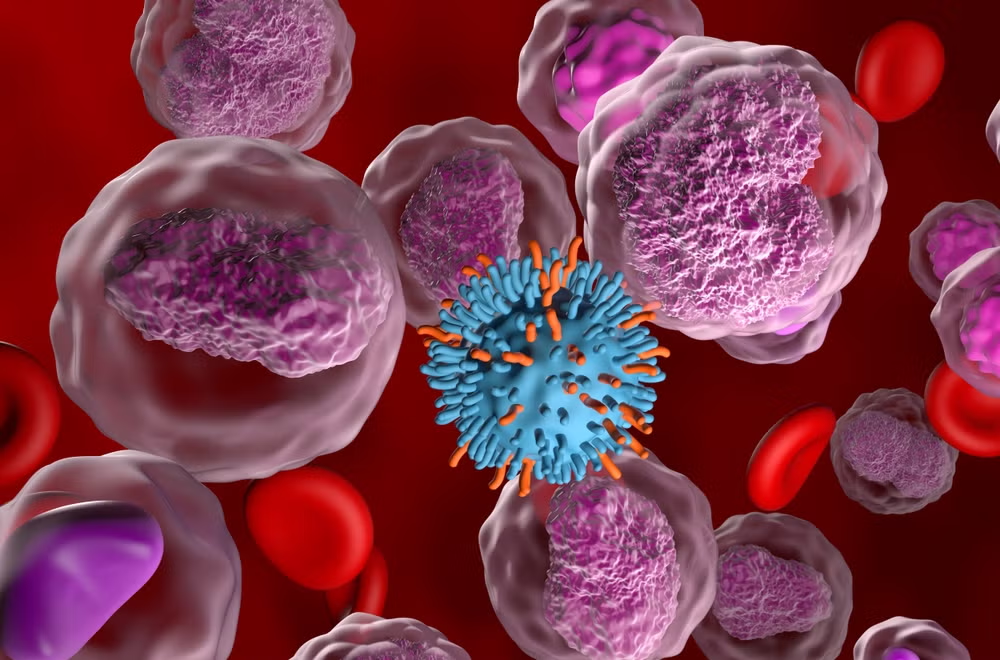
In vivo CAR-T therapies like KLN-1010 and ESOT-01 remain in early development. Credit: Krot-Studio/Shutterstock.com
Kelonia Therapeutics presented results for the Phase I inMMyCAR clinical trial (NCT07075185) at the American Society of Clinical Oncology (ASCO) 2026 meeting, held May 29–June 2, 2026. The trial features an in vivo chimeric antigen receptor (CAR)-T cell therapy, KLN-1010, administered in patients with relapsed or refractory (r/r) multiple myeloma (MM). KLN-1010 is a modified lentiviral vector, encoding a human anti-B-cell maturation antigen (BCMA) CAR, infused directly into patients, and unlike autologous CAR-T cell therapies does not require apheresis, lymphodepletion, and manufacturing. There have been 18 patients administered with the therapy across three dose levels. Eli Lilly agreed to acquire this therapy as part of the acquisition of Kelonia Therapeutics, which took place in April 2026 for $3.25 billion upfront and an additional $3.75 billion in potential milestone payments.
All patients across all dose cohorts responded to the therapy, with nine partial responses (PR), four very good PRs (VGPR), one complete response (CR), and four stringent CRs (sCR). Of the patients evaluable at least four months post-infusion (n=6), two had VGPRs and four had sCRs, indicative that the therapy can deliver deep durable responses. All 18 patients achieved minimal residual disease (MRD) at one month post-infusion; however, one patient was MRD-positive at their four-month follow-up. Another patient experienced disease progression at their four-month follow-up despite having a partial response and being MRD-negative at their one-month follow-up. One patient had extramedullary disease and experienced complete resolution by the first month follow-up. Toxicity for lentiviral-based therapies is concerning; however, safety signals were relatively moderate here, as four patients experienced cytokine release syndrome (CRS), all of which were grade 1 or 2 and could be managed with tocilizumab and corticosteroids. Two patients experienced immune effector cell–associated neurotoxicity syndrome (ICANS), one instance of which was grade 3 but was manageable and limited to three days. These positive safety results indicate the therapy could be administered in an outpatient setting in future.