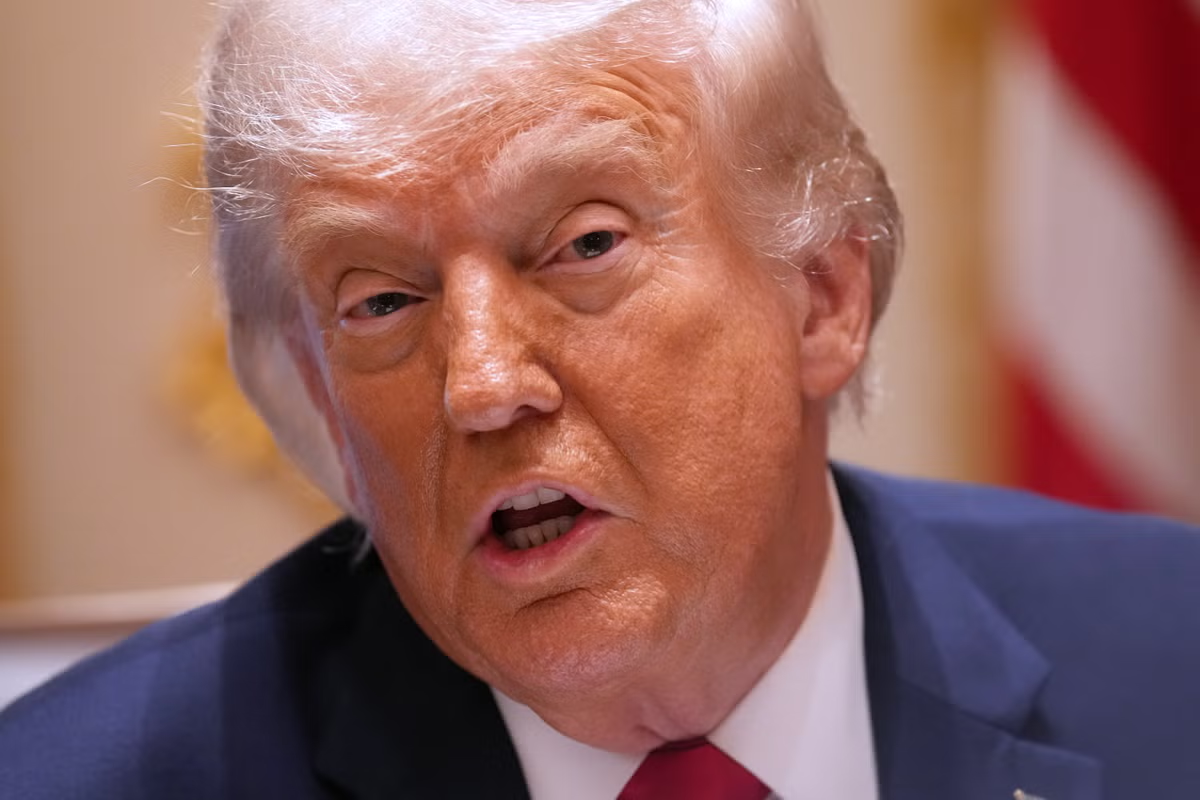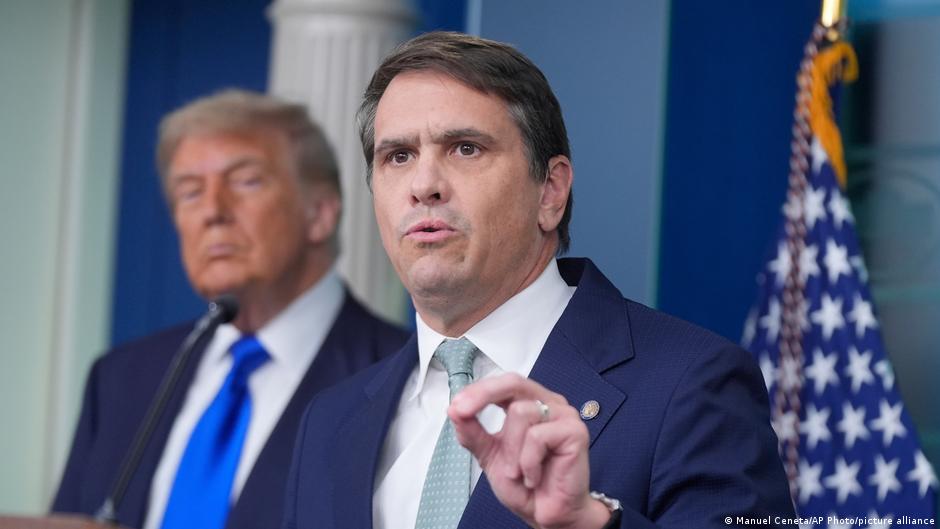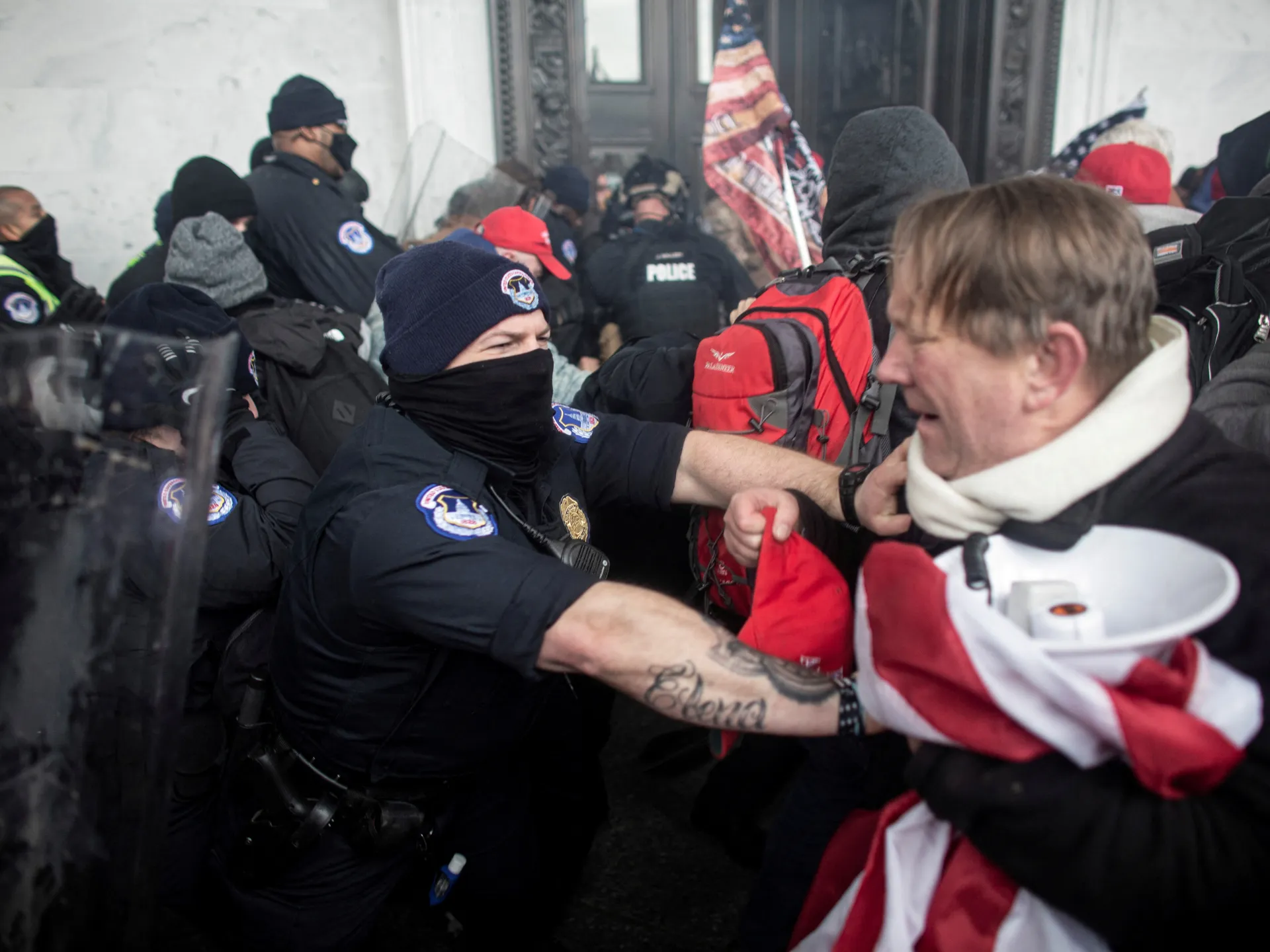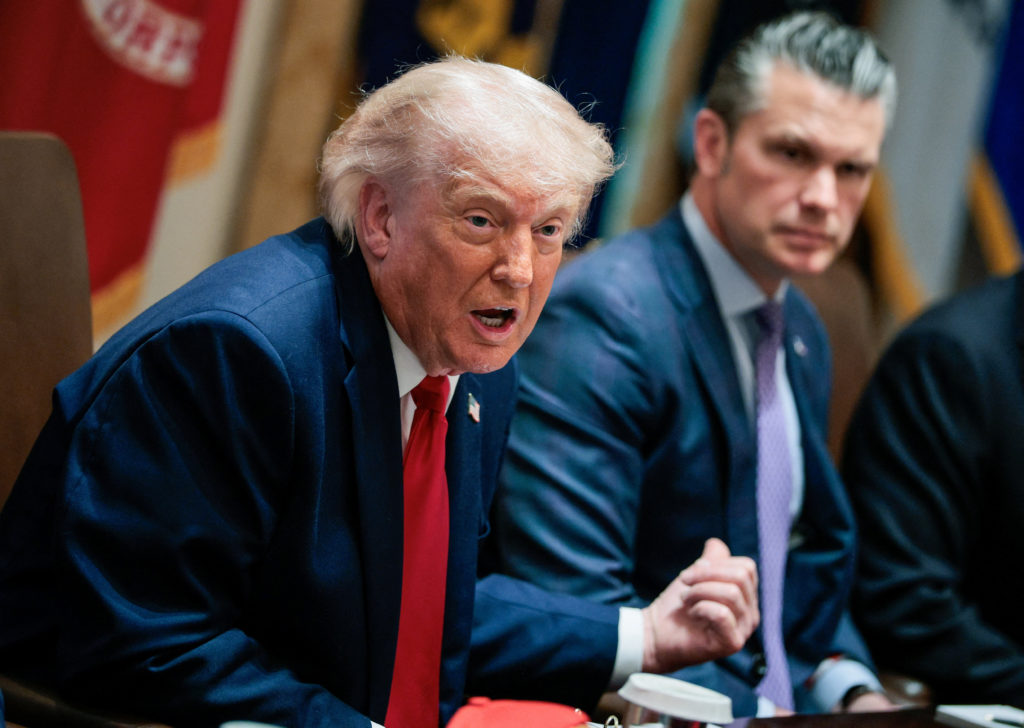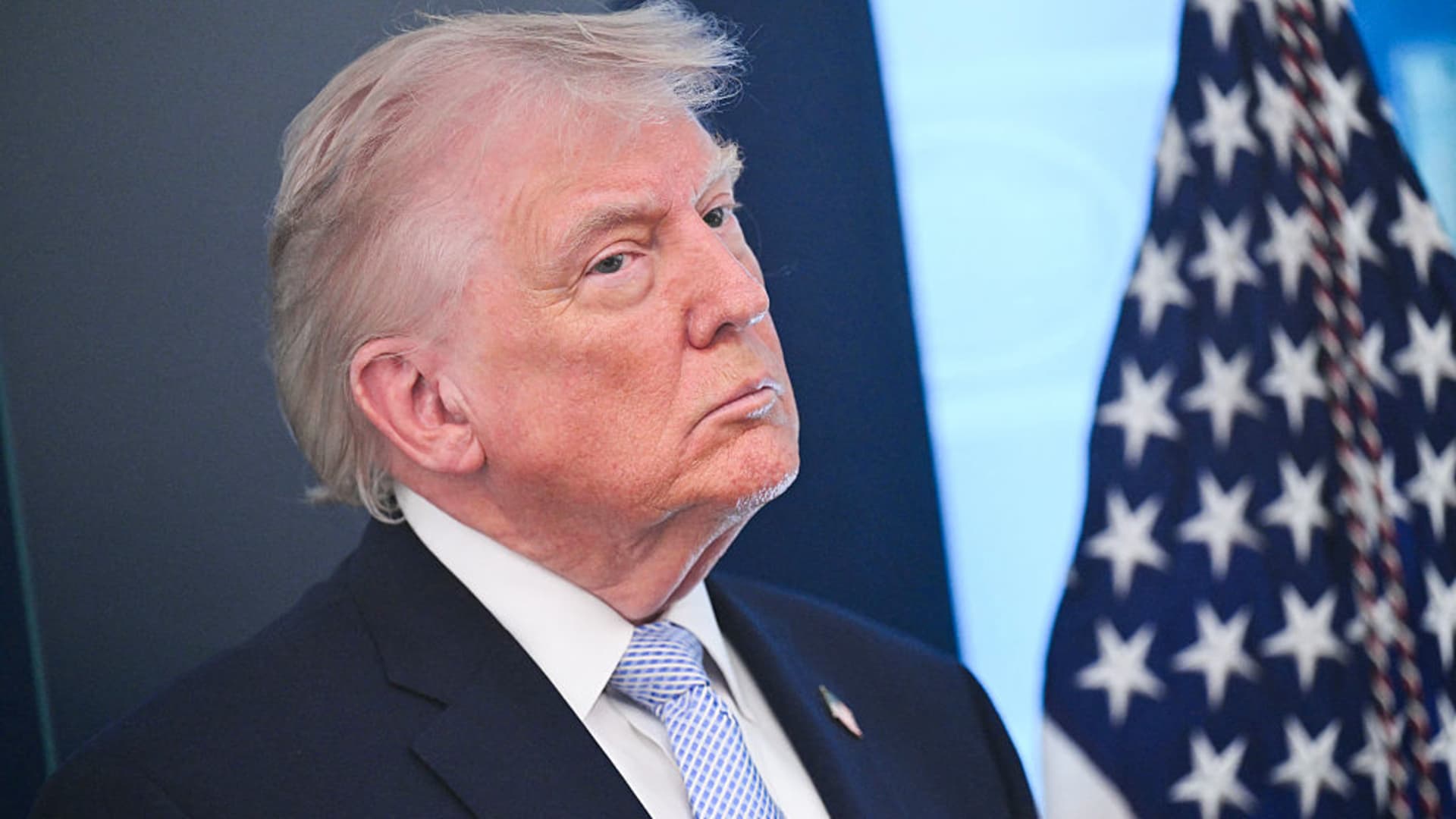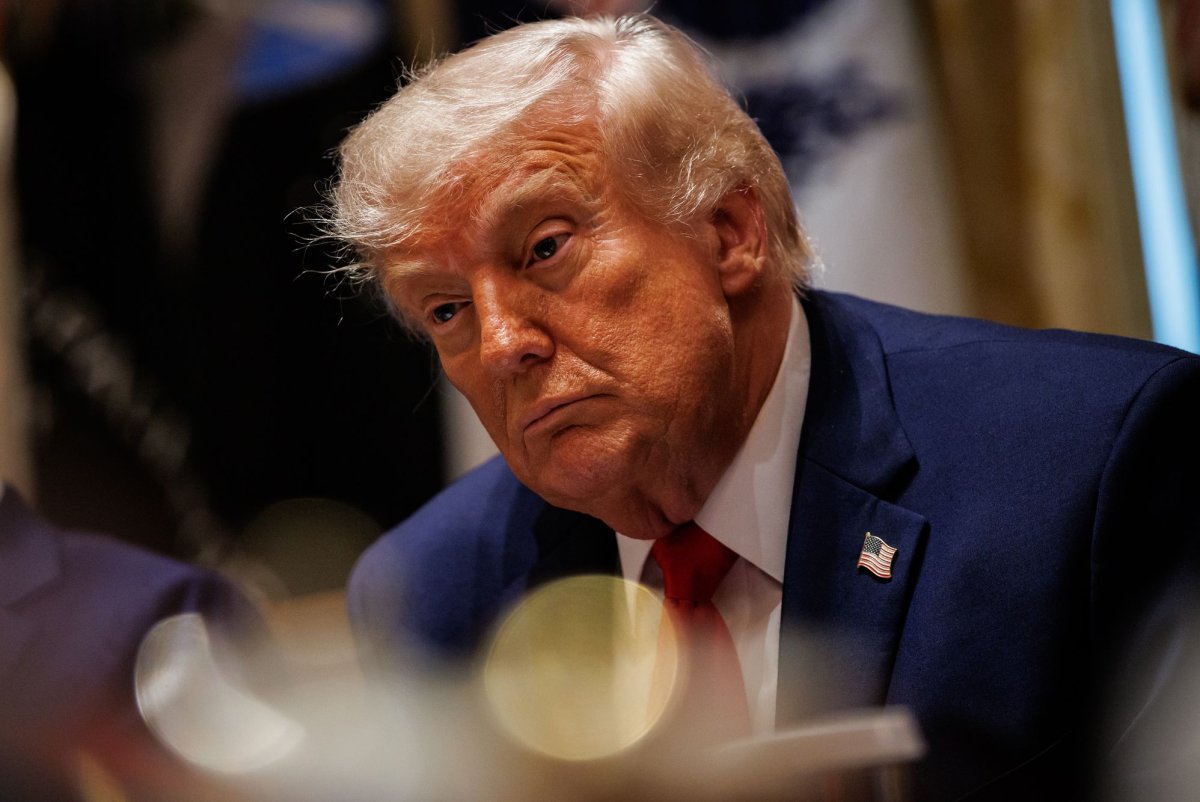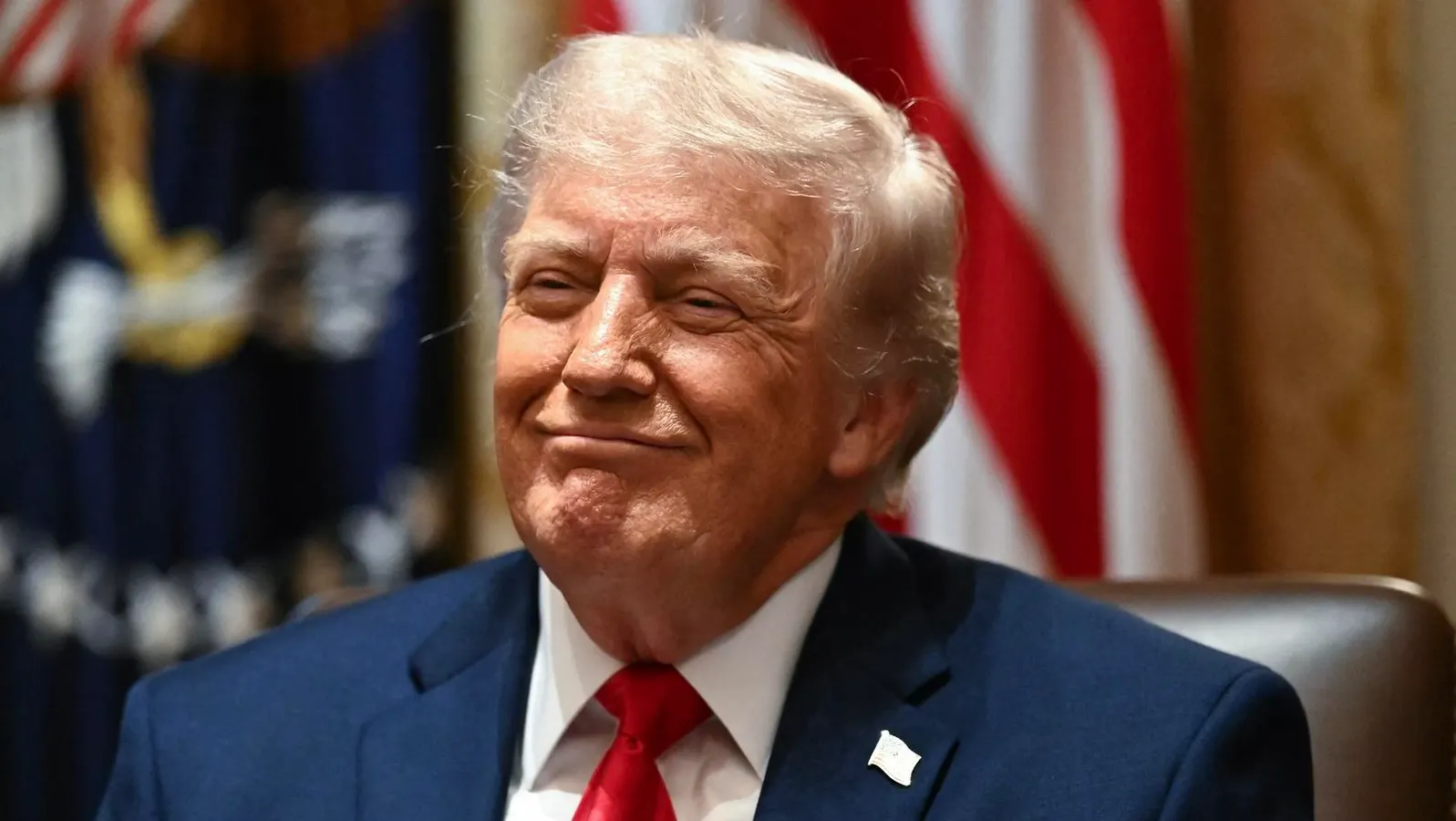
ToplineThe Trump administration said Monday it would halt its new $1.8 billion “anti-weaponization” fund in response to a recent court ruling—but it’s likely the other part of President Donald Trump’s settlement with the IRS, which gives him broad legal immunity, is still in play.President Donald Trump reacts during a cabinet meeting at the White House in Washington, DC, on May 27.AFP via Getty ImagesKey FactsThe Justice Department said Monday it was complying with a recent court ruling that temporarily halts Trump’s “anti-weaponization” fund from moving forward, amid reports that the Trump administration was pausing the fund in response to criticism from GOP lawmakers.The $1.776 billion fund for those who feel they’ve been victimized by the DOJ is one of two provisions in Trump’s recent settlement with the IRS, after he sued the agency for allegedly failing in its duty to keep his tax returns confidential.The other part of the settlement broadly gave Trump, his eldest sons and the Trump Organization—also plaintiffs in the lawsuit—widespread immunity from being sued or prosecuted by the government for acts that had occurred as of the settlement date.That includes shielding the plaintiffs from having existing tax returns audited by the IRS, but also more broadly says the U.S. is “forever barred” from taking action regarding “any matters currently pending or that could be pending” before other government agencies.That part of the settlement was not at issue in the lawsuit that paused the $1.8 billion fund, so there is nothing legally stopping the Trump administration from moving forward with Trump’s legal immunity right now, and the DOJ did not say anything on Monday about that provision.The DOJ has not yet responded to a request for comment on whether the immunity provision is still in effect, or if it proactively paused that part of the settlement as well.Big Number$600 million. That’s how much Trump could save if he avoids paying federal taxes for 2025 because of his IRS immunity, Forbes estimates. The New York Times has also separately reported Trump faced a potential $100 million penalty thanks to a tax audit focused on his Chicago skyscraper, though it’s unclear if that audit was still pending when the settlement was reached.Could Trump’s Legal Immunity Still Be Blocked?The settlement provision giving Trump some immunity will be harder to challenge in court than the $1.8 billion fund, legal experts cited by The Wall Street Journal noted, though it’s possible a future Democratic-led administration could take action after Trump leaves office. Congress could also pass legislation that would invalidate the settlement, though that remains a longshot with Republicans in control of Congress, and Trump would likely veto any bill challenging his agreement. The judge overseeing Trump’s original lawsuit against the IRS is now weighing whether to reopen the case, in response to a request from former federal judges in light of Trump’s settlement request. That would keep the entire settlement on hold at least while the case remains open, the former judges noted, though it’s unclear if the judge could undo the settlement entirely, or just levy sanctions on Trump and the IRS that punish them for reaching it.Will The $1.8 Billion Fund Be Reinstated?It’s unclear. Reports prior to the DOJ’s statement Monday suggested the Trump administration was planning to pause the fund indefinitely in response to GOP criticism, but that was thrown into doubt by the agency’s statement saying only that it would comply with the court’s ruling. The court order only blocks the $1.8 billion fund temporarily while the parties in the lawsuit submit briefs on whether it should be paused for a longer period of time while the litigation is pending. That means there could be another ruling on the fund’s fate as soon as June 12, when a hearing is scheduled in the case. If the court did lift its ruling and allow the fund to move forward, it’s still unclear at that point whether the Trump administration would start it up again, or keep the fund paused to quell Republican lawmakers’ concerns.Key BackgroundTrump reached his settlement with the IRS as the judge overseeing the lawsuit was weighing throwing out the case altogether, as it was unclear whether Trump and the IRS he oversees as president were actually opposing parties eligible to be in litigation against each other. The settlement has prompted a widespread backlash, with the “anti-weaponization” fund decried as a “slush fund” for Trump’s political allies, including Jan. 6 rioters. A number of GOP lawmakers have expressed concern about the fund, and the Trump administration’s announcement to pause it—albeit temporarily—came as the fund threatened a separate bill to bankroll Trump’s immigration enforcement priorities. Democrats had been expected to add amendments to that bill that would restrict the $1.8 fund or get rid of it completely, and at least some Republicans were expected to support those amendments, which stopped congressional leaders from bringing the bill up for a vote and threatened it entirely. Senate Majority Leader John Thune, R-S.D., confirmed Monday prior to the DOJ’s announcement that lawmakers were in touch with the White House about making changes to the fund in order for the immigration enforcement bill to move forward.Further ReadingForbesTrump’s $1.8B ‘Anti-Weaponization’ Fund Is Dead—For NowBy Alison DurkeeForbesTrump’s Tax Immunity Could Save Him More Than $600 MillionBy Dan AlexanderForbesTrump’s IRS Immunity Deal Sparks Concerns He’s Giving Himself A Self-PardonBy Alison DurkeeForbesTrump’s $1.8 Billion ‘Anti-Weaponization’ Fund Blocked In Court—At Least For NowBy Alison DurkeeForbesApplicants For Trump’s $1.8B Fund Include Proud Boys Leader, J6 Rioters And George SantosBy Sara Dorn
Trump’s Anti-Weaponization Fund Paused—But Here’s Why He Likely Still Has Legal Immunity
The DOJ said it would abide by a court ruling pausing the $1.8 billion “anti-weaponization” fund, but that ruling doesn’t concern the other part of Trump’s settlement.
TL;DRAI
Trump's IRS settlement grants him immunity from tax audits and government prosecution (potentially saving ~$600M on 2025 taxes); the accompanying $1.8B "anti-weaponization" fund is temporarily blocked by court. The immunity clause sets precedent on executive exemptions from federal oversight; Democrats plan legislative challenges, but GOP control makes reversal unlikely without a future Democratic administration.
914 words~4 min read