Support CleanTechnica's work through a Substack subscription or on Stripe.
In two-thirds of EU Member States, companies do not get a clear tax signal to switch to electric
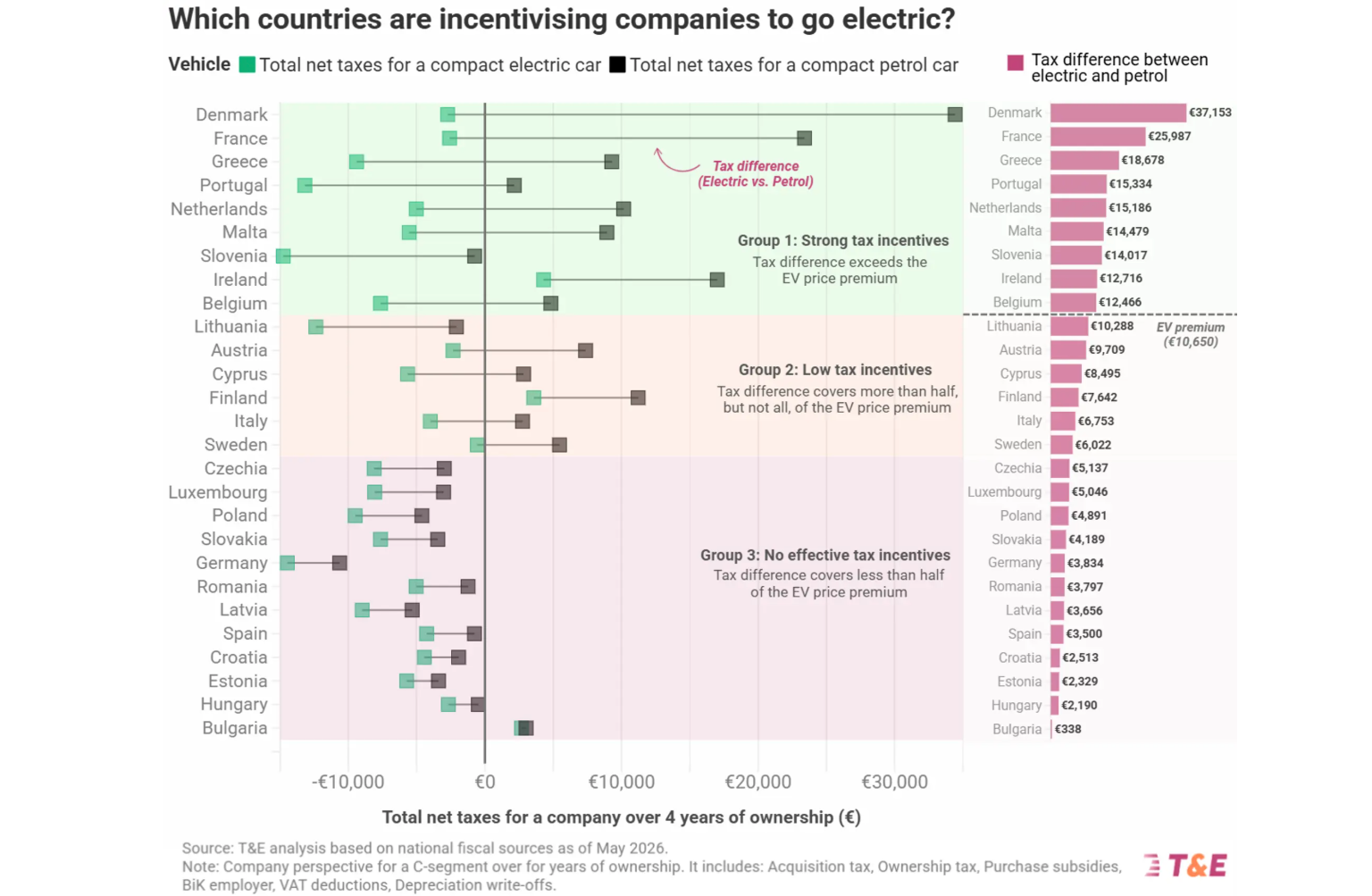
Two-thirds of EU member states are failing to provide companies with the tax incentives necessary to steer them away from fossil-fuel cars. In 18 out of 27 Member States, the tax gap between an EV and a fossil-fuel car is not enough to compensate for higher EV prices, according to new T&E analysis [1]. At a time when Europe should be reducing its dependency on oil, weak company car tax risks locking the continent into a decades-long reliance on petrostates.
To assess where clear incentives exist, T&E evaluated whether the gap exceeded the EV price premium, which stood at €10,650 in 2025 [2], reasoning that where taxes offset the upfront premium, the lower running costs of EVs can then make the business case for electrification. However, the study finds that the tax gap between electric and fossil-fuel company cars surpasses the EV price premium only in 9 countries [3].
Company cars are key to tackling road transport pollution. They account for 59% of new car registrations and 78% of oil imports consumed by new cars [4]. Last December, the EU presented the Clean Corporate Vehicle regulation which sets national electrification targets for the car fleets of large companies, proposing an EU-wide average of 45% of their new cars to be electric in 2030. It proposed Member States, not companies, be responsible to meet them.