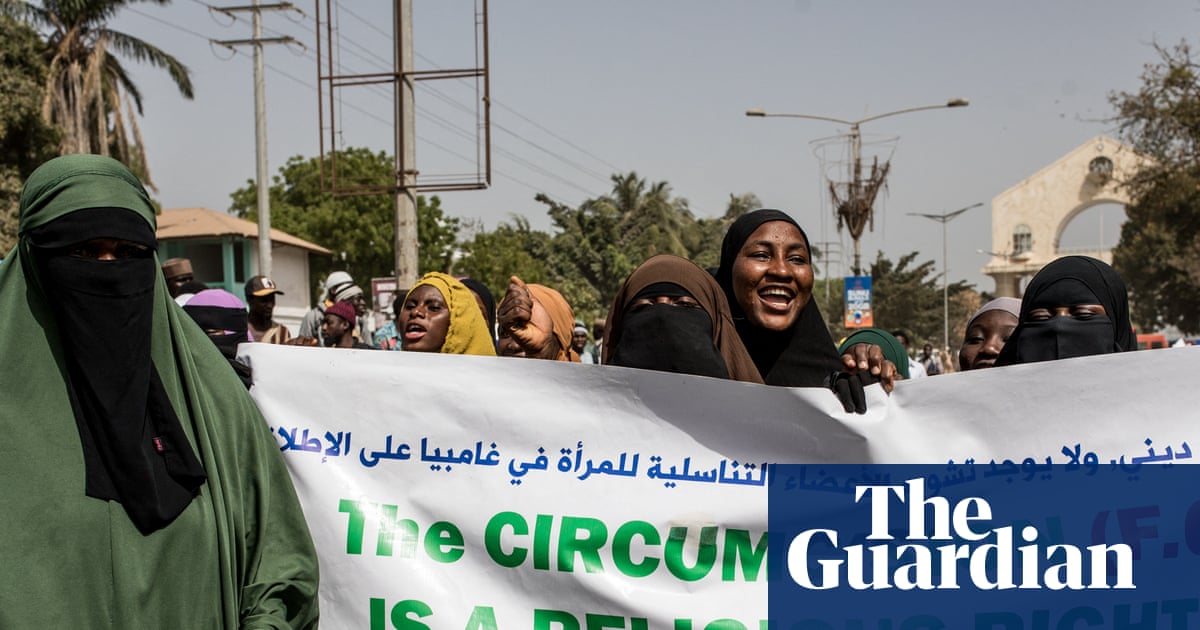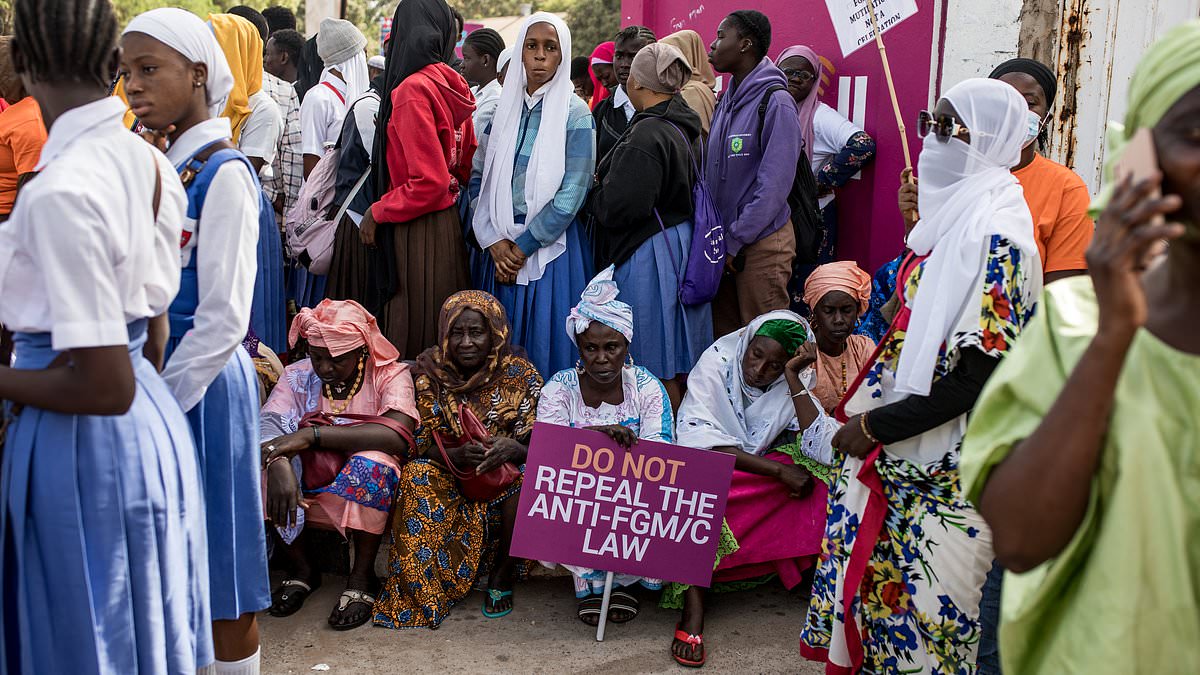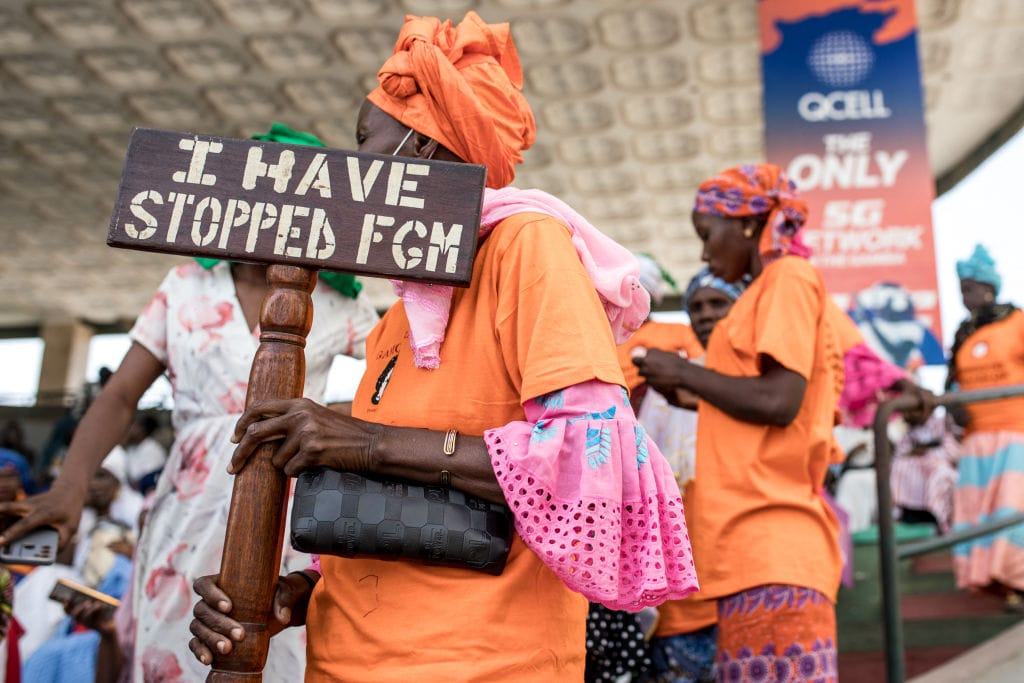
In July 2024, The Gambia came closer than any country in the world to reversing a ban on female genital mutilation. A practice that had been criminalised for nearly a decade was on the verge of becoming legal again.Then feminist organisers stopped it.After months of sustained organising, community mobilisation and public campaigning, the National Assembly voted 34 to 19 to reject a bill that would have repealed the country’s 2015 ban on FGM. It was a major victory, not only for Gambian women and girls, but for feminist movements across the continent.The fact that the vote happened at all should alarm us. Just months earlier, in March 2024, 42 members of the same Parliament had voted to advance the repeal bill. Its supporters argued that FGM is Islamic and the ban was a Western imposition – that Gambians, up to 96% of whom are practising Muslims, should be free to practise their faith as they see fit. These false arguments – there is no requirement for FGM in Islamic law – were not new, but they were better coordinated and more politically embedded than before.At a moment when anti-rights forces are better funded, better organised and more confident, The Gambia offers something the feminist movement badly needs: a documented win, and a template worth studying. It is a rare case of a movement turning a political crisis into momentum. But it is also a reminder that ‘winning’ in legislation does not automatically deliver change.In August 2025, a one-month-old baby girl, Sarjo Conteh, was rushed to a hospital in Banjul. She had been cut. By the time doctors reached her, she had bled to death. The Gambian authorities confirmed that her injuries were the result of FGM. Conteh’s death was not an isolated incident. Activists on the ground have for years reported that the 2015 ban has not ended FGM, but pushed it underground, and led to girls being cut younger than ever. Many families believe that infants as young as a few days old will heal faster from the cutting, meaning evidence will be harder to detect. Recently, activist Dr Leyla Hussein wrote about this tragedy with the clarity and fury it deserved. She named what so many institutions still refuse to: that FGM is sexual violence, that it is child abuse, and that the world’s reluctance to say so plainly is inseparable from the fact that the children being harmed are overwhelmingly Black and Brown girls. She asked why, if this violence were happening to white children, there would be any hesitation at all in calling it assault. There would not be.Hussein also wrote about the particular cruelty of normalisation: the way survivors are taught to question the legitimacy of their own pain when the world has minimised it first. That is the atmosphere in which Sarjo Conteh died. That is the atmosphere in which three women were recently acquitted in connection with her death.And that is why the legislative fight in The Gambia, as hard-won as it was, cannot be the end of the story. Even now, the people who tried to roll back this right are petitioning the Supreme Court, claiming that the ban violates their right to religious and cultural freedom..This is a story about a victory. But it is also a story about the fragility of that victory, and about what enforcement, long-term cultural change and sustained feminist organising actually require.How we got hereThe 2015 ban was introduced under former president Yahya Jammeh. It was imperfect legislation, lacking a serious enforcement strategy, and many Gambians associated it with Jammeh’s dictatorship rather than with the rights it was designed to protect. For years, FGM continued largely unabated.Then, in August 2023, three women were convicted under the law for performing FGM on eight girls under the age of five, one of whom was just four months old.Those convictions – the first for perpetrators of FGM in a Gambian court – were a breakthrough. Although the law states offenders can be imprisoned for up to three years, the women were issued fines of 15,000 dalasis – equivalent to up to half a year’s income for women in rural areas of the country – or one-year prison sentences if they were unable to pay. Amid national outrage, a prominent imam paid the women’s fines, lawmakers began to talk openly about repealing the ban, and, in February 2024, a private member’s bill was introduced in the National Assembly to do exactly that – arguing that it was ‘anti-Islamic’.I want to be direct about this framing, because it is used to silence us – and we should not let it. The Quran does not mention FGM. There is no authentic hadith that promotes it. FGM predates Islam, is practised by communities of multiple faiths, and is opposed by Muslim scholars across the world. Associating FGM with Islam is not theology. It is politics. And its political purpose is to put the practice beyond critique.The organising that turned it aroundWhen the bill to repeal the ban was introduced, the Gambian government said very little, with the main opposition parties saying even less. Civil society did not wait for either.GAMCOTRAP, which has spent three decades working community by community across this country, mobilised immediately. We were joined by organisations across the Network Against Gender-Based Violence, which became the coordination spine of the campaign.Together, activists ran events across the country. We ran radio programmes, put up billboards, and called legislators directly. We brought survivors to testify at the National Assembly, gathered evidence on death rates and health consequences, and put it in front of anyone who would look at it.We also took the religious argument seriously, rather than dismissing it. Activists and lawyers facilitated a fact-finding mission to Al-Azhar University in Egypt, one of the most respected institutions in Islamic scholarship. The findings were clear: FGM is not required by Islam. That evidence was placed before lawmakers, and it mattered.At the international level, I took this fight to the UN Human Rights Council. I met with the UN Special Rapporteur on Violence against Women and Girls, with UNFPA, WHO and state delegations, urging them all to use their mandates. I also warned them of something the global conversation tends to underestimate: if The Gambia had fallen, girls from neighbouring countries where FGM is banned could have been transferred across the border to be cut.None of this was without cost. Activists faced harassment, particularly online. Speaking out against the repeal made people targets. Some survivors who were prepared to testify chose silence because the atmosphere had become too threatening. I want that recorded. The victory was real, and so was the price paid to achieve it.What the movement needs nowThe organisations that held the line in The Gambia need continued, sustained resourcing, not project funding tied to deliverables and donor reporting cycles. They need core funding that allows movements to respond to a political crisis in real time, coordinate across networks, and sustain community engagement over the years that real norm change requires.The fight against FGM is not the responsibility of women alone. It never was. It requires men, religious leaders, community elders, young people and lawmakers who are willing to be on the right side of this, even when it is uncomfortable. In The Gambia, we have seen what happens when enough of them are brought into the work. We have also seen what happens when they stand aside.I have spent decades on this. I will spend whatever decades remain on it. But two years on from July 2024, I want to be clear about what that moment meant, and what it did not. It meant that a specific, coordinated rollback was defeated. It meant that activists who risked a great deal showed it was possible to turn a political crisis into momentum.It did not mean that the work is done, or that the protections are secure, or that the next attempt will not come. We stood on the right side of history. Now we have to make sure we stay there.
Inside the campaign that stopped The Gambia reversing its FGM ban
When lawmakers moved to legalise FGM again, Gambian feminists turned a dangerous rollback into a landmark victory
1,338 words~6 min read