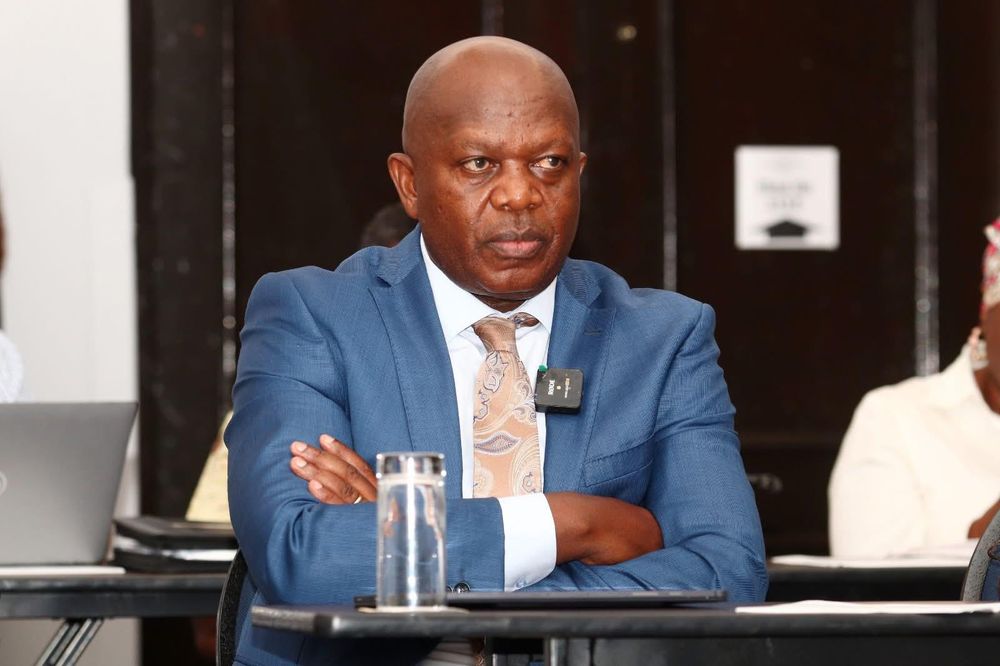
In another organisational blow for the beleaguered Broad-Based Black Economic Empowerment (B-BBEE) Information and Communications Technology (ICT) Sector Council, its deputy chair Katharina Pillay has resigned after reports of dysfunction and infighting.This emerged during a meeting between a government delegation and parliament’s portfolio committee on communications and digital technologies on Tuesday afternoon. It comes as South African-born American billionaire Elon Musk has campaigned to bring his satellite-based service, Starlink, to South Africa but decried B-BBEE policies as “racist”.The committee heard that while the council was hamstrung, equity equivalent investment programmes (EEIP) occasionally allowed ICT companies to participate in South Africa with diluted investments in the local economy without investing in the transformation of the sector directly.Nontombi Matomela, acting COO at the department of trade, industry and competition, said the council faced operational challenges which caused it to add layers of institutional administration with little evidence of advancing transformation in the ICT sector.“If you pay council members council fees and then you haven’t produced reports, you haven’t prioritised the thing that makes you who you are; you are going to sit in the same position, [asking] why there is a deficit of willingness to contribute to council.”The council’s structural challenges come at a time when compliance with B-BBEE in the ICT sector leaves much to be desired, as the government’s estimations say that between 2018 and 2023, 30% of the sector was level 8 or non-compliantThe council is an independent body that functions under the department of trade, industry and competition. The government delegation included the B-BBEE Commission and the department of communications and digital technologies.The council’s structural challenges come at a time when compliance with B-BBEE in the ICT sector leaves much to be desired, as the government’s estimations say that between 2018 and 2023, 30% of the sector was level 8 or non-compliant.Towards the end of the committee meeting, Khusela Sangoni, chairperson of the committee, asked Matomela: “Are you dysfunctional?”In a candid moment, Matomela responded: “I would say, chair, we are not adequately structured, and just for the update of the House, without going into details, the deputy chairperson has also since resigned.”Head of policy development and strategy at the department of communication and digital technologies, Alfred Mmoto, told the committee the council lacked statutory power to get multinationals to share information, as multinationals say they cannot share financials with the council. “We said we don’t want information about their financials. We want confirmation so we have satisfaction that your EEIP investment is equivalent to what would be satisfactory to the department of trade, industry and competition.”He said that from the inception of the council, there were allegations of leadership squabbles, making it hard for the council to continue with its business. “These things emerged out of what different commissioners were writing to the minister. Issues at the top managed to rob the commissioners of the opportunity to work.”Jacob Maphutha, chief director of the B-BBEE advisory council, said while the council was aware of the challenges the ICT Sector Council faced, it introduced interventions such as the B-BBEE Charter Forum to provide it and other sector councils with support.“We are in other sectors where councils are functioning. One of the things that we also did, because we also want councils to learn from each other, is we set up the charter forum where the various councils meet … quarterly … to share best practice.”Commissioner for the B-BBEE Commission, Tshediso Matona, said that of the estimated 28,000 BEE certificates on record, 2,291 were from the ICT sector and that EEIP programmes ICT companies participated in instead of B-BBEE seldom resulted in a transfer of ICT skills.“When accountability becomes weak, it results in the loss of momentum in driving transformation. Ownership is at about 30%. That is not a worrisome number. The worrisome number is skills. We need a BEE ecosystem. The different role players in the oversight process have data, but that data is fragmented,” Matona said.Sangoni said the committee understood that the BEE ICT Sector Council was experiencing instability and disagreement on matters of transformation. “We understand that that matter seems to have escalated … with accusations flying, and the chair has said that some remarks that have been made are not necessarily the views of the board. There have also been news reports that there has been a regression of transformation in the sector.”The ICT sector is among the most colonised sectors in the South African economy. It’s criminal, and we will continue to be a colonised ICT sector if we do not stand up and hold these entities accountable for failing to meet these objectives— Shaik Imraan Subrathie, ANC MP She said Dell was an example of the practice of malicious compliance in the sector, as EEIPs were not monitored for delivery against predetermined objectives and targets. No method of transformation was complete without the transformation of ownership.“I don’t understand how you say you are going to train 50 people. That number has gone down from 100 people. You can’t say that you are going to train 50 people and you are looking at R12bn from the market.”ANC MP Shaik Imraan Subrathie said the capacity for the council and the commissioner needed urgent support, adding it was “criminal” that various sectors of South African society were “outsourcing” digital skills and capabilities to foreign firms that were largely untransformed.“The ICT sector is among the most colonised sectors in the South African economy. It’s criminal, and we will continue to be a colonised ICT sector if we do not stand up and hold these entities accountable for failing to meet these objectives.”ANC MP Mzoleli Mrara asked the delegation to explain the allegations against the council chair, who was currently under suspension, and the conflicts of interest that were alleged in reports surrounding the beleaguered leadership.DA MP Tsholofelo Bodlani said the institutional and policy architecture of South Africa has failed to drive meaningful economic transformation in the economy, particularly in the ICT sector. She suggested that the council be disbanded. DA MP Shara Singh expressed concern at the staffing constraints the council was experiencing, as well as the ostensible failure to produce key reports on the progress of the state of transformation in the sector and any success of the sector codes therein.“What we’ve seen here today [Tuesday], it’s very difficult to say, with the governance challenges of the day, that I have any confidence in this council. I would have to say that this council must be disbanded.”She said the council has been hamstrung with governance, operational, and strategic challenges, while gaps in transformation in the ICT sector persisted. She said the DA supports programmes that expand economic participation, with consideration of effectiveness over ideological preference.MK Party MP Adil Nchabeleng took issue with the absence of minister of trade, industry and competition Parks Tau and minister of communications and digital technologies Solly Malatsi from the meeting.“We are in this situation as a country because we have vanguards like yourself who are failing us, from DGs to councils to departments to ministers. The council has many problems. You’ve had resignations; you’ve had infighting. I have the file of the council. The council is a big reason why we are not transforming.”He said multinational companies investing in South Africa were not doing the country any favours but were using EEIP to enter the market because they recognised its value.TimesLIVE
ICT transformation council hobbles as deputy chair Katharina Pillay resigns
A government delegation has admitted to a committee of parliament that the B-BBEE ICT Sector Council is 'not adequately structured'
1,228 words~6 min read