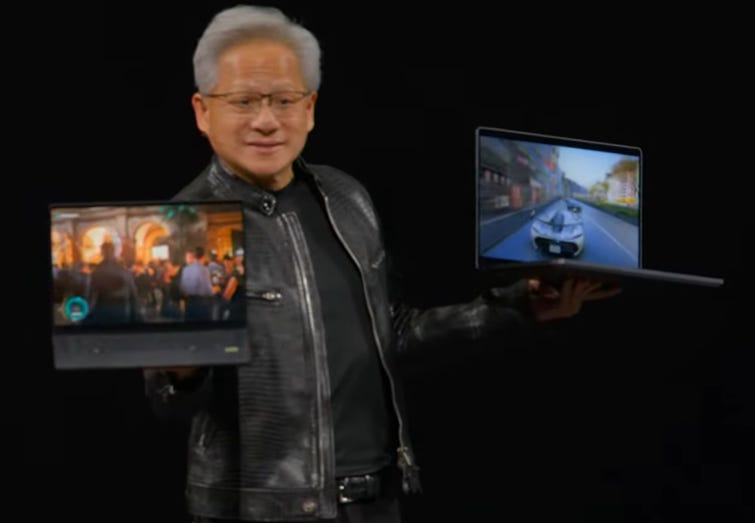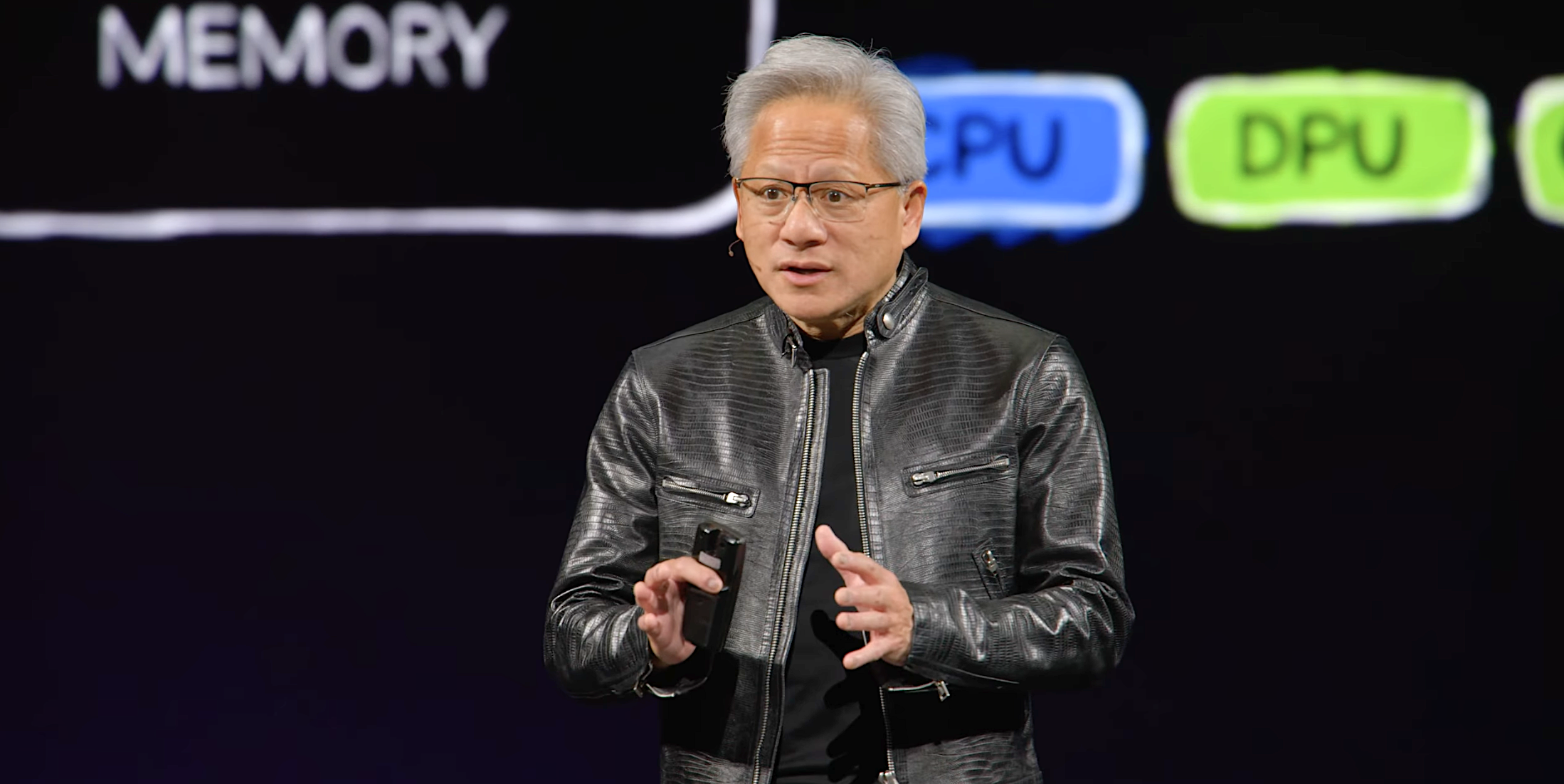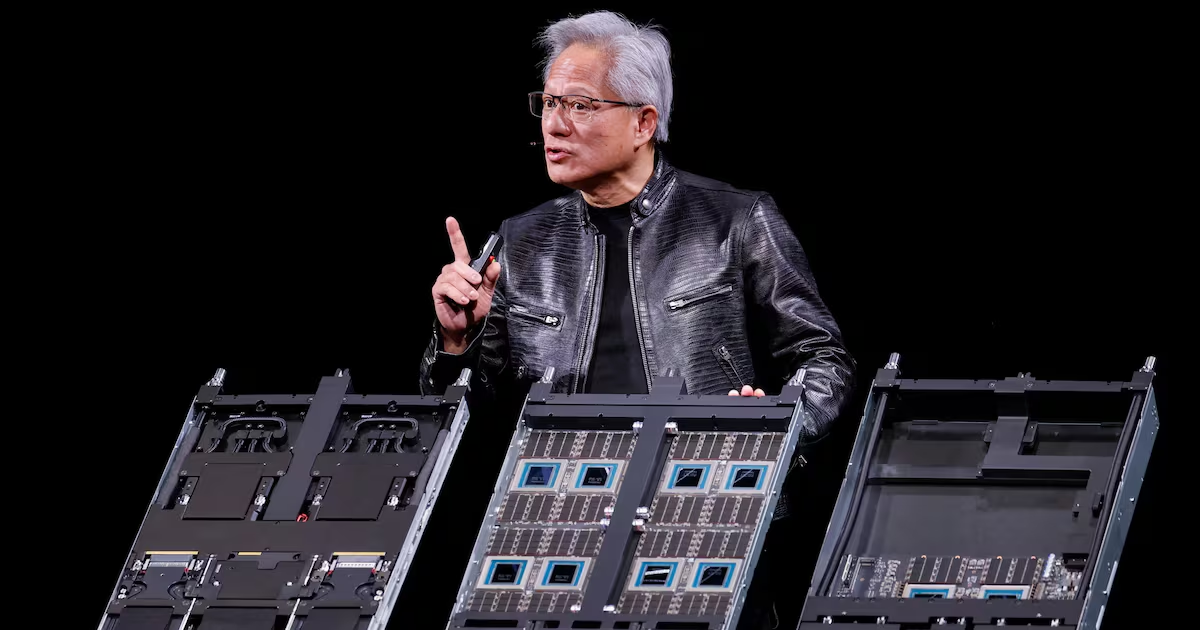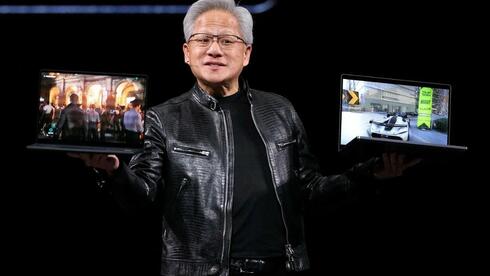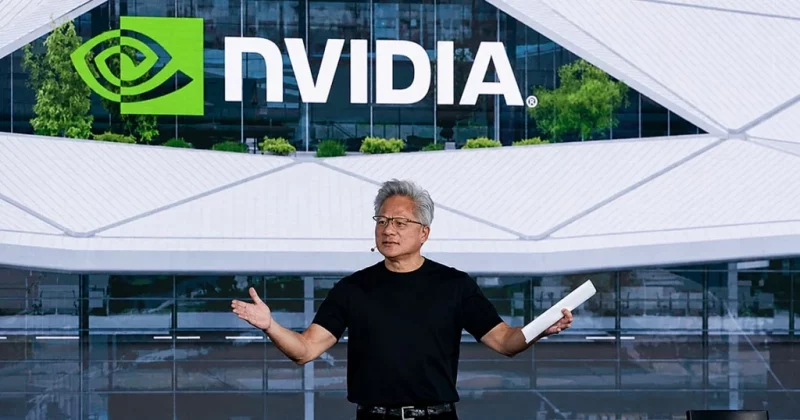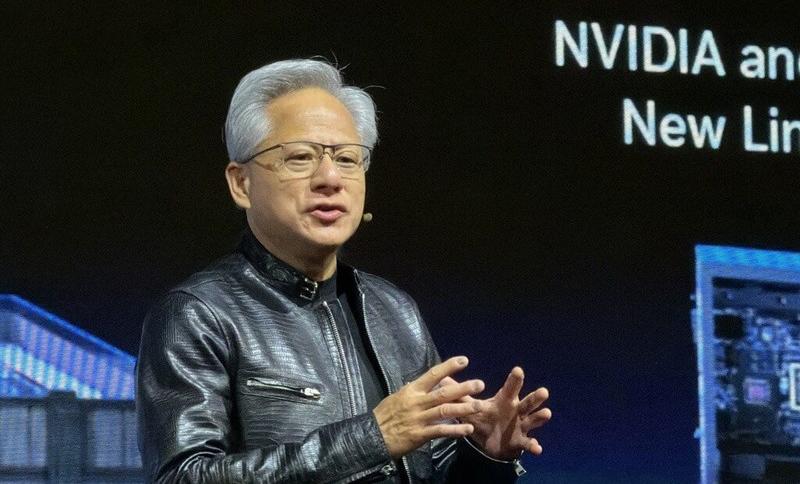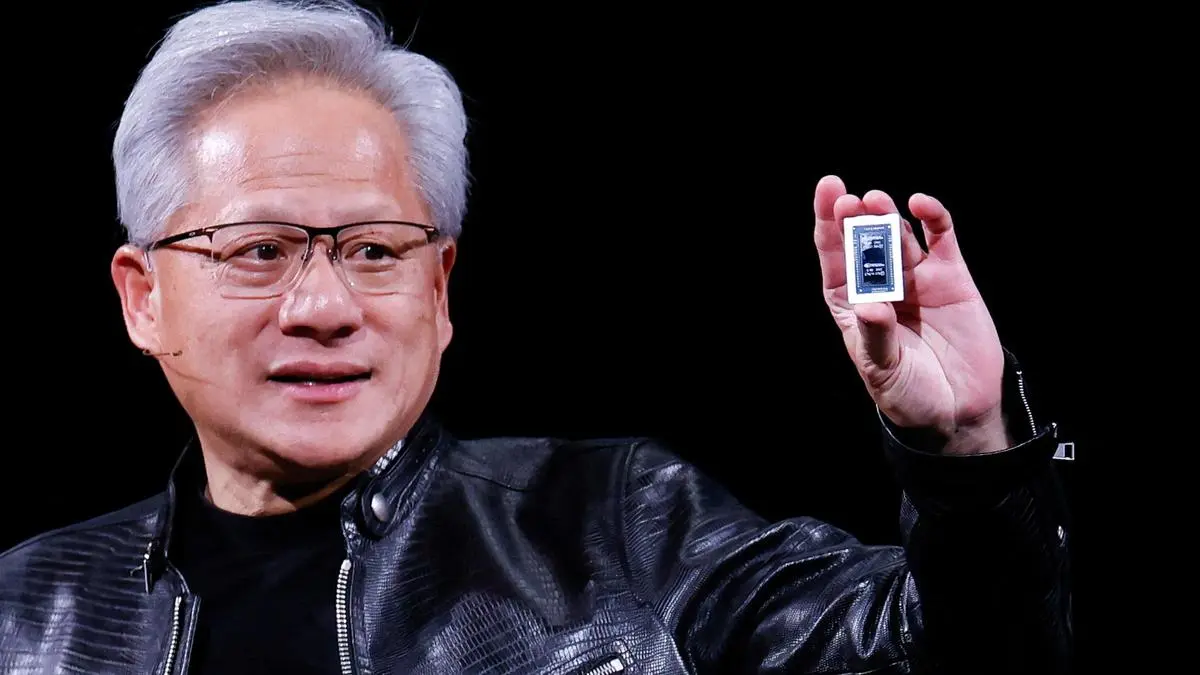
Nvidia CEO Jensen Huang introduces the RTX Spark GPU during a keynote address on the sidelines of the annual Computex in Taipei, Taiwan, June 1, 2026. REUTERS/Ann Wang
| Photo Credit:
As the heavyweights of global tech converged upon Taipei, Taiwan, for Computex 2026, one message cut across the visionary keynotes and next-gen product announcements — a new era of personal computing is here. The agentic era of computing will go beyond applications stuck inside devices to an all-pervasive agent which will work across various ‘endpoints‘ from mobile phones and PCs to smartwatches, cars and household robots. These agents will understand contexts, assess user needs, interact with other similar agents and act autonomously with minimal human interference, the industry leaders declared at the annual technology conference.Tech titan and Nvidia CEO Jensen Huang kicked off his keynote emphasising that the age of ‘useful AI’ has now arrived. “Agents will not just be part of the cloud or within enterprises, it will run on our devices. 10 years from now, today’s PCs, a tool where you launch applications, click and type, will not exist. There will be an AI supercomputer in every house which will run all of your agents who are doing all kinds of things for you all the time,” he said. He also launched Nvidia’s RTX Spark, the company’s first real foray into CPUs by the chip major known for its GPUs. Purpose-built for PCs with personal agents, RTX Spark is expected to compete with similar offerings from Intel, AMD and Apple Silicon.‘Year of agents’Qualcomm’s CEO Cristiano Amon described 2026 as the ‘year of agents’ and said that just like the smartphone has been central to digital life in the past two decades, in future, agents too will be the centre of digital experience. He added that this evolution will require a complete reshaping of device architecture, with future devices having ‘two personalities’. “One personality serves the human user. The other serves the AI agent. Future devices will be used at the same time by both humans and agents working in the background,” he said.Qualcomm, whose Snapdragon chip has been a frontrunner in on-device AI CPUs, launched Dragonfly, its umbrella brand for data centre compute. Interestingly, with this, Qualcomm now takes Nvidia head-on.Meanwhile, Intel’s Head, Lip Bu Tan, who wore the hat of a wise sage in comparison to his technology contemporaries, suggested that privacy will be another key driver for on-device AI. Joined by Perplexity’s Aravind Srinivas, Tan demonstrated a system of ‘hybrid agent inference’ where, within the same system, local agents on Intel chips will perform tasks with sensitive private data(like financial documents) while higher-level tasks will be done on cloud models. In an interaction with businessline, David McAfee, who leads the products team for AMD’s Ryzen processor family, said that globally, investments are being made and new fab capacities are being built to tackle the ongoing memory crisis.“Memory has historically gone through these mega cycles where prices get really high because the market is undersupplied and then prices normalise when the market is oversupplied. We are on the undersupplied side of things now. It will take a few years for the capacity to catch up. But it’s not a forever problem,” he said. The writer is in Taipei at the invitation of SynologyPublished on June 2, 2026