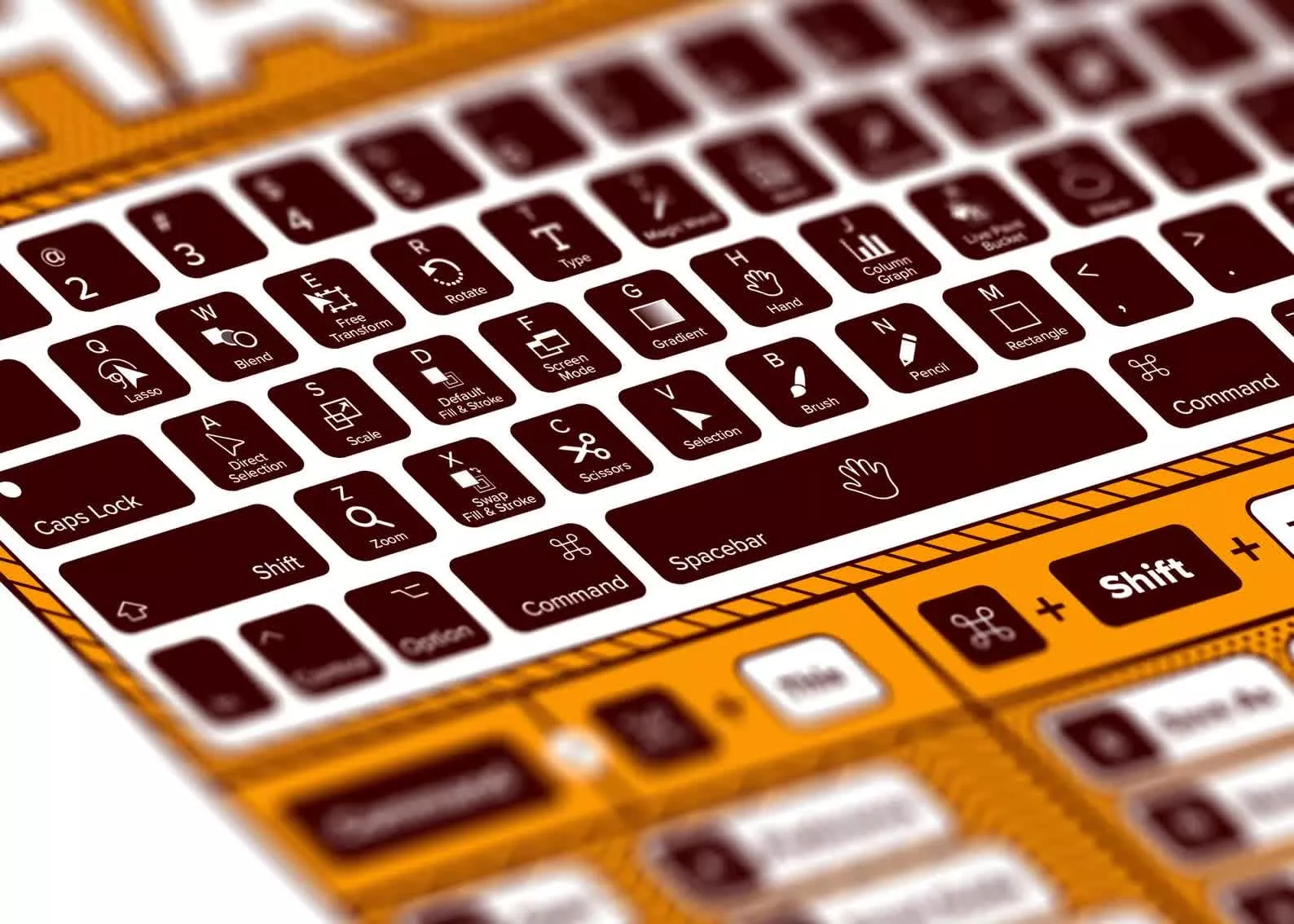
Cmd+C, Cmd+V, Cmd+Z — the basics settle into procedural memory quickly. Beyond that, most shortcuts remain things we intend to learn eventually.
The resources are easy to find. Most applications expose shortcuts directly in their menus, publish reference pages, and allow custom key bindings. Yet a 2005 study by Lane, Napier, Peres, and Sandor found that even experienced users relied on keyboard shortcuts less than 10% of the time, and that time spent using a program had little relationship with keyboard shortcut proficiency. Exposure alone doesn't build skill.
What builds it is intentional repetition — and a willingness to be slower before you're faster. Fitts and Posner's three-stage model of skill acquisition describes the progression: cognitive (active recall, slower execution), associative (familiarity forming, still requires attention), autonomous (fires without thought). Remington, Yuen, and Pashler put a number on the crossover: after roughly 200 repetitions, keyboard shortcuts became consistently faster than menu navigation. A new shortcut might cost you a beat every time you reach for it on day one. By the end of the first week of consistent use, that friction is mostly gone.