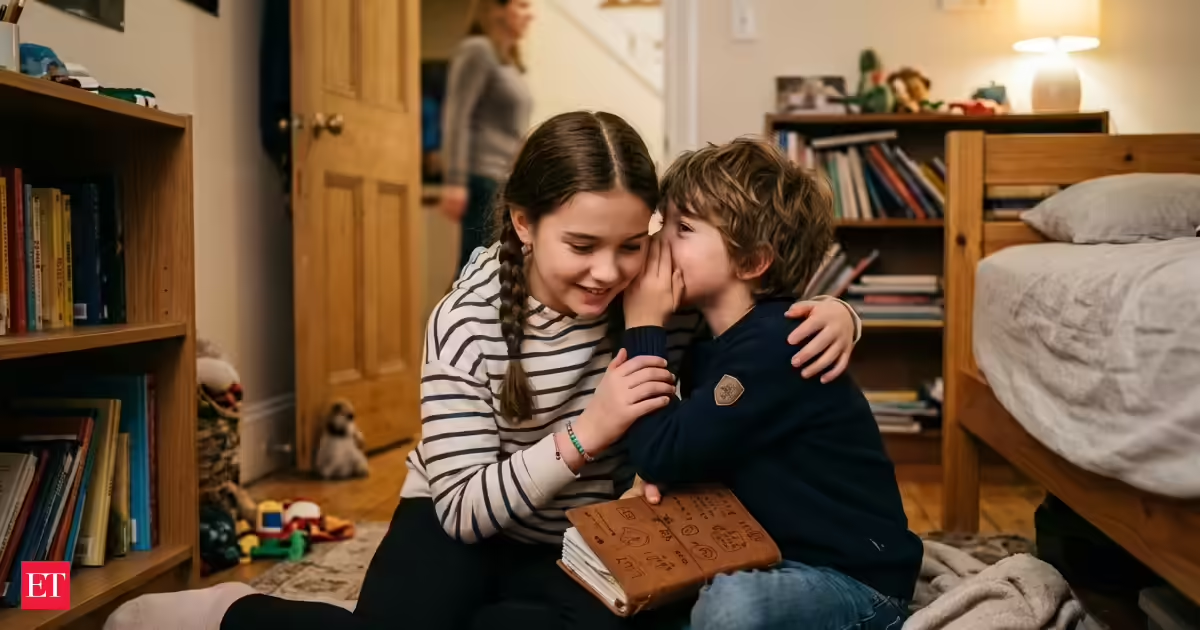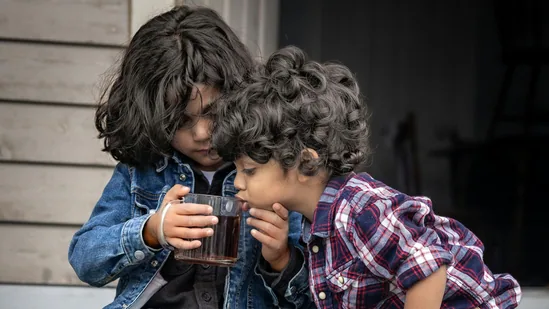
Psychology suggests siblings who slowly stop speaking as adults aren’t drifting apart over recent conflicts: They’re often acting out childhood dynamics no one in the family ever namedSynopsisThe roots of distance among adult siblings often trace back to their childhood experiences. Instances of perceived favoritism or uneven treatment by parents can carve deep emotional divides. These formative interactions influence how siblings view themselves and relate to others in adulthood. Unexpressed grievances about favoritism or a sense of being burdened can foster quiet separation.How children view themselves in relation to their parents' treatment is just as important as how they were actually treated | Image Credit: Wikimedia CommonsIn instances where adult siblings become estranged from each other, there is usually an easy answer as to why. An argument about money, disagreements over elderly parents, or even politics could be a reason why, or perhaps just a single statement that went too far.However, according to family psychology, sometimes what seems like the cause is simply just the tip of the iceberg. More often than not, the silence between adult siblings begins much earlier, when they were children and trying to figure out where they fit into the family structure.How children view themselves in relation to their parents' treatment is just as important as how they were actually treated | Image Credit: Wikimedia CommonsFamily roles often begin long before adulthoodBrother-sister relationships take place against a family backdrop which can have lasting effects. According to a seminal review of sibling studies published in the Annual Review of Psychology, families are complex systems in which parent-child dynamics are intertwined with sibling dynamics, which in turn affect parent-child relationships. This means that neither closeness nor sibling rivalry arises out of nowhere. Rather, they are shaped by contextual factors such as fair treatment, warmth, expectations, and parenting style.According to the same review, how children view themselves in relation to their parents' treatment is just as important as how they were actually treated. Indeed, two siblings raised in the same family could see their childhoods differently. While one might think that their parents expected them to behave responsibly all the time, the other will feel criticized and judged on a regular basis.Such views, left unacknowledged, may form the core of one's self-perception and shape the future relationship for years to come. As a result, adult distancing might be related to past views instead of a recent conflict.Favoritism can echo for yearsNumerous studies on parental differential treatment have demonstrated links between favoritism and poorer sibling relations. For example, a study of young adults revealed the negative impact of favoritism and a larger treatment discrepancy on the degree of sibling intimacy and more depressive symptoms. In another study published by PubMed, the researchers found that sibling closeness within the same family varied with mothers' differential treatment of their children, and all these results indicate that adulthood does not solve the problems of favoritism and discrimination.In addition to the findings described above, research indicates that favoritism by both mothers and fathers increases sibling rivalry, which is crucial because it demonstrates that favoritism affects siblings regardless of family structure. Growing up ranked or compared leads to these people feeling less secure and comfortable in their relationships as adults. Not all such relations turn into conflicts; sometimes there is silent distance.Families are complex systems in which parent-child dynamics are intertwined with sibling dynamics | Image Credit: PexelsSilence can become a form of protectionIn family systems theory, researchers emphasize the value of non-shared experiences. One such study on Mexican-American families characterized parental differential treatment as a non-shared experience with the potential to create different expectations, identities, and outcomes for siblings reared in the same household. In other words, while siblings may have had the same family background, they actually lived two different experiences. Longitudinal studies have revealed that differential treatment in parents' interactions with their children can result in depression, behavioral problems, and shifts in affective well-being well into young adulthood. Another longitudinal study tracking siblings from late adolescence into early midlife found that warmth and hostility in sibling relationships could lead to emotional distress in adulthood. These results do not imply that all sibling conflicts originated during childhood.The very nature of distance can prevent its resolution due to a lack of open communication in the first place. The need for a sense of fairness has been emphasized time and again in the sibling experience; however, it can be internal to one or both siblings and never vocalized. One sibling could privately think that they were treated unfairly because they were favored. The other could see themselves as being responsible for too much. If this goes unvoiced, it becomes ingrained into their relationship. Sibling relations throughout adult life continue to prove that family dynamics can have long-term repercussions. An adult's failure to communicate does not necessarily mean they have just been betrayed or that there has been an explosive argument. In actuality, it could be an accumulation of years of expectations, comparison, and familial roles that had never before been explored.Read More News on(Catch all the US News, UK News, Canada News, International Breaking News Events, and Latest News Updates on The Economic Times.) Download The Economic Times News App to get Daily International News Updates....moreless
Psychology suggests siblings who slowly stop speaking as adults aren’t drifting apart over recent conflicts: They’re often acting out childhood dynamics no one in the family ever named
The roots of distance among adult siblings often trace back to their childhood experiences. Instances of perceived favoritism or uneven treatment by parents can carve deep emotional divides. These formative interactions influence how siblings view themselves and relate to others in adulthood. Unexpressed grievances about favoritism or a sense of being burdened can foster quiet separation.
872 words~4 min read