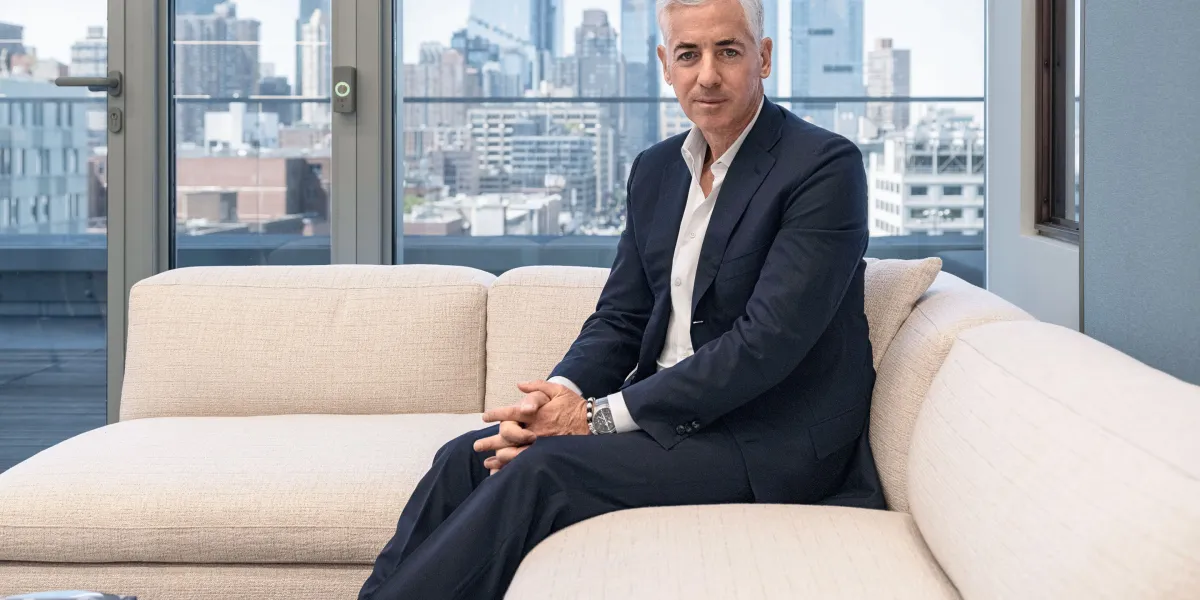
When billionaire investor Bill Ackman gets a pitch asking for a grant from his foundation, he starts with a question that sounds more like a venture fund screening process than a charitable exercise: Is this a problem the market can already solve? For Ackman, the highest-impact philanthropy exists where markets and governments have failed to produce workable solutions.One category is in what he calls “blue-sky” scientific research, where scientists look for ambitious breakthroughs in problems in healthcare and other areas – like his Pershing Square foundation’s MIND prize, a yearly award of up to $750,000 to six researchers supporting cutting-edge research on neurodegenerative diseases like Alzheimer’s and Dementia. He has also expressed applying artificial intelligence to solve long-standing problems in areas such as housing and K-12 education. This gap-filling approach to philanthropy has guided Pershing Square to distribute more than $930 million in gifts and grants since 2006 to tackle unique issues like cancer research, neuroscience and ovarian health. “I think there's both good philanthropy and bad philanthropy and I try to do good philanthropy,” Ackman tells Forbes. “There are lots of different ways to have impacts…philanthropy I think is a very useful tool to solve certain problems that there isn't currently a for profit solution for.”Cari Tuna, the wife of Facebook cofounder Dustin Moskovitz and a leading philanthropist, puts it this way: “Governments need to justify decisions to voters; businesses answer to shareholders. Philanthropy faces fewer of these constraints,” she said at a recent Stanford philanthropy summit. “The freedom to act in the face of uncertainty and take on risk is one of philanthropy’s most underused, structural advantages.” So instead of donating to the causes that the ex-Wall Street Journal reporter and her husband are most passionate about, they give to the riskiest areas where they can have the greatest impact per dollar in hard-to-reach areas. Gone are the days when the world’s wealthiest just donated to their alma maters and legacy institutions like museums and libraries in exchange for their names on buildings. Now, many of these icons of industry are applying contrarian thinking to philanthropy. That’s especially true for the members of the inaugural Iconoclast list who are disrupting philanthropy much in the same way they’ve transformed businesses – focusing on approaches that can ensure the greatest long-term social and economic return. Take MacKenzie Scott, who has disbursed more than $26 billion in philanthropic gifts to more than 2700 non-profits, universities, and community organisations with little fanfare and at record pace. Even more notable is the fact that she gives it away with literally no strings attached, letting the nonprofits decide entirely what to do with the money. In 2024, she also announced that she would invest her wealth in impact investments – funds that focus on supporting positive causes like green energy or education. “I’ve asked the investment team helping me manage the assets to source funds and companies focused on for-profit solutions to these challenges,” she wrote on her foundation’s website. “In this way, the money can help address these issues twice.”Then there is Steve Ballmer. While he and his wife Connie Ballmer have given billions to a variety of causes, the former Microsoft CEO is particularly passionate about making government data more up-to-date, accessible and actionable for all citizens by funding nonpartisan website USAFacts. The site aggregates a trove of government data on everything from the economy and education to crime and immigration, and Ballmer has poured more than $100 million into the effort.“I grew up in the world of shareholders: people who hold stock in your company and who you are accountable to,” says Ballmer, “I see all of us taxpayers as shareholders in the United States, and I believe we should all have access to the data and information that lets us know how well or how poorly we're doing, and in what areas. ”One of the most unusual gifts in recent years came from tech billionaire Michael Dell and his wife Susan. In December, the couple announced an unprecedented $6.25 billion gift to seed more than 25 million American children ineligible for President Donald Trump’s Invest America program with $250 in an investment account through the Treasury Department. The gift, which is one of the biggest philanthropic pledges in American history and nearly double what they’d given previously total giving to date – will help seed accounts for children 10 and under in targeted zip codes with median household incomes of less than $150,000. What makes it stand out is its focus on a long-term economic strategy – giving millions of children a financial asset that can grow over decades without strict yearly evaluations. Meanwhile, hugely successful energy trader and one-time Enron executive, John Arnold, who closed his hedge fund in 2012 at age 38, and his wife Laura have donated more than $2 billion, or 42% of their fortune, making them one of the most generous couples by percentage given away. But what makes their approach quite different is their heavy reliance on rigorous research applied to everything from education to housing supply to legalized sports betting. The Evidence & Evaluation team at Houston-based Arnold Ventures doled out more than 85 research grants last year alone. Of course finding unique ways of giving isn’t entirely new, even if the ideas and approaches keep evolving. Since 2016, for instance, Blackstone founder and CEO Steve Schwarzman has sent 100 to200 scholars every year to a master’s degree program known as Schwarzman Scholars at Tsinghua University in China – with the goal of improving understanding and relations between countries. “In philanthropy, as in business, I enjoy tackling complex challenges that require thoughtful, innovative solutions,” he explains, adding that “education is the passport to a better life.” While each of these billionaire philanthropists has their own unique approach, what is clear is just how much of their efforts are spent not necessarily on choosing or investigating the particular institutions but reimagining where philanthropy fits into a capitalist ecosystem also heavily influenced by government. For these iconoclasts, the innovation is not where they choose to give but how they think about giving in the first place. Here are extended quotes on philanthropy from some of the inaugural Iconoclast 50. Steve and Connie Ballmer: “You can't change opportunity for millions of kids and families without changing systems, and changing systems takes time. We were both incredibly fortunate to be born in this country, at a time when there was a lot of opportunity afforded to us. Connie and I felt it made sense to figure out ways that we could share our resources to help others have the kinds of opportunities we had.”Steve Cohen: “Growing up in Washington Heights, my mother taught me how important it was to support our community. Our goal is to make a positive difference in people's lives. We are passionate about supporting change-making organizations so they can continue to do what they do best- help communities rise up and solve complex problems. Everyone has the power to make the world a better place.” Michael and Susan Dell: “Real progress happens when communities, governments, businesses, and philanthropy work together. Philanthropy can play such an important role in testing new ideas, moving quickly, learning from results, and providing early support to solutions that can scale more broadly.” Melinda Gates: “I have always believed deeply in our partners and the work they’re doing, but now I think much more about how I show up for them—because that plays a huge role in how much progress we can drive together. The people closest to a problem have the clearest view of what needs to happen for lives to improve. My job is not to arrive with all the answers. It’s to back effective leaders and listen closely to what they’re teaching me.”Dustin Moskovitz and Cari Tuna: “We're motivated by a simple idea that we take very seriously: we want to do as much good as we can for others. That principle has led us to choose our causes strategically – from global health to scientific research to navigating transformative AI – based on where we believe more philanthropic funding will make the biggest difference. After more than 15 years of this work, our experience has only reinforced how much good is possible when you go where the need is greatest“Steve Schwarzman: “Helping others is supposed to be part of life. It should be a habit, not something reserved for “philanthropy” in the traditional sense. I’ve tried to embrace this and encourage others to do the same. The scale and form of giving – whether money, time or connections – can change over time, but your commitment to helping others should not. Doing so will add deep meaning to your own life.”More from ForbesForbesNew Billionaire David Beckham On His Family And LegacyBy Maneet AhujaForbesLegendary Texas Wildcatter’s Granddaughter Makes Energy’s Riskiest BetBy Christopher HelmanForbesAmerica’s Most Valuable Private Family Businesses 2026By Andrea MurphyForbesHow Melinda French Gates Plans To Fund “Chronically,” “Unconscionably” Underfunded Programs For Women And GirlsBy Luisa KrollForbesInside A Billionaire Couple’s Plan To Give Away A $20 Billion Facebook FortuneBy Phoebe Liu
How Bill Ackman And Other Iconoclasts Are Reimagining Philanthropy
Some of the most iconic minds in business including Bill Ackman, Michael Dell and John Arnold are applying contrarian thinking to how they give their billions away.
1,515 words~7 min read