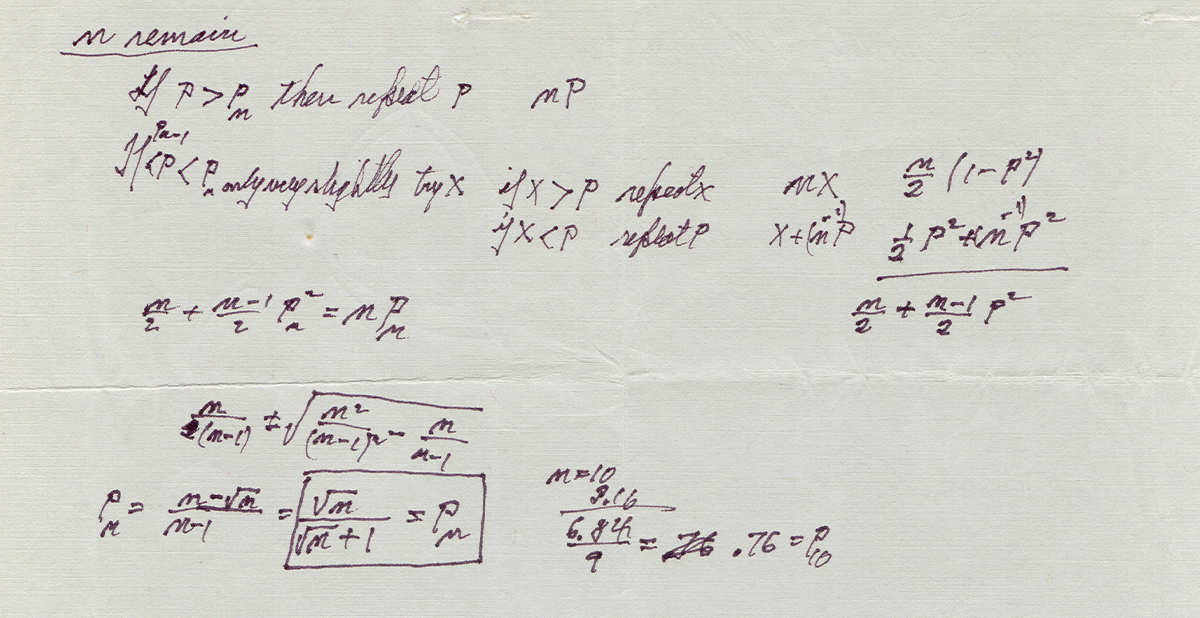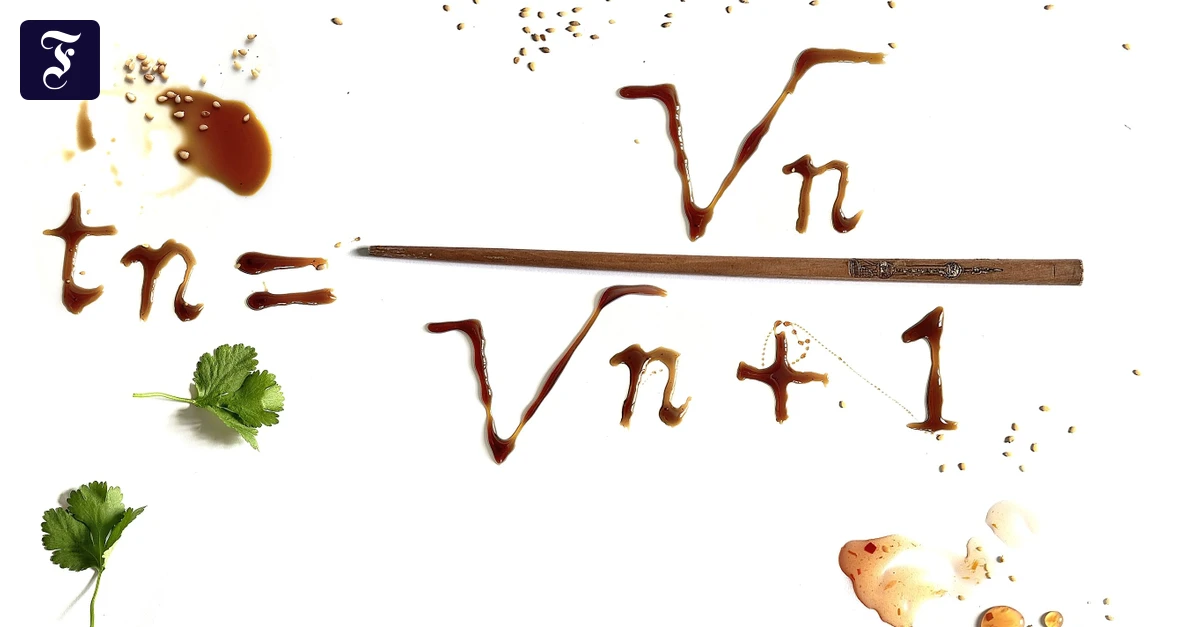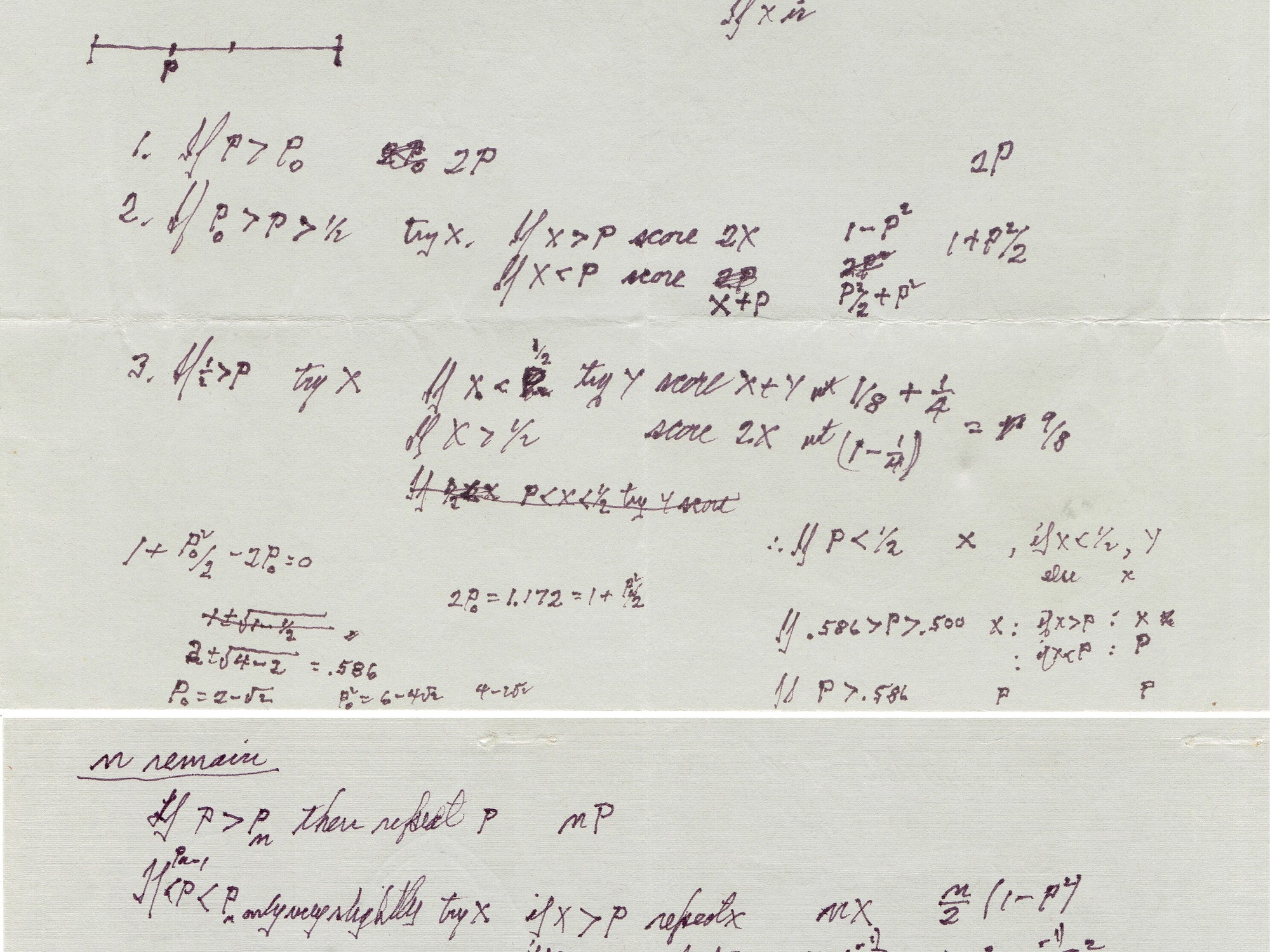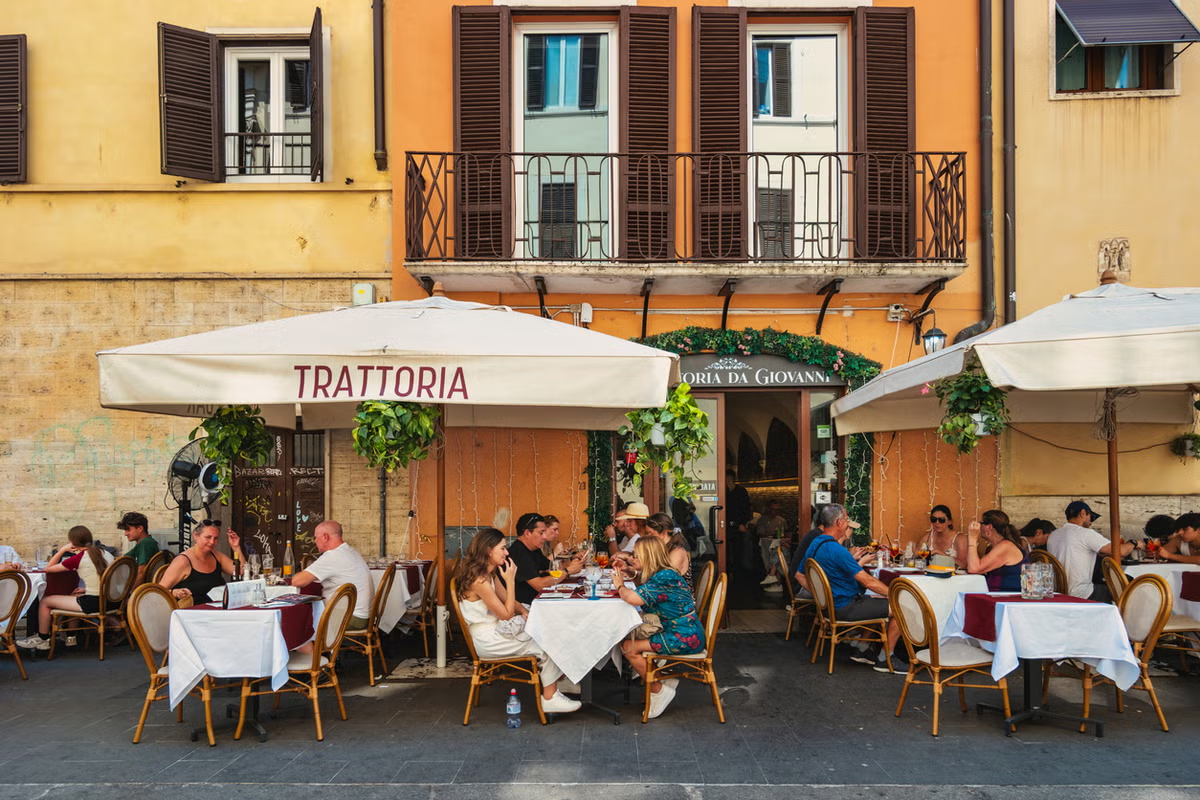
Deciding where and what to eat can be tricky in your own city. But when dining out while travelling, is it better to stick with a safe old favourite, or try something new?Scientists have deciphered a decision-making solution handwritten in the notes of late physicist Richard Feynman after 50 years. The Nobel Prize–winning physicist turned lunch with a friend into a math problem in the 1970s to optimise how to select the best dishes over multiple meals, said the new research in the Proceedings of the National Academy of Sciences (PNAS). At a California Thai restaurant with friend Ralph Leighton, a debate over whether to order his favourite ginger chicken or try something new prompted Feynam to apply a mathematical equation that can tackle the conundrum with an optimal policy for switching from exploring new dishes to exploiting the best.Feynman never published his analysis of the “optimal stopping task” – a dilemma of deciding exactly when to take an action to maximise reward – leaving only hard-to-interpret notes of the original problem. Researchers from Oxford, Princeton and the City University of New York noted: “The notes remained inscrutable for decades, until we managed to decipher them and reconstruct Feynman’s original problem and solution.”The team applied Feynman’s solution to a reframed conundrum in terms of choosing which restaurant to dine at when visiting a city for a certain number of nights.Researchers experimented on 2,520 participants with a series of online decision-making tasks that reflected the restaurant dilemma. Participants were introduced to the problem of choosing which restaurant to eat at each night, explaining that “restaurants differed in quality, but the quality could only be observed by visiting the restaurant”. According to the paper, results showed “people tend to explore more than predicted by linear thresholds”, leaning towards exploration early in the task when there is time to benefit from discovering a better dish.By applying Feynman’s approach, people should try a different restaurant each night until they find one that exceeds their desired quality threshold, said the team. If your favourite scores above that night’s restaurant, you should return to it for the rest of the trip; if not, try somewhere new. They added that the longer your trip, the more time you should spend exploring new places before exploiting your favourites. Professor Tom Griffiths of Princeton University, a co-author of the study, said: “The trick is having a threshold and then decreasing that threshold as you get closer to the end [of a trip]. And as long as you are doing something like that, that’ll actually work pretty well,” reported The Guardian.Read more: One in five Britons say they can’t afford a summer holiday this year as cost of living soars
Scientists uncover the perfect formula for where to eat on holiday
Physicist Richard Feynman’s inscrutable notes have been deciphered after 50 years
450 words~2 min read