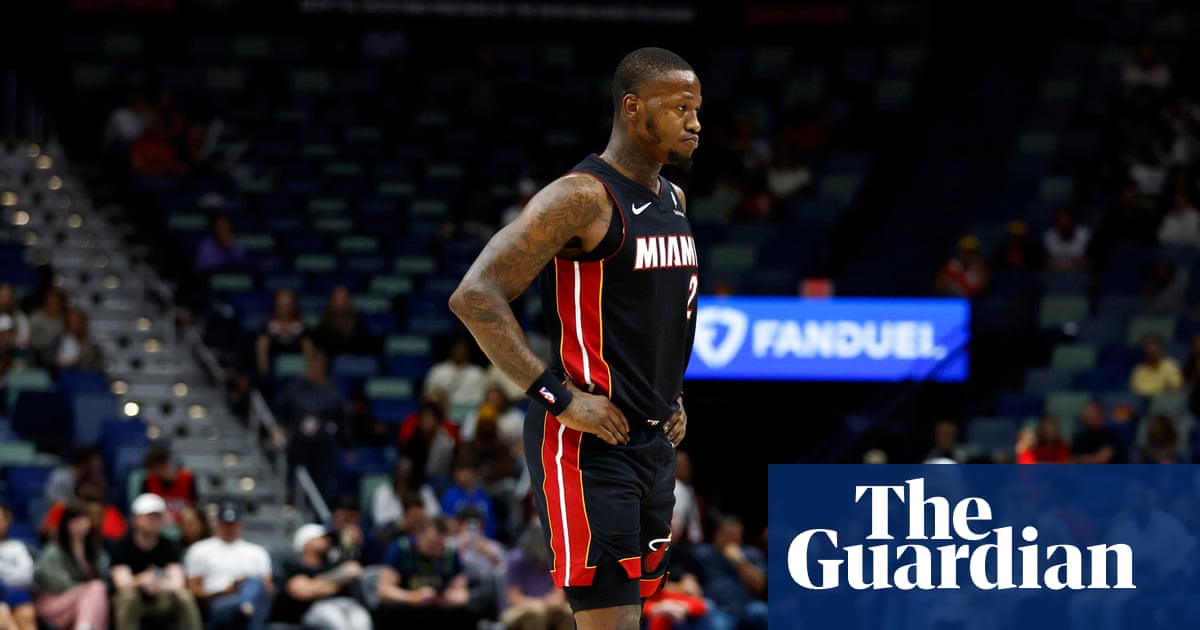
For the last eight months, The Athletic has been investigating the threat of fixing to the integrity of sport. In this second article in the series, we look at the explosion of sports gambling in the United States, the fixing scandals that have gripped basketball and baseball, and what can be learned from Europe’s decades-long battles with fixing.The arrests came like a thunderbolt on a gray fall day. One after another, each was more incendiary than the next.First, there was Terry Rozier, a veteran guard who had spent the night prior on the bench for the Miami Heat. Federal prosecutors in New York alleged that he had told a friend he would come out early from an NBA game and that friend sold the information to a group of sports gamblers. Rozier had made more than $150million in his career. He was just one game into a season that would pay him more than $26million no matter whether he played a minute on the floor. Instead, he was headed to a federal courtroom to be arraigned.Terry Rozier arrives for an arraignment hearing at U.S. District Court for the Eastern District of New York. (Michael M. Santiago / Getty Images)Then there was Chauncey Billups. He was a Hall of Fame player for the Detroit Pistons and had remade himself into a head coach for the Portland Trail Blazers. The day after coaching a game, Billups woke up to FBI agents at his home in Lake Oswego, Washington. He was arrested because he was allegedly part of a rigged poker game ring, but someone closely matching his description was also alleged to have given information about Trail Blazers lineups to gamblers.And then there was Damon Jones. He had played 11 years in the NBA but was arrested and charged for divulging and profiting from inside information on the health of star players on the LA Lakers while he stayed close to the team as a volunteer coach.It was all a shocking moment for professional sports in America. Sports gamblers had allegedly weaponized people in and around the NBA — and more importantly the information they have access to — for their own wagers. It was a wake-up call for the incursion of legalized gambling in the country, still less than a decade old.Those arrests came last October. In the months since, the NBA, pro sports leagues, and America have had to reckon with the risks that legalized gambling now presents. While Rozier and Billups have pleaded not guilty and deny all charges, Jones is awaiting sentencing after he admitted his guilt in front of a federal judge in April.The indictments, and the case itself, broke up a scandal that had been boiling underneath the surface. It is also a problem that remains unanswered. Rozier was not the first to be charged. Jontay Porter, a former Toronto Raptors center, had been indicted and pleaded guilty after federal prosecutors said he manipulated his own performance for the sake of sports bettors. He took himself out of two games early so they could win their prop bets on his statistics. He even bet on the Raptors. The NBA banned him; he is awaiting sentencing by a judge.These are now the faces of an issue that the United States is just the latest to deal with. Sports gambling scandals have consumed Britain and Europe and much of the world. America is just arriving at this point as it continues to integrate gambling into daily life.Chauncey Billups, coach of the Portland Trail Blazers, exits Brooklyn Federal Court. (Angelina Katsanis / AFP via Getty Images)The NBA is not alone. Major League Baseball put two Cleveland Guardians pitchers on leave as they face federal charges for allegedly rigging pitches for the sake of winning wagers on them. While Rozier was a well-paid player, he was hardly one of the sport’s elite. Emmanuel Clase, however, was among the very best closers in baseball. He finished third in American League Cy Young voting in 2024. But he was also in the middle of what federal prosecutors say was a multi-year scheme to bet on Clase’s pitches.Clase, prosecutors said, told associates before he entered a game that he would throw a pitch for a ball or under a certain velocity. They would then bet on it. Prosecutors have identified 15 different pitches between 2023 and 2025 they say were thrown as part of that plan, including in a 2024 playoff game, and claim that he even allegedly recruited a teammate, Luis Ortiz, to join the plot. Clase and Ortiz have both pleaded not guilty and deny the charges against them.Clase tried to obfuscate his intent by using coded language, an indictment said. He discussed the pitches as if he was discussing roosters in a cockfighting match.“Throw a rock at the first rooster in today’s fight,” he said in a text message with one of his alleged co-conspirators.The investigation unveiled last fall shows the different ends of the spectrum in how sports can be turned and potentially criminalized. Rozier was a player on the floor who has been implicated in an alleged gambling scheme that prosecutors say ate at the integrity of the on-court product. Clase was allegedly involved in a plan to rig pitches. Jones was someone close to the players and to the team who knew what was going on and who has pleaded guilty to selling that information to people who could make money from it.As sport attempts to figure out how to protect itself, it must learn how to close off both avenues.The Athletic spoke to five experts with extensive experience of fighting match-fixing in Europe about what lessons can be learned. Two spoke on condition of anonymity owing to their involvement in sensitive ongoing cases.Several shared concern at the speed of gambling’s development in the United States — and whether integrity measures could keep up with this advance. Online gambling platforms are now advertised at many sporting events in the U.S. and many broadcasters and media outlets, including The Athletic, take betting sponsorship.“Europe has been dealing with betting in sport for decades,” explains Professor Richard McLaren, a Canadian doyen of sports law who led the World Anti-Doping Agency’s investigation into Russian state-sponsored doping. He sits on the Court of Arbitration for Sport, is the International Basketball Federation’s integrity officer, and is tennis’ chief anti-corruption hearing officer. “But it’s a very new phenomenon in the United States. They were last on the scene — and now they’re one of the biggest problems.”“We’ve been trying to educate athletes for 15 years, and there has been some progress,” says Chris Kronow Rasmussen, a Danish integrity expert. “Whereas in the United States, it’s barely gotten started. And with how gambling is progressing, they have to manage in one year what it took us 15 years to do.”For Affy Sheikh, former head of integrity at British betting consultancy and analytics firm Starlizard, some of the surprise is that this gambling explosion has happened at all. The U.S. Supreme Court overturned the Professional and Amateur Sports Protection Act (PASPA), which banned legal betting on sport outside Nevada, in 2018. As of May 2026, 39 states have legalized sports betting.“A few years ago, in the post-PASPA period, U.S. sports were nearly all publicly stating how they didn’t want sports betting because it was going to present an integrity risk,” he remembers. “Fast forward to the present and many are now happy to be officially partnering with betting companies and reaping the lucrative financial benefits of doing so.“The original ask, a one percent integrity fee sourced from bookmakers’ profits that would presumably have gone towards securing the integrity of those sports, fell by the wayside. The betting landscape has scaled faster than the integrity architecture.”At the same time, as a huge new market emerges, it is becoming increasingly difficult to police the fixers.“The cases are all becoming more complicated, because in the old days, it used to be the case that people just didn’t think they’d get caught,” explains a top UK-based lawyer, who has worked in several recent high-profile fixing cases. “Now, it’s all a lot more cloak and dagger. There’s a lot of code being used, burner phones which are left on buses.”Legal sports betting in the United States is not just growing — it is massive already, handling over $165billion in wagers each year. Watching on from Europe, experts recognize issues they have contended with before.The Athletic asked all five for their perspective on the most pressing integrity challenges facing U.S. sport. What can be learned from Europe? And what missteps are to be avoided?The need for a unifying system“The problem for me is that in the U.S., the jurisdiction over this whole area is totally state-based,” says McLaren. “Each state has to do it themselves — it’s not a federal matter. So now, to regulate, if you want to deal with match manipulation you have to go through criminal processes, like the FBI has done in basketball, for example. But that means sports are missing the appropriate statutory framework.”McLaren points to horse racing, which in the U.S, has one single nationwide regulatory body (the Horseracing Safety and Integrity Authority), which he says has significantly improved animal abuses and racetrack conditions. “They have a wide jurisdiction wrapped up in one federal body,” he says. “But there isn’t one for sports gambling generally — it leaves horse racing as a standalone.”The situation has implications for athletes, who face different rules depending on their state — and who may be traded at a moment’s notice. Gambling and gambling addiction is a major risk factor for potential corruption, multiple bodies including the United Nations’ Office of Drugs and Crime, have warned.“From an athlete’s perspective, a uniform set of (gambling) rules is really important,” says the lawyer. “For example, in the U.S., you could see some states banning athletes gambling on sport altogether, others telling athletes they cannot bet on their own sport, others saying they just cannot bet on their own league. That’s pretty difficult for players.“On the flip-side, it’s hard to know how much that plays into the match-fixing. Athletes have said as their defense: ‘I had no education’. But sometimes, it’s like: ‘Did you really ever think that fixing matches was OK?’”For Sheikh, one example that the United States might follow is the Macolin Convention — a multilateral treaty organised by the Council of Europe, which seeks to tackle match-fixing by making amendments to international law.“Signing up to the Macolin convention is a signal of intent, but it’s not a magic switch,” he explains. “States can become party to it, but it then requires impactful laws, ratifying legislation. It’s not just for Europe — Australia has signed up, for example. Theoretically, the U.S. could sign up too but the approach in the U.S. is too fragmented, with each state doing its own thing and taking its own approach.“Macolin has created legal definitions and policy implications; it has also fostered good cooperation and coordination. However, there are questions about how much actual impact it’s had on tackling match-fixing at the operational level.”For him, the issue is not the number of regulatory bodies in the United States — it is that there is a lack of coordination between them.“It would make sense for something to bind organizations in the U.S. together,” he says. “Right now, if one regional sports body in the U.S. takes action against an individual for whatever reason, how is that information passed on to other organizations?”“There is no shortage of bodies and institutions with integrity responsibilities in the U.S.. The problem is more an absence of dedicated cross-sport coordination bodies that can fill in the gaps between them and bind them. But this would require careful planning, funding, powers and capabilities, otherwise the big leagues could dominate and you’d risk college sports and smaller professional sports not receiving access to the support they need.”Crucial role of low-level sportIt is always natural that cases at sport’s highest level attract the most attention — in the United States, the investigations involving the Cleveland Guardians, NCAA basketball, and NBA illegal gambling schemes.But there is an iceberg effect in play — that while these are the most visible, the mechanisms which facilitate top-level fixing are reliant on lower-level sports. Here, on the borderline of professionalism, it is far easier to corrupt athletes and coaches who are not already being compensated with generational wealth.“Though not as much money can be wagered, that means it’s also easier for fixers to avoid detection,” adds Rasmussen. “And so if an athlete participates in those schemes, it will be undetected until a body works out that a player is placing bets in a family member or friend’s name. But that will take some time to do.”Data collected by the Macolin Convention’s advisory group in 2025, seen by The Athletic, indicates that less than a quarter of suspicious betting patterns (23.4 percent) originate from top divisions globally. Twenty per cent, for example, are found at fourth division level or below. Eleven per cent stems from youth matches.Despite the introduction of NIL (name, image and likeness) payments to athletes, the uniqueness of the college system means that the United States still has a massive sporting system which is open to betting markets, and where participants are not paid like professional athletes. The growth of the legal betting market is expected to lead to an increase in the size of the illegal market, potentially even opening high school sports, upon which gambling is currently outlawed in every state, to potential corruption.“Europe has often focused its integrity efforts on the top tiers of sport,” says Sheikh. “In football (soccer), it’s often the top two tiers of the national football system that get monitored for betting anomalies. And then you’ve got competitions like the Euros and the World Cup that have task forces from UEFA and FIFA to protect their integrity.“But actually, when it comes to fixing, it’s often the lower leagues that present the biggest risks, as they can still attract significant betting markets on events in which the participants are comparatively poorly paid. And in the United States, there’s a unique situation with college sports, so to focus purely on the big leagues would be a mistake. Plus I still don’t think that NIL fully addresses the vulnerability that college athletes face — the number of cases this year in college sports underlines that.”One lawyer points to the example of Argentinian tennis player Nicolas Kicker, who reached a career-high ranking of 78 in 2017. The next year, he received notification of his provisional suspension from the International Tennis Integrity Association (ITIA) for match-fixing offences. He was ultimately banned for six years.Nicolas Kicker was banned in 2018 for fixing games when he was younger. (Carlos Rodrigues / Getty Images)“The match-fixers got him when he was young,” the lawyer explains. “As far as the panel could tell, he was not consistently doing it, but it was something he was caught up in when he was younger. The ruling forced him out of Roland Garros just as he was arriving to compete.“And the point here is that he was starting to play in the Grand Slams, which is finally where you start to make money, and then incidents from three years or so earlier emerged. So it’s a case of athletes doing something that feels relatively innocent to them, such as throwing a couple of games or points, where they’re still told they can try and win the overall match. They’re young and have no money — but then they get caught.“Kicker’s ban was eventually reduced in part after he did educational work for the ITIA — his story shows the risks to athletes who are playing at the lower levels.”Importance of regulator independence“I am worried that when sport is investigating itself, that this creates a biased view,” says Rasmussen, when asked to explain his major concerns. “For example, if you’re wanting to look at corruption in a FIFA competition, do you really want FIFA to investigate it?“In general, sport organizations have a strong interest in not making fixing a big problem — because they want to generate money by selling their betting data. But they do want to make it a big enough issue that they can say they’re doing something about it.“It also means that they’re limited to investigating the athletes involved — not the network from outside the sport which might have organized the fixing.”“A lot of sports bodies in Europe are commercially exposed and politically sensitive,” agrees Sheikh. “So that’s why there’s sometimes a reluctance to do it, which again, gives you that argument towards an independent body.”For Rasmussen, in an ideal world, this body would not just possess the independence needed to carry out an investigation — but also to help stipulate what data is sold. Increasingly, the granularity of betting markets — for example, the ability to bet on whether the next pitch will be a strike or not in real-time, rather than merely on the overall match result — has led to the latest wave of fixing cases.“There needs to be some kind of independent body to monitor this,” he says. “But there’s not an example of this in Europe, it’s something which one nation around the world needs to introduce, to address this problem in a proper manner.”Others have a slightly different viewpoint — that an independent body should exist to monitor owners and directors of professional clubs or franchises. Though forms of this exist in the United States’ top five sports leagues, there is limited oversight further down the pyramid.“The ownership structure of teams has been a problem in some sports,” explains the lawyer. “Thinking about some cases I’ve seen, the middle men involved, or even the owner and management and people around them, has been able to influence what has been going on around the fix — even controlling selection, for example.“That’s an interesting angle — in terms of looking at what the United States might learn, strict controls on who owns and manages teams is only going to become more important.”The frightening implications of prediction marketsWatching from across the Atlantic, all five experts were relieved that Europe, currently, does not have to contend with prediction markets — an increasingly popular betting platform which is not yet technically classed as gambling.Companies such as New York City-based duo Kalshi and Polymarket are the most high-profile examples, offering odds on a wide range of markets. In simple terms, they are regulated under the Commodity Futures Trading Commission (CFTC) at a federal level, rather than being subject to state laws.“They’re sitting right in this gap between sports betting, sports integrity, and financial markets,” says Sheikh. “So they’re offering similar exposure to busy markets that are restricted by states in the U.S., but because they’re in an e-commerce prediction market, they don’t have to abide by the same rules. It’s just this definitional kind of thing. But it walks like that, talks like that, quacks like that. But legally, it’s something else.”Infamously, Polymarket attracted attention in January when one gambler won $436,000 (£320,000) from a $32,537 (£24,000) bet on the capture of Venezuelan president Nicolas Maduro. Their huge win, with the bet laid prior to the politician’s capture becoming public, sparked fears of inside knowledge.Ahead of this summer’s World Cup in North America, FIFA has entered a partnership with a new prediction market firm, ADI Predictstreet.Last month, the NCAA wrote to the CTFC, outlining their integrity concerns — but rather than suspending prediction markets, due to the match-fixing risk, the regulator has indicated they will be expanded.“The CTFC was created to regulate markets critical to the functioning of the nation’s economy, not to regulate Monday Night Football,” Bill Miller, chair of the American Gaming Association, told a Senate Subcommittee in May.Sports leagues are unable to monitor the betting data gathered by prediction markets for suspected integrity breaches.“It remains unregulated,” says McLaren. “And so the market is going wild in this field because of the precision betting process it offers. You can bet on anything. So how do we draw a sharp line between what’s regulated by sport, and what remains in the predictions market? Everybody’s trying to puzzle that out — and I’ve not talked to anybody who has good answers.”
Fixing in sport: With gambling arrests in NBA and MLB, what can the U.S. learn from Europe’s scars?
In the second part of The Athletic's eight-month investigation into fixing, we look at the betting scandals gripping U.S. sport
3,380 words~15 min read