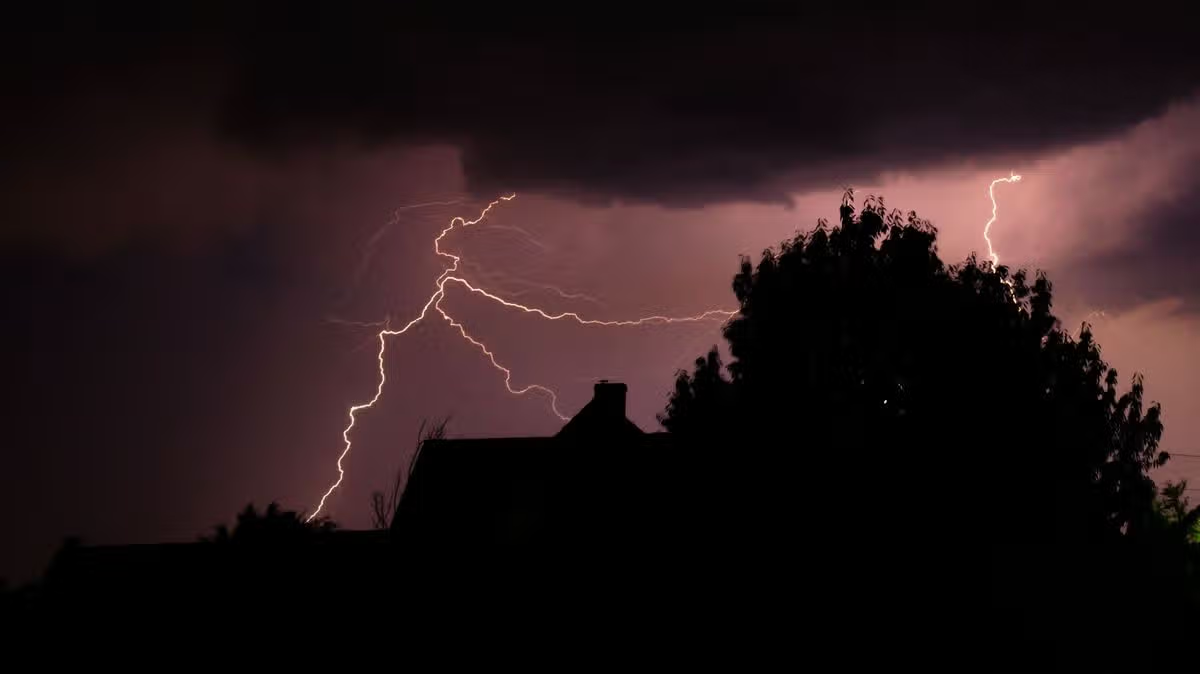
People who are using inhalers are urged to stay extra careful with their symptoms this week, as the NHS has issued important advice to people who have asthma or other lung conditions10:54, 02 Jun 2026After the record breaking heatwave that saw parts of the UK reach temperatures up to 35C, it now gives way to to wet, rainy conditions, with the chance of thunder in parts of the UK.Temperatures soared across the UK, with 35.1C measured in Kew Gardens, west London, and 32.9C recorded at Cardiff’s Bute Park, on Tuesday. On Sunday (May 31), Bushy Park in Richmond upon Thames saw the highest temperature of the day at 24.7C, the Met Office said. But the weather saw a big change on Monday (June 1), with heavy rain crossing the whole country, particularly in parts of Wales, forecasters have said, with thunderstorms and cooler weather to continue.Because of this, the NHS has now come out with important advice to anyone who has been prescribed an inhaler, as it'll be more important than ever to carry it around with you."If you have been prescribed an inhaler, carry it with you during periods of thundery weather," the image text read on the NHS' Instagram post.Content cannot be displayed without consentThey added in the caption of the post: "Thunderstorm can trigger symptoms for those with lung conditions, like asthma. If the weather makes your symptoms worse and you need to use your inhaler more, talk to your pharmacist, contact your GP or NHS 111."Asthma is a common condition. In the UK, 7.2 million people have some degree of asthma, which works out to roughly about eight in every 100 people, according to Asthma + Lung UK. In a recent survey made by the charity, 7 in 10 people said that changes in weather triggered their asthma.Why do people with inhalers need to be careful during thunderstorms?While it's not uncommon for heatwaves to be followed by some intense thunderstorms, it does mean that people with certain health conditions, like asthma, need to be more careful.According to Asthma + Lung UK, thunderstorms can trigger a person's asthma, causing asthma attacks and making symptoms like breathlessness, wheezing and coughing worse. Sometimes, this is called thunderstorm asthma.Thunderstorm asthma is rare and does not affect everybody with asthma. They explain that people are more likely to experience this if a person has both asthma and hay fever, if you have asthma but aren't' managing it well, or if you have yet to be diagnosed. There is also evidence that younger adults, under 30 years old, are more affected by thunderstorm asthma.If you do experience thunderstorm asthma, there are things you can do to protect yourself, such as following the NHS' advice of always keeping your inhaler near during thunderstorms.Asthma + Lung UK also recommend to make sure you keep managing your asthma well, while also trying to stay indoors with the windows closed both before, during, and after the thunderstorm.Article continues below"If you have to go outside, wear a mask to protect yourself against pollen grains," they added. They also recommend to take hay fever medicines to further protect yourself against pollen if you suffer from hay fever.
NHS issues important advice to anyone using an inhaler this week
People who are using inhalers are urged to stay extra careful with their symptoms this week, as the NHS has issued important advice to people who have asthma or other lung conditions
529 words~2 min read