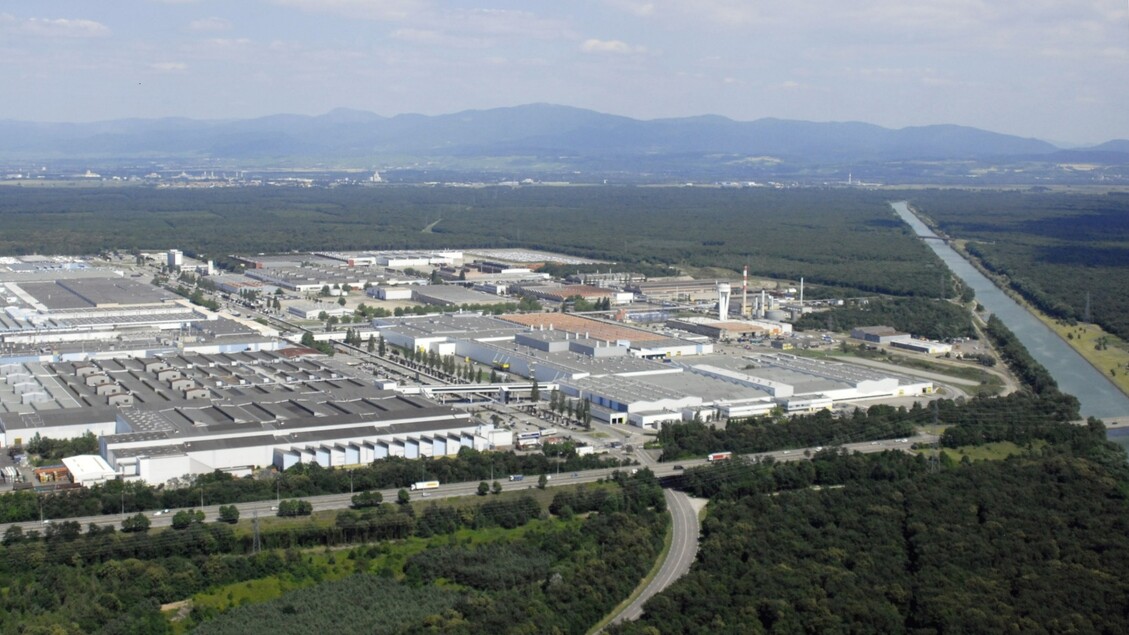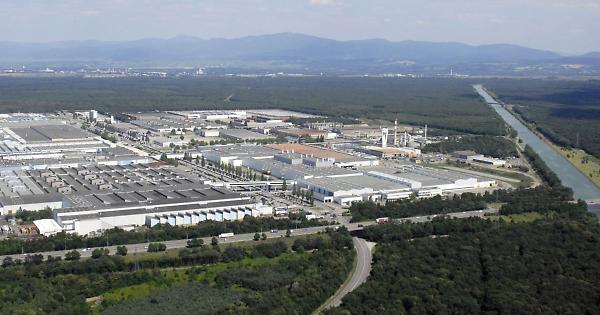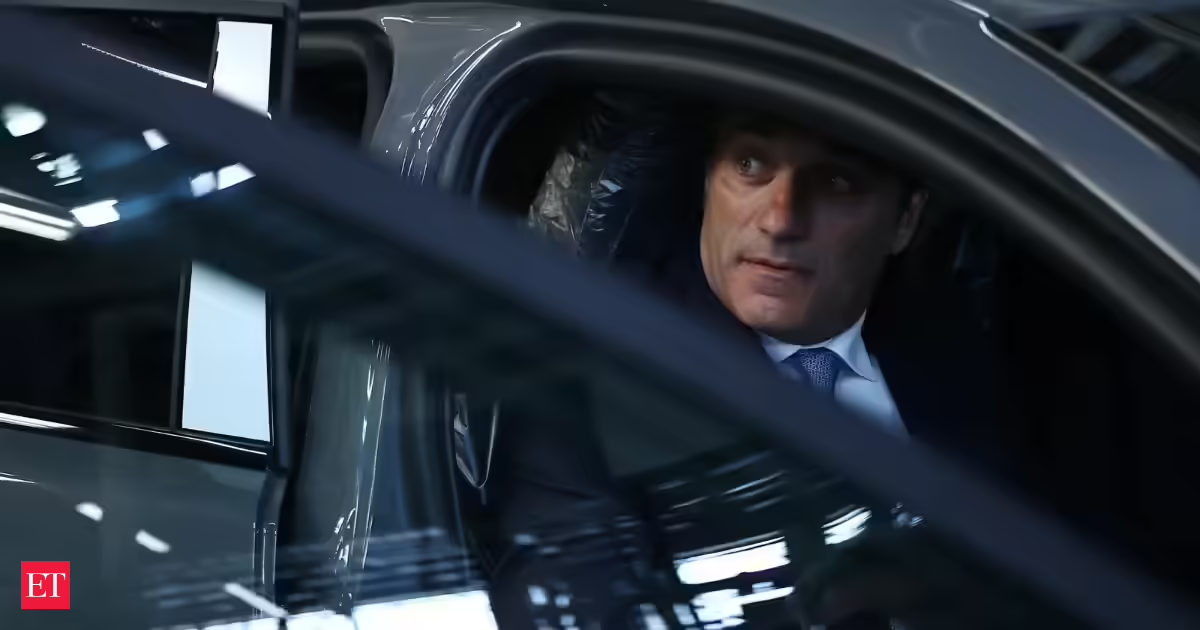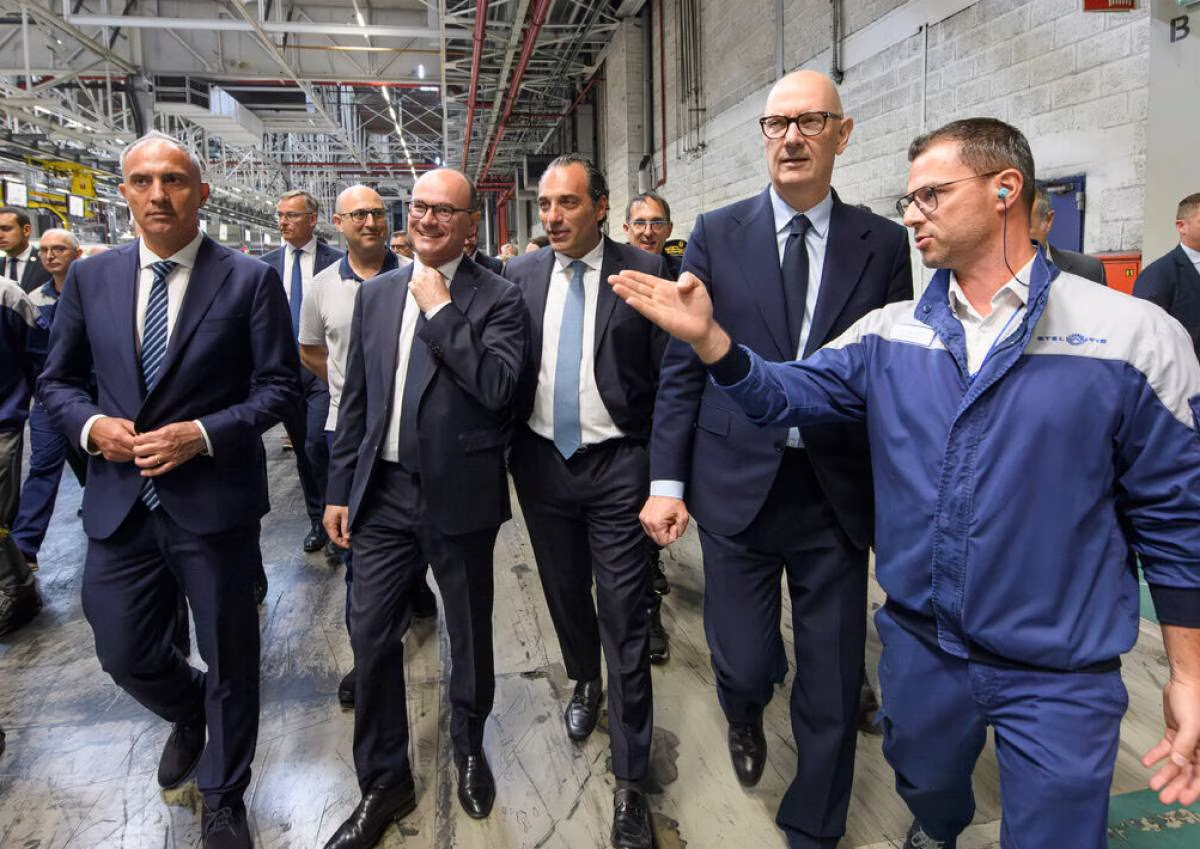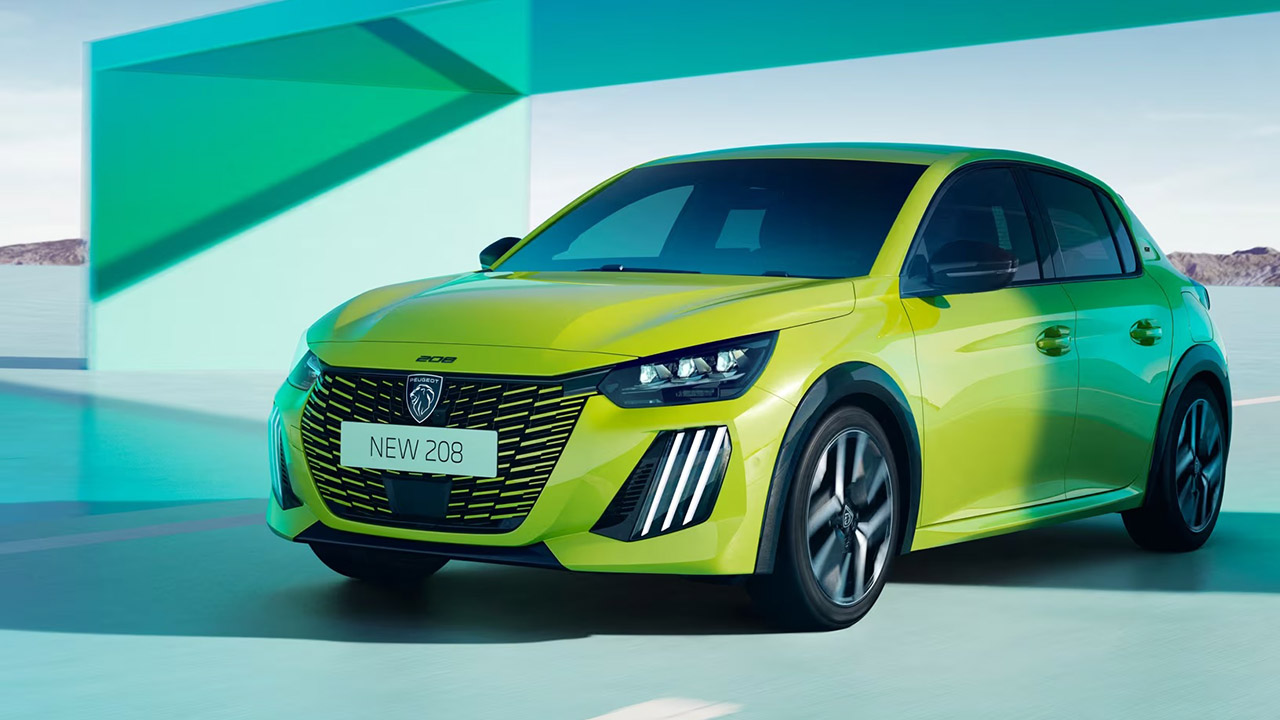
Stellantis has confirmed the billion-euro investment in its Mulhouse plant announced last week by French President Emmanuel Macron. From 2029, the site will produce three electric and hybrid models based on the new STLA One platform for Peugeot.Image: StellantisAnnouncing the investment last week during a speech on France’s electrification strategy, President Macron stated that Stellantis would invest over €1 billion to produce a new generation of electric vehicles in the city of Mulhouse from 2029 onwards. This would represent a significant boost for the plant’s approximately 4,500 employees, as utilisation of the site’s capacity has so far been suboptimal.Stellantis has now confirmed the news, stating that its Mulhouse plant will be used to produce three new Peugeot models with both battery-electric and hybrid powertrains. This is a logical step for a plant that primarily manufactures Peugeots: the facility, which opened in 1962, currently produces the DS 7 Crossback and the Peugeot 508, 308, and 408 models in various drivetrain variants, including fully electric versions.According to Stellantis, the three new models will belong to the C-segment and utilise the new STLA One platform. This recently announced ‘mega-platform’ is designed to consolidate five existing architectures into a single system. Peugeot will be the first brand within the group to use the STLA One platform.First STLA One EVs scheduled for 2027However, the announcement provides no substantial new details about the STLA One platform. A few weeks ago, Stellantis announced that this multi-powertrain architecture would replace five existing platforms and cover the B, C, and D segments. The STLA One is designed to accelerate development cycles and achieve cost efficiency improvements of up to 20 per cent through economies of scale. Notably, Stellantis has scheduled the debut of the STLA One for 2027. This means that battery-electric vehicles built on the new platform could roll off production lines elsewhere before the new C-segment Peugeots start production in Mulhouse in 2029.Stellantis states that the market launch of the three new C-segment Peugeots will play a key role in its recently published ‘FaSTLAne 2030‘ roadmap and will contribute to two strategic pillars: “On the one hand, Peugeot ranks among the Company’s four global brands with the strongest potential in terms of volume and profitability. Peugeot is the first brand to launch the STLA One platform, a technology designed for global implementation,” the company’s representatives stated. “On the other hand, these investments in the C-segment, which accounts for approximately 30% of total car sales in Europe, are part of Stellantis’ European strategy to strengthen the Company’s market coverage in Europe.”Stellantis’ new lead brandsRegarding the first point, Stellantis highlights the reorganisation of its brand portfolio: the European brands Fiat and Peugeot, along with the US brands Jeep and Ram, are set to become the group’s lead brands, while the remaining brands (such as Opel) will follow and operate more as regional brands. As part of this restructured brand strategy, Stellantis plans to launch over 60 new models and 50 significant model updates across all powertrain types by 2030. These will include 29 battery-electric models, 15 plug-in hybrids or range-extended models, 24 hybrid vehicles, and 39 models with internal combustion or mild-hybrid engines. Further details on the ‘FaSTLAne 2030’ roadmap can be found here.Regarding Mulhouse, Stellantis emphasises that the allocation of these models underscores its ambition “combine electrification with high industrial performance in France, a key country in the Company’s strategy.” Against this backdrop, the investment aims to increase capacity utilisation at the Mulhouse plant and secure the site’s future.In return, Stellantis is likely to receive incentives from the French government. The group explicitly welcomes “the French government’s strong commitment to decarbonizing mobility through support for the purchase of clean vehicles, as well as its determination to pursue an ambitious and competitive industrial policy in France and Europe” – particularly within the framework of the Made in Europe initiative. Stellantis adds, “These policies have been instrumental in creating conditions conducive to these investments.”“Made in EU” rules under discussionFrance is one of the strongest advocates of the ‘Made in Europe’ rules, which are currently being discussed in EU bodies as part of the ‘Industrial Accelerator Act‘ (IAA). This act aims to promote the growth of the EU’s industrial sector and strengthen its independence from the US and China in key sectors – including the automotive industry. If the legislative package is adopted in its current form, electric vehicles and other goods would need to demonstrate a high proportion of value added within the EU to qualify for financial support from a member state, such as subsidies or public procurement.Regarding the legislative process so far, the IAA has been proposed and approved by the European Commission. However, the law still requires approval from the member states and the European Parliament before it can enter into force. Amendments, such as the potential integration of the UK into the regulation, remain a realistic possibility.Antonio Filosa, CEO of Stellantis, emphasises that the decision to invest in Mulhouse reflects the professionalism and exceptional commitment of his team. “France perfectly exemplifies Stellantis’ global strategy, presented in our FaSTLAne 2030 plan, where our global scale, our in-depth local knowledge, and our brands come together to meet and exceed our customers’ expectations.” Rarely has a Stellantis CEO articulated the group’s close ties to France so clearly. media.stellantis.com
Mulhouse plant to produce first Peugeot models on Stellantis' STLA One platform - electrive.com
Stellantis has confirmed the billion-euro investment in its Mulhouse plant announced last week by French President Emmanuel Macron. From 2029, the site will
879 words~4 min read