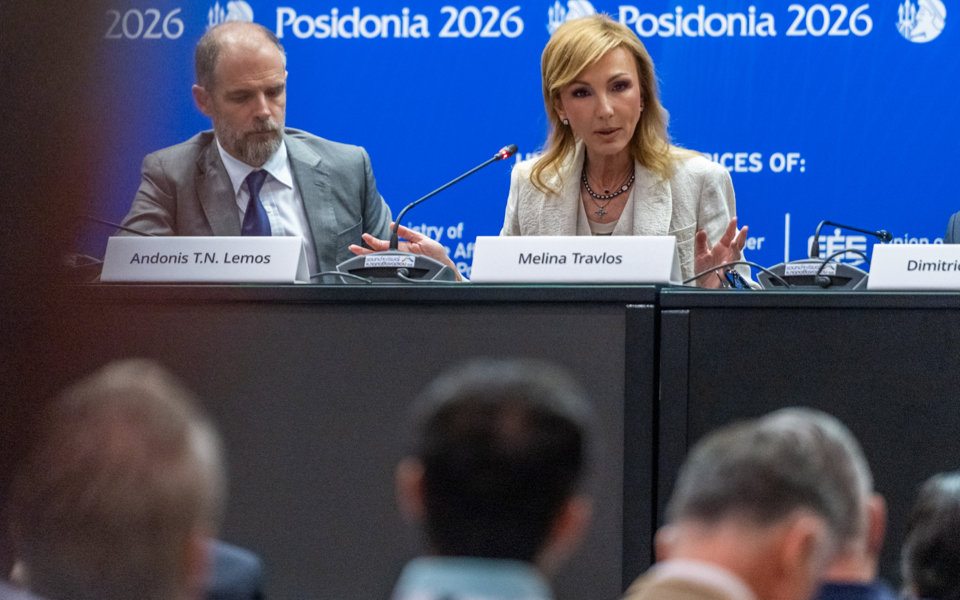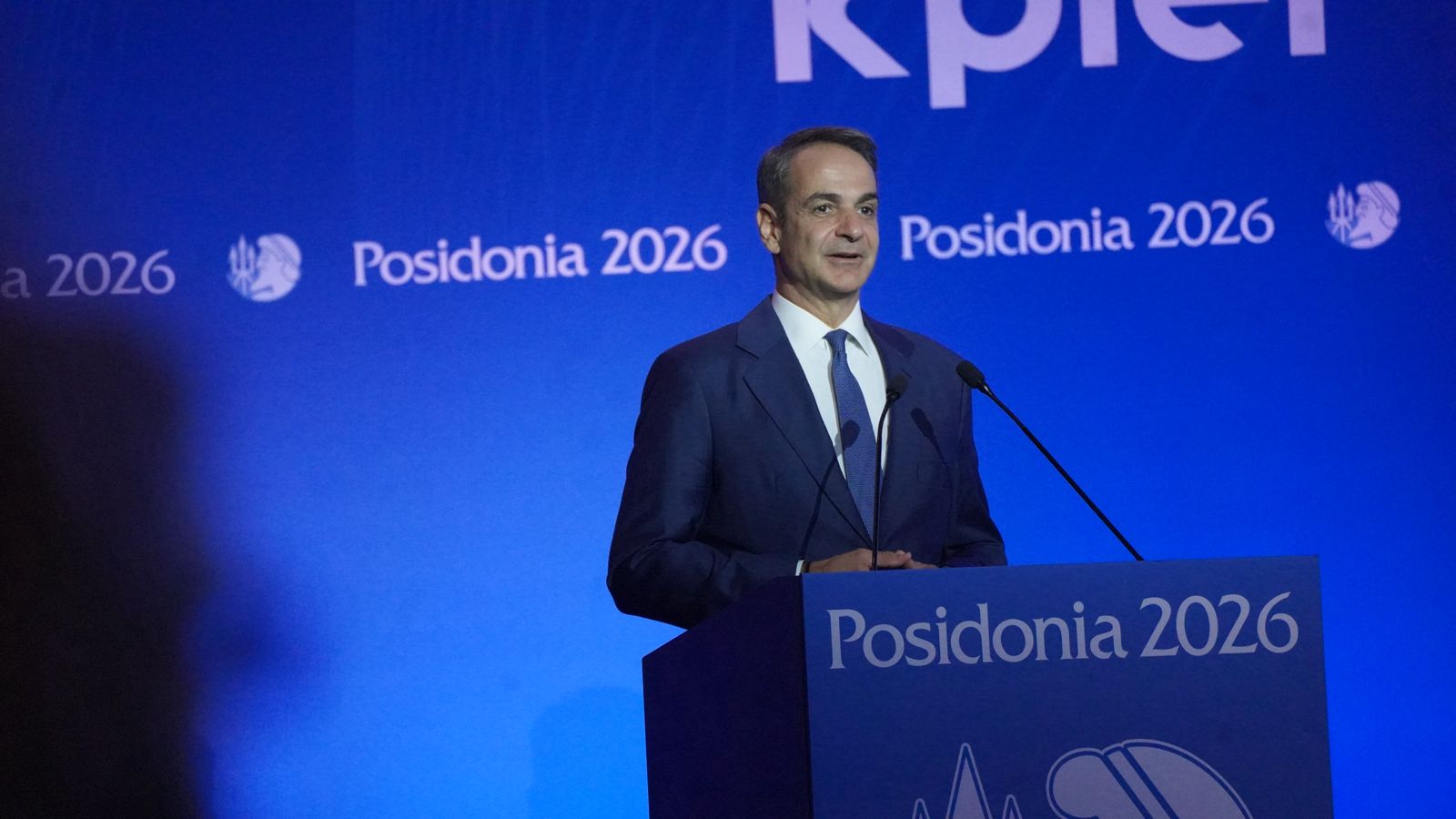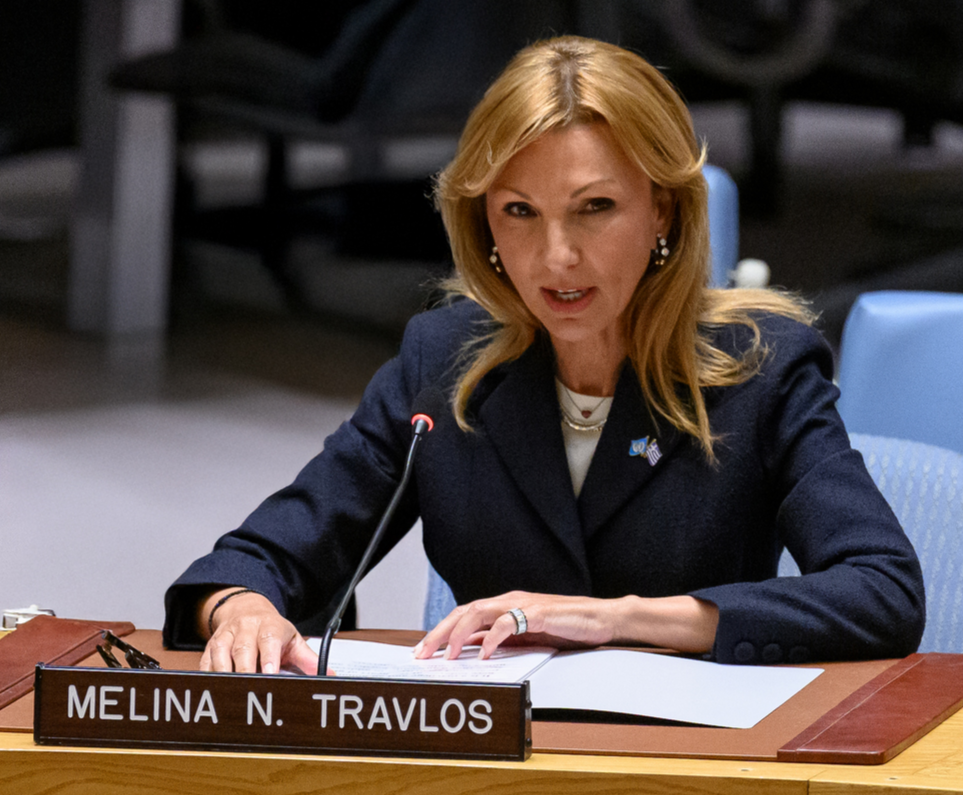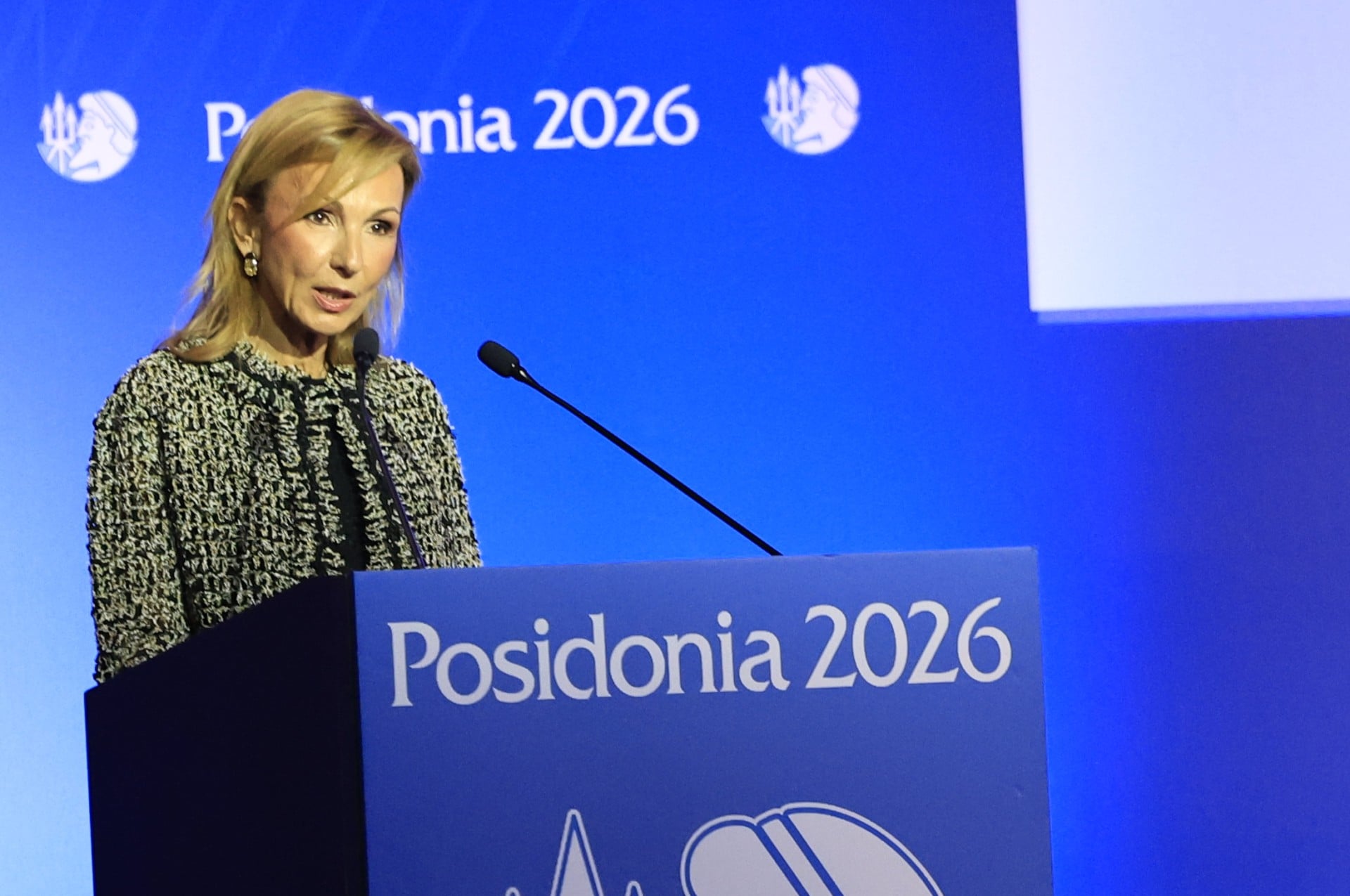
“There can be no global prosperity without freedom of navigation,” stated Melina Travlou, President of the Union of Greek Shipowners, during her address at Posidonia 2026, where she underscored the global responsibility to protect shipping.“Two years ago, from this very stage, we presented an international study on what the world would look like without shipping. The findings were clear: within 90 days, the planet would come to a standstill. And today, the reality we are experiencing confirms this,” she said, referring to recent developments in the Strait of Hormuz.“When shipping is obstructed, it is not merely an industry that is disrupted. The very functioning of the world is disrupted,” she emphasized, stressing that shipping must never be instrumentalised or targeted under any circumstances. “Freedom of navigation is a condition of international stability and progress.”She added that maritime routes are not merely trade corridors but “the arteries of the global economy,” noting that seafarers must never be exposed to heightened risks, let alone threats to their lives. She expressed hope that peace and respect for international law would prevail, ensuring that seas remain open, safe, and free for the benefit of all nations. “Shipping is the invisible guarantor of our daily life, becoming visible only when the world is under strain,” she noted.“The future of land is decided at sea”The President of the Union of Greek Shipowners stressed that “history teaches us that the future of land is decided at sea,” adding that both the present and future of humanity continue to be shaped in the world’s oceans. As such, she underlined that the protection of shipping must lie at the core of state strategy and decision-making centres.Challenges and green transitionIn this context, she described as a positive development the fact that the European Commission is finally prioritising the global competitiveness of European shipping, a competitiveness closely linked to the sector’s major challenge: decarbonisation.“The Greek shipping industry is actively acknowledging the need for transition to cleaner energy sources, investing billions in new vessels equipped with advanced technologies and alternative, and in some cases experimental, fuels. However, it must be taken into account that shipping has the lowest environmental footprint, accounting for only 1.6% of global greenhouse gas emissions, while at the same time being one of the most complex sectors to fully decarbonise,” she noted.“Without realism, there is no sustainable green transition”She also stressed that the decarbonisation of shipping depends entirely on external factors: “Safe and available fuels, appropriate technologies, and adequate infrastructure are all outside the direct control of the industry.”According to Travlou, a successful green transition requires technological feasibility, economic viability, global coordination, and a level playing field. Otherwise, she warned, it would result in higher costs across the supply chain without corresponding environmental benefits.“The key challenge ahead is clear: to align the international regulatory process with maritime expertise and the operational realities of the sector. Let us be realistic: without freedom of navigation there is no global prosperity; without safe sea lanes there is no secure global trade; without strong shipping there is no resilient economy; and without realism there is no sustainable green transition,” she said.She concluded that the protection of shipping is not merely a functional requirement of global trade, but a shared global responsibility requiring transparency and honesty.Closing her speech, Travlou thanked the Prime Minister for recognising Greek shipping as a national asset—both in its economic and humanitarian dimension—as well as a global geopolitical advantage for Greece, honouring the words of Pericles: “For the power of the sea is great.”
Travlou at Posidonia: There is no resilient economy without strong shipping
“Two years ago, from this very stage, we presented an international study on what the world would look like without shipping. The findings were clear: within
617 words~3 min read