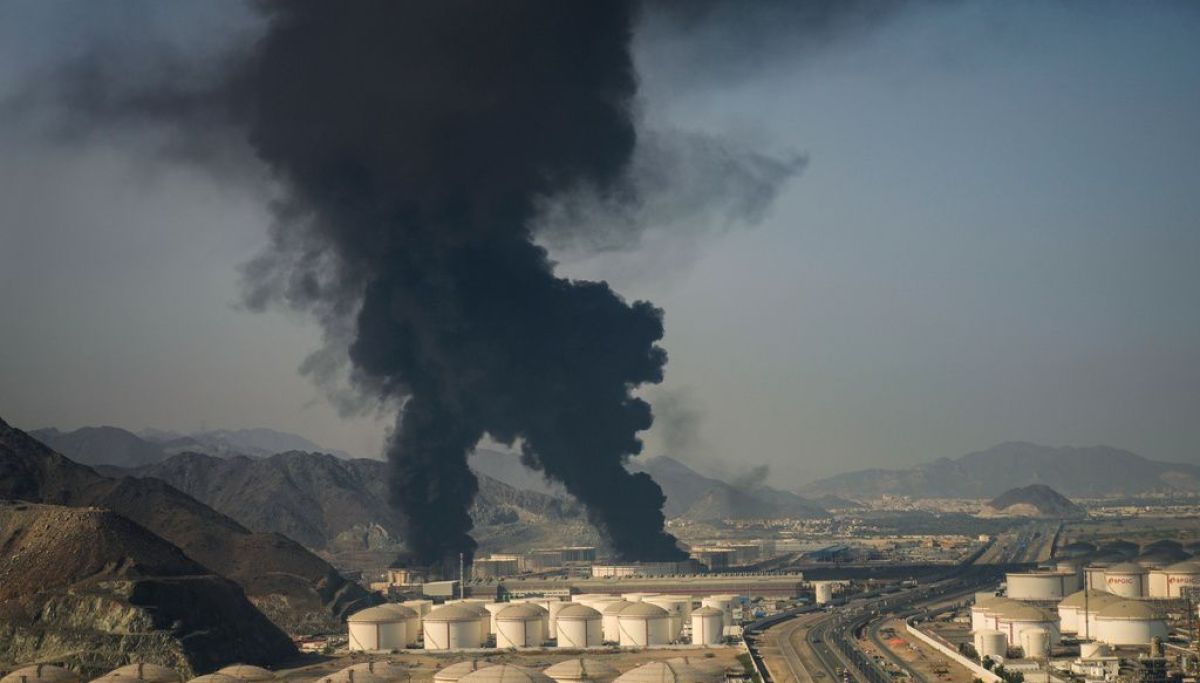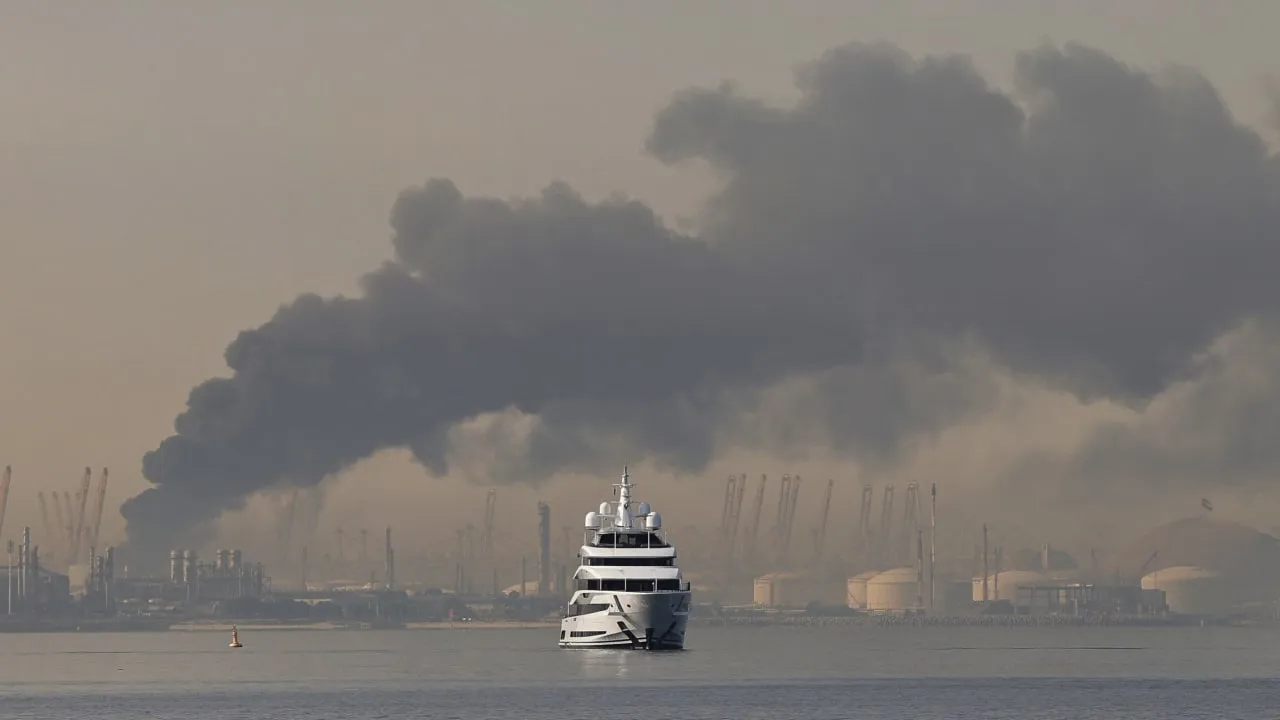
ByDANIELLE GREYMAN-KENNARDJUNE 2, 2026 12:44The Islamic Republic’s attacks on the United Arab Emirates, a key trading partner for Tehran, are a sign of “strategic desperation,” two experts on the region explained to The Jerusalem Post on Monday night.In late March, the UAE’s defense ministry confirmed its air defenses engaged 357 ballistic missiles, 15 cruise missiles, and 1,815 drones, and sporadic attacks on the country have continued despite the current pause in the majority of regional hostilities.While the UAE bore the vast brunt of attacks on Gulf nations, presumably as it is a member of the Abraham Accords, international relations expert Dr. Arman Mahmoudian, a research associate at the University of South Florida’s Center for Strategic & Diplomatic Studies, explained to the Post that the country is an essential financial hub for Tehran.Beyond its role as a major trading partner, the UAE serves as one of Iran’s principal sanctions-evasion hubs, Mahmoudian said. Over the years, the US Treasury has sanctioned numerous UAE-based companies and financial institutions for facilitating Iranian petroleum and petrochemical exports, enabling the transfer of funds to Iran, and helping Tehran evade international sanctions.“The UAE has been a strategic partner for Iran’s economy,” he stressed, adding that the regime must have “calculated” its survival would necessitate damaging financial relations.Smoke and flames rise from an energy installation in the Gulf emirate of Fujairah on March 14, 2026. (credit: AFP VIA GETTY IMAGES)The UAE exported $5.78 billion to Iran in 2023, and Iran $453 million in return, according to the Observatory of Economic Complexity. Additionally, in the Persian year that ended on March 20, 2025, the volume of non-oil trade between the countries reached a record $29.1 billion, according to the financial outlet Calcalist.Tehran's economy is compromised by its own strikes against the UAEDr. Kristian Alexander, a senior fellow and lead researcher at the Emirates-based Rabdan Security and Defense Institute and an advisor at Gulf States Analytics, assessed much the same as Mahmoudian, explaining that “Tehran prioritized coercive signaling over economic self-preservation.”“Heavy strikes against UAE infrastructure risk undermining one of Tehran’s own economic escape valves. In that sense, the attacks were coercive but also self-harming,” he noted.Tehran’s “logic” largely seemed to be based on the understanding that the “UAE’s value as a global trading, aviation, port, energy, and investment hub makes it vulnerable to disruption,” and such disruptions would “demonstrate that any war against Iran would endanger the economic model of the entire Gulf,” Alexander said.Though Alexander acknowledged Tehran had made some calculations, he commented that the regime had likely underestimated or “misread” the UAE, which, in the face of constant barrages, had little choice but to consider “Iranian commercial networks as a security vulnerability.”In March, authorities made the decision to shutter an Iranian state-affiliated hospital in Dubai. An official told The Financial Times that the decision was made over concerns the institution would be “misused to advance agendas that do not serve the Iranian people and in violation of UAE laws.”The site also reported that several Iranian state-linked schools had also been closed down on the orders of the UAE authorities. The Wall Street Journal also reported that the UAE struck Iran in March.The recent actions taken by the UAE have not followed its typical pattern of response to Tehran, Alexander noted, referencing how Abu Dhabi has prioritized diplomatic and legal processes in response to disagreements with Tehran.In the longstanding dispute over Abu Musa and the Greater and Lesser Tunbs, the three islands occupied by Iran since 1971, the Emirati governments have repeatedly called for bilateral negotiations or referral of the dispute to the International Court of Justice, he exemplified.“The UAE has historically separated economic pragmatism from political disagreement. Abu Dhabi kept channels open with Tehran even during periods of sanctions pressure, tanker attacks, the Yemen war, and disputes over the islands.But direct attacks on the UAE’s economic infrastructure blur the line between commerce and security. Iranian-linked businesses, financial channels, shipping networks, and expatriate structures will now face much closer scrutiny,” he explained.Mahmoudian, however, suggested that Tehran had been prepared to pay the price for attacks on its neighbors, claiming the “deterioration” was seen as necessary “collateral damage,” understanding that it had a greater chance of defeating the United States with economic coercion than with military warfare.He noted that regional actors took similar actions, shutting down Iranian exchange centers, restricting Iranian bank accounts, canceling visas, and, in some cases, deporting Iranian businessmen during Mahmoud Ahmadinejad’s presidency; thus, such an outcome would have been predictable.“By attacking economic targets in the region, Iran was trying to increase pressure on energy markets and energy prices. Even when some of the targets were not directly related to oil and gas, attacks on countries that are major energy producers, especially in oil- and gas-rich regions such as the Middle East and the Persian Gulf, still create pressure on global energy markets,” Mahmoudian explained.Moody’s Analytics data shared exclusively with CNBC found that the war with Iran has already imposed high costs on American consumers, with the average US household spending an additional $447 on fuel-related expenses since the conflict began in February. Additionally, airline fares rose by more than 20% in April compared with 12 months ago, federal government inflation data shows.Consumer goods, industrial components, machinery, electronics, pharmaceuticals“Unless the war ends soon, financially pressed consumers will have no option but to turn more cautious in their spending, threatening the already soft economy,” Mark Zandi, Moody’s chief economist, told CNBC.While experts have predicted that an extension in the conflict would harm the American economy, Mahmoudian made clear that Tehran’s own would not be spared.“If Iran and the United States resume the war, or if the current conflict does not end with a deal, I believe the chances of Iran restoring its trade partnership with the UAE will remain minimal,” he predicted.Alexander stressed that if Gulf states tighten restrictions on Iranian-linked businesses, shipping companies, financial intermediaries, and re-export networks, “the cost of importing goods into Iran will rise significantly,” which would only further harm an Iranian economy already suffering from inflation.“Many consumer goods, industrial components, machinery, electronics, pharmaceuticals, and intermediate products reach Iran through Gulf trading hubs,” Alexander highlighted. “Any disruption to these supply chains increases costs for Iranian businesses and consumers alike.”Iran’s worsening economic conditions had already sparked nationwide protests in January, which were met with a harsh crackdown by the regime’s security forces.Since then, the war has further strained the economy. The US blockade of the Strait of Hormuz fueled inflation and disrupted trade, while the regime’s three-month internet shutdown deprived countless Iranians of their livelihoods, exacerbating an already severe cost-of-living crisis.Tehran’s official statistics center reported in April that annual inflation was 53.7%, while inflation for food breached 115% compared with the same period last year.Even if Tehran makes a formal agreement with Washington, Alexander predicted that the damage would threaten investment in the region.Labeled as an “unstable” region, the Gulf can expect to struggle to build international commercial relationships or attract foreign capital “at a time when Tehran is seeking economic recovery.” Tehran’s attacks on its neighbors will likely manifest as a “self-inflicted wound” demonstrating “Iran's military reach” while discrediting it in the eyes of stakeholders.Though the UAE and other Gulf nations would be difficult to replace, other countries may seek to fill the vacuum. Turkey, Pakistan, and Iraq will likely increase trade, though none of the aforementioned countries is as economically stable.Ankara may have a particular interest in covert involvement with Tehran, Mahmoudian theorized, noting that a destabilized regime could empower Turkish groups and create further weight to its own “Kurdish question.”“Turkey is an important commercial partner, but it is geographically less convenient for Gulf-facing trade and subject to its own political considerations,” Alexander said. He noted that the UAE’s role as a “sanctions-adaptation platform” would be difficult to replace, adding that it would take Iran “years, not months” to replicate the functions the Emirates currently provides.Follow us on Google
Tehran risks its own economy with self-harming UAE strikes | The Jerusalem Post
Beyond its role as a major trading partner, the UAE serves as one of Iran’s principal sanctions-evasion hubs.
1,316 words~6 min read