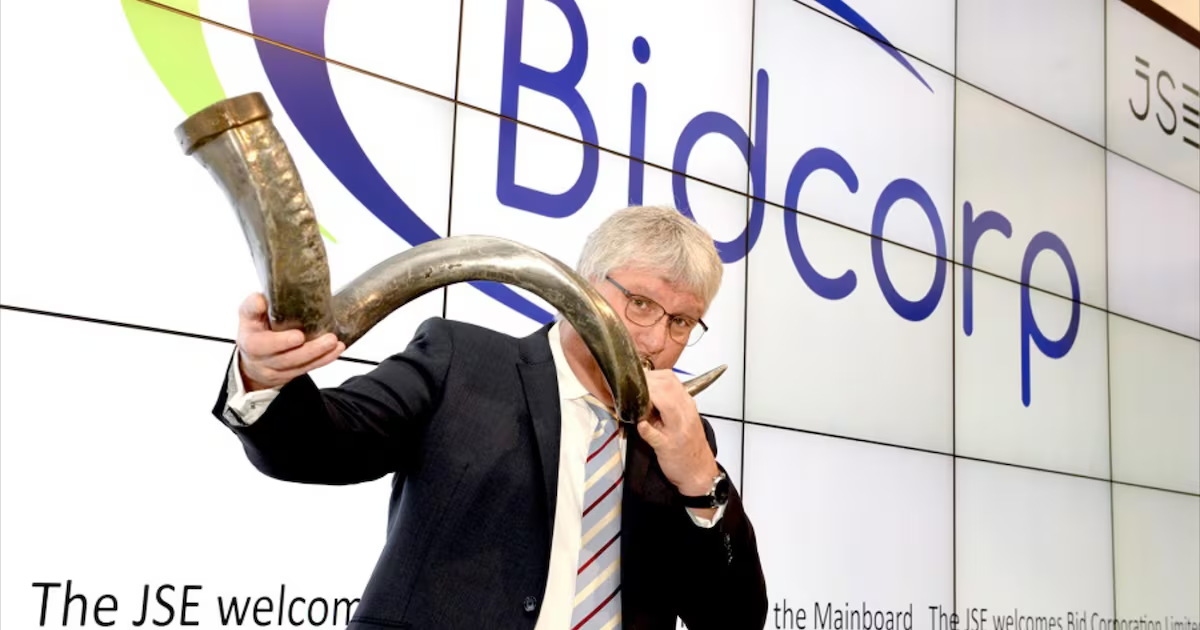
International food service group Bid Corporation remains cautiously positive about its outlook despite the effects of conflict in the Middle East. The group said in a trading update for the 10 months ended April that while elevated fuel costs have had a short-term effect on some of its cost structures, overall consumer demand has remained “generally stable”.For the 10-month period, group revenue increased 5.1% in constant currency, and 3.8% in rand, reflecting predominantly organic growth, it said on Tuesday.Trading profit was up 7% in constant currency and 6.1% in rand, supported by strong performances in Europe and the UK, but partially offset by lower growth in Australasia and emerging markets. “Gross margins have risen by around 20 basis points, which has mitigated the slightly higher cost of doing business to date, a very commendable outcome under the circumstances,” it said.HEPS increased 7.1% in constant currency and 6.6% in rand, reflecting solid momentum. Currency fluctuations negatively affected the rand results by about 0.5%.CEO Bernard Berson said the group had delivered a resilient performance despite the difficult and volatile trading environment.“Across most geographies, eating-out spend remains consistent as consumers continue to adapt to the prolonged cost-of-living pressures,” Bidcorp said.Food inflation is relatively moderate, but core inflation remains above trend, driven largely by wages, services, and logistics costs.Rising fuel prices since March have increased distribution and operating cost pressure. The peak of that was felt in April.The group said trading conditions improved in April after a softer third quarter, particularly in the northern hemisphere, where weather conditions improved after a very cold January and February. The timing of Easter was also slightly different to last year. “Competition remains elevated as market participants aggressively pursue volume in slow-growth environments. Against this backdrop, the group remains focused on delivering sustained growth through pricing discipline, margin quality, customer selection, cost control and service excellence,” it said.Operations abroadBidcorp said its UK operations delivered a solid year-to-date performance in a very negative macroenvironment, while Europe delivered a very strong performance, supported by resilient margins, disciplined cost control, and good organic growth across most markets. Italy continued to outperform after recent infrastructure investments, delivering improved volumes and profitability, while the Eastern European operations, including Poland, Czech Republic and Slovakia, and the Baltics, delivered pleasing growth, supported by strong execution and market share gains, Bidcorp said.Its more mature Western European markets experienced tougher conditions and heightened competitive intensity.Australasia delivered a broadly flat outcome for the period, with New Zealand’s recovery continuing, supported by an improved cost base, better sales momentum and the benefits of additional capacity and infrastructure investments coming on stream. Emerging markets delivered “reasonable growth” overall, with strong performances in South Africa, Malaysia and South America, where Brazil, Chile, and Argentina all continued to improve despite volatile economic conditions. These gains were partially offset by weaker results in greater China, where trading conditions are highly challenging and financial results weak. “The Middle East was significantly impacted by the Iran war post-February, disrupting consumer demand, logistics and supply chains. We are now seeing a return to more normal levels of activity,” it said.Bidcorp has repurchased about R1.3bn worth of shares since March, representing 0.7% of its shares in issue. Recent acquisition activity has been quiet as elevated valuations have not matched the group’s risk-reward dynamics. However, several bolt-on opportunities are being pursued, which, if successful, are likely to conclude in the first half of the 2027 financial year.For the rest of the year, the group expects to focus on areas it can influence and on maintaining its positive momentum. Warmer weather in the northern hemisphere summer should bolster weaker macro conditions, it said.
Bidcorp retains positive outlook despite volatile trading conditions
Acquisition pace slows but bolt-on deals targeted for early 2027
TL;DRAI
Bidcorp delivered 5.1% revenue growth and 7% trading profit gain over 10 months despite elevated fuel costs and core inflation (wages, logistics), with gross margins improving 20bps. The resilience signals how supply chain operators maintain margin quality through pricing discipline and cost control in low-growth competitive environments—relevant benchmark for tech-driven supply chain optimization.
604 words~3 min read