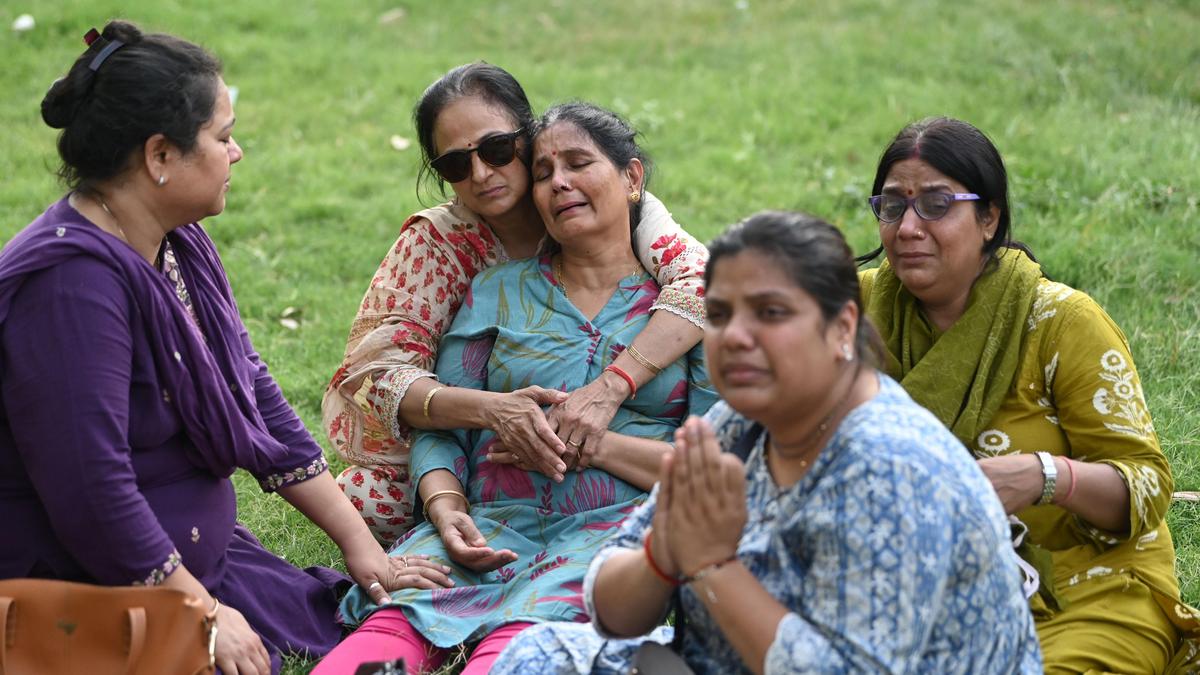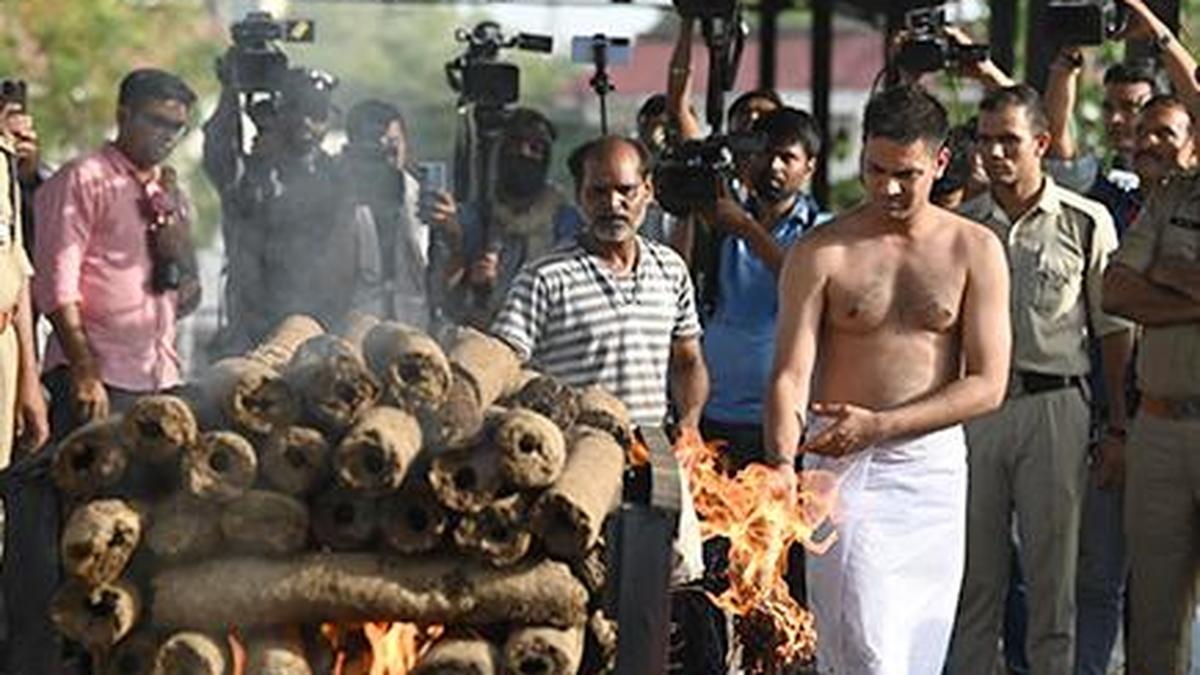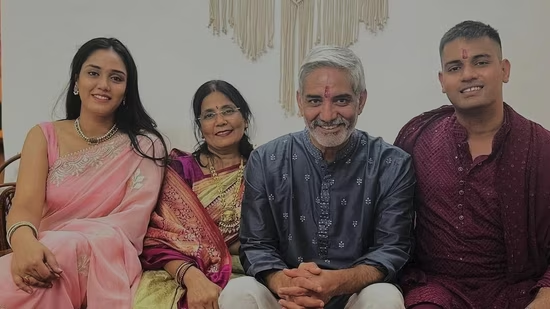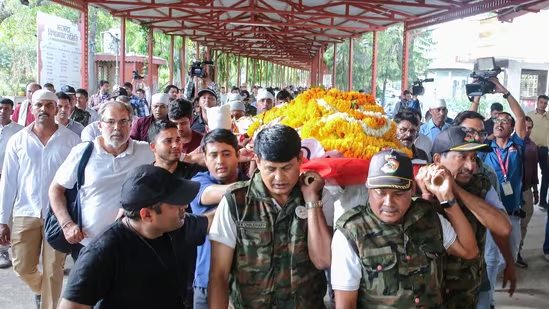
India is watching the Twisha Sharma case unfold in real time. Television studios are debating it. Social media is dissecting every development. Courts are monitoring the investigation. Political leaders are being questioned. Every new update is breaking news. And that is precisely what raises an uncomfortable question: What happens to the victims whose stories never become headlines?Ex army men and family members of the Bhopal alleged dowry death case victim, Twisha Sharma carry the mortal remains during her last rites at the crematorium, in Bhopal on Sunday. (ANI)Because the truth is that Twisha’s story is not exceptional. What is exceptional is that the country is paying attention. Across India, countless victims spend years fighting for the most basic thing the law promises them: to be heard. Many spend months trying to get an FIR registered. Others watch investigations move at a glacial pace. Families run from one police station to another, one courtroom to another, one authority to another, carrying files that become thicker than the hope they began with.The Twisha case has become a national conversation because a young woman lost her life under circumstances that raised disturbing questions. But history shows that institutional action often accelerates only when public pressure becomes impossible to ignore.India has witnessed this repeatedly. When the Delhi gangrape of 2012 took place, public outrage forced a national reckoning on women’s safety and criminal justice. The same happened in the Uttarakhand resort murder case, where a young receptionist’s death and allegations involving the son of an influential political figure triggered nationwide anger and renewed questions about power, privilege and accountability.Different victims. Different circumstances. Different decades. Yet a common question remains: Would these cases have moved with the same urgency if nobody was watching?And this fight is not limited to Indian citizens alone. The world saw this when foreign bikers travelling through India became victims of a horrific assault, forcing international attention on questions of safety, accountability and the speed of justice. For many, the concern remains the same: Why should visibility determine urgency?For every case that becomes national news, there are thousands that remain trapped in silence. There are women who continue living with abuse because they believe the system will not protect them. There are families who spend years attending hearings that end in adjournments. There are victims who become exhausted long before justice arrives. And there are those who continue fighting even when the cameras are not watching.One such story is that of an NRI woman who, on January 8, 2026 in Delhi, filed a complaint at the Tughlak Road Police Station alleging physical assault, outraging the modesty of a woman, abetment and criminal intimidation in a matter involving the son of a major politician. What followed was not just a fight for justice, but first a fight to even be heard.The NRI woman reportedly faced a long wait at the police station while seeking action in the matter and raised concerns over prolonged police inaction. The case once again brought attention to the challenges victims face when allegations involve individuals with power and influence. What should have been a straightforward process of seeking help became another battle within itself. At a time when she was navigating an intimidating situation, she was asked to appear without the presence of the lawyer she trusted and considered her source of protection through the process. For someone fighting against a powerful name, access to legal support represented security and the confidence to continue.Months later, the matter remains pending, reflecting the reality faced by many victims who continue their fight long after the initial complaint. Her struggle represents a larger issue: that approaching the system itself often becomes the first battle before the battle for justice even begins.Stories like these raise a difficult question about access, influence and accountability. Whether it is a case that captures national attention or one that unfolds quietly away from the spotlight, the concern remains the same: why should victims have to fight to be heard before they can even begin fighting for justice?The problem is larger than any individual case. It is about a system that often appears most responsive when public pressure is at its peak. It is about investigations that gain momentum only after media attention. It is about victims who must first prove their suffering to the internet before institutions fully acknowledge it.Justice should not depend on whether a case trends. It should not depend on television debates. And it should certainly not depend on whether a victim is alive to fight for it.A justice system is measured not by how it responds to the cases everyone is watching. It is measured by how it treats the cases nobody is.(The views expressed are personal)This article is authored by Mahima Kaushik, mental wellness specialist, Namah Foundation.
When justice needs a headline
This article is authored by Mahima Kaushik, mental wellness specialist, Namah Foundation.
797 words~4 min read