Lim Jae-seong
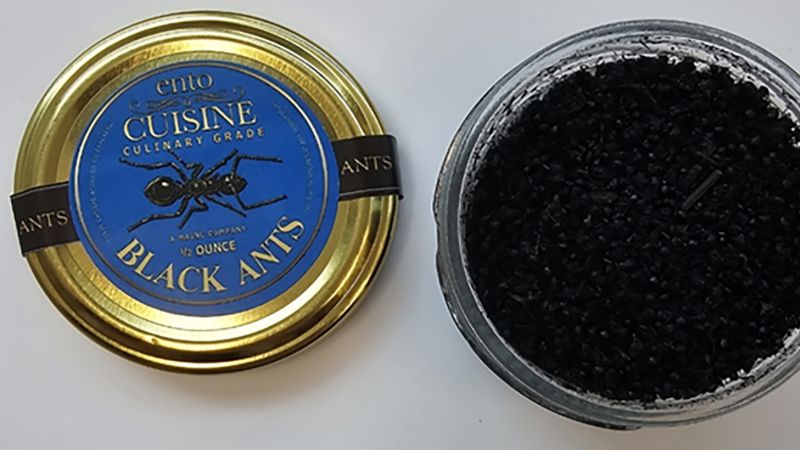
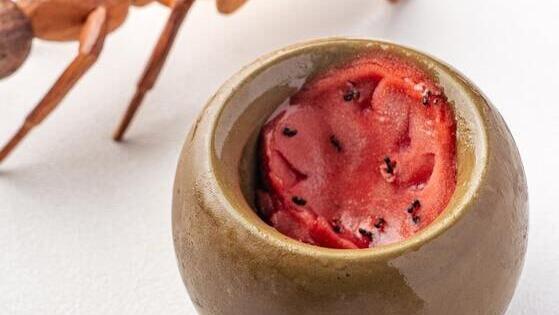
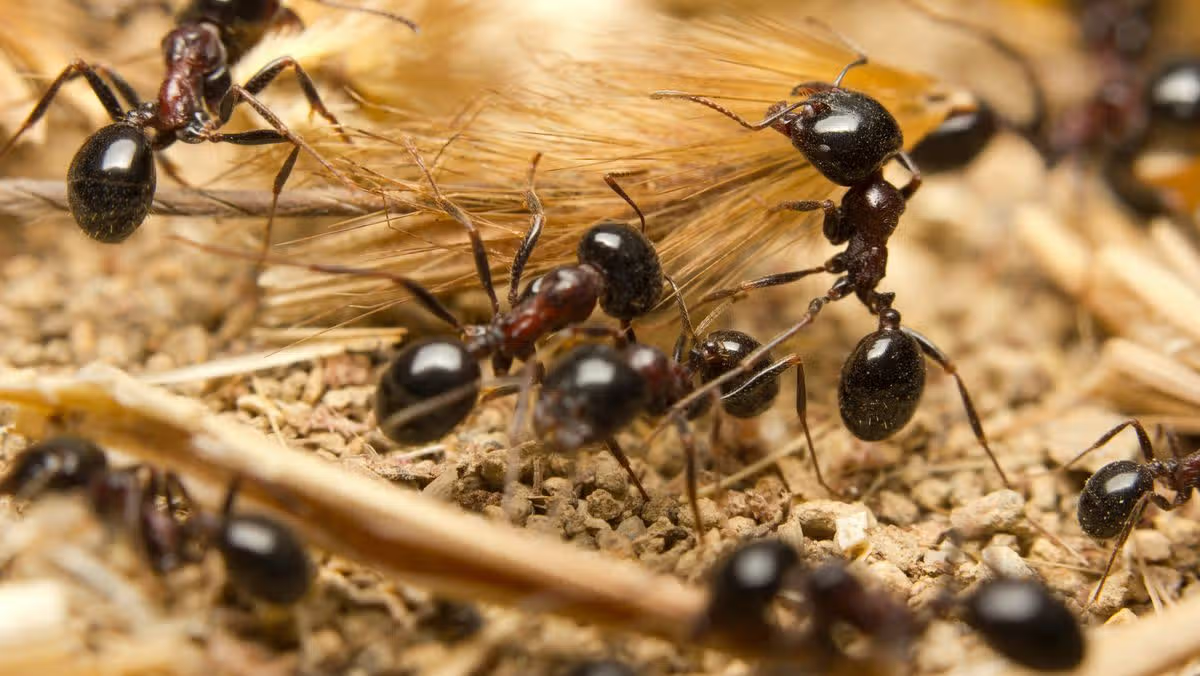
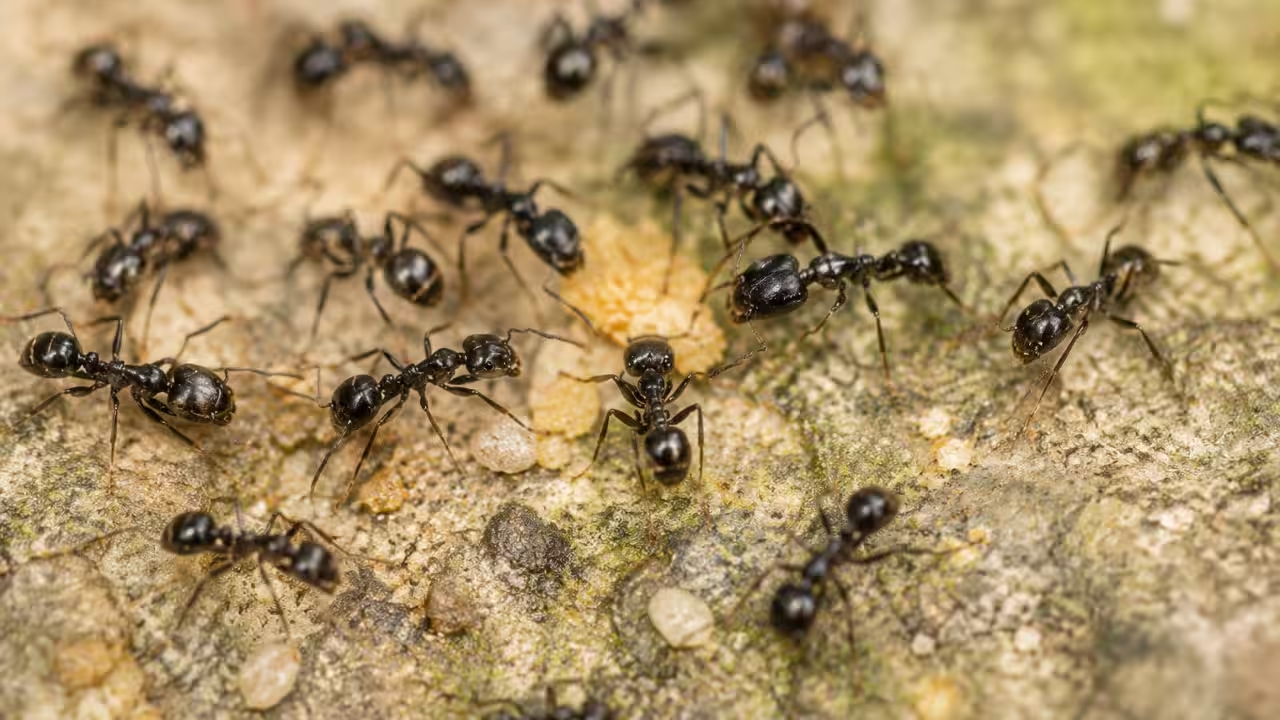
Parapodisma mikado (Jeollanam-do Agricultural Research & Extension Service) Grasshoppers have made it onto South Korea’s dinner tables, at least legally. Ants and cockroaches, however, remain off the menu.On Tuesday, South Korea approved Parapodisma mikado, a species of grasshopper, as a food ingredient, expanding the country’s short list of edible insects. The decision has renewed attention on a question that may sound simple but is tightly regulated: Why are some insects approved as food while others are not?The answer lies in a regulatory system that requires years of safety reviews before a species can be recognized as a food ingredient, even if it has long been consumed safely in other countries.While advocates argue that insects offer sustainable nutrition and new business opportunities, regulators have moved cautiously, approving only a handful of species for consumption. Illustration showing the 10 edible insect species approved by the South Korean government (Neoteny Insect Farm) A tightly curated collectionThe question is not entirely hypothetical.On April 29, the owner of a two-Michelin-star restaurant in Seoul’s Gangnam District was indicted over the restaurant’s signature dessert, which used ants to add a sour flavor. The sorbet was made with culinary-grade black ants imported from the United States and Thailand.Excessive levels of heavy metals in the dessert were also an issue in the case, but the investigation was initially triggered by the fact that ants are not among the 10 insect species approved for use as food ingredients in South Korea.The penalties can be severe. Under the Food Sanitation Act, using unapproved food ingredients may result in up to five years in prison or a fine of up to 50 million won, along with the suspension or revocation of a business license.The approved list currently includes three insect-derived food ingredients traditionally consumed in Korea: rice grasshoppers, baekgangjam, a silkworm larva killed by a fungal infection, and silkworm pupae, better known as beondegi.Since 2016, seven additional species have been approved, including two-spotted crickets, white-spotted flower chafer larvae, rhinoceros beetle larvae and drone bee pupae.Even if an insect is already sold as food abroad, it must undergo a lengthy review before it can be approved in Korea. The process evaluates the standardization and hygiene of breeding and processing methods, as well as food safety risks, toxicity and nutritional value.The Ministry of Food and Drug Safety said it takes a particularly cautious approach toward foods that have not traditionally been consumed in Korea, citing potential public health concerns.“Applicants can first obtain temporary approval after providing sufficient evidence on the ingredient’s safety for human consumption,” a ministry official said. “However, an additional monitoring period of about three years is required to identify any food safety risks that may not have been detected during the initial review.” Gosoae, a mealworm larva snack sold on Jangsu Mall, the online marketplace of Jangsu County, North Jeolla Province (Jangsu Mall) Growing appetite for insectsDespite the slow approval process, both the government and industry see edible insects as a potential growth sector.With beondaegi remaining one of Korea’s best-known edible insect foods and insect-derived ingredients long used in traditional remedies, interest in edible insects appears to be growing, although the pace of change struggles to pick up.Government data show that sales of edible insects and insect-based food products rose 18.7 percent over the past two years to reach 23.7 billion won ($15.6 million) in 2024, driven largely by their reputation as a rich source of protein and other nutrients.A survey conducted by Kim Youn-jung, a professor at Korea University, found that 88.7 percent of 387 respondents believed edible insects had high nutritional value.According to the Gyeonggi Province Institute of Health & Environment, a review of edible insects and insect-based products found that they contain between 39.8 and 72.2 grams of protein per 100 grams, higher than the protein content reported for chicken breast and beef tenderloin, at 23.0 grams and 19.2 grams per 100 grams, respectively.They also contained higher levels of minerals than spinach, milk and brown rice.“Parapodisma mikado, which was approved this time, is also rich in protein and unsaturated fatty acids and can be used in snacks, powdered health foods, chocolate products and toppings,” the Food Ministry official said. Scorpions are suspended in lollipops at the booth of a retailer selling edible insects in 2014 in Berlin, Germany. (Getty Images) State push, industry frustrationSeeing edible insects as a way to diversify and supplement the income of farmers whose annual agricultural income averages around 10 million won ($7,300), the government has promoted the industry through deregulation and support for new insect-based products.Industry representatives, however, argue that South Korea has yet to create an environment conducive to the growth of the edible insect sector.Under the current system, businesses seeking to use a particular insect species as food must first demonstrate its safety and commercial viability before obtaining approval for its use as a food ingredient.Industry players say the lack of comprehensive support covering the entire value chain, from production and processing to marketing and sales, has contributed to the limited number of approved edible insect species as well as a nearly 30 percent decline in the number of edible insect farms over the past five years.A 2024 study in Scientific Reports found that 450 insect species have been reported as consumed in Mexico, 235 in China and 123 in Japan. Singapore, meanwhile, approved 16 insect species for human consumption in 2024.“Individual farms can only do so much to develop markets for insect products, but even the government lacks a unified body that can provide comprehensive support,” said Song In-moon, president of the Korea Edible Insect Producers Association, in an interview with The Korea Herald.“Insects are more efficient than conventional livestock, but support for branding and technology remains limited. Greater support could help tackle high prices and negative public perceptions.”