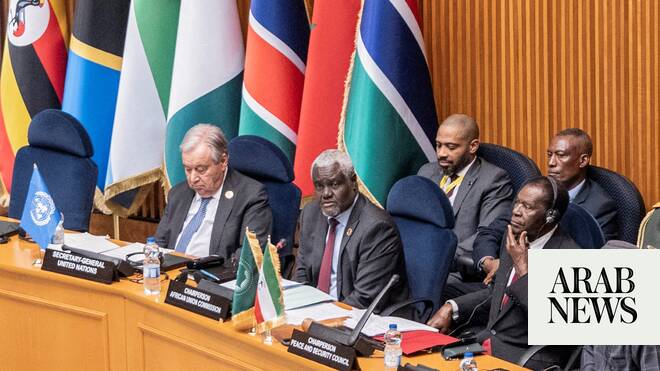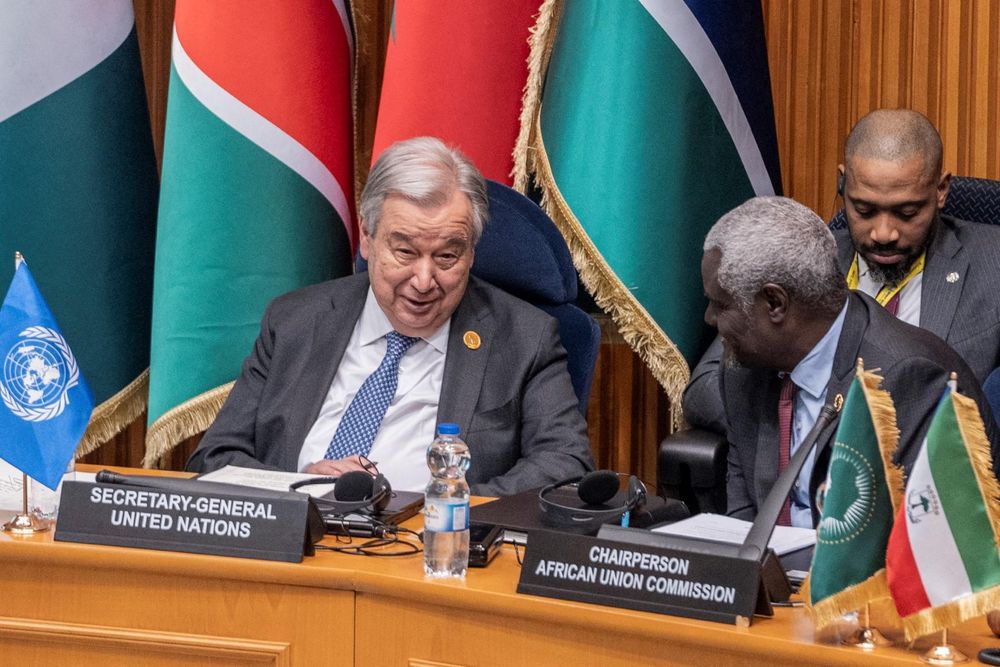
Secretary General of the United Nations Antonio Guterres (left) speaks with outgoing African Union Commission Chairperson Moussa Faki during the African Union (AU) Peace and Security Council meeting, on the Situation in Sudan and DR Congo, at the AU Headquarters in Addis Ababa on February 14, 2025. African agency is often diluted by multiple competing mediation tracks led by African institutions, neighbouring states, external powers, private envoys and ad hoc coalitions, says the writer.
Dr. Vasu Gounden
For more than three decades, African mediation has rested on a powerful assumption: that conflict can be prevented, managed and resolved through dialogue; that parties can be brought to the table; that African institutions can build norms, mechanisms and capacities to support peace; and that mediation can create the political space for negotiated settlements. That assumption was not naïve.
It emerged from one of the most hopeful periods in modern African political history.
The late 1980s and early 1990s were marked by profound change. The Cold War had ended. Apartheid was coming to an end. Namibia had become independent. Mozambique was moving towards peace. South Africa was negotiating its transition.