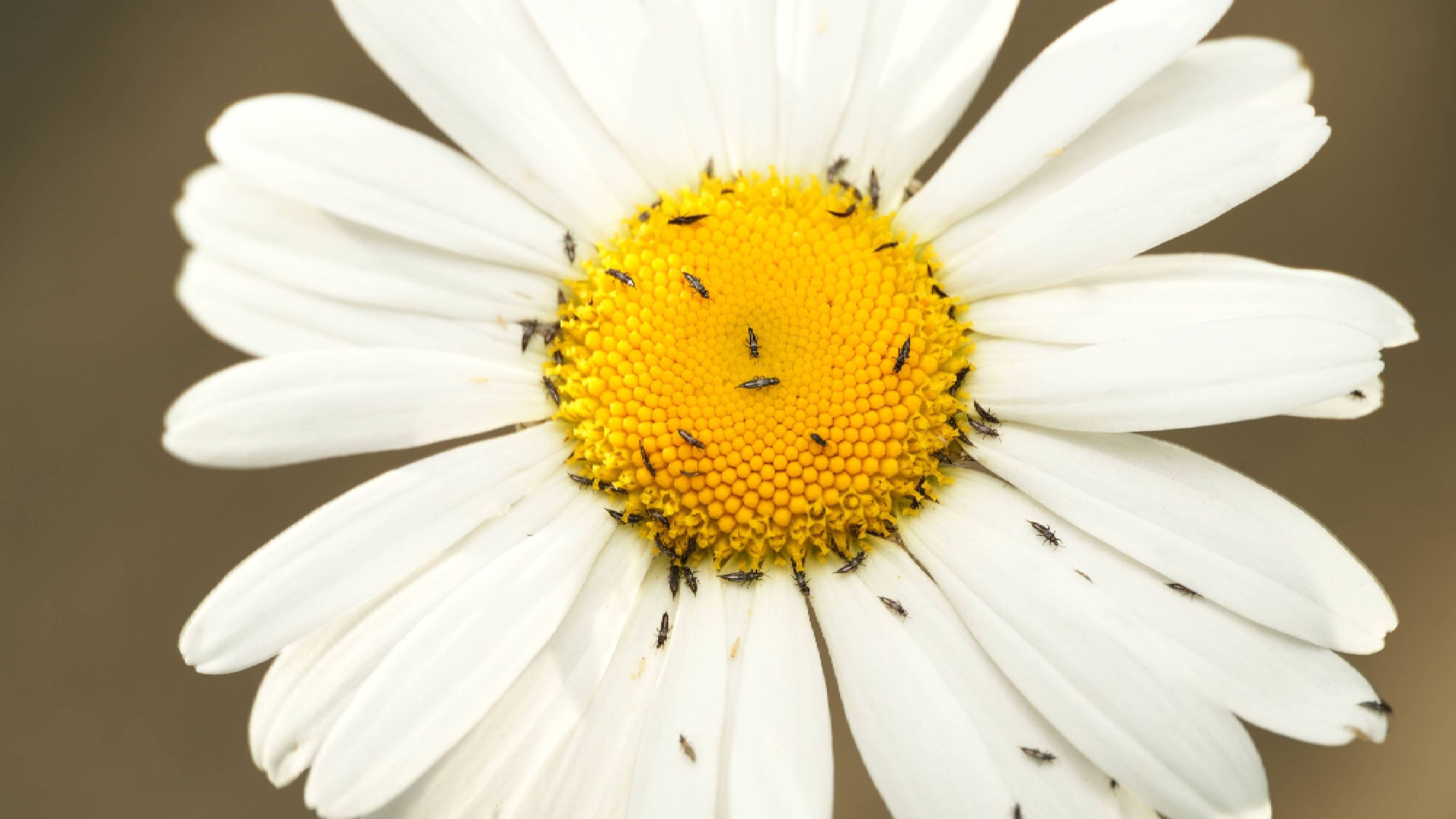
Thrips are so small you can barely see them without magnification. At less than 1mm long, they're barely visible to the naked eye. Yet they cause damage so obvious you can't miss it.The frustrating part is identifying what's causing the damage because thrips hide between petals and under leaves where you can't easily spot them. By the time you realize something's wrong with your plants, thrips have already established themselves. They feed continuously, suck out plant tissue, and reproduce quickly.Catching thrips early makes them manageable. The challenge is knowing what you're looking for and acting fast before populations explode. Here's how to identify thrips and eliminate them before they wreck your garden.
What thrips are and how to spot them
Thrips are slender insects barely visible at 1–2mm long that hide between flower petals, under leaves, and in new growth. To check for them, hold a sheet of white paper under a flower or leaf and tap the plant — any thrips will fall onto the paper where they're easy to see.Their rasping mouthparts pierce plant tissue and remove pigmentation, creating silvery patches on leaves and stippling on flowers, along with brown petal edges and distorted growth. A telltale sign is the tiny dark fecal specks they leave scattered across damaged areas. If you see those alongside discoloration, thrips are almost certainly the culprit.Some species also transmit tomato spotted wilt virus, which has no cure and requires immediate removal of infected plants. Yellow sticky cards placed near plants can alert you to an infestation before damage becomes obvious, as catching them early on is critical.