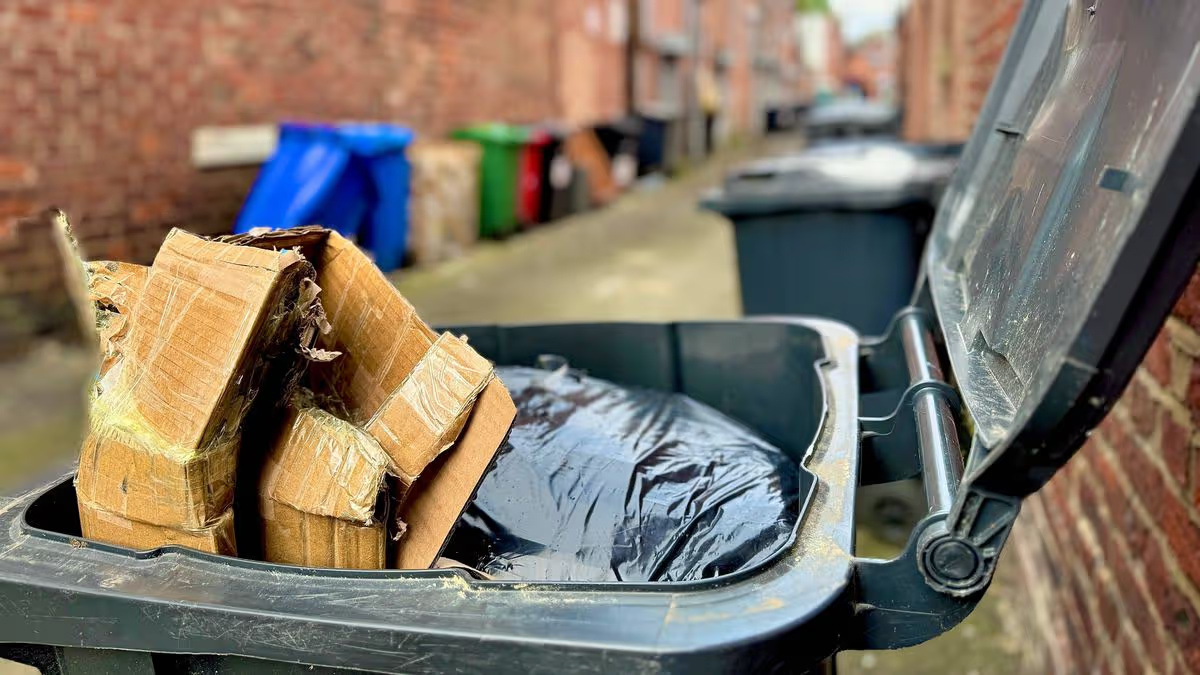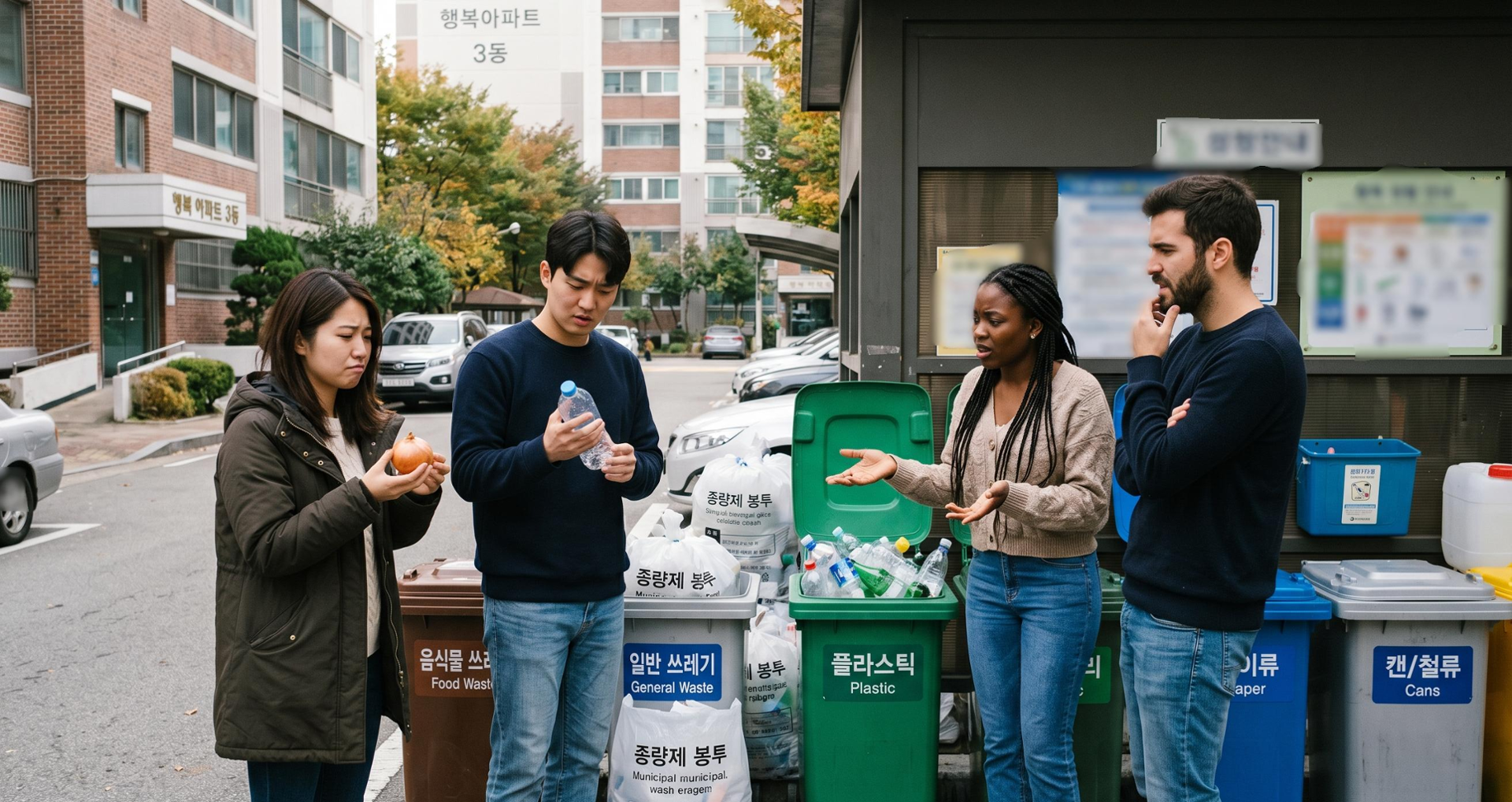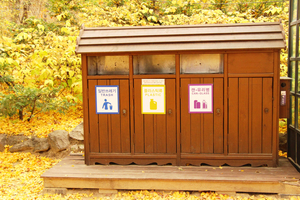
A photo of a vintage wooden waste bin, with separated sections each for general waste, plastic and cans and glass (123rf) Many foreign residents in South Korea may have run into problems with garbage disposal. Public trash bins can be found on some streets, but they are few and far between, and they are not meant for household waste. Those caught disposing of household waste in public bins may face administrative fines.Household waste in Korea is generally divided into general waste, food waste, recyclables and large waste items. General waste and food waste must be thrown away in government-approved bags sold at convenience stores and supermarkets.General wasteWaste that is neither recyclable nor food waste must be placed in standard general waste bags.If you live in a building without a separate recycling station, put your waste outside only on the designated day and at the designated time. These rules vary by region, but waste disposal is generally prohibited on Saturdays and holidays.Some items that may look like food waste should actually be disposed of as general waste. These include hard seeds, garlic peels, walnut shells, clam and oyster shells, fish bones, animal bones and fur, eggshells, tea leaves, herbal medicine residue, coffee grounds and disposable tea bags.Tie the bag up before disposal and do not fill it above the dotted line near the top. Mixing different types of waste or using nonstandard bags may result in a fine.Food wasteFood waste should be placed in standardized yellow food waste bags, which are sold at stores across the country. Residents must follow the designated day, time and location for disposal, and food waste bags should be placed inside designated collection containers.In multihousehold buildings with recycling stations, food waste should be placed in the designated food waste container. Some buildings may require yellow food waste bags, while others may not, so ask the building manager.A rough rule of thumb is to consider whether the food item could be used as livestock feed or fertilizer. Watermelon rinds and apple peels are generally considered food waste, though they should be cut into small pieces before disposal.Before throwing away food waste, remove foreign substances, separate items that animals cannot eat and drain as much liquid as possible. High-sodium foods such as kimchi should be rinsed before being placed in the bag.
Guide to waste disposal in Korea (1)
Many foreign residents in South Korea may have run into problems with garbage disposal. Public trash bins can be found on some streets, but they are few and far
384 words~2 min read