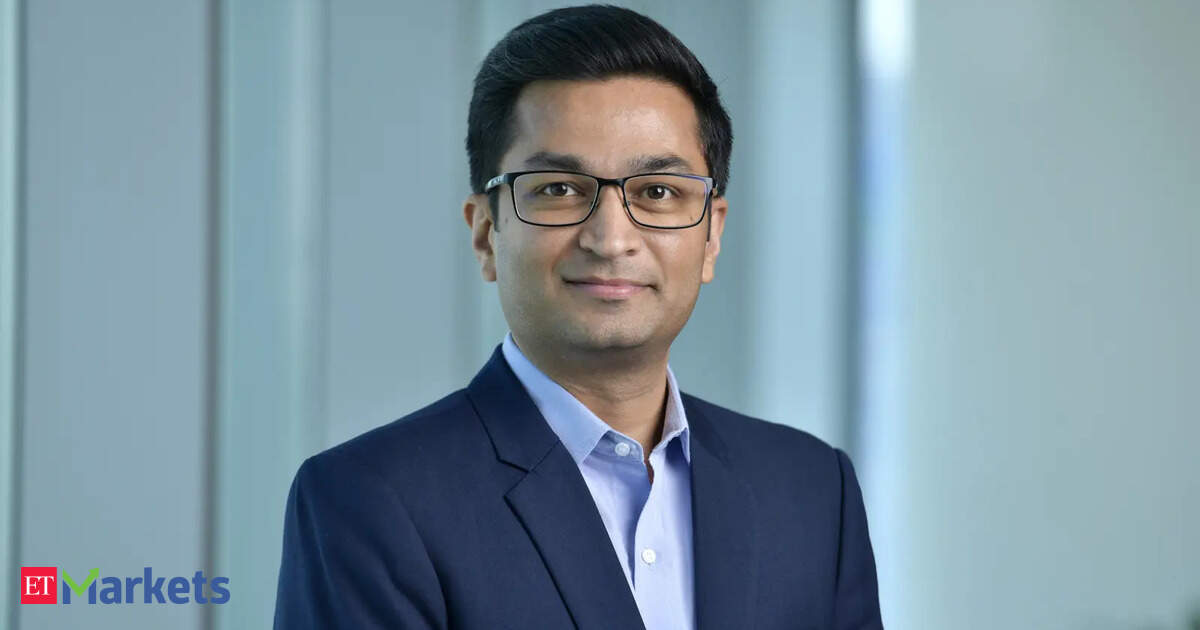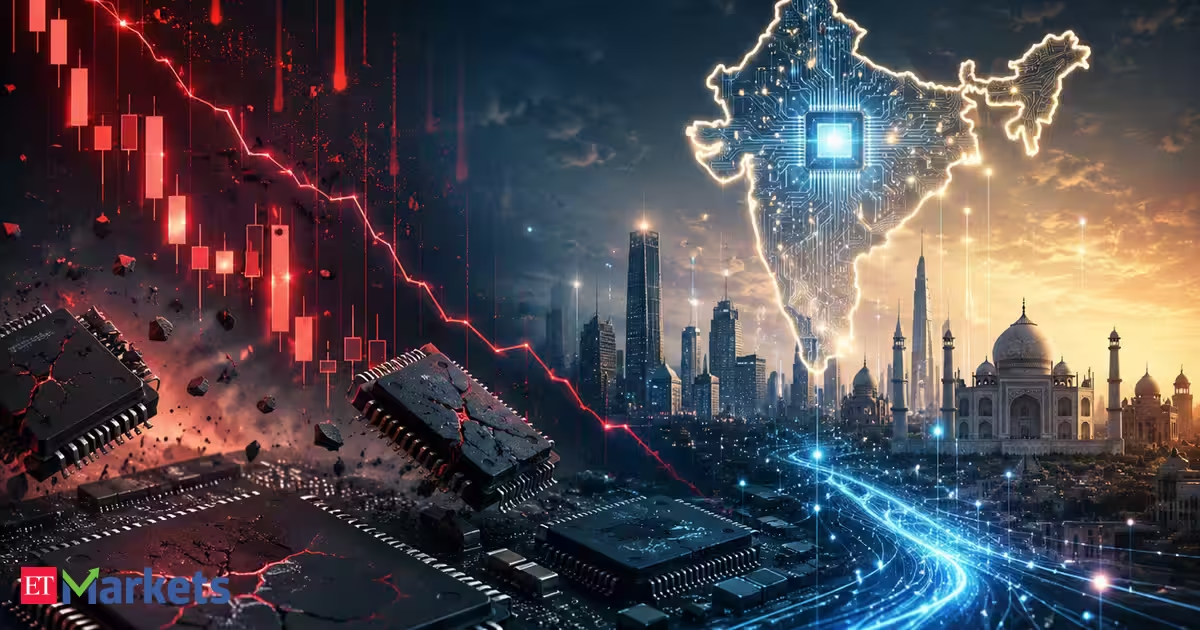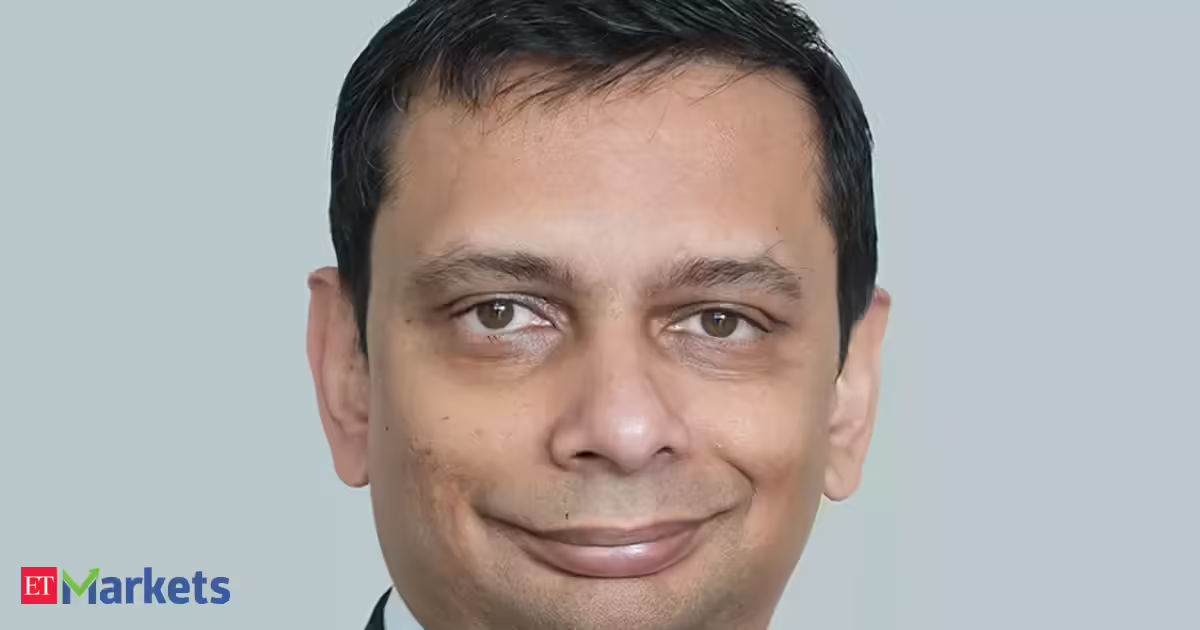
India's macro fundamentals may be holding up, but the country faces a structural disadvantage in the age of artificial intelligence, that is the blunt warning from Nirav Sheth, CEO of Institutional Equities at Emkay Global Financial Services.Speaking to ET Now, Sheth did not mince words: "The biggest problem that we face as a country is that you are on the wrong side of the AI trade. It is such a phenomenal happening in terms of the investments that are happening, in terms of how profound the technology is, and we are just not there — neither on the infrastructure side, nor on the software side, nor on the LLM side."The AI gap is driving foreign outflowsSheth argues that the AI revolution is not a bubble, at least not yet. Global markets have moved in lockstep with earnings growth, and he sees no clear peak in sight. The real danger for India, he says, is that FIIs are aggressively chasing AI-linked earnings growth abroad, and India simply is not in that conversation.His prescription for investors is direct: build a portfolio around companies delivering at least 20% earnings growth. "If you are below that, you are likely to invite FII outflows till this AI issue gets resolved," he warns.Platform companies with proven unit economics and electronics manufacturing services (EMS) players are among his preferred bets in this environment.You Might Also Like:IT sector: Don't mistake a bounce for a turnaroundDespite a sharp intraday rally in IT stocks, Sheth urges caution. He believes India's technology services sector is caught in a structural headwind, not a temporary slowdown."Coding is the most feasible use of AI right now," he notes. "IT has moved from high single-digit growth to an 'X' growth phase, and the de-rating is very, very severe." His rule when a sector faces disruption is unambiguous: ignore valuations. "Every rally in software should be used to exit," he says.Macro risks: Oil, rupee, and the reflexivity trapSheth also flags the second-order effects of geopolitical tensions in West Asia. A rupee that has depreciated 7–8% creates a ripple effect, petrochemicals, rubber, textiles, metals, diesel, all face cost pressures over time."We are being driven by the reflexivity of capital flows, which feeds into the economy. It should be the other way around," he says, calling for significant policy changes to restore investor confidence and attract durable capital inflows.You Might Also Like:On earnings, he notes that Q4 results, while broadly ahead of expectations across autos, banks, and cement, are backward-looking. What matters now is how Q1 and Q2 FY26 play out, and that depends heavily on oil prices softening and the rupee stabilising. His current projection for Nifty earnings stands at high single-digit growth for FY27.You Might Also Like:
'India is on the wrong side of the AI trade': Emkay's Nirav Sheth sounds the alarm
India is on the wrong side of the AI trade, warns Nirav Sheth. Foreign investors are chasing AI growth abroad, impacting Indian markets. Investors should focus on companies with 20% earnings growth. IT sector faces headwinds, not a temporary slowdown. Geopolitical risks and rupee depreciation add to macro concerns. Policy changes are needed for durable capital inflows.
451 words~2 min read