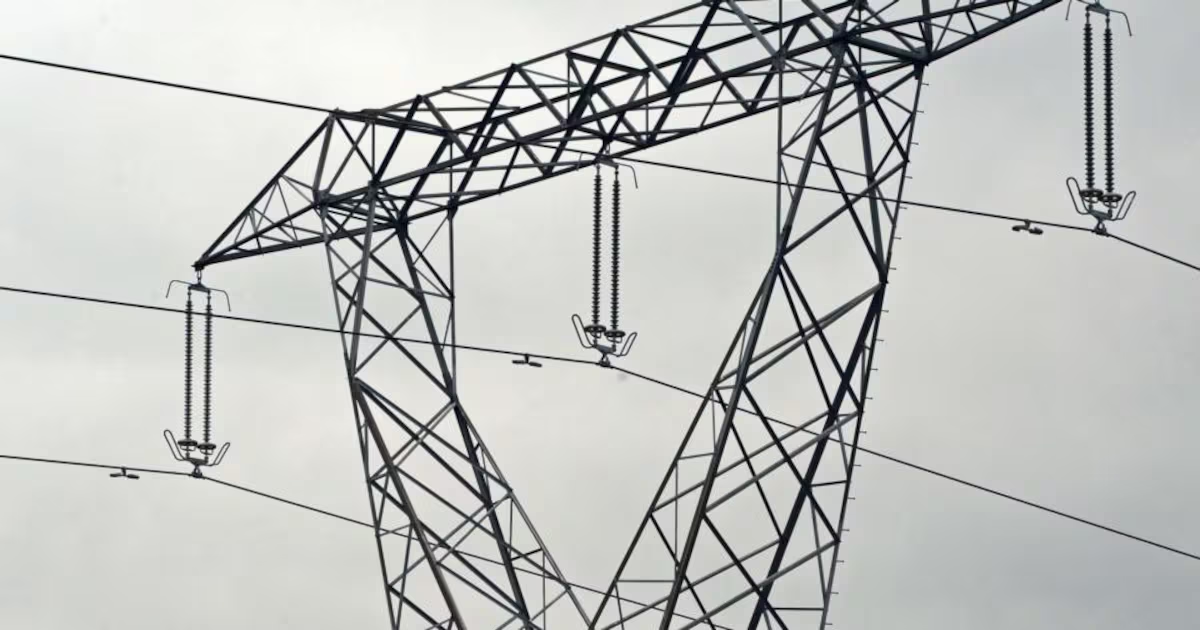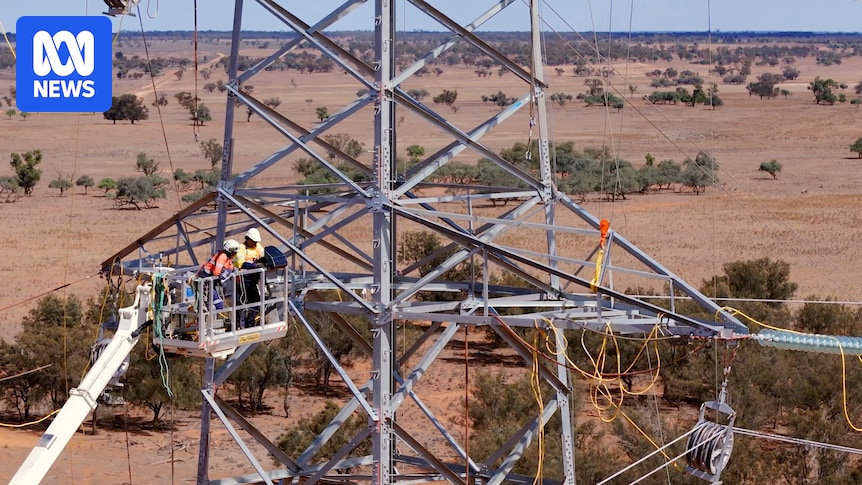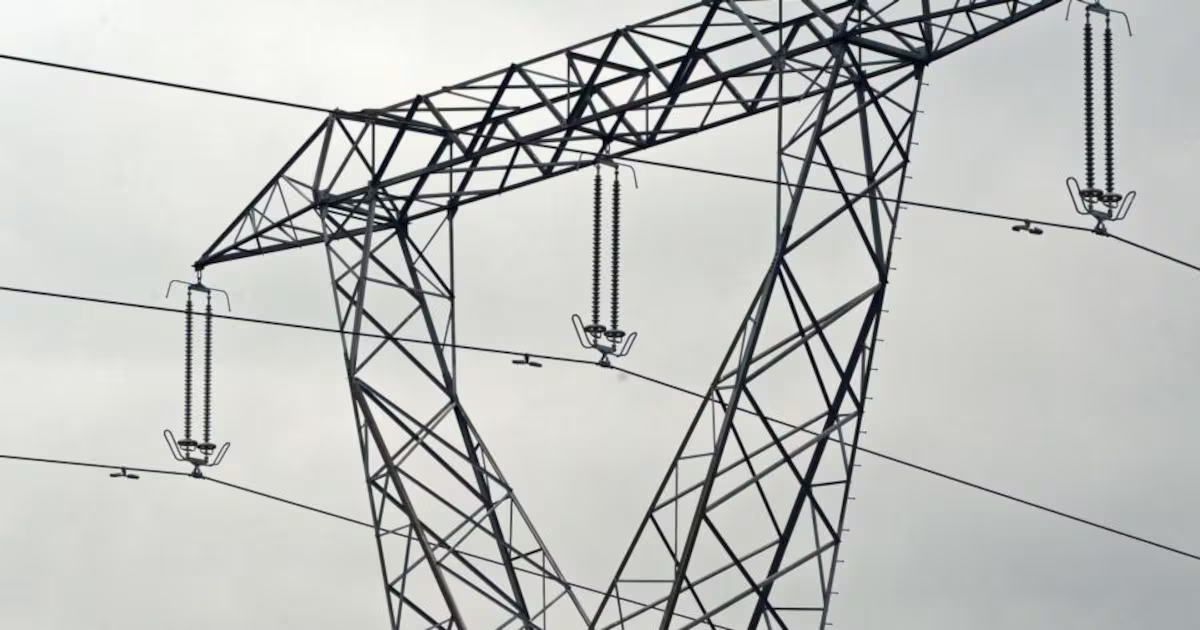
EirGrid will pay landowners along its proposed north-south power line up to €50,000 for each pylon placed on their property, the electricity grid operator has confirmed in a new offer.The State company has written to farmers and other landowners on the route of the north-south interconnector, running from Co Meath to Co Tyrone, setting out terms of a deal that will cost it a total of €40 million.The long-delayed interconnector is a high-voltage power line that will link electricity networks in the Republic and Northern Ireland, increasing the flow of power across the Border.Letters sent to landowners set out two options. One is a “settlement agreement” of €50,000 for each pylon placed on an individual’s land and €160 a metre for lines crossing the property, subject to a minimum of €8,000.The other is an “upfront payment” of €43,000 for pylons and €140 a metre for lines, also subject to an €8,000 minimum payment.Landowners who take the lower upfront payment can seek further compensation within six years of work starting on their property.EirGrid originally offered €50,000 for each pylon when it first sought access to properties along the north-south interconnector route in 2023.That offer would have given EirGrid an easement over each property, a property right allowing it permanent access to pylons and other equipment.EirGrid has now dropped that. Instead, the ESB, which will build the power line, will use section 53 of the Electricity Supply Act, 1927, which gives the State company rights to access private property to build infrastructure.That legislation also allows owners the right to seek compensation for the use of their property.EirGrid confirmed at the weekend landowners who sign up to either offer early will get goodwill payments.“Subject to certain conditions, landowners may also be entitled to make a claim for compensation for loss of development as well,” the company added.“As part of the updated approach, for the upfront compensation package landowners can make a claim for additional compensation from ESB within six years from the start of works on their land with the option of arbitration in default of agreement,” said EirGrid.The company maintains that the new offer will not add to the €40 million total that it had earmarked for compensating landowners along the north-south interconnector route.“We do not see a requirement to revise the original cost estimate of the scheme,” a statement confirmed.The grid operator pledged to engage with local groups in counties Cavan, Meath and Monaghan on how it will allocate a community benefit fund designed to aid areas affected by new infrastructure construction.EirGrid hopes that ESB will begin work on the project this year and that it will be completed in 2031, almost a quarter of a century after it was first proposed.When the company first contacted landowners in 2023, it had planned that the power line would be completed some time this year.EirGrid calculates the project will save electricity customers on both sides of the Border €100 million a year once it is built and operating.The line will increase security of electricity supplies, allow more renewable power on the system and increase competition in the all-Ireland market, according to the company.EirGrid is responsible for managing the project in the Republic while its sister company, System Operator Northern Ireland, will take responsibility for the section in the North.Opposition to the project on both sides of the Border has slowed its progress. Locals in regions along the route argued that it should be run underground rather than on pylons.However, several technical reviews concluded that this was not possible. EirGrid noted that the project is classed as critical infrastructure.
EirGrid revises €40m offer to north-south line landowners
Company has written to farmers offering two compensation deals for pylons and lines
TL;DRAI
EirGrid raises pylon pay to €50k using statutory access to bypass easement barriers and unlock delayed cross-border grid infrastructure. Grid stability and renewable capacity reduce energy costs for Ireland's tech—critical for data center planning and enterprise infrastructure economics.
595 words~3 min read